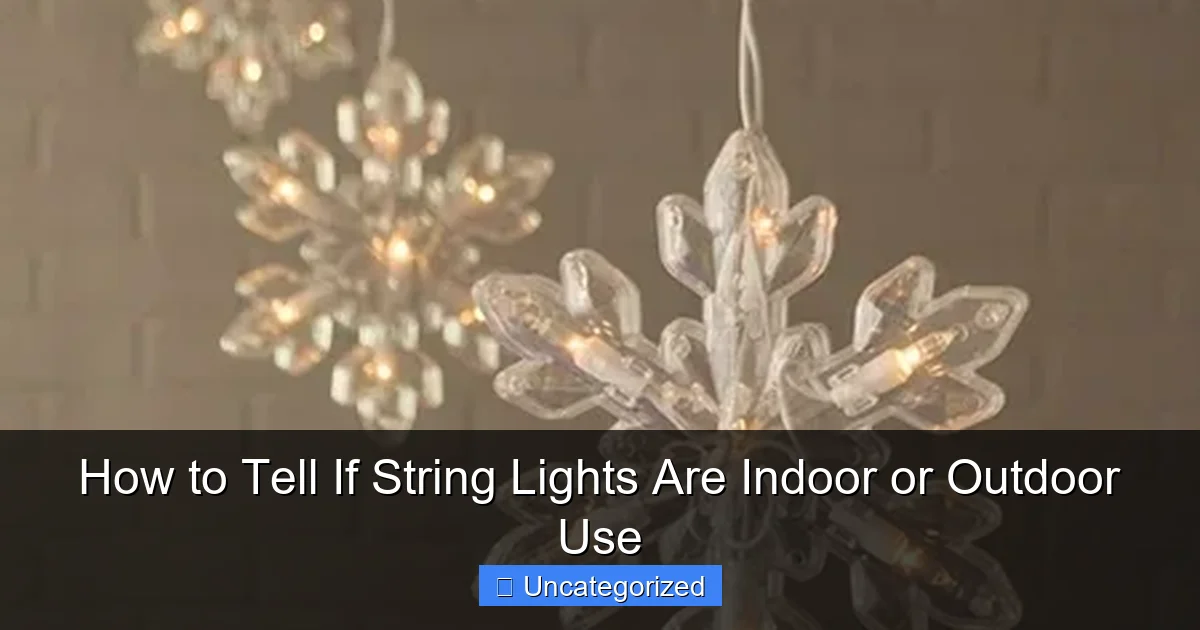
Featured image for how to tell if string lights are indoor or outdoor
Image source: i5.walmartimages.com
Check the packaging or product label for an “indoor/outdoor” rating—this is the fastest way to confirm safe usage. Outdoor string lights are built with weather-resistant materials and have thicker insulation to withstand moisture, UV rays, and temperature shifts, while indoor versions prioritize aesthetics over durability. When in doubt, look for safety certifications like UL or ETL, which often specify approved environments.
Key Takeaways
- Check the label: Look for “Indoor Use Only” or “Outdoor Rated” on packaging.
- Inspect the plug: Outdoor lights have thicker, weatherproof plugs and cords.
- Look for UL ratings: “UL Wet” or “UL Damp” ensures outdoor safety compliance.
- Test the bulbs: Shatterproof, sealed bulbs indicate outdoor durability.
- Assess the wire: Thicker, rubber-coated wires are designed for outdoor use.
- Read the manual: Always confirm intended use in product documentation.
📑 Table of Contents
- Understanding the Importance of Choosing the Right String Lights
- Check the Packaging and Labeling for Clear Indicators
- Inspect the Physical Construction and Materials
- Evaluate the Bulb Type and Wattage
- Review the Manufacturer’s Specifications and Warranty
- Use a Data Table to Compare Key Features
- Final Tips and Safety Reminders
Understanding the Importance of Choosing the Right String Lights
String lights have become a staple in modern home decor, offering a touch of magic to everything from backyard patios to cozy living rooms. Whether you’re draping them across a pergola for an outdoor dinner party or wrapping them around a bookshelf for a whimsical indoor glow, the right set can elevate any space. However, not all string lights are created equal—and using indoor-rated lights outside, or vice versa, can lead to safety hazards, premature wear, and even electrical fires. Knowing how to tell if string lights are indoor or outdoor use is essential for both safety and longevity.
Many homeowners and decorators make the mistake of assuming that all string lights are interchangeable. After all, they look similar: bulbs on a wire, often with a plug on one end. But the differences between indoor and outdoor-rated string lights are more than just marketing labels—they involve construction materials, electrical safety standards, and environmental durability. For instance, outdoor string lights must withstand rain, wind, UV exposure, and temperature fluctuations, while indoor lights prioritize aesthetics and lower heat output. Misunderstanding these distinctions can result in costly replacements or, worse, dangerous situations. This guide will walk you through the key indicators, safety standards, and practical tips to help you confidently identify whether your string lights are designed for indoor or outdoor use.
Check the Packaging and Labeling for Clear Indicators
Look for Explicit “Indoor” or “Outdoor” Labels
One of the most straightforward ways to determine if your string lights are meant for indoor or outdoor use is to examine the packaging or product label. Reputable manufacturers clearly label their products with terms like “Indoor Use Only” or “Outdoor Rated”. These labels are not just suggestions—they’re based on rigorous testing and compliance with safety standards. For example, outdoor-rated lights often bear the designation “Wet Location Rated” or “Weatherproof,” indicating they can handle direct exposure to rain and moisture.
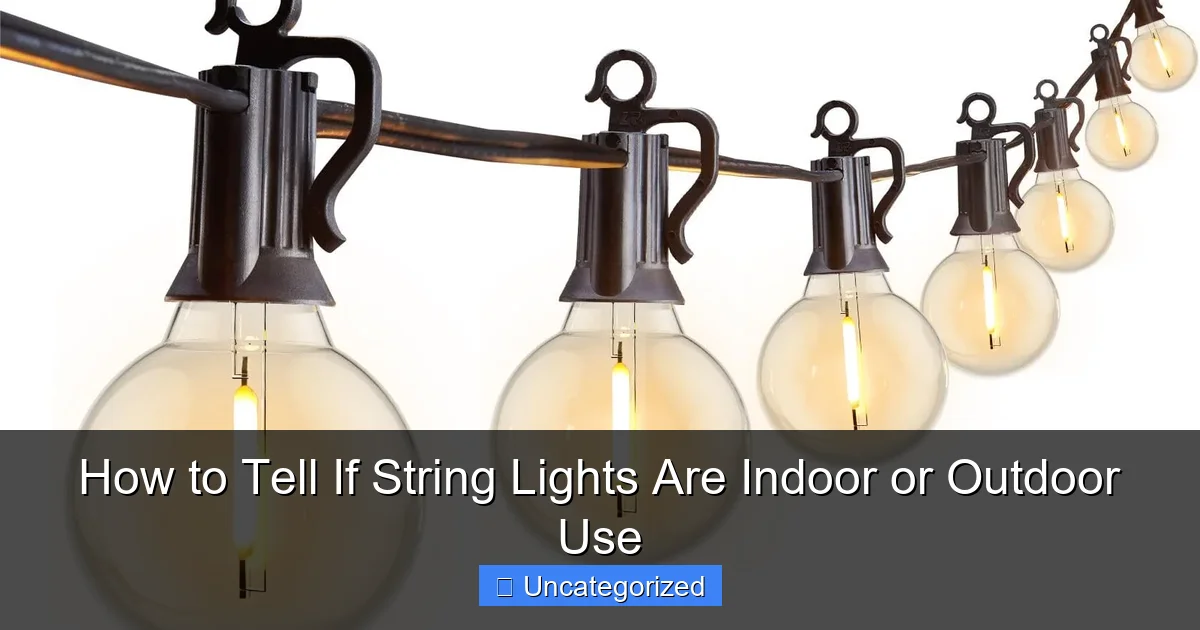
Visual guide about how to tell if string lights are indoor or outdoor
Image source: m.media-amazon.com
When shopping online, pay close attention to the product description. Phrases like “suitable for patios,” “ideal for gardens,” or “weather-resistant” are strong clues that the lights are intended for outdoor use. Conversely, descriptions emphasizing “cozy ambiance,” “living room decor,” or “non-waterproof” typically mean the lights are for indoor use only. Always double-check these details—don’t rely solely on images, as many string lights look similar whether they’re indoor or outdoor models.
Understand the Meaning of Safety Certifications
Safety certifications are another critical clue. Look for stamps or labels from recognized organizations such as UL (Underwriters Laboratories), ETL (Intertek), or CSA (Canadian Standards Association). These certifications indicate that the product has been tested for electrical safety. More importantly, the certification label often specifies the intended environment. For example:
- UL Listed for Wet Locations: Suitable for outdoor use, including exposure to rain and snow.
- UL Listed for Damp Locations: Can handle humidity and indirect moisture (e.g., covered patios) but not direct rain.
- UL Listed for Dry Locations: Designed for indoor use only.
For example, a string light set with a UL Wet Location rating can be safely hung in your backyard during a summer storm. But a set with a Dry Location rating should never be exposed to moisture, even if it’s under a covered porch. Always verify these certifications—especially if you’re buying from third-party marketplaces where counterfeit or non-compliant products may slip through.
Check for Additional Warnings and Usage Instructions
Beyond the main label, look for additional warnings printed on the packaging or the cord itself. Indoor-only string lights often include cautionary text such as:
- “Do not use outdoors.”
- “Not waterproof.”
- “For indoor use only.”
Outdoor-rated lights may instead include instructions like “Can be used in wet conditions” or “Install at least 10 feet from water sources.” Some even specify maximum exposure times (e.g., “Do not leave on continuously for more than 12 hours”) to prevent overheating. These small details are invaluable when determining the proper use of your lights.
Inspect the Physical Construction and Materials
Examine the Bulb and Socket Design
The physical construction of string lights provides strong clues about their intended environment. Outdoor string lights are typically built with durability in mind. Their sockets are often made of thick, weather-resistant plastic with rubber gaskets or silicone seals to keep moisture out. The bulbs themselves may be sealed in epoxy or encased in shatterproof materials to withstand wind, rain, and accidental impacts.
In contrast, indoor string lights often use thinner plastic sockets with little to no sealing. The bulbs may be open at the base, allowing heat to dissipate—a design that’s safe indoors but dangerous outdoors where moisture can seep in. For example, a vintage Edison-style bulb with exposed filaments is usually for indoor use, while an LED bulb with a silicone-coated base is more likely to be outdoor-rated.
Assess the Wire and Plug Quality
The quality of the wire and plug is another telltale sign. Outdoor-rated string lights use thicker, more flexible cords made from materials like PVC or rubber, which resist cracking in cold weather and melting in heat. The wire gauge (thickness) is usually lower (e.g., 18 AWG), indicating higher current capacity and better durability. The plug itself is often heavier and may include a built-in fuse or weatherproof cover.
Indoor string lights, on the other hand, typically use thinner, more lightweight cords (e.g., 20 or 22 AWG) made from less robust materials. The plug is often smaller and lacks weatherproofing features. For instance, a set of fairy lights with a thin, flimsy cord and a plastic plug is almost certainly for indoor use only. If the cord feels brittle or cracks when bent, it’s a red flag—especially if you plan to use it outdoors in winter.
Look for Waterproof or Weatherproof Features
Outdoor string lights often include specific waterproofing features. These may include:
- IP (Ingress Protection) Ratings: Look for IP65, IP67, or higher. IP65 means the lights are dust-tight and can handle water jets. IP67 means they can be submerged in up to 1 meter of water for 30 minutes. Indoor lights rarely exceed IP44 (splash-proof).
- Sealed Junctions: Outdoor lights often have sealed connections between bulbs and wires to prevent water ingress.
- UV-Resistant Coatings: The plastic parts are treated to resist fading and cracking from sun exposure.
For example, a set of outdoor string lights with an IP67 rating and rubber-sealed sockets can be left up year-round, even in snowy climates. But a set with no IP rating and open sockets should never be exposed to rain.
Evaluate the Bulb Type and Wattage
LED vs. Incandescent: A Key Difference
The type of bulb used in your string lights can also indicate their intended use. LED string lights are overwhelmingly the better choice for outdoor use. They produce less heat, are more energy-efficient, and are often designed with weatherproofing in mind. Many outdoor-rated string lights use shatterproof, epoxy-sealed LEDs that can withstand temperature swings from -20°F to 120°F.
Incandescent string lights, while nostalgic and warm in tone, are generally not recommended for outdoor use. They generate more heat, which can cause plastic sockets to melt in direct sunlight. Additionally, their filaments are fragile and prone to breaking in windy conditions. Most incandescent lights are labeled for indoor use only, especially if they lack weatherproofing features.
For example, a set of warm white incandescent fairy lights with a 5-watt bulb is likely for indoor use. But a set of cool white LED string lights with 0.5-watt bulbs and rubberized sockets is probably outdoor-rated.
Wattage and Heat Output Considerations
Higher wattage lights generate more heat, which can be a safety hazard outdoors where ventilation is limited. Outdoor string lights typically have lower wattage per bulb (often 0.5–1.5 watts for LEDs) to minimize heat buildup. They also use spaced-out bulbs to allow airflow and reduce the risk of overheating.
Indoor lights, especially decorative ones, may use higher-wattage bulbs (e.g., 5–10 watts for incandescent) because they’re used in well-ventilated areas. However, even low-wattage indoor lights can pose a fire risk if left on for extended periods outdoors. Always check the total wattage of the set—outdoor-rated lights often have lower maximum wattage ratings to comply with safety standards.
Smart Features and Dimming Capabilities
Many outdoor string lights now come with smart features like app control, timers, and dimming. These features are usually built into weatherproof housings and are a good sign that the lights are designed for outdoor use. For example, a Wi-Fi-enabled string light with a weatherproof control box is almost certainly outdoor-rated.
Indoor smart lights, while advanced, often lack the rugged construction needed for outdoor environments. Their control units may not be sealed, and their cords may not be UV-resistant. If your smart lights don’t specify outdoor use, assume they’re for indoor only—even if they’re marketed as “weather-resistant.”
Review the Manufacturer’s Specifications and Warranty
Check the Product Manual or Website
If the packaging is missing or the label is unclear, consult the manufacturer’s website or product manual. Reputable brands provide detailed specifications, including:
- Intended use (indoor/outdoor)
- IP rating
- Temperature range
- Warranty terms
For example, Philips Hue’s outdoor string lights clearly state “for outdoor use” and list an IP67 rating. In contrast, their indoor fairy lights specify “not for outdoor use.” Always look for these official specifications—they’re more reliable than third-party descriptions.
Warranty Clues: Indoor vs. Outdoor Coverage
The warranty can also reveal the intended use. Outdoor-rated lights often come with longer warranties (e.g., 3–5 years) and cover weather-related damage. Indoor lights typically have shorter warranties (1–2 years) and exclude water damage. If the warranty explicitly states “void if used outdoors,” you’ve found a clear indicator.
For instance, a string light set with a 5-year warranty that covers “rain, snow, and UV exposure” is definitely outdoor-rated. But a set with a 1-year warranty that says “not covered if exposed to moisture” is for indoor use only.
Customer Reviews and Real-World Testing
Customer reviews are a goldmine of practical information. Search for reviews that mention outdoor use, such as:
- “Used these in my backyard for 6 months—no issues with rain.”
- “Faded after one summer in direct sunlight.”
- “Socket filled with water after a storm.”
These real-world experiences can confirm or contradict the manufacturer’s claims. If multiple users report water damage or melting sockets, the lights are likely not outdoor-rated—even if the packaging says otherwise.
Use a Data Table to Compare Key Features
Indoor vs. Outdoor String Light Comparison Table
| Feature | Indoor String Lights | Outdoor String Lights |
|---|---|---|
| Labeling | “Indoor Use Only,” “Not Waterproof” | “Outdoor Rated,” “Wet Location,” “Weatherproof” |
| Safety Certification | UL/ETL for Dry Locations | UL/ETL for Wet/Damp Locations |
| IP Rating | IP44 or lower (splash-proof) | IP65, IP67, or higher (waterproof) |
| Bulb Type | Incandescent, open LEDs, high wattage | Sealed LEDs, low wattage, shatterproof |
| Cord Material | Thin plastic, lightweight | Thick PVC/rubber, UV-resistant |
| Socket Design | Open, no gaskets | Sealed, rubber gaskets, silicone |
| Warranty | 1–2 years, excludes water damage | 3–5 years, covers weather damage |
| Smart Features | Indoor-only control units | Weatherproof smart controls |
This table summarizes the key differences and can serve as a quick-reference guide when evaluating string lights. Use it to compare products before purchasing or to assess existing sets in your home.
Final Tips and Safety Reminders
When in Doubt, Assume Indoor Use
If you’re unsure whether your string lights are indoor or outdoor-rated, assume they’re for indoor use only. It’s always safer to err on the side of caution. Using indoor lights outdoors can lead to:
- Electrical shorts
- Fire hazards
- Voided warranties
- Shortened lifespan
For example, a set of indoor fairy lights left outside during a summer storm could short-circuit and spark a fire—especially if the sockets aren’t sealed.
Use Outdoor Lights for Covered Areas Too
Even if you’re using lights under a covered porch or gazebo, opt for outdoor-rated models. These areas are still exposed to humidity, condensation, and occasional rain. Outdoor lights are designed to handle these conditions, while indoor lights are not.
Regular Maintenance and Inspection
Regardless of the rating, inspect your string lights regularly. Look for:
- Cracks in the cord or sockets
- Frayed wires
- Water inside the bulbs
- Discoloration from UV exposure
Replace any damaged lights immediately. For outdoor sets, clean them annually with a damp cloth (when unplugged) to remove dirt and debris that can trap moisture.
By following these guidelines, you can confidently determine how to tell if string lights are indoor or outdoor use—and enjoy a safe, beautiful lighting setup in any environment. Whether you’re creating a cozy nook or a dazzling outdoor oasis, the right lights make all the difference.
Frequently Asked Questions
How can I tell if string lights are for indoor or outdoor use?
Check the product packaging or label for an “outdoor rating” like IP44 or IP65, which indicates weather resistance. Outdoor-rated lights also typically have thicker, more durable cords and waterproof seals around bulbs.
What’s the easiest way to identify outdoor-rated string lights?
Look for an “ETL” or “UL” safety certification mark with “Wet Location” or “Damp Location” listed—this confirms they’re safe for outdoor use. Indoor-only lights often lack these certifications or are labeled “Indoor Use Only.”
Can I use indoor string lights outside temporarily?
It’s not recommended. Indoor lights lack weatherproofing, so moisture or temperature changes can damage them or create fire hazards. Always use lights labeled for outdoor use in exterior settings.
Are there visual differences between indoor and outdoor string lights?
Outdoor string lights usually have thicker, UV-resistant cables, rubberized bulb sockets, and sealed connections. Indoor versions often have thinner wires and plastic housings without weatherproofing features.
Do outdoor string lights have a special plug or connector?
Yes, many outdoor-rated lights have grounded (3-prong) plugs and thicker insulation to prevent electrical issues. Some also include a built-in fuse or weatherproof covers for the plug connections.
What does the IP rating on string lights mean for indoor/outdoor use?
The IP (Ingress Protection) rating, like IP65, shows resistance to dust and water. For outdoor use, aim for IP44 or higher; indoor lights may have no IP rating or a lower one (e.g., IP20).