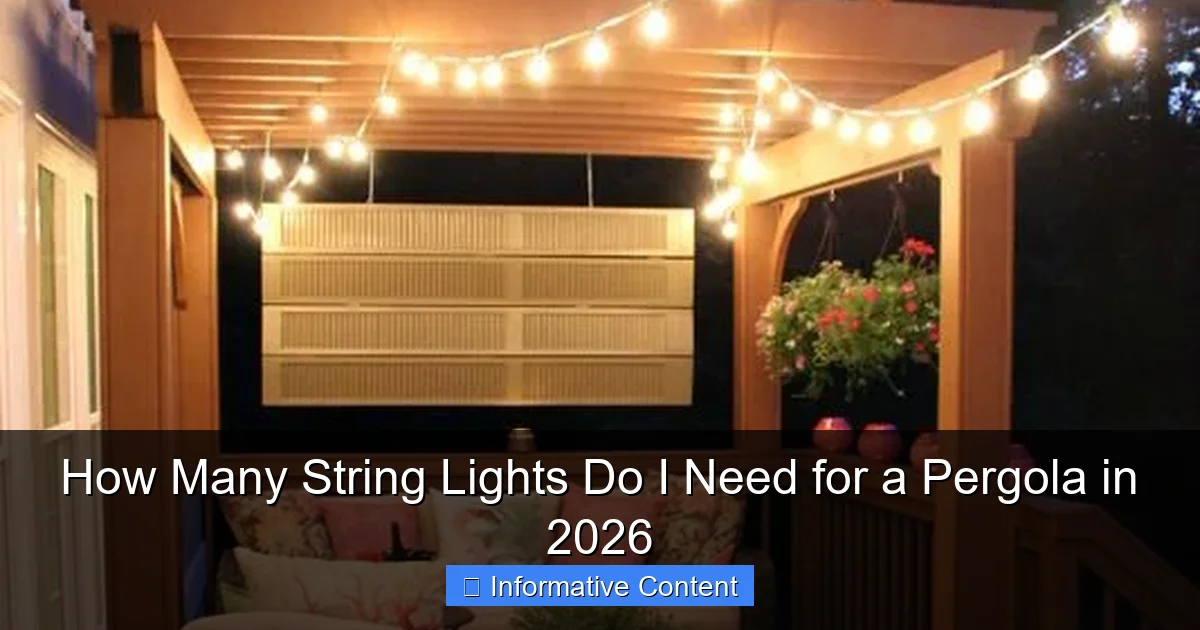
Featured image for how many string lights do i need for a pergola
Image source: cdn.homedit.com
For a standard 10×12 ft pergola, you’ll need 30 to 50 feet of string lights to achieve balanced, ambient illumination in 2026, depending on spacing and desired brightness. Use LED string lights with 6–12 inch bulb spacing for optimal coverage, energy efficiency, and modern smart features like app control and color customization. Always measure your pergola’s perimeter and consider vertical drops for a layered, professional look.
Key Takeaways
- Measure your pergola to calculate total linear feet needed for even coverage.
- Use 10-15 bulbs per 10 sq ft for balanced brightness and ambiance.
- Choose LED lights for energy efficiency and longer lifespan in outdoor settings.
- Plan for power sources by spacing outlets or using solar-powered options.
- Layer lights vertically on beams and diagonally for a dynamic glow.
- Check spacing between bulbs—6-12 inches apart avoids gaps or overcrowding.
📑 Table of Contents
- How Many String Lights Do I Need for a Pergola in 2026
- Understanding Your Pergola’s Layout and Size
- Choosing the Right Type of String Lights
- Calculating How Many Strands You Need
- Hanging and Spacing Tips for the Perfect Look
- Energy Efficiency, Safety, and Maintenance
- Data Table: Quick Reference Guide
- Final Thoughts: Light It Up the Right Way
How Many String Lights Do I Need for a Pergola in 2026
Picture this: a warm summer evening, a gentle breeze, and your backyard transformed into a glowing sanctuary. String lights drape gracefully across your pergola, casting a soft, inviting glow over your outdoor space. Whether you’re hosting a dinner party or enjoying a quiet night with a book, the right lighting can turn a simple pergola into a magical retreat. But here’s the catch—how many string lights do you actually need? It’s a question I’ve asked myself more times than I can count, and if you’re here, chances are you’re asking it too.
Lighting a pergola isn’t just about hanging a few strands and calling it a day. It’s about balance: too few lights, and the space feels dim and underwhelming; too many, and it becomes overwhelming or overly bright. In 2026, with so many lighting styles, smart bulbs, and energy-efficient LEDs available, the choices can feel endless. But don’t worry—this guide will walk you through everything you need to know to get it just right. From measuring your pergola to choosing the perfect spacing and brightness, I’ll share practical tips, real-life examples, and even a few mistakes I’ve made (so you don’t have to). Let’s dive in and light up your pergola the right way.
Understanding Your Pergola’s Layout and Size
Before you start shopping for string lights, you need to know your pergola’s dimensions. This is the foundation of your entire lighting plan. Think of it like baking a cake—you wouldn’t start mixing ingredients without knowing the size of your pan. The same goes for lighting: size matters.
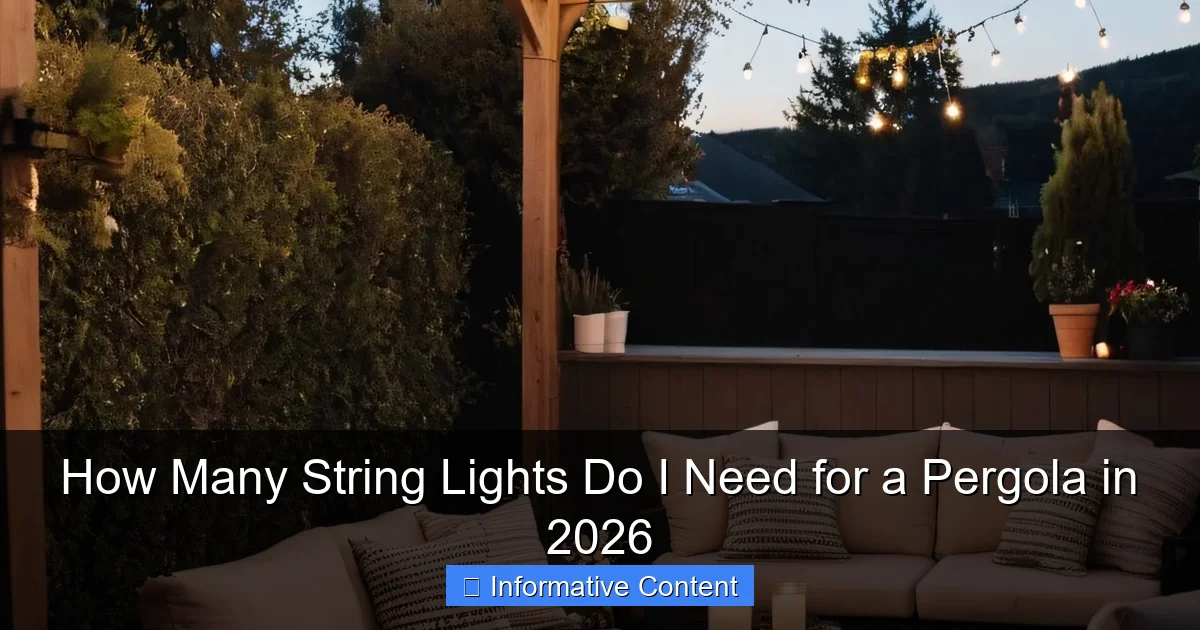
Visual guide about how many string lights do i need for a pergola
Image source: publicdomainpictures.net
Measuring Your Pergola’s Dimensions
Grab a measuring tape and jot down the following:
- Length and width: Measure the outer edges of your pergola from post to post. This tells you the total area you’re working with.
- Height: Measure from the ground to the top of the pergola beams. This affects how high you’ll hang the lights and how much wire you’ll need to reach.
- Beam spacing: If your pergola has multiple crossbeams, note the distance between them. This helps determine whether you’ll drape lights across the top or weave them between beams.
For example, if your pergola is 12 feet long and 10 feet wide with beams spaced every 2 feet, you’ll have a grid-like structure that’s perfect for a crisscross pattern. But if it’s a simple open design with just a single top beam, you might opt for a straight-line or zigzag layout.
Identifying Key Lighting Zones
Not every part of your pergola needs the same amount of light. Think about how you’ll use the space:
- Dining area: You’ll want brighter, more focused lighting here, especially if you’re using a table or grill.
- Seating nook: A softer, ambient glow works best for relaxing or conversation.
- Entry points: If your pergola has steps or a pathway leading to it, consider adding extra lights for safety.
Pro tip: Sketch a quick diagram of your pergola and mark these zones. It’ll help you visualize where to place the lights and how many strands you’ll need for each area.
Choosing the Right Type of String Lights
Not all string lights are created equal. In 2026, you’ll find a wide range of options, from classic incandescent bulbs to smart LEDs that change color with your mood. The type you choose will directly impact how many strands you need and how they’ll look in your space.
Incandescent vs. LED: What’s the Difference?
Incandescent lights give off a warm, traditional glow but are less energy-efficient and burn out faster. LEDs, on the other hand, are brighter, last longer, and use up to 80% less energy. For a pergola, I almost always recommend LEDs—they’re more durable, weather-resistant, and cost-effective in the long run.
For example, a 25-foot strand of incandescent lights might have 50 bulbs, but a similar LED strand could have 100 bulbs while using less power. That means you can use fewer strands or space them farther apart without sacrificing brightness.
Bulb Size and Spacing
String lights come in various bulb sizes and spacing options. Here’s how to choose:
- Bulb size: Smaller bulbs (like mini LEDs) create a delicate, fairy-light effect, while larger bulbs (like globe or Edison-style) give off a bolder, statement-making glow.
- Spacing: Lights can be spaced anywhere from 2 inches to 6 inches apart. Closer spacing means more bulbs per foot, which creates a denser, brighter look. Wider spacing gives a more subtle, scattered effect.
For a pergola, I recommend spacing lights 3–4 inches apart. It’s a sweet spot—bright enough to illuminate the space without feeling overcrowded. If you want a more dramatic look, go for 2-inch spacing. For a softer ambiance, 5–6 inches works well.
Smart and Color-Changing Options
In 2026, smart string lights are a game-changer. With app or voice control, you can dim the lights, change colors, or set schedules. Some even sync with music! These are great if you want versatility—like switching from warm white for dinner to blue for a late-night hangout.
But here’s the catch: smart lights often have fewer bulbs per strand, so you might need more strands to achieve the same coverage. Always check the product specs to see how many bulbs are included and how they’re spaced.
Calculating How Many Strands You Need
Now for the fun part—figuring out the exact number of string lights. This isn’t a one-size-fits-all answer, but with a little math, you can get it right the first time.
The 2-Foot Rule (and When to Break It)
A good starting point is the 2-foot rule: plan for one foot of string lights for every 2 feet of pergola length. For example, a 12-foot pergola would need about 6 feet of lights per row. But this is just a baseline—you’ll need to adjust based on your layout and desired brightness.
Here’s how to refine it:
- For a straight-line layout: Multiply your pergola’s length by 0.5. So a 12-foot pergola = 6 feet of lights per row. If you’re running multiple rows, multiply by the number of rows.
- For a crisscross or zigzag pattern: Add 20–30% more length to account for the extra wire. For example, 6 feet per row + 30% = 7.8 feet (round up to 8 feet).
- For a canopy effect: If you’re draping lights from one side to the other, measure the diagonal distance between posts and multiply by the number of strands.
Accounting for Overlap and Layering
Most people don’t use just one strand of lights. Layering is key to creating depth and avoiding dark spots. Here’s a simple formula:
- Single layer: 1 strand per 2 feet of length (use for subtle lighting).
- Double layer: 2 strands per 2 feet of length (great for dining areas).
- Triple layer or more: 3+ strands per 2 feet (for a dramatic, festival-like glow).
For example, a 12-foot pergola with double-layer lighting would need: (12 ÷ 2) × 2 = 12 feet of lights per row. If you’re running 3 rows (top, middle, and bottom), that’s 12 × 3 = 36 feet total.
Example: Lighting a 10×12 Foot Pergola
Let’s say your pergola is 10 feet wide and 12 feet long, with beams spaced every 2 feet. You want a crisscross pattern with medium brightness (4-inch bulb spacing).
- Total length per row: 12 feet + 30% (for zigzag) = 15.6 feet.
- Number of rows: 6 (one for each beam pair).
- Total lights needed: 15.6 × 6 = 93.6 feet.
Now, check your string light specs. If each strand is 25 feet long, you’d need 4 strands (93.6 ÷ 25 = 3.74, rounded up).
Hanging and Spacing Tips for the Perfect Look
You’ve calculated the number of strands—now it’s time to hang them. This is where the magic happens, but also where things can go wrong. A few simple tips will help you avoid common mistakes.
Choosing the Right Hanging Method
How you attach the lights will depend on your pergola’s design:
- Hooks or eye screws: The most common method. Drill small holes into the beams and screw in hooks. Space them evenly (every 12–18 inches) to support the weight.
- Zip ties or cable clips: Great for metal pergolas or if you don’t want to drill holes. Just wrap them around the beams and secure the lights.
- Adhesive clips: A no-damage option for wood or vinyl. Use outdoor-rated clips and test them in a small area first.
Pro tip: Leave a little slack in the wires—about 1–2 inches between each bulb. This creates a gentle curve and prevents the lights from looking too stiff.
Creating Depth with Layered Lighting
Layering isn’t just about brightness—it’s about creating visual interest. Try these techniques:
- Top layer: Hang one row of lights across the top beams for a classic look.
- Middle layer: Add a second row 6–12 inches below the top for extra glow.
- Ground-level lighting: Wrap lights around the posts or use small LED stakes near the edges to ground the space.
For a 10×12 foot pergola, I’d recommend 2–3 rows on top, spaced 8 inches apart, plus post lighting for balance.
Avoiding Common Mistakes
Even seasoned DIYers make these errors:
- Overcrowding: Too many lights can look chaotic. Stick to 2–3 strands per row unless you’re going for a bold look.
- Uneven spacing: Use a measuring tape or string guide to keep rows straight.
- Ignoring power access: Plan where your lights will plug in. Extension cords work, but outdoor-rated ones are a must.
Energy Efficiency, Safety, and Maintenance
Lighting your pergola isn’t just about aesthetics—it’s also about practicality. In 2026, energy efficiency and safety are more important than ever. Here’s how to keep your lights shining bright without breaking the bank or risking damage.
Choosing Energy-Efficient Options
LEDs are the clear winner here. A typical LED string light uses about 0.5 watts per bulb, while incandescent lights use 1–2 watts. That means a 100-bulb LED strand uses 50 watts, while the same incandescent strand uses 100–200 watts. Over time, that adds up—especially if you leave the lights on for hours.
Look for ENERGY STAR-rated lights or check the packaging for lumens (brightness) and wattage. A good rule of thumb: 10–20 lumens per square foot is enough for ambient lighting.
Weatherproofing and Safety
Outdoor lights need to withstand rain, wind, and UV exposure. Always check for an IP rating (like IP65) to ensure they’re waterproof. Also:
- Use outdoor-rated extension cords and GFCI outlets.
- Avoid overloading circuits—most outdoor outlets handle 15–20 amps.
- Inspect lights yearly for frayed wires or damaged bulbs.
Easy Maintenance Tips
To keep your lights looking fresh:
- Clean bulbs with a damp cloth every few months to remove dust and grime.
- Store lights in a dry place during winter (or use all-weather lights).
- Replace bulbs as needed—LEDs last 25,000+ hours, but it’s good to have spares.
Data Table: Quick Reference Guide
| Pergola Size (feet) | Layout Type | Bulb Spacing (inches) | Estimated Lights Needed (feet) | Number of 25-Foot Strands |
|---|---|---|---|---|
| 8×10 | Straight line | 4 | 40 | 2 |
| 10×12 | Crisscross | 3 | 94 | 4 |
| 12×14 | Zigzag | 4 | 100 | 4 |
| 15×20 | Canopy | 3 | 180 | 8 |
Remember, this is just a guide—adjust based on your preferences and pergola design. And always buy an extra strand or two just in case!
Final Thoughts: Light It Up the Right Way
Lighting your pergola isn’t just about numbers—it’s about creating a space that feels like home. Whether you’re going for a cozy glow or a dazzling display, the right string lights can transform your outdoor area into a year-round retreat. In 2026, with so many options available, there’s no excuse not to get it just right.
Start by measuring your pergola, choose high-quality LEDs with the right spacing, and use the formulas in this guide to calculate your needs. Don’t forget to layer the lights for depth and keep energy efficiency and safety in mind. And most importantly—have fun with it! Lighting is one of the easiest ways to personalize your space, so don’t be afraid to experiment with colors, patterns, and layouts.
When I first lit up my pergola, I made the mistake of using too few lights and ended up with a dim, underwhelming result. After adding a second layer and spacing them just right, the whole space came alive. It’s those little details that make all the difference. So grab your measuring tape, pick out your favorite lights, and get ready to enjoy your pergola like never before. The perfect glow is just a few strands away.
Frequently Asked Questions
How many string lights do I need for a pergola to achieve even coverage?
For even coverage, plan for 10–15 feet of string lights per linear foot of pergola. Measure the perimeter and roof beams, then multiply by the desired density (e.g., two strands for a layered look). Always round up to account for connectors or spacing.
What’s the best spacing for string lights on a pergola in 2026?
In 2026, most experts recommend spacing string lights 6–12 inches apart for optimal ambiance. For a pergola, drape lights along the beams or zigzag across the top, ensuring bulbs are evenly distributed to avoid dark spots.
Can I use battery-powered string lights for my pergola setup?
Yes, battery-powered string lights work well for pergolas without easy outlet access. Choose weather-resistant, LED options with timers for convenience. Just ensure the batteries are accessible for replacement or recharging.
How many string lights do I need for a large pergola (10×20 feet)?
For a 10×20-foot pergola, you’ll need roughly 200–300 feet of string lights. Cover the perimeter (60 feet) with 2–3 strands and add crisscross patterns across the roof, spacing strands 12 inches apart for balanced brightness.
Do I need special hardware to hang string lights on a pergola?
No special hardware is required, but use outdoor-rated hooks, zip ties, or clips to secure lights. For a polished look, attach lights to the pergola’s beams or rafters, ensuring they’re taut and weatherproof.
How do I calculate string lights for a pergola with irregular shapes?
For irregular pergolas, break the structure into smaller sections (e.g., rectangles, triangles) and measure each. Add 10–15 feet of lights per linear foot, adjusting for curves or angles. Test layouts with temporary clips before final installation.