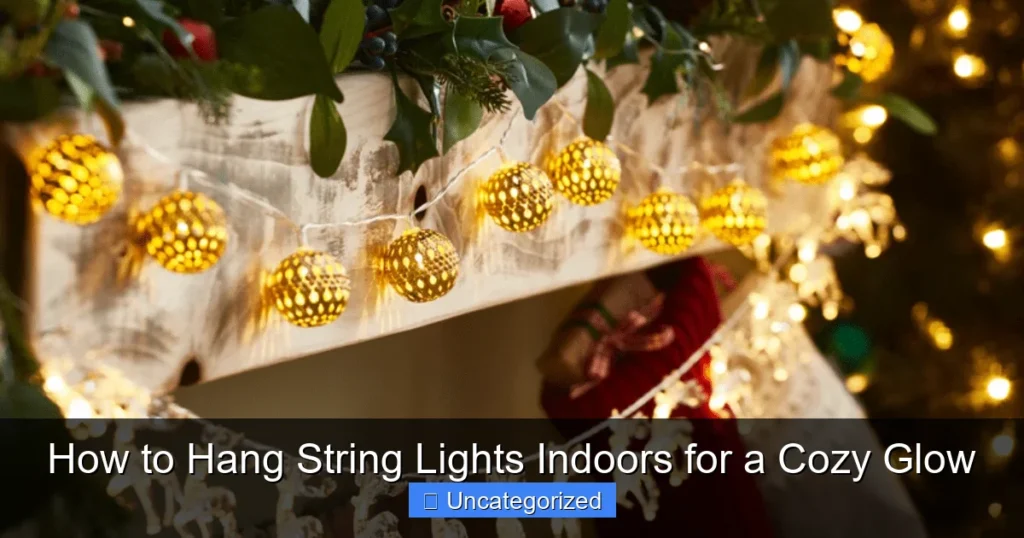
Featured image for how to make battery powered led light string
Create a custom battery-powered LED light string in minutes by connecting LEDs in parallel to a small battery pack using basic tools like wire, resistors, and a switch for control. No soldering required—just follow simple steps to ensure proper polarity and brightness, making it perfect for DIY decor, camping, or emergency lighting.
How to Make Battery Powered LED Light String in Simple Steps
Key Takeaways
- Gather materials first: LEDs, battery, wires, and resistors are essential.
- Test LED polarity: Match positive and negative leads correctly.
- Secure connections: Solder or tape wires to prevent short circuits.
- Use a switch: Add one for easy on/off control.
- Insulate exposed wires: Prevent shocks and ensure safety.
- Choose battery wisely: Match voltage to LED requirements.
Why This Matters / Understanding the Problem
Have you ever wanted to add soft, glowing lights to your bedroom, patio, or holiday décor—without dealing with messy wires or hunting for a nearby outlet? That’s where learning how to make battery powered LED light string in simple steps comes in handy.
Traditional string lights often require extension cords, power strips, or outdoor-rated outlets. But battery-powered LED lights give you total freedom. Whether you’re decorating a dorm room, creating a cozy reading nook, or lighting up a wedding arch, this DIY project is quick, affordable, and beginner-friendly.
Plus, making your own means you can customize brightness, color, length, and battery life to suit your needs. No more buying expensive pre-made sets that break after one season. With a few basic supplies and a little know-how, you can craft a reliable, portable, and stylish light string that works anywhere.
And the best part? You don’t need to be an electrician. This guide will walk you through the entire process, from picking parts to testing your finished project. By the end, you’ll have a custom LED string that’s perfect for any occasion.
What You Need
Before we dive into the steps, let’s gather everything you’ll need. The beauty of this project is that most materials are easy to find and budget-friendly.
- LED string lights (battery-ready or bare wire) – Choose 3V or 5V LEDs. Battery-powered versions often come with a small inline switch. For more control, buy bare LED strips with wire leads.
- Battery holder – Match it to your power source: AA (2 or 3 cells), AAA, or 9V battery. A 2xAA holder (3V) is ideal for most 3V LED strings.
- Batteries – Rechargeable NiMH or standard alkaline. Rechargeables save money and reduce waste.
- Wire strippers and cutters – For preparing and trimming wires safely.
- Soldering iron and solder – Optional but recommended for a durable, long-lasting connection. If you don’t have one, use wire nuts or heat-shrink connectors.
- Heat shrink tubing or electrical tape – For insulating and protecting connections.
- Small plastic or metal housing (optional) – A project box or pill container to hide the battery and wires neatly.
- Multimeter (optional but helpful) – To test voltage and check continuity before final assembly.
- Scissors or utility knife – For cutting tape or tubing.
- Hot glue gun (optional) – To secure components and strain relief.
You can find most of these at hardware stores, electronics shops, or online retailers like Amazon, Adafruit, or SparkFun. If you’re using pre-wired LED strings (like fairy lights), you might only need the battery holder and tape—no soldering required!
This setup works for any application: holiday décor, mood lighting, camping, emergency kits, or even kids’ crafts. Once you know how to make battery powered LED light string in simple steps, you can adapt it to almost any space.
Step-by-Step Guide to How to Make Battery Powered LED Light String in Simple Steps
Step 1: Choose Your LED Type and Power Source
Not all LEDs are created equal. Start by deciding what kind of light effect you want and where it will go.
For example:
- Fairy lights (micro LEDs on thin wire) – Great for wrapping around trees, headboards, or picture frames. Usually 3V and run on 2xAA batteries.
- LED strip lights (flexible PCB with SMD LEDs) – Better for long, even lighting under shelves or along edges. Often 5V or 12V, but 3V versions exist.
- Pre-wired battery-operated strings – Already have a switch and battery box. You just replace the battery compartment or upgrade it.
Check the label or product description. Look for voltage (V) and current (mA). Most small LED strings draw 20–60 mA, which means they’ll last 50–100+ hours on fresh AA batteries.
Match your battery holder to the LED’s voltage. For instance:
- 3V LEDs → 2xAA (3V) or 2xAAA (3V)
- 5V LEDs → USB power bank or 4xAA (6V with resistor)
- 9V LEDs → 9V battery holder (rare, but used for brighter strips)
Pro Tip: Use a multimeter to test your LED string’s voltage if unsure. Set it to DC voltage and touch the probes to the wire leads. Never connect LEDs directly to a battery without checking—overvoltage can burn them out!
Choosing the right combo now saves time and frustration later. This is the foundation of your project, so take your time here. Once you’ve picked your parts, you’re ready to move on to wiring.
Step 2: Prepare the Wires (Stripping and Cleaning)
Now it’s time to get your hands dirty—in a good way! If your LED string has exposed wire ends, skip to the next step. But if they’re sealed or insulated, you’ll need to strip them.
Use wire strippers to remove about ½ inch (1–1.5 cm) of insulation from both the positive (+) and negative (–) wires on the LED string.
- The positive wire is usually red or marked with a “+” symbol.
- The negative is black or plain copper.
Twist the bare copper strands tightly to prevent fraying. Do the same with the wires from the battery holder.
Warning: Don’t cut too deep! If you nick the copper core, the wire can break easily. Use the correct gauge notch on your stripper (usually 22–24 AWG for small LEDs).
If you’re working with a pre-made string that has a built-in switch and battery box, you can cut off the old battery holder and reuse the switch. Just strip the wires leading to the switch terminals.
Clean the stripped ends with a bit of alcohol or sandpaper if they look oxidized. Fresh, shiny copper makes better electrical contact.
This step ensures your connections will be solid and reliable. Poor stripping leads to loose connections, flickering lights, or total failure. So don’t rush it—take care of the details now.
Step 3: Connect the LED String to the Battery Holder
Now comes the fun part: connecting your lights to the power source. There are two main methods—soldering (best) or using wire connectors (good for beginners).
Option A: Soldering (Recommended for Durability)
- Heat your soldering iron (set to 300–350°C).
- Place the positive LED wire against the positive wire from the battery holder. Use a helping hand tool or tape to hold them together.
- Touch the iron to the wires, then feed solder into the joint. The solder should flow smoothly around the copper.
- Repeat for the negative wires.
Let the joints cool completely—don’t wiggle them while hot.
Option B: Wire Nuts or Heat-Shrink Connectors (No-Solder Method)
- Twist the positive LED wire with the positive battery wire clockwise.
- Screw on a small wire nut or slide a heat-shrink connector over the joint.
- Repeat for the negative side.
- If using heat-shrink, use a lighter or heat gun to shrink the tube until it grips tightly.
Pro Tip: Always connect positive to positive and negative to negative. Reversing polarity can damage some LEDs, especially addressable ones. If nothing lights up, try swapping the wires.
Once connected, gently tug each joint to make sure it’s secure. Loose connections are the #1 cause of flickering or dead lights.
Now, insert fresh batteries into the holder. If your LED string has an inline switch, turn it on. You should see your lights glow!
If they don’t light up, don’t panic. We’ll troubleshoot in the next step.
Step 4: Test and Troubleshoot
Testing early saves a lot of headaches. Before sealing everything up, make sure your circuit works.
Insert batteries and flip the switch (or press the battery holder’s button, if it has one). The LEDs should light up evenly.
Common issues and fixes:
- No lights? Check battery orientation. Try fresh batteries. Test the battery holder with a multimeter to confirm 3V output.
- Flickering or dim lights? Loose wire connection. Resolder or re-tighten the joint. Check for frayed wires or cold solder joints.
- Only some LEDs work? A break in the string or bad connection. Use a multimeter in continuity mode to trace the issue.
- LEDs burn out immediately? Overvoltage! You’re using too many batteries or the wrong type. Switch to a lower voltage or add a current-limiting resistor.
For longer strings, consider using a resistor if your voltage is slightly high. For example, a 100Ω resistor in series with a 4xAA (6V) setup can protect 3V LEDs. (Use Ohm’s Law: R = (V_supply – V_LED) / I)
Warning: Never leave batteries in the holder for weeks without use. They can leak and corrode the contacts. Remove them when not in use, especially with alkaline batteries.
Once everything works, move to the next step: protecting your connections.
Step 5: Insulate and Protect the Connections
A good connection is only as strong as its protection. Exposed wires can short out, break, or shock you (though low voltage is safe, it’s still best practice).
Here’s how to insulate:
- Cover each solder joint with heat-shrink tubing (best option). Slide the tube over the wire before soldering, then shrink it with a heat gun or hair dryer.
- If you used wire nuts, wrap the entire nut and wires with electrical tape in a spiral. Overlap each layer by half to create a watertight seal.
- For extra durability, add a drop of hot glue at the base of the wires. This acts as strain relief, preventing the wires from pulling out of the joint.
If you’re using a project box or battery enclosure, now’s the time to mount everything inside. Cut a small hole for the LED wires to exit, and secure the battery holder with double-sided tape or screws.
Label the positive and negative wires with tape or a marker—this helps during future repairs.
For outdoor use, consider sealing the entire connection with silicone sealant (after testing). This keeps moisture out and extends lifespan.
Insulation isn’t glamorous, but it’s essential. A single exposed wire can ruin your entire project—or worse, damage your batteries.
Step 6: Customize and Mount Your Light String
Now that your battery powered LED light string is working, let’s make it look amazing.
Here are some creative ideas:
- Wrap around a headboard or mirror – Use clear adhesive hooks or Command strips to hang without nails.
- Weave into a wreath or centerpiece – Tuck the battery pack inside for a clean look.
- Line a bookshelf or window frame – Use zip ties or small clips to keep the string straight.
- Create a “floating” effect – Hang the string from clear fishing line in a dark room.
- Use in a lantern or mason jar – Place the battery pack at the bottom, lights coiled inside.
For portability, attach a small carabiner or clip to the battery holder. Now you can hang it from a backpack, tent, or tree branch.
If you want to go further, add a timer circuit or remote control module (available cheaply online). These let you turn the lights on/off automatically or from a distance.
You can also swap LED colors—try warm white for cozy spaces, cool white for task lighting, or RGB for parties.
Customization is where your creativity shines. This is why knowing how to make battery powered LED light string in simple steps is so powerful—you’re not limited to store-bought options.
Step 7: Maintain and Extend Battery Life
Great lighting isn’t just about setup—it’s about sustainability. A few smart habits keep your lights glowing longer.
- Use rechargeable batteries – NiMH AAs last 500–1000 cycles. Save money and reduce waste.
- Turn off when not in use – Even if you have a switch, make it a habit.
- Store in a cool, dry place – Heat and humidity shorten battery life.
- Check connections every few months – Tighten loose wires, clean contacts.
- Use a low-power mode (if available) – Some LED strings have a “dim” setting to save energy.
For extended use, consider a USB power bank instead of disposable batteries. A 2000mAh power bank can run a small LED string for 20+ hours. Just connect the positive and negative wires to a USB breakout board.
Pro Tip: Label your battery pack with the expected run time. For example: “2xAA = ~80 hours”. This helps you plan replacements.
With proper care, your DIY light string can last for years—and be reused for every holiday, party, or cozy night in.
Pro Tips & Common Mistakes to Avoid
Even simple projects have pitfalls. Here’s what seasoned DIYers wish they’d known earlier.
Pro Tip #1: Always test your circuit before insulating. It’s much easier to fix a bad connection when it’s still exposed.
Pro Tip #2: Use silicone-coated wires if possible. They’re more flexible and less likely to break when bent.
Pro Tip #3: For outdoor use, choose waterproof LED strings and seal all connections. Look for “IP65” or “IP67” ratings.
Pro Tip #4: Add a small switch if your battery holder doesn’t have one. A simple toggle switch lets you turn lights on/off without removing batteries.
Common Mistake #1: Using the wrong battery type. A 9V battery with a 3V LED string will burn it out instantly. Always match voltage!
Common Mistake #2: Skipping insulation. A bare solder joint can short against metal surfaces, drain batteries, or create sparks.
Common Mistake #3: Overloading the circuit. Connecting too many LED strings in parallel can exceed the battery’s current limit. Use a power bank or external battery pack for large setups.
Common Mistake #4: Forgetting strain relief. If the LED string is pulled, the wires can break at the solder joint. Always secure the connection point.
By avoiding these mistakes and using the pro tips, your project will be safer, longer-lasting, and more professional-looking.
FAQs About How to Make Battery Powered LED Light String in Simple Steps
Q1: Can I use rechargeable batteries with any LED string?
Yes! Rechargeable NiMH batteries work great. They provide slightly less voltage (1.2V per cell vs. 1.5V for alkaline), but most 3V LED strings still work fine on 2xAA rechargeables. Just don’t use lithium AA batteries (3.7V) unless the LEDs are rated for higher voltage.
Q2: How long will my battery powered LED light string last?
It depends on the battery capacity and LED current. A typical 20mA LED string with 2xAA batteries (2500mAh) will last about 100 hours. Use the formula: Battery life (hours) = Battery capacity (mAh) ÷ LED current (mA). For example: 2500mAh ÷ 20mA = 125 hours.
Q3: Can I connect multiple LED strings together?
Yes, but only in parallel (positive to positive, negative to negative). Never connect them in series unless you increase the voltage. Also, make sure your battery can handle the total current. For example, three 20mA strings = 60mA total.
Q4: What if my LED string doesn’t have exposed wires?
You can carefully cut the insulation and expose the wires. Or, use a wire piercing connector (also called a “vampire tap”) to connect without cutting. These clip onto the wire and pierce the insulation to make contact.
Q5: Are these lights safe for kids?
Yes! Battery-powered LEDs run on low voltage (3V or less), so they’re safe for children. Just supervise young kids to prevent them from opening the battery compartment. Use a secure housing to keep batteries out of reach.
Q6: Can I make the lights flash or twinkle?
Absolutely! Buy LED strings with built-in flash modes, or add a blinker module between the battery and lights. These small circuits create twinkling, fading, or chasing effects.
Q7: What’s the easiest no-solder method?
Use alligator clip wires or JST connectors. Clip the LED wires to the battery holder, or plug them into a connector set. It’s fast, reversible, and perfect for temporary setups.
Final Thoughts
Learning how to make battery powered LED light string in simple steps opens up endless possibilities for creative lighting. Whether you’re brightening a dorm room, setting the mood for a date night, or adding sparkle to your next party, this DIY project gives you control, convenience, and charm.
You now have the skills to build a custom, portable light source that works anywhere—no outlet required. And with the tips, warnings, and FAQs in this guide, you’re equipped to avoid common pitfalls and keep your lights shining for years.
So grab your supplies, test your first connection, and let your creativity shine. Start small, experiment, and don’t be afraid to try new things. The next time you need lighting, you won’t reach for a store-bought set—you’ll make your own.
Remember: every expert was once a beginner. Your first light string might not be perfect, but it’s a step toward mastering a useful, fun, and eco-friendly skill.
Now go light up the world—one battery at a time.