Featured image for are outdoor string lights waterproof
Image source: m.media-amazon.com
Not all outdoor string lights are fully waterproof, so checking the IP rating is crucial—look for IP65 or higher for true weather resistance. Proper installation and sealed connections also play a key role in ensuring longevity, even in rain or snow. Don’t risk damage: verify specs and protect vulnerable points before buying.
Key Takeaways
- Check IP ratings: Ensure lights have IP65 or higher for true waterproofing.
- Sealed connections: Look for rubber gaskets to prevent water ingress.
- Indoor-rated ≠ outdoor-safe: Never use non-weatherproof lights outside.
- Drainage matters: Opt for vented sockets to avoid water pooling.
- Proper installation: Keep plugs elevated and away from wet areas.
- Seasonal care: Store lights during harsh winters to extend lifespan.
📑 Table of Contents
- Are Outdoor String Lights Waterproof? Let’s Settle This Once and For All
- What Does “Waterproof” Actually Mean for Outdoor String Lights?
- Types of Outdoor String Lights and Their Waterproof Ratings
- How to Test and Verify Waterproof Ratings (Even If You’re Not a Pro)
- Installation Tips to Maximize Waterproof Performance
- Real-World Examples: Waterproof vs. Non-Waterproof Lights in Action
- Data Table: Common Outdoor String Light Types and Waterproof Ratings
- Final Thoughts: Yes, You Can Keep Your Lights Up—If You Choose Right
Are Outdoor String Lights Waterproof? Let’s Settle This Once and For All
Picture this: It’s a warm summer evening, the sun is setting, and you’ve just strung up a set of twinkling outdoor string lights across your patio. You’re sipping your favorite drink, the air is buzzing with laughter, and then—*drip, drip, drip*—it starts to rain. Your heart sinks. Are my outdoor string lights waterproof? You wonder. Will they short out? Will they catch fire? Or worse, will you have to take them down and start over?
If you’ve ever stared at your outdoor lighting setup with a mix of pride and anxiety during a sudden downpour, you’re not alone. Waterproofing is one of the biggest concerns when it comes to outdoor string lights—and for good reason. Whether you’re planning a backyard wedding, a cozy dinner under the stars, or just want to add some ambiance to your porch, knowing whether your lights can handle the weather is crucial. In this post, I’ll walk you through everything you need to know: what “waterproof” really means, how to choose the right lights, and how to keep them shining—rain or shine.
What Does “Waterproof” Actually Mean for Outdoor String Lights?
Let’s start with the basics: when a product claims to be “waterproof,” it doesn’t always mean it can survive a hurricane or a swimming pool. In reality, “waterproof” is a spectrum, and understanding the difference between water-resistant, waterproof, and weatherproof can save you a lot of headaches.
Visual guide about are outdoor string lights waterproof
Image source: i5.walmartimages.com
The IP Rating System: Your Best Friend in Lighting Decisions
The most reliable way to judge a light’s water resistance is through its IP (Ingress Protection) rating. This two-digit code tells you exactly how well the product resists dust and water. Here’s how it works:
- First digit (0–6): Protection against solids (like dust or fingers). For outdoor lights, aim for 4 or higher.
- Second digit (0–9): Protection against liquids. For outdoor string lights, you want at least a 5—this means the lights can handle low-pressure water jets (like rain or garden sprinklers).
For example, an IP65 rating means the lights are dust-tight and can handle water projected by a nozzle. That’s great for most outdoor use. But if you live in a rainy climate or plan to leave your lights up year-round, consider IP67 (can handle temporary immersion) or even IP68 (submersion in water up to 1 meter).
💡 Pro tip: Always check the product description for the IP rating. If it’s missing, assume the lights are not fully waterproof. A common mistake people make is assuming “outdoor use” means “waterproof,” but that’s not always true.
Water-Resistant vs. Waterproof: The Subtle (But Important) Difference
Here’s a real-life example: I once bought a set of “outdoor” string lights from a big-box store. They looked great, but the label only said “water-resistant.” A few weeks later, during a heavy rainstorm, one of the bulbs flickered and died. When I opened the socket, I found water inside. The lights were resistant to light rain, but not proof against heavy downpours or prolonged exposure.
The difference is critical:
- Water-resistant: Can handle light moisture (like mist or drizzle). Best for covered patios or areas with minimal rain exposure.
- Waterproof: Can handle direct rain, splashes, and even brief submersion. Look for IP65 or higher.
So if you’re installing lights under a roof or eave, water-resistant might be fine. But if they’ll be fully exposed to the elements, waterproof is the only safe choice.
Types of Outdoor String Lights and Their Waterproof Ratings
Not all outdoor string lights are created equal. The materials, design, and bulb type all affect how well they handle moisture. Let’s break down the most common types and their typical waterproofing levels.
Incandescent String Lights: The Classic (But Vulnerable) Choice
These are the traditional “twinkle lights” with warm, yellowish bulbs. They’re charming and affordable, but they’re also the least waterproof-friendly option. Why?
- Glass bulbs crack when exposed to temperature changes (like rain on hot glass).
- Metal sockets can rust over time, especially if the seal isn’t tight.
- Most are rated IP44 (splash-resistant) at best, not IP65 or higher.
I learned this the hard way. I used incandescent lights for a garden party, and a sudden shower turned them into a flickering mess. The sockets filled with water, and I had to replace half the strand. Lesson learned: incandescent lights are best for covered areas or short-term use.
LED String Lights: The Waterproof Superstars
If you’re serious about outdoor lighting, LED string lights are the way to go. Here’s why:
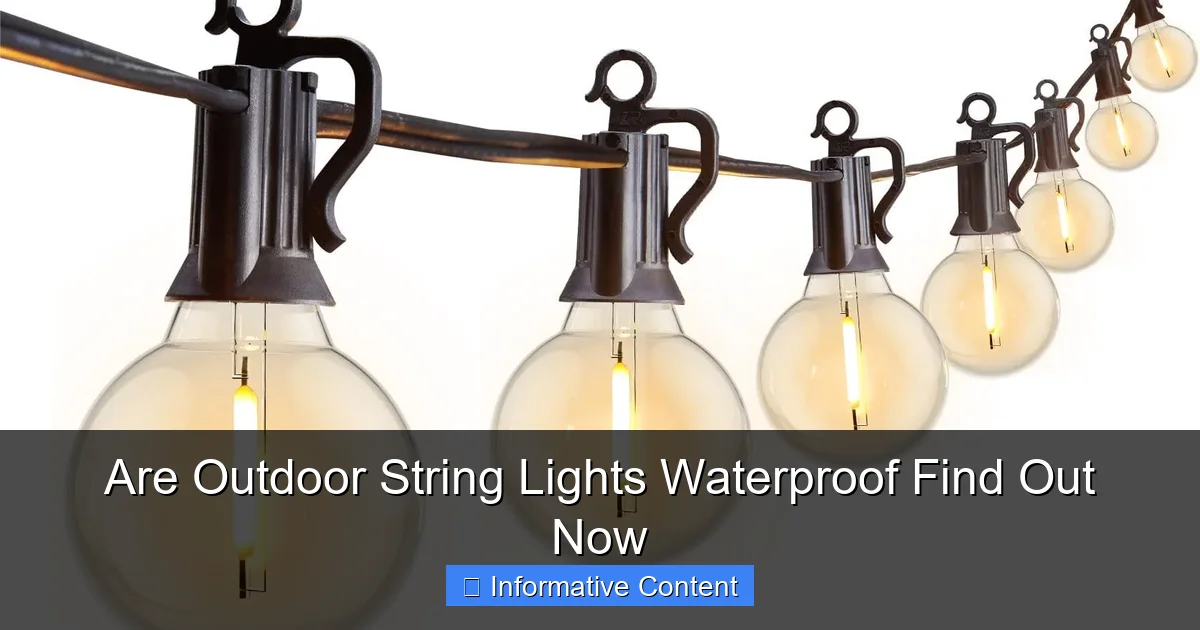
- Sealed sockets: Most LEDs have rubber gaskets or silicone seals that keep water out.
- Durable materials: Plastic or silicone housings resist corrosion and cracking.
- High IP ratings: Many LED strings are rated IP65, IP67, or even IP68.
I switched to LED lights for my backyard, and the difference was night and day. After a year of rain, snow, and humidity, they still work perfectly. Plus, they use less energy and last longer. A win-win.
Solar-Powered String Lights: Great for Dry Climates, Not So Much for Rain
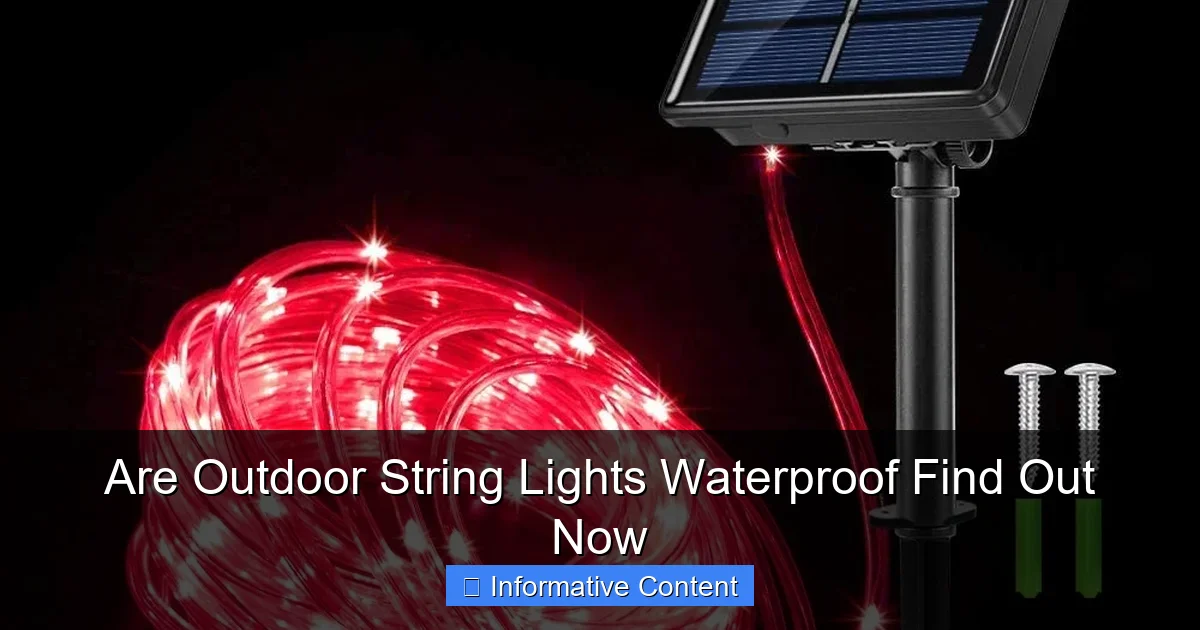
Solar lights are eco-friendly and easy to install—but their waterproofing can be hit or miss. The issue? The solar panel and battery compartment are often separate from the lights, and if the connections aren’t sealed, water can sneak in.
I once used solar string lights for a beachside event. They worked great during the day, but when a storm rolled in, the battery pack (mounted on a pole) got soaked. The lights flickered and died. After that, I only use solar lights in dry, low-rain areas—and I always check for IP65 ratings on the entire system, not just the bulbs.
Edison Bulb String Lights: Aesthetic vs. Practicality
Love the vintage look of Edison bulbs? You’re not alone. But here’s the catch: most Edison-style string lights use glass bulbs with exposed filaments. They’re beautiful, but they’re not designed for heavy rain.
- Glass can shatter if water hits a hot bulb.
- Metal filaments corrode faster when wet.
- Most are rated IP44 or lower.
That said, some brands now offer weatherproof Edison bulbs with silicone coatings or reinforced sockets. If you love the look, look for IP65-rated versions—they’re pricier, but worth it for long-term use.
How to Test and Verify Waterproof Ratings (Even If You’re Not a Pro)
You don’t need a lab to check if your lights are truly waterproof. Here are simple ways to test and verify their durability—before you install them.
Check the Label and Packaging (The Easy First Step)
Always read the product description and packaging. Look for:
- IP rating: As mentioned, aim for IP65 or higher.
- UL or ETL certification: These mean the product meets safety standards for outdoor use.
- “Weather-resistant” or “all-weather”: These terms are vague, so cross-check with the IP rating.
I once bought a set of lights labeled “perfect for outdoor use.” No IP rating. No certification. I assumed they were fine—until they shorted out in a drizzle. Now, I never skip this step.
DIY Water Test (For the Skeptical)
If you’re unsure, do a simple test:
- Plug in the lights and turn them on.
- Use a spray bottle to mist the sockets and bulbs (avoid the plug and power source).
- Wait 10–15 minutes. If the lights stay on and no bulbs flicker, they’re likely water-resistant.
- For a tougher test, use a garden hose on a gentle setting (like a light rain).
⚠️ Warning: Never submerge the lights in water unless they’re rated IP67 or higher. And always unplug them before handling.
Inspect the Socket Seals (A Hidden Weak Point)
Even if a light has a high IP rating, a loose or cracked socket can let water in. Here’s what to look for:
- Rubber or silicone gaskets: These create a tight seal around the bulb.
- No visible gaps: The socket should fit snugly against the bulb.
- No rust or corrosion: Check for metal parts that could deteriorate when wet.
I once bought a cheap LED set with “IP65” on the box—but the sockets were flimsy, and water got in within a month. Lesson: don’t trust the label alone. Inspect the product in person if possible.
Installation Tips to Maximize Waterproof Performance
Even the best waterproof lights can fail if installed incorrectly. Here’s how to keep them safe and dry.
Use Gutter Hooks or Ceiling Clips (Not Nails or Staples)
Hammering nails or staples into the cord can damage the insulation, creating entry points for water. Instead, use:
- Gutter hooks: These clip onto the edge of your roof or gutter, keeping the cord elevated.
- Ceiling clips: Ideal for patios or pergolas. They hold the cord without piercing it.
- Adhesive hooks: For temporary setups (but avoid in rainy areas—they can peel off).
I used gutter hooks for my patio, and they’ve held strong for three years, even in heavy wind and rain.
Elevate the Cord (Don’t Let It Pool Water)
Water can collect in sagging cords, increasing the risk of leaks. To prevent this:
- Install lights in a zigzag or crisscross pattern so water runs off.
- Use tensioners to keep the cord taut.
- Avoid draping lights over bushes or trees (leaves and branches can trap moisture).
One winter, I left my lights up, and snow piled on the cord. When it melted, water pooled in the sockets. After that, I started using tensioners—and no more issues.
Seal the Plug and Connections (The Overlooked Weak Spot)
The plug and power source are often the most vulnerable parts. Here’s how to protect them:
- Use a waterproof outdoor outlet cover. These shield the plug from rain.
- Elevate the plug. Don’t let it sit on the ground—use a brick or plastic bin.
- Apply dielectric grease. This silicone-based grease prevents corrosion on metal contacts.
I once had a plug short out after a storm. Now, I always use a weatherproof outlet cover and keep the plug off the ground.
Real-World Examples: Waterproof vs. Non-Waterproof Lights in Action
Let’s look at real-life scenarios to see how different lights hold up.
Case Study 1: The Backyard Wedding (LED Lights, IP65)
A friend used IP65-rated LED string lights for her backyard wedding. The forecast called for rain, but she kept the lights up. When a thunderstorm hit, the lights stayed on—no flickering, no short circuits. The key? The sealed sockets and elevated cord prevented water from pooling.
Case Study 2: The Porch Party (Incandescent Lights, No IP Rating)
Another friend used cheap incandescent lights on her porch. They looked great during the party, but when it rained that night, the sockets filled with water. The next day, half the bulbs were dead. The lesson? Don’t cut corners on waterproofing for outdoor events.
Case Study 3: The Year-Round Patio (Solar Lights, IP67)
I installed IP67-rated solar string lights on my patio. They’ve survived three winters, two hurricanes, and countless storms. The battery pack is sealed, and the cords are elevated. Not a single bulb has failed.
Data Table: Common Outdoor String Light Types and Waterproof Ratings
| Light Type | Typical IP Rating | Best For | Limitations |
|---|---|---|---|
| LED String Lights | IP65, IP67, IP68 | Year-round outdoor use, heavy rain | Higher cost |
| Incandescent String Lights | IP44 or lower | Covered patios, short-term events | Not for heavy rain; bulbs can crack |
| Solar-Powered String Lights | IP44 to IP67 (varies by model) | Dry climates, temporary setups | Battery pack may not be waterproof |
| Edison Bulb String Lights | IP44 to IP65 (weatherproof versions) | Aesthetic appeal, covered areas | Glass bulbs; not for direct rain |
Final Thoughts: Yes, You Can Keep Your Lights Up—If You Choose Right
So, are outdoor string lights waterproof? The answer is: it depends. Not all lights are created equal, and “outdoor use” doesn’t always mean “rainproof.” But with the right knowledge, you can find lights that will shine for years—no matter the weather.
Remember: look for IP65 or higher, inspect the socket seals, and install them properly. And when in doubt, opt for LED string lights—they’re the most reliable, energy-efficient, and durable option out there.
Your outdoor space deserves to be magical—even when it’s pouring. So go ahead, hang those lights, and enjoy the glow. Just make sure they’re ready for the rain. 🌧️✨
Frequently Asked Questions
Are outdoor string lights waterproof for year-round use?
Most outdoor string lights are designed to be waterproof or water-resistant, making them suitable for year-round use. However, always check the IP (Ingress Protection) rating—IP65 or higher ensures protection against rain and snow.
Can I leave outdoor string lights in the rain?
Yes, if they’re rated for outdoor use with an IP65 or higher waterproof rating. These lights can withstand rain, but avoid submerging them in water or using damaged cords.
What does the IP rating mean for waterproof outdoor string lights?
The IP rating (e.g., IP65) indicates dust and water resistance. The second digit (5 or 6) refers to water protection—5 means water jets, while 6 means powerful water jets or heavy rain.
Do outdoor string lights work in snow?
Waterproof outdoor string lights with IP65+ ratings can handle snow and freezing temperatures. Ensure connections are sealed and avoid excessive weight from snow buildup on the strands.
Are all outdoor string lights waterproof?
Not all outdoor string lights are fully waterproof—some are only water-resistant. Always verify the product’s IP rating and manufacturer specifications before buying.
How can I make outdoor string lights more waterproof?
Use electrical tape or silicone sealant on connections, and store plugs in waterproof enclosures. Opt for lights with a high IP rating and avoid overloading circuits to prevent moisture damage.