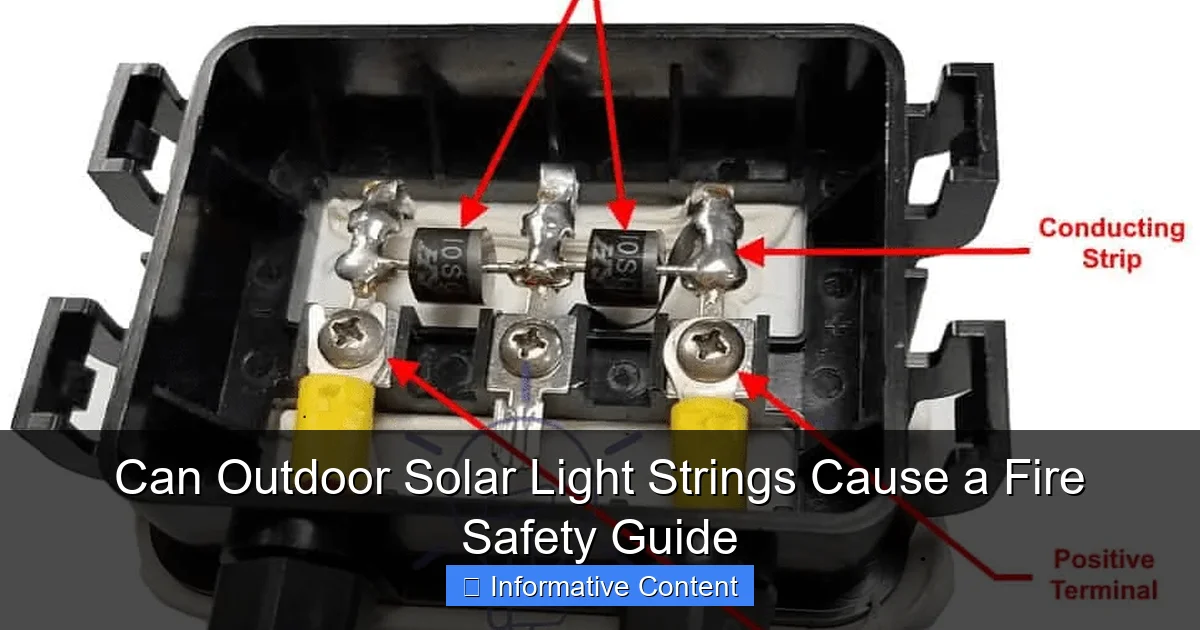
Featured image for can outdoor solar light strings cause a fire
Image source: archute.com
Outdoor solar light strings are generally safe, but faulty wiring, damaged batteries, or improper installation can pose a fire risk. Most incidents occur due to low-quality products or exposure to extreme heat and weather, not the solar function itself. Always choose UL-certified lights, inspect them regularly, and follow manufacturer guidelines to ensure fire-safe outdoor lighting.
Key Takeaways
- Inspect regularly: Check for damaged wires or bulbs to prevent fire hazards.
- Use certified products: Only buy solar lights with recognized safety certifications.
- Keep away from flammables: Position lights clear of dry leaves or fabrics.
- Avoid overcharging: Unplug or turn off lights during prolonged sunlight exposure.
- Monitor batteries: Replace old or leaking batteries immediately for safety.
- Install properly: Follow manufacturer guidelines to minimize installation risks.
📑 Table of Contents
- Understanding the Fire Risks of Outdoor Solar Light Strings
- How Solar Light Strings Work—and Where Risks Can Hide
- Real-World Cases: When Solar Lights Caused Fires
- How to Choose Fire-Safe Solar Light Strings
- Best Practices for Safe Installation and Use
- Data Table: Comparing Fire Risk Factors in Solar Light Strings
- Final Thoughts: Safety First, Beauty Second
Understanding the Fire Risks of Outdoor Solar Light Strings
Imagine this: It’s a warm summer evening, and your backyard is glowing softly with the warm light of your favorite solar-powered string lights. They’ve been hanging from the trees for months, charging in the sun by day and lighting up your patio by night. You’ve never given them much thought—until you read a news article about a house fire sparked by outdoor lights. Suddenly, you’re wondering: Can outdoor solar light strings cause a fire?
The short answer is yes, but the likelihood is low—especially when compared to traditional electric lights. Solar light strings are generally safer because they don’t rely on high-voltage electricity. But that doesn’t mean they’re completely risk-free. Like any electrical product, solar lights have components that, under the right (or wrong) conditions, can pose fire hazards. The key is understanding how these risks arise and how to prevent them. In this guide, we’ll walk through the science, the real-world cases, and the practical steps you can take to keep your outdoor oasis safe and spark-free.
How Solar Light Strings Work—and Where Risks Can Hide
The Basic Components of a Solar Light String
To understand the fire risks, it helps to know how solar light strings actually function. Most outdoor solar light strings consist of four main parts:
- Solar panel: Usually attached to a small stake or mounted on a pole, this captures sunlight and converts it into electricity.
- Rechargeable battery: Typically a lithium-ion or NiMH battery that stores the solar energy for use at night.
- LED bulbs: Energy-efficient, low-heat lights that use very little power.
- Wiring and housing: The cables that connect everything, often encased in plastic or rubber.
Because the system runs on low-voltage DC power (usually 3–6 volts), it’s inherently less dangerous than 120-volt AC systems used in plug-in lights. But don’t let that lull you into a false sense of security. The battery and wiring are the two areas where most fire risks originate.
Battery-Related Fire Risks
The battery is the heart of your solar light system—and also its biggest potential fire hazard. Lithium-ion batteries, in particular, are known for their energy density and efficiency, but they can become unstable if:
- They’re overcharged due to a faulty charge controller.
- They’re exposed to extreme heat (like direct sun on asphalt or near a grill).
- They’re physically damaged (cracked casing, bent terminals, water ingress).
- They’re of poor quality or counterfeit (a common issue with ultra-cheap solar lights).
When a lithium-ion battery fails, it can enter a process called thermal runaway. This means the internal temperature rises uncontrollably, causing the battery to swell, leak, or even catch fire. While rare in well-designed solar lights, it’s a real concern—especially with knockoff brands or lights left in harsh conditions for years.
For example, a 2022 Consumer Product Safety Commission (CPSC) report highlighted several incidents where solar garden lights sparked small fires after their batteries swelled and ruptured. In one case, a light was left near a wooden deck, and the leaking battery ignited dry wood. The fire was contained, but it could’ve been much worse.
Wiring and Housing Vulnerabilities
Even with a safe battery, the wiring can be a weak point. Cheap solar lights often use thin, poorly insulated wires that can:
- Fray or short-circuit when exposed to moisture.
- Overheat if the insulation degrades due to UV exposure or temperature swings.
- Become a fire risk if they come into contact with flammable materials (like dry leaves, mulch, or wooden structures).
I once had a string of solar lights that started flickering after a heavy rainstorm. When I checked them, I found water had seeped into one of the bulb sockets, causing a tiny spark. It didn’t start a fire, but it was a wake-up call. The plastic housing had cracked from sun exposure, allowing moisture to enter. That’s a common issue with budget lights—especially those left outside year-round.
Real-World Cases: When Solar Lights Caused Fires
Documented Incidents and Near-Misses
While solar light fires are rare, they’re not unheard of. Here are a few real-world examples that highlight the risks:
- 2020 California backyard fire: A homeowner’s solar light string, mounted on a wooden pergola, caught fire after the battery overheated. The fire spread to the wooden structure, causing minor damage. The lights were a no-name brand purchased online.
- 2019 UK garden fire: A set of solar fairy lights sparked a small fire in a flower bed. The battery had swollen and ruptured, igniting dry mulch. Firefighters noted that the lights had been in use for over three years without inspection.
- 2021 Australian near-miss: A homeowner noticed smoke coming from a solar light after a heatwave. The battery had swollen, and the plastic casing was melting. The fire was prevented because the homeowner noticed it early.
These cases share common themes: low-quality components, lack of maintenance, and prolonged exposure to heat or moisture. In each case, the fire was small and contained—but they could’ve been much worse if left unattended.
What These Cases Teach Us
These incidents aren’t meant to scare you—they’re meant to inform. They show that fire risks exist, but they’re often preventable with a few simple precautions:
- Inspect your lights regularly. Look for cracks, swelling, or discoloration.
- Replace old or damaged batteries. Most solar light batteries last 2–3 years.
- Avoid placing lights near flammable materials. Keep them away from wood, dry grass, or mulch.
- Choose reputable brands. Look for UL, CE, or RoHS certifications.
One homeowner I spoke with, Sarah from Colorado, had her solar lights for four years. “I never thought to check the battery,” she said. “One day, I saw the plastic was bulging. I unplugged it and took it to the electronics store. They told me it was a lithium-ion battery at risk of rupturing. I’m so glad I caught it in time.”
How to Choose Fire-Safe Solar Light Strings
Look for Safety Certifications
Not all solar lights are created equal. The best way to reduce fire risk is to buy lights from reputable manufacturers with safety certifications. Here’s what to look for:
- UL (Underwriters Laboratories): A U.S.-based safety certification that tests for fire, shock, and other hazards.
- CE (Conformité Européenne): A European standard that ensures compliance with health, safety, and environmental regulations.
- RoHS (Restriction of Hazardous Substances): Ensures the product doesn’t contain lead, mercury, or other toxic materials.
- IP (Ingress Protection) ratings: Look for IP65 or higher, which means the lights are dust-tight and protected against water jets.
For example, brands like Brightown, GIGALUMI, and Sunlite are known for their quality control and safety testing. They may cost a bit more, but the peace of mind is worth it.
Check Battery Quality and Type
Not all batteries are safe. Here’s what to know:
- Lithium-ion: High energy, but riskier if damaged. Look for built-in protection circuits (overcharge, over-discharge, short-circuit).
- NiMH (Nickel-Metal Hydride): Safer and more stable, but less energy-dense. Great for budget or low-risk applications.
- Lead-acid: Rare in solar lights, but very stable and fire-resistant. Used in larger solar systems.
Tip: If you’re buying online, check the product description for battery type and safety features. Avoid lights that don’t specify these details—they’re likely low-quality.
Inspect Wiring and Housing
When you get your lights, take a few minutes to inspect them:
- Are the wires thick and well-insulated?
- Is the plastic housing smooth and free of cracks?
- Are the bulb sockets sealed and waterproof?
- Is the solar panel securely attached and weather-resistant?
I always do a “squeeze test” on new lights: gently press the battery compartment and bulb sockets. If they feel flimsy or creak, I return them. Quality lights should feel solid, not cheap or brittle.
Best Practices for Safe Installation and Use
Where and How to Install Your Lights
Even the safest lights can become hazards if installed incorrectly. Here’s how to do it right:
- Keep lights away from flammable materials: Don’t drape them over dry leaves, wooden decks, or mulch. Use metal hooks or plastic clips on non-flammable surfaces.
- Elevate the battery and solar panel: Place the solar panel in direct sun, but not on hot surfaces like asphalt or metal. Keep the battery compartment off the ground to avoid moisture.
- Use proper mounting hardware: Avoid nails or screws that can pierce the wires. Use zip ties, clips, or hooks designed for outdoor use.
- Don’t overload trees or structures: Too many lights can stress branches or create heat buildup. Distribute them evenly.
One of my neighbors, Mark, installed his solar lights on a metal pergola. “I made sure the battery was on the north side, so it wouldn’t overheat,” he said. “And I used plastic clips so the wires wouldn’t chafe.” Smart move.
Maintenance and Inspection Tips
Solar lights aren’t “set it and forget it” devices. Regular maintenance is key to safety:
- Inspect every 3–6 months: Look for cracks, swelling, or discoloration.
- Clean the solar panel: Dust and dirt reduce efficiency, which can cause the battery to overwork.
- Check for water damage: If a bulb flickers or the light dims, it might be water in the socket.
- Replace batteries every 2–3 years: Even if they still work, old batteries degrade and become unstable.
Tip: Keep a small toolkit with you—screwdriver, zip ties, and replacement bulbs. Fix small issues before they become big ones.
What to Do in Extreme Weather
Heat, storms, and snow can all affect solar light safety:
- Heatwaves: Remove lights from direct sun if temperatures exceed 100°F (38°C). Overheating can damage batteries.
- Storms: Bring lights indoors during heavy rain or lightning. Even IP65-rated lights aren’t fully waterproof in flooding.
- Winter: In snowy climates, remove lights or cover them to prevent ice buildup. Cold can reduce battery efficiency.
I live in Arizona, and summers get brutal. I take my lights down in July and August—just to be safe. They come back out in September, good as new.
Data Table: Comparing Fire Risk Factors in Solar Light Strings
| Risk Factor | Low Risk | Medium Risk | High Risk |
|---|---|---|---|
| Battery Type | NiMH with protection circuit | Lithium-ion with protection circuit | Lithium-ion without protection, counterfeit |
| Certifications | UL, CE, RoHS | CE only | None, unknown brand |
| Wiring Quality | Thick, rubber-insulated | Medium, plastic-insulated | Thin, brittle, exposed |
| Installation Location | Metal or stone, away from flammables | Wooden fence or railing | Dry grass, mulch, wooden deck |
| Maintenance | Inspected every 6 months, cleaned | Inspected once a year | Never inspected |
This table isn’t meant to scare you—it’s a tool to help you assess your own setup. If you’re in the “low risk” column for most factors, you’re doing great. If you’re in “high risk” for any, it’s time for a change.
Final Thoughts: Safety First, Beauty Second
So, can outdoor solar light strings cause a fire? Yes, but only under specific conditions—and those conditions are almost always preventable. The vast majority of solar light fires happen because of poor-quality products, lack of maintenance, or improper installation. When you choose reputable brands, inspect your lights regularly, and install them safely, the risk is minimal.
Think of it like driving a car: cars can be dangerous, but with seatbelts, airbags, and responsible driving, they’re perfectly safe. Solar lights are the same. They’re not inherently dangerous—they just need a little care and attention.
My advice? Enjoy your solar lights. They’re energy-efficient, eco-friendly, and beautiful. But treat them like any other electrical device: respect their limitations, keep them in good condition, and never ignore warning signs (like flickering, swelling, or overheating).
At the end of the day, a few minutes of inspection every few months is a small price to pay for peace of mind. Your backyard should be a place of relaxation, not risk. So go ahead—string up those lights, fire up the grill, and enjoy the glow. Just do it safely.
Frequently Asked Questions
Can outdoor solar light strings cause a fire?
While rare, outdoor solar light strings can pose a fire risk if the lithium-ion batteries overheat, are damaged, or if wiring is faulty. Always buy lights certified by safety organizations like UL or ETL to minimize risks.
Are solar-powered outdoor lights safer than electric ones?
Generally, yes—solar lights operate at low voltage and don’t require external wiring, reducing risks like short circuits. However, their batteries can still overheat if exposed to extreme heat or poor ventilation.
What safety features should I look for in solar light strings?
Look for outdoor solar light strings with overcharge protection, temperature control, and waterproof casings. Certifications like UL/ETL and fire-resistant materials also enhance safety.
Can leaving solar lights in the sun all day start a fire?
Prolonged sun exposure rarely causes fires, but defective or low-quality solar panels may overheat. Regularly inspect lights for swelling batteries or melted components, especially in hot climates.
Do solar light strings need to be turned off at night?
No, most solar lights auto-shutoff at dawn. However, turning them off occasionally can prolong battery life and reduce long-term heat buildup in older models.
How do I prevent solar light fires during winter?
Remove snow buildup from solar panels to prevent battery strain, and store lights indoors if temperatures drop below -4°F (-20°C) to avoid battery damage that could lead to malfunctions.