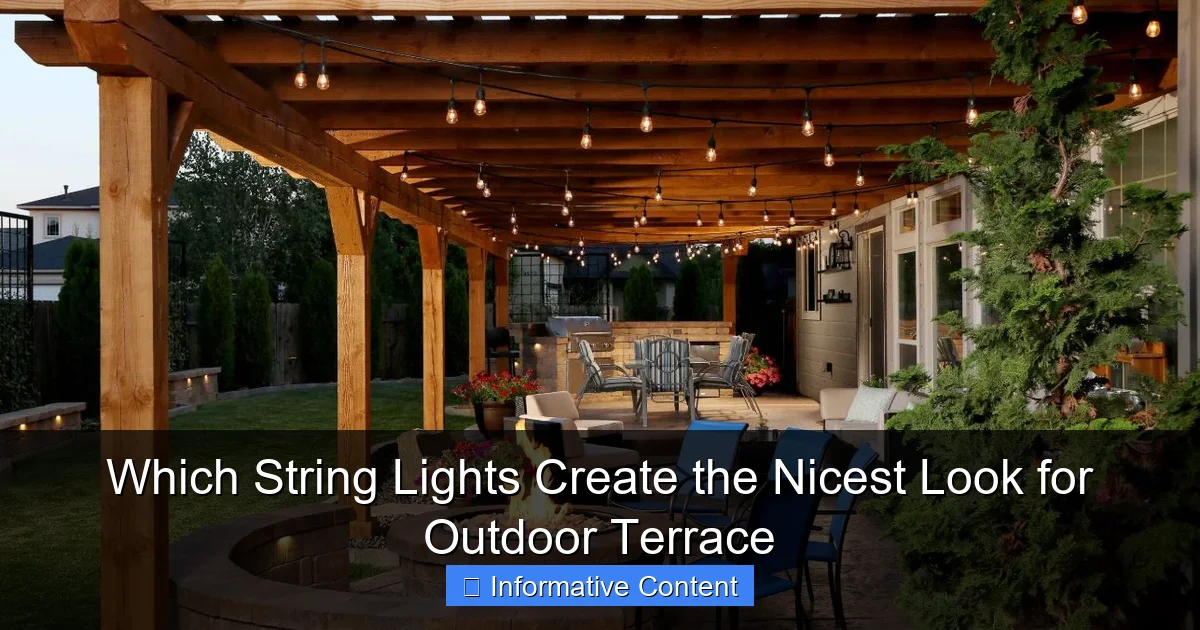
Featured image for which string lights create the nicest look for outdoor terrace
Image source: cdn.homedit.com
For the most enchanting outdoor terrace ambiance, warm white Edison-style string lights deliver timeless charm and soft, inviting glow. Their exposed filaments and vintage design enhance aesthetics while providing functional illumination—ideal for dining, lounging, or entertaining. Durable, weather-resistant options with dimmable LEDs ensure both beauty and year-round versatility.
Key Takeaways
- Choose warm white LEDs: They create a cozy, inviting ambiance for terraces.
- Opt for dimmable lights: Adjust brightness to match any mood or occasion.
- Use weatherproof designs: Ensure durability and safety in outdoor conditions.
- Pick Edison-style bulbs: Add vintage charm with exposed filament aesthetics.
- Space bulbs evenly: Achieve balanced, professional-looking illumination across spaces.
- Mix light types: Combine string and fairy lights for layered visual appeal.
📑 Table of Contents
- Why String Lights Are a Game-Changer for Outdoor Terraces
- 1. Types of String Lights: Which Style Suits Your Terrace?
- 2. Color Temperature: Warm vs. Cool vs. Multicolor
- 3. Placement and Hanging Techniques: Where and How to Hang
- 4. Power Source and Weather Resistance: Practical Must-Haves
- 5. Smart Features and Customization: The Future of Outdoor Lighting
- 6. Data Table: Quick Comparison of Top String Lights for Terraces
- Final Thoughts: Creating Your Perfect Outdoor Glow
Why String Lights Are a Game-Changer for Outdoor Terraces
Imagine this: It’s a warm summer evening. You’re sitting on your terrace, barefoot, a glass of wine in hand. The sun has just dipped below the horizon, and suddenly, your space transforms. Not because of expensive furniture or a fancy grill, but because of soft, twinkling string lights gently swaying in the breeze. That’s the magic of outdoor lighting. It doesn’t just illuminate—it sets a mood, invites conversation, and turns your terrace into a personal sanctuary.
But here’s the thing: Not all string lights are created equal. Some cast harsh, clinical glows. Others flicker like they’re about to die. And then there are those rare gems that make your terrace look like it belongs in a magazine. So, how do you pick the ones that create the nicest look for your outdoor space? After years of testing, tweaking, and even a few DIY disasters, I’ve learned what truly works. In this guide, I’ll walk you through the types, styles, and practical tips to help you choose the perfect string lights for your terrace—no guesswork, no fluff, just real, honest advice.
1. Types of String Lights: Which Style Suits Your Terrace?
The first step in creating a stunning look is understanding the different types of string lights available. Each has its own personality, and choosing the right one depends on your terrace’s vibe, size, and how you plan to use it.
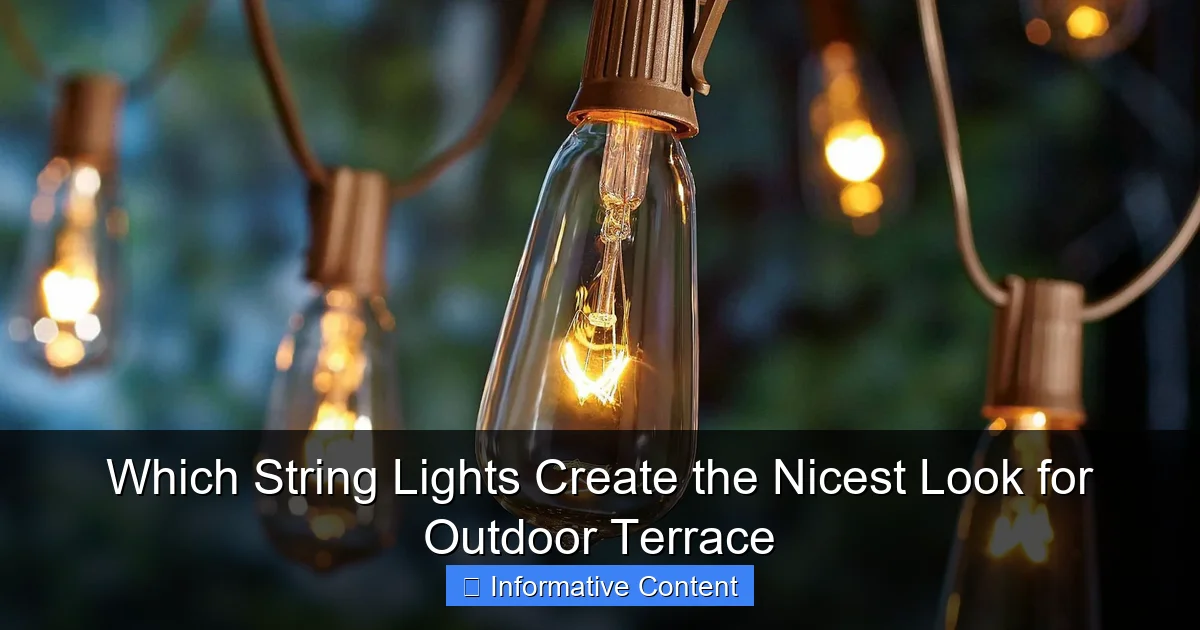
Visual guide about which string lights create the nicest look for outdoor terrace
Image source: warisanlighting.com
Edison Bulb String Lights: Vintage Charm with a Modern Twist
These are the ones with the exposed, filament-style bulbs that look like something from a 1920s speakeasy. Edison bulbs give off a warm, amber glow (typically 2200K–2700K) that’s incredibly flattering. They’re perfect if you want a cozy, rustic, or industrial-chic aesthetic.
- Best for: Terraces with exposed wood, brick walls, or metal furniture.
- Tip: Hang them in a zigzag pattern between posts or along a pergola for a “draped” effect. I once did this on a small urban terrace, and it instantly made the space feel larger and more inviting.
- Watch out: The bulbs are often made of glass, so they’re not ideal if you have kids or pets who might bump into them.
LED Mini String Lights: Subtle and Versatile
These are the tiny, energy-efficient LEDs you often see in fairy lights. They come in warm white, cool white, or multicolored versions. Warm white LEDs (2700K–3000K) are my go-to for terraces—they’re bright enough to see, but not so bright that they feel like a parking lot.
- Best for: Small terraces, railings, or wrapping around trees and plants.
- Tip: Use them to outline your terrace’s edges or drape them over a trellis. I wrapped them around my ivy-covered fence, and it looked like the plants were glowing from within.
- Watch out: Cheap versions can have uneven brightness or flicker. Look for ones with a high CRI (color rendering index) of 80+ for a natural glow.
Commercial-Grade String Lights: Durability Meets Style
If you live in a place with harsh weather (rain, snow, or strong winds), these are your best bet. They’re built with thicker cords, weatherproof sockets, and often come with replaceable LED bulbs. Brands like Brightech and Kichler make excellent options.
- Best for: Large terraces, year-round use, or areas with frequent entertaining.
- Tip: Pair them with dimmable LEDs and a remote control. I have a set on my covered terrace, and I can adjust the brightness from my phone—perfect for transitioning from dinner to late-night chats.
- Watch out: They’re pricier, but the durability is worth it. I’ve had mine for 4 years, and they’ve survived storms, snow, and even a squirrel chewing on the cord (it’s fine—the outer jacket is tough).
Fairy Lights in Mason Jars: Whimsical and DIY-Friendly
Want a touch of magic? These are mini string lights tucked into mason jars, lanterns, or even wine bottles. They’re great for adding a playful, boho vibe to your terrace.
- Best for: Small nooks, tabletops, or as accent lighting.
- Tip: Hang them from a shepherd’s hook or line them up along a shelf. I did this for a friend’s birthday party, and the jars looked like fireflies floating in the air.
- Watch out: They’re not great for general illumination—think of them as decorative accents, not primary lighting.
Net Lights: For a “Ceiling” of Stars
These are mesh-style lights that you drape over a pergola, awning, or even a large tree. They create a “canopy” effect, like you’re sitting under a sky full of stars.
- Best for: Covered terraces, patios, or large outdoor spaces.
- Tip: Use them in combination with other lights (like Edison bulbs along the edges) for layered lighting. I once used net lights over a pergola and added fairy lights on the railings—the result was pure magic.
- Watch out: They can look a bit “Christmasy” if not styled right. Stick to warm white or amber tones for a year-round look.
2. Color Temperature: Warm vs. Cool vs. Multicolor
This is where many people make mistakes. The color temperature of your lights (measured in Kelvin) has a huge impact on how your terrace feels.
Warm White (2200K–3000K): The Cozy Classic
This is the sweet spot for outdoor terraces. It mimics the glow of candlelight or a sunset, making people look great and creating a relaxed, welcoming vibe.
- Why it works: It’s flattering, soothing, and perfect for dining, lounging, or entertaining.
- Real example: I have warm white LEDs on my terrace, and friends always comment on how “cozy” it feels. Even in winter, it’s the first place we gravitate toward.
- Pro tip: If you’re unsure, start with 2700K—it’s universally flattering and works with almost any decor style.
Cool White (4000K–5000K): Modern but Less Inviting
This is the “daylight” look you see in offices or garages. It’s bright and crisp, but it can feel clinical or harsh outdoors.
- When to use it: Only if you want a modern, minimalist look and plan to use your terrace as a workspace (e.g., for reading or crafting).
- Watch out: It can make people look washed out and feels less “lounge-y.” I tried cool white once—it was like having a hospital corridor in my backyard.
Amber or Orange (1800K–2200K): Ultra-Cozy and Retro
Think firelight or candle flames. These are rare but stunning if you want a truly romantic or vintage feel.
- Best for: Small, intimate terraces or spaces with dark furniture.
- Real example: A friend has amber Edison bulbs on her terrace, and it looks like she’s sitting in a Parisian café. The downside? They’re not bright enough for cooking or reading.
Multicolor: For Playful Vibes (Use Sparingly)
Red, blue, green—these are fun for parties or holidays, but they’re tough to style year-round.
- When to use it: As accent lighting (e.g., a string of multicolored fairy lights in a jar) or for themed events.
- Watch out: Too much can look chaotic. I once went overboard with rainbow lights for a BBQ, and my guests said it felt like a carnival. Lesson learned.
3. Placement and Hanging Techniques: Where and How to Hang
Even the best lights can look underwhelming if they’re not placed right. Here’s how to make them shine (literally).
Create Layers: Ambient, Task, and Accent Lighting
Think of your terrace like a room. You need:
- Ambient lighting: The main source (e.g., Edison bulbs overhead).
- Task lighting: For cooking, reading, or eating (e.g., a small LED strip under a shelf).
- Accent lighting: To highlight plants, art, or architectural features (e.g., fairy lights in jars).
I once had just one string of lights overhead—it felt flat. When I added fairy lights on the railings and a small LED under the grill, the whole space came alive.
Use the “Rule of Odd Numbers” for Visual Balance
Hanging lights in odd numbers (3, 5, 7) feels more natural to the eye. For example:
- Hang 3 strings of Edison bulbs across a pergola.
- Place 5 mason jars with fairy lights along a shelf.
- Wrap 7 mini LED strings around a tree trunk.
This trick makes your lighting feel intentional, not random.
Try These Hanging Ideas
- Zigzag pattern: Drape lights diagonally between posts. It draws the eye and makes small terraces feel larger.
- Canopy effect: Use net lights or multiple strings to create a “ceiling” of light. Perfect for covered terraces.
- Railings and fences: Wrap lights around railings, or use adhesive hooks to hang them along a fence. I did this with my wooden fence, and it looked like the whole yard was glowing.
- Tree and plant integration: Wrap lights around tree trunks or drape them through branches. For plants, use small clips (like binder clips) to attach lights without damaging leaves.
Pro Tip: Use Hooks and Clips, Not Nails
Adhesive hooks (like 3M Command hooks) are your friends. They’re easy to install, won’t damage your walls, and can hold up to 5 lbs. I use them for everything—hanging lights, plants, even small shelves. For heavier lights, use stainless steel screw hooks (they’re weatherproof and hold up to 20 lbs).
4. Power Source and Weather Resistance: Practical Must-Haves
Let’s talk about the unsexy but critical part: how your lights stay lit.
Plug-In vs. Battery-Operated: Pros and Cons
- Plug-in: More powerful, longer-lasting, and cheaper over time. But you need an outdoor outlet or extension cord.
- Battery-operated: Portable and outlet-free. Great for small spaces or rentals. But batteries add up in cost, and they’re less bright.
I use both: plug-in for my main lights (Edison bulbs), and battery-operated for fairy lights in jars. The battery lights last 8–10 hours on a single charge—enough for most evenings.
Weather Resistance: Look for IP65 or Higher
The “IP” rating tells you how waterproof your lights are. For outdoor use, aim for IP65 (dustproof and protected against water jets) or IP67 (dustproof and waterproof up to 1 meter).
- Real example: I bought cheap string lights once with an IP44 rating. They survived a light drizzle but died in a heavy rainstorm. Lesson learned.
- Pro tip: If your lights are plug-in, use an outdoor-rated extension cord and a GFCI outlet (it cuts power if it detects moisture).
Solar-Powered: Great for Some, Not All
Solar lights are eco-friendly and require no wiring. But they’re less reliable in cloudy climates or shaded terraces.
- Best for: Terraces with 6+ hours of direct sunlight.
- Watch out: They’re often dimmer and may not last all night. I have solar fairy lights on my south-facing terrace, but I switch to plug-in when it’s cloudy.
5. Smart Features and Customization: The Future of Outdoor Lighting
Want to take your terrace to the next level? Smart lights let you control brightness, color, and even schedules from your phone or voice assistant.
Dimmable Lights: Set the Mood
A dimmer switch (or app) lets you adjust brightness. I love turning my lights down to 30% for late-night chats—it’s intimate and cozy.
- Look for: Dimmable LEDs (not all LEDs are dimmable).
- Pro tip: Pair with a smart plug (like TP-Link Kasa) for app-based control.
Color-Changing Lights: For Special Occasions
Smart bulbs (like Philips Hue) can shift from warm white to any color. Great for parties or holidays.
- Best for: Entertaining. I use them for BBQs—blue and red for 4th of July, pink and purple for birthdays.
- Watch out: They’re expensive, and the color mode can feel gimmicky if overused.
Timer and Automation: Set It and Forget It
Program your lights to turn on at sunset and off at midnight. No more fumbling with switches in the dark.
- Real example: I set my Edison bulbs to turn on at 7:30 PM and off at 11 PM. It’s one less thing to think about.
- Pro tip: Use a smart plug with a sunrise/sunset feature (like the Kasa Smart Plug).
6. Data Table: Quick Comparison of Top String Lights for Terraces
| Type | Best For | Color Temp (K) | Weatherproof Rating | Power Source | Price Range (per 25-ft strand) |
|---|---|---|---|---|---|
| Edison Bulb | Rustic, industrial, vintage | 2200–2700 | IP65 | Plug-in | $30–$60 |
| LED Mini | Small spaces, railings, plants | 2700–3000 | IP65 | Plug-in, battery, solar | $15–$40 |
| Commercial-Grade | Large terraces, year-round use | 2700–3000 | IP67 | Plug-in | $50–$100 |
| Fairy Lights in Jars | Accent lighting, boho vibe | 2700–3000 | IP65 (jars), IP44 (lights) | Battery | $10–$25 (per jar) |
| Net Lights | Covered terraces, pergolas | 2700–3000 | IP65 | Plug-in | $20–$50 |
Final Thoughts: Creating Your Perfect Outdoor Glow
Choosing the right string lights isn’t just about brightness or price—it’s about how your terrace makes you feel. Do you want it to feel like a cozy cabin in the woods? A chic urban oasis? A whimsical garden? The lights you pick will shape that experience.
Start small. Try a few warm white LEDs on your railing. Add a jar with fairy lights. See how it feels. Then layer in Edison bulbs or net lights as you go. And don’t forget the practical stuff: weatherproofing, power sources, and smart features that make your life easier.
Remember, the “nicest look” isn’t about perfection—it’s about creating a space where you love to spend time. Whether you’re sipping coffee at dawn or sharing stories under the stars, the right lights will make every moment feel a little more magical. So go ahead, string up those lights, and let your terrace shine.
Frequently Asked Questions
Which string lights create the nicest look for an outdoor terrace?
Warm white Edison bulb string lights or fairy lights with adjustable brightness often create the most inviting ambiance. Consider weather-resistant, dimmable LED options for a balance of elegance and functionality.
Are solar-powered string lights effective for outdoor terrace lighting?
Solar-powered string lights are eco-friendly and easy to install, especially in sunny areas. They work well for ambient lighting but may be dimmer than plug-in options, so choose high-lumen models for better brightness.
What color temperature is best for creating a cozy outdoor terrace vibe?
Warm white (2700K-3000K) string lights create the coziest, most natural look for an outdoor terrace. Avoid cool white or blue tones, as they can feel harsh and less inviting.
Can I leave string lights outside year-round?
Yes, but only if they’re rated for outdoor use (look for IP65 or higher waterproof ratings). Always check the manufacturer’s guidelines to ensure durability against rain, wind, and temperature changes.
Which string lights are best for a modern outdoor terrace design?
For a sleek, modern look, choose minimalist string lights with clear bulbs, black wires, or geometric shapes. LED filament bulbs or globe lights in neutral tones complement contemporary decor best.
How do I hang string lights without damaging my outdoor terrace?
Use removable adhesive hooks, tension rods, or zip ties on existing structures like railings or pergolas. For a no-damage solution, opt for freestanding poles or weighted bases designed for string lights.