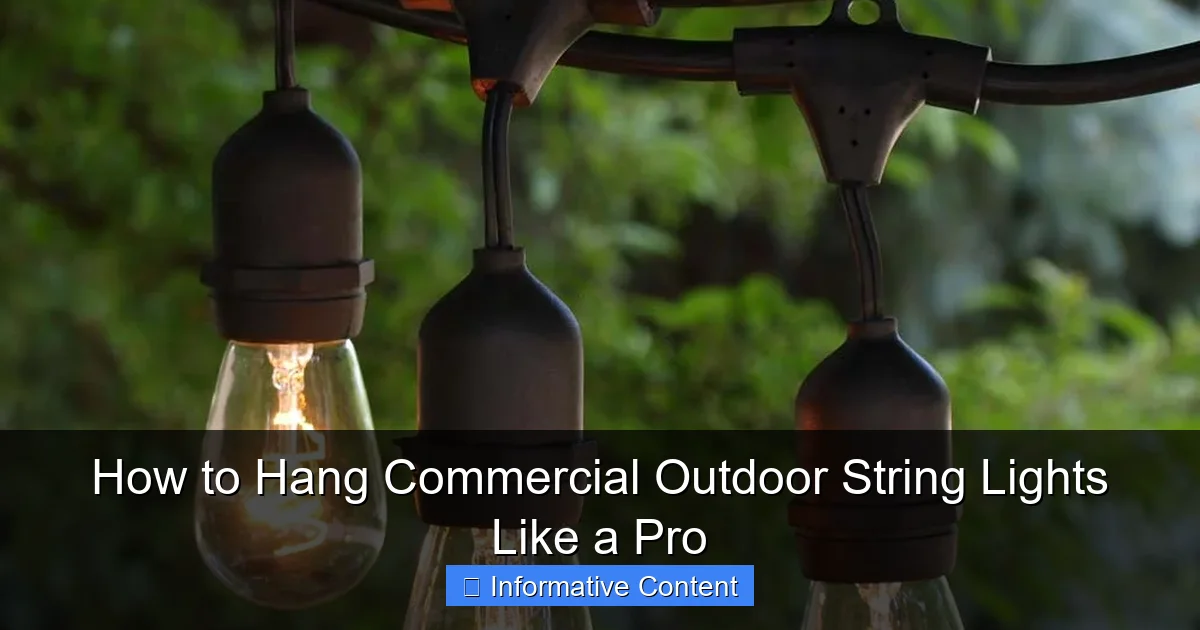
Featured image for how to hang commercial outdoor string lights
Image source: randolphsunoco.com
Hanging commercial outdoor string lights like a pro starts with planning your layout and choosing durable, weather-resistant fixtures designed for long-term use. Use secure mounting hardware—such as eye hooks, tension cables, or commercial-grade clips—to ensure stability across patios, pergolas, or open spaces. Always follow manufacturer guidelines and local electrical codes to guarantee both safety and a polished, professional result.
Key Takeaways
- Plan your layout: Measure space and mark anchor points before installation.
- Choose durable hardware: Use weatherproof hooks, cables, and commercial-grade fixtures.
- Maintain proper sag: Allow slight droop for expansion and wind resistance.
- Secure connections: Waterproof all joints and seal with silicone for longevity.
- Use dimmers/timers: Optimize ambiance and energy efficiency with smart controls.
- Inspect regularly: Check for wear, loose fittings, and bulb replacements seasonally.
📑 Table of Contents
- Why Hanging Commercial Outdoor String Lights Is Worth the Effort
- 1. Planning Your Layout: The Blueprint for Success
- 2. Choosing the Right Hardware and Tools
- 3. Installation Techniques: From Sagging to Snug
- 4. Weatherproofing and Long-Term Maintenance
- 5. Real-World Examples: From Backyard to Business
- 6. Data Table: Comparing Installation Scenarios
- Final Thoughts: Shine Bright, Stay Safe
Why Hanging Commercial Outdoor String Lights Is Worth the Effort
There’s something magical about stepping into a backyard, patio, or outdoor event space lit up with soft, twinkling lights. Whether it’s a cozy dinner under the stars, a festive wedding reception, or a bustling restaurant patio, commercial outdoor string lights have the power to transform any space into an inviting, Instagram-worthy setting. I remember the first time I hung them for a friend’s backyard wedding—simple white Edison bulbs strung between trees, with just enough glow to make the night feel warm and intimate. The guests didn’t just notice the lights; they *felt* them. That’s the magic of proper lighting.
But here’s the thing: hanging commercial outdoor string lights isn’t as simple as just tying a few wires between two posts. Done wrong, they can sag, flicker, or worse—fall during a storm. Done right, they elevate your space with elegance, safety, and durability. Whether you’re a business owner, event planner, or a homeowner looking to upgrade your outdoor ambiance, this guide will walk you through how to hang commercial outdoor string lights like a pro. We’ll cover planning, tools, safety, installation techniques, and even maintenance—so your lights shine bright for years, not just one season.
1. Planning Your Layout: The Blueprint for Success
Before you even touch a ladder or drill a hole, planning is your most important tool. A well-thought-out layout ensures your lights look intentional, not haphazard. Think of it like drawing a map—you need to know where you’re going before you start walking.
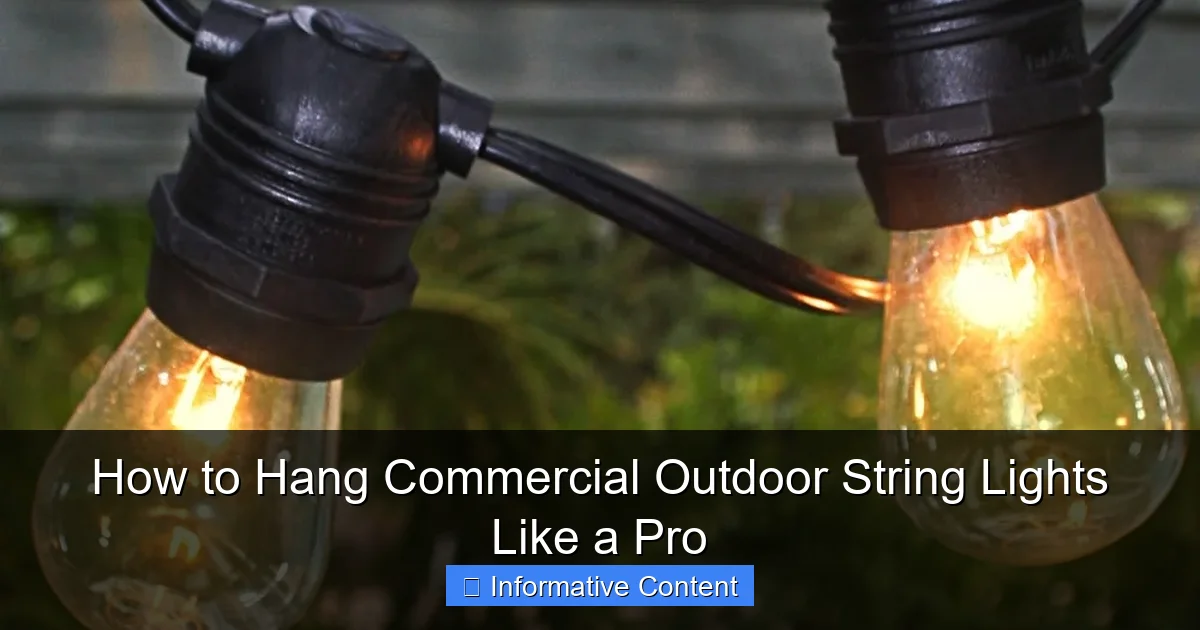
Visual guide about how to hang commercial outdoor string lights
Image source: randolphsunoco.com
Assess Your Space and Purpose
Start by asking: What’s the goal? Is it to illuminate a dining area? Create a romantic pathway? Highlight architectural features? The answer shapes your layout.
- For dining areas: Create a grid or canopy pattern overhead. This ensures even light and prevents dark spots.
- For walkways: Use parallel lines along the edges. This guides guests safely and adds visual interest.
- For large open spaces: Combine clusters—overhead canopies with perimeter lighting—to avoid a “spotty” look.
For example, a café with a 20×30 ft patio might use a 3×3 grid of lights (9 total strings) to cover the dining tables, plus two parallel strings along the fence for ambiance. Always sketch it out—paper or digital—so you can visualize spacing and coverage.
Measure, Measure, Measure
Grab a tape measure (or a laser distance tool if you’re fancy). Note:
- Distance between anchor points (trees, posts, walls)
- Height of attachment points
- Total area to cover (in square feet)
- Obstacles (gutters, roof overhangs, furniture)
Pro tip: Add 10–15% extra length to your measurements. String lights sag slightly when installed, and you’ll want room to adjust. If you’re spanning 20 feet between two trees, plan for 23 feet of lighted cable.
Choose the Right Light Type for Your Needs
Not all commercial outdoor string lights are created equal. Here’s a quick rundown:
- LED vs. Incandescent: LED is more energy-efficient, lasts longer (up to 25,000+ hours), and stays cool. Incandescent offers a warmer glow but uses more power and burns out faster.
- Bulb Shape: Edison (vintage), globe (modern), and fairy lights (delicate) set different moods. Edison bulbs are great for rustic or industrial spaces; globes work well in minimalist designs.
- Weather Rating: Look for IP65 or higher (dustproof and water-resistant). Avoid lights rated only for “dry use”—they won’t survive rain or snow.
Example: A beachside tiki bar might choose warm-white Edison bulbs with IP67 rating to handle salt air and occasional storms.
2. Choosing the Right Hardware and Tools
You wouldn’t build a house without a hammer, and you can’t hang lights without the right gear. The hardware you use determines how secure, durable, and professional your installation looks.
Essential Tools and Supplies
Here’s what you’ll need:
- String lights (with weatherproof sockets and cords)
- Anchor points: Eye bolts, lag screws, or heavy-duty hooks (rated for 50+ lbs)
- Cable ties or zip ties (UV-resistant for outdoor use)
- Turnbuckles or tensioners (to adjust sag)
- Drill and drill bits (masonry bits for concrete, wood bits for posts)
- Ladder or scaffolding (with stabilizer for safety)
- Measuring tape, level, and chalk line (for straight lines)
- Extension cords or outdoor-rated power strips (with GFCI protection)
Pro tip: Use stainless steel or galvanized hardware. Regular steel rusts quickly outdoors. For trees, use tree-friendly straps (not nails) to avoid damaging bark.
Understanding Weight and Load
Commercial string lights can be heavier than they look. A 50-foot string with 25 Edison bulbs might weigh 15–20 lbs. Add wind, snow, or debris, and that load increases.
- Each anchor point should support at least 2x the expected load.
- For long spans (30+ feet), use a center support (like a post or tree) to reduce sag.
- If using a building, check the wall material. Brick? Use plastic anchors. Wood? Use lag screws. Metal? Use self-tapping screws.
Example: A 40-foot run between two wooden posts needs anchor points rated for 50 lbs each. Use 3/8″ lag screws drilled 3 inches deep into the post.
Power Source and Electrical Safety
Safety first: outdoor electricity is no joke. Follow these rules:
- Use GFCI (Ground Fault Circuit Interrupter) outlets or adapters. They cut power if water gets in.
- Keep connections at least 10 feet from pools, sprinklers, or standing water.
- Use outdoor-rated extension cords (look for “SJTW” or “SJTOW” labels).
- Don’t overload circuits. Most outdoor outlets handle 15–20 amps. A single 50-foot LED string uses about 0.5 amps.
For large setups (e.g., a 100-light grid), consider a dedicated outdoor circuit or consult an electrician.
3. Installation Techniques: From Sagging to Snug
Now the fun part: hanging the lights. This is where your planning pays off. The key is balance—tight enough to avoid sagging, loose enough to handle expansion in heat.
Step-by-Step Installation
- Mark anchor points: Use a chalk line to mark where hooks will go. For a straight line, snap the line between two points. For a grid, use a measuring tape and level.
- Install hardware: Drill pilot holes, then screw in eye bolts or hooks. Tighten securely but don’t strip the wood.
- Attach turnbuckles: Connect one end of the light string to a turnbuckle, then the turnbuckle to the anchor. This lets you adjust tension later.
- Hang the lights: Unroll the string along the path. Don’t plug it in yet! Use cable ties every 3–4 feet to secure it to the main cable or anchor points.
- Tension the line: Gradually tighten the turnbuckles until the lights have a slight “smile” (1–2 inches of sag at the center). Too tight? Risk of snapping. Too loose? Looks sloppy.
- Connect power: Use outdoor-rated connectors. Tuck excess cord into a waterproof junction box or zip-tie it to a post.
Dealing with Sagging: The Pro’s Secret
Even the best-installed lights sag over time. Here’s how to fix it:
- Turnbuckles: The easiest fix. Loosen slightly, adjust, then tighten.
- Support cables: For long spans, run a thin steel cable (like aircraft cable) parallel to the lights. Attach the lights to the cable with zip ties. The cable bears the weight; the lights just hang.
- Center posts: Add a temporary or permanent post in the middle of long runs. Use a decorative post or even a tall planter with a metal rod.
Example: A 60-foot span between two buildings might use a center post with a 10-foot metal rod. The lights hang from the rod, reducing sag by 75%.
Creative Layout Ideas
Don’t be afraid to get creative:
- Zigzag pattern: Great for covering large areas. Alternate attachment points on either side of a path.
- Canopy with “clouds”: Hang clusters of lights at different heights to mimic clouds. Use fishing line to attach individual bulbs to a main cable.
- Fence lighting: Wrap lights around fence posts or run them along the top rail.
Pro tip: For a “dripping” effect, use clear fishing line to hang individual bulbs below the main string.
4. Weatherproofing and Long-Term Maintenance
Outdoor lights face sun, rain, wind, and snow. Without proper care, they’ll fail in months. Here’s how to make them last.
Weatherproofing Every Connection
Water is the enemy. Follow these steps:
- Seal connections: Use waterproof electrical tape or silicone-filled wire nuts. Wrap the entire plug connection with tape.
- Elevate plugs: Don’t let plugs sit on the ground. Use a waterproof outlet box or hang them on a hook.
- Use drip loops: Before plugging into the outlet, create a “U” shape in the cord. This lets water drip off instead of flowing into the plug.
Example: A café in Seattle (rainy climate) uses silicone-filled connectors and drip loops on every string.
Seasonal Maintenance Checklist
Check your lights at least twice a year (spring and fall):
- Inspect for frayed wires, cracked sockets, or rust.
- Clean bulbs with a damp cloth. Dust and grime reduce brightness.
- Check anchor points. Tighten loose screws or replace rusted hooks.
- Test each string. Replace bulbs or entire strings if needed.
- Trim overhanging branches that could damage lights in wind.
Pro tip: Keep spare bulbs and connectors on hand. A single burnt-out bulb can make a whole string look bad.
When to Remove vs. Leave Up
Some people leave lights up year-round. Others take them down seasonally. Consider:
- Leave up: If in a dry, mild climate (e.g., California). Use heavy-duty, all-weather lights.
- Remove: In areas with heavy snow, ice, or storms. Store in a dry place.
For removable setups, use quick-connect hooks or carabiners to make removal easy.
5. Real-World Examples: From Backyard to Business
Let’s look at three real-world installations to see how these techniques work in practice.
Case Study 1: The Cozy Café Patio
Space: 20×20 ft wooden deck with two trees and a pergola.
- Layout: 3×3 grid over the deck, plus two strings along the trees for ambiance.
- Hardware: Eye bolts on the pergola, tree-friendly straps on the trees.
- Lights: Warm-white LED Edison bulbs (IP67 rating).
- Power: One GFCI outlet with a 25-amp extension cord.
- Result: Even lighting, no sag, survived a winter storm.
Case Study 2: The Wedding Tent
Space: 30×50 ft white tent for 150 guests.
- Layout: Canopy of 15 strings in a diamond pattern.
- Hardware: Temporary metal poles (10 ft tall) with base plates. Turnbuckles for tension.
- Lights: Clear globe bulbs (LED, 200 lumens each).
- Power: Two outdoor outlets with GFCI adapters.
- Result: Romantic, even glow. Guests said it felt like a “fairy tale.”
Case Study 3: The Rooftop Bar
Space: 15×30 ft rooftop with metal railings and glass walls.
- Layout: Lights wrapped around railings and along the glass edge.
- Hardware: Magnetic hooks for metal railings, suction cup hooks for glass.
- Lights: Cool-white LED fairy lights (IP68 rating).
- Power: Dedicated outdoor circuit with surge protector.
- Result: Modern, elegant look. Survived a summer thunderstorm.
6. Data Table: Comparing Installation Scenarios
Here’s a quick reference for different setups:
| Scenario | Recommended Hardware | Ideal Light Type | Power Source | Maintenance Frequency |
|---|---|---|---|---|
| Backyard (trees & posts) | Eye bolts, tree straps, turnbuckles | LED Edison bulbs (IP65+) | GFCI outlet + extension cord | Bi-annual (spring/fall) |
| Commercial Patio | Lag screws, support cables, center posts | LED globe bulbs (IP67+) | Dedicated outdoor circuit | Quarterly |
| Event Tent | Temporary poles, base plates, quick-connects | Clear globe or fairy lights (LED) | Portable GFCI power station | Post-event inspection |
| Rooftop/Urban | Magnetic/suction hooks, tensioners | Cool-white LED (IP68+) | Surge-protected outlet | Monthly (wind/weather exposure) |
Final Thoughts: Shine Bright, Stay Safe
Hanging commercial outdoor string lights isn’t just about aesthetics—it’s about creating an experience. Whether it’s the soft glow over a family dinner or the vibrant energy of a nighttime market, the right lighting sets the mood and keeps people lingering longer. I’ve seen restaurants boost sales by 20% just by upgrading their patio lights. I’ve watched guests at a wedding tear up because the lights made everything feel so magical.
But remember: beauty shouldn’t come at the cost of safety or durability. Plan your layout, use the right hardware, weatherproof every connection, and maintain your lights regularly. A little extra effort upfront saves headaches (and fallen lights) down the road. And when you finally flip that switch and see your space bathed in warm, inviting light? That’s the moment you’ll feel like a pro.
So go ahead—grab your tools, sketch your dream layout, and start hanging. Your outdoor oasis is waiting. Just don’t forget to enjoy it with a glass of wine (or a cold beer) under those twinkling lights. You’ve earned it.
Frequently Asked Questions
How do I choose the right commercial outdoor string lights for my space?
Consider the bulb type (LED for durability), spacing, and weatherproof rating (IP65 or higher). Measure your installation area to ensure the lights cover the desired space without excessive gaps.
What’s the best way to hang commercial outdoor string lights without damaging walls?
Use removable hooks, adhesive clips, or tension wires to avoid drilling. For permanent setups, stainless steel eye screws with anchors provide a secure, damage-minimized hold.
How far apart should I space the mounting points when hanging commercial outdoor string lights?
For even lighting, space mounting points 2–4 feet apart depending on the string weight. Use turnbuckles or zip ties to adjust tension and prevent sagging in longer runs.
Can I connect multiple strands of commercial outdoor string lights together?
Yes, but check the manufacturer’s maximum wattage or amperage limit for end-to-end connections. Overloading circuits can cause overheating or failure, so use a power distribution box if needed.
How do I secure the lights in windy conditions?
Use zip ties, twist ties, or rubber-coated clips to fasten the string to its mounting line. Avoid rigid connections; slight flexibility helps absorb wind stress and prevents damage.
What tools do I need to hang commercial outdoor string lights professionally?
Basic tools include a ladder, drill (for permanent mounts), measuring tape, and a stud finder. Add zip ties, turnbuckles, and a voltage tester for a polished, safe installation.