Featured image for are led string lights bad for your eyes
Image source: vision-boutique.com
LED string lights are generally safe for your eyes when used properly, as they emit low levels of blue light and lack harmful UV radiation. Prolonged exposure to very bright or poorly diffused LEDs may cause eye strain or discomfort, especially in dark environments, but choosing warm-white, dimmable options with soft diffusion greatly reduces any risk.
Key Takeaways
- LED string lights are safe when used properly and at low brightness levels.
- Choose warm white LEDs (2700K–3000K) to reduce blue light exposure risks.
- Limit prolonged exposure to avoid eye strain or headaches from flickering.
- Use diffusers or covers to soften glare and improve visual comfort.
- Avoid cheap, uncertified LEDs that may emit harmful UV or excessive blue light.
- Take regular breaks if using LEDs for extended work or study sessions.
📑 Table of Contents
- Are LED String Lights Bad for Your Eyes? Find Out Now
- How LED Lights Work and What Makes Them Different
- The Science Behind LED Light and Eye Health
- Types of LED String Lights and Their Eye Safety Ratings
- Best Practices for Using LED String Lights Safely
- When to Be Concerned: Signs of Eye Strain and Long-Term Risks
- Conclusion: Balancing Beauty and Eye Safety
Are LED String Lights Bad for Your Eyes? Find Out Now
LED string lights have become a staple in modern decor, illuminating everything from cozy bedrooms and outdoor patios to festive holiday displays and wedding venues. Their energy efficiency, long lifespan, and vibrant color options make them a favorite choice for both residential and commercial spaces. But as their popularity grows, so do concerns about their impact on eye health. With so many people spending hours under the glow of these lights—especially in the evening—it’s natural to wonder: Are LED string lights bad for your eyes?
This question isn’t just about comfort—it touches on deeper health issues such as sleep disruption, eye strain, and long-term vision risks. While LED technology has advanced significantly, certain types of LED lighting, including some string lights, may emit blue light or flicker in ways that affect the eyes and circadian rhythms. In this comprehensive guide, we’ll explore the science behind LED lighting, examine how string lights differ from other light sources, and provide practical, evidence-based advice to help you use these popular lights safely. Whether you’re decorating for the holidays, creating a relaxing bedroom ambiance, or setting the mood for a special event, understanding the potential risks and benefits is essential to protecting your vision and overall well-being.
How LED Lights Work and What Makes Them Different
Understanding LED Technology
Light Emitting Diodes (LEDs) are semiconductor devices that produce light when an electric current passes through them. Unlike traditional incandescent or fluorescent bulbs, which generate light through heat or gas excitation, LEDs emit light directly from the semiconductor material. This process is far more efficient, converting over 90% of energy into light rather than heat—making LEDs significantly more energy-efficient and longer-lasting. Most LED string lights use surface-mount device (SMD) LEDs, which are tiny, flat chips mounted directly onto circuit boards. These SMD LEDs are ideal for string lights due to their compact size, low heat output, and ability to produce consistent brightness across long strands.
Visual guide about are led string lights bad for your eyes
Image source: growlightinfo.com
LEDs can produce a wide range of colors by using different semiconductor materials or by combining red, green, and blue (RGB) diodes. White LEDs—the most common type used in string lights—are typically created using a blue LED coated with a yellow phosphor layer. This method produces a broad spectrum of white light, but it often results in a higher concentration of blue wavelengths. This blue-rich light is one of the key factors that raises concerns about eye health, especially with prolonged exposure.
Comparison with Other Light Sources
Compared to incandescent bulbs, which emit a warm, continuous spectrum of light rich in red and yellow tones, LED lights tend to be cooler and more blue-dominant. Fluorescent lights, while also energy-efficient, often produce a flickering effect and contain mercury, posing environmental and health risks. LEDs, by contrast, are mercury-free and flicker less—but not all LEDs are flicker-free, especially lower-quality models.
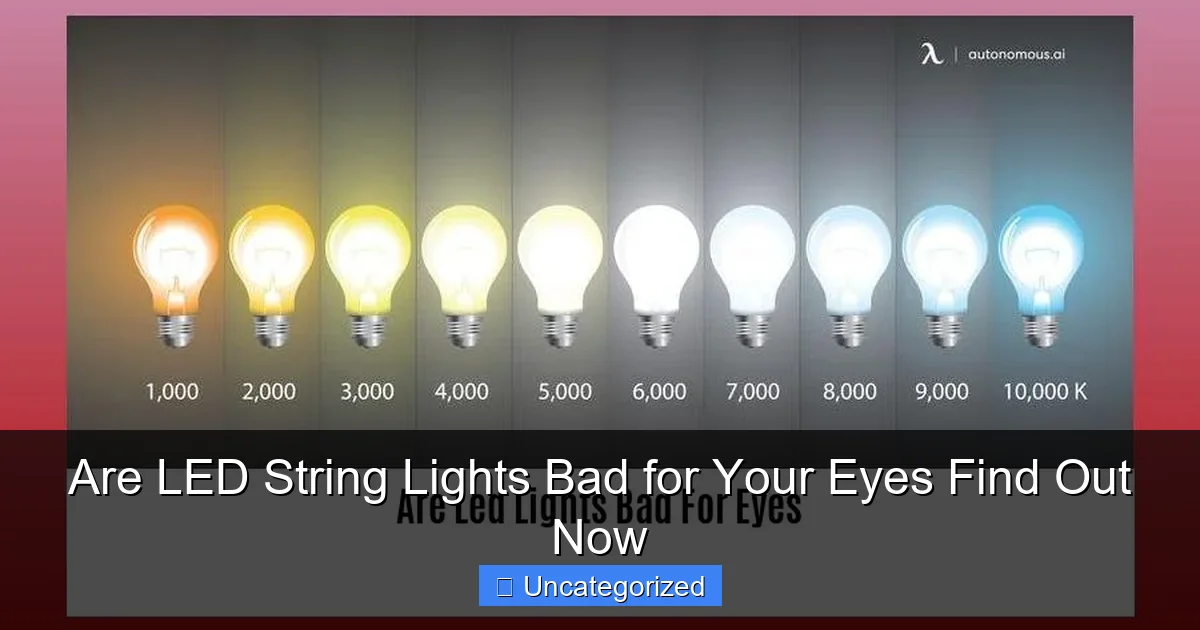
For example, a 60-watt incandescent bulb emits light with a color temperature of around 2,700K (warm white), while many LED string lights operate between 3,000K (neutral white) and 5,000K (cool white or daylight). The higher the Kelvin (K) value, the cooler and bluer the light. A study published in the Journal of Clinical Sleep Medicine found that exposure to light above 4,000K before bedtime can suppress melatonin production by up to 85%, disrupting sleep cycles. This is particularly relevant for LED string lights used in bedrooms or evening settings.
Key Components Affecting Eye Safety
- Color Temperature: Measured in Kelvin (K), this determines the warmth or coolness of light. Warm white (2,700–3,000K) is gentler on the eyes than cool white (4,000K+).
- Luminance (Brightness): Measured in lumens, excessive brightness can cause glare and eye strain, especially in dimly lit rooms.
- Flicker Rate: Invisible flicker in LEDs can cause headaches and eye fatigue. Quality LEDs use drivers that minimize flicker.
- CRI (Color Rendering Index): A scale from 0 to 100 indicating how accurately a light source reveals colors. A CRI above 80 is ideal for visual comfort.
Understanding these components helps explain why not all LED string lights are created equal when it comes to eye health. The next section delves into the specific ways LED lighting may affect your eyes.
The Science Behind LED Light and Eye Health
Blue Light Exposure and Retinal Risks
One of the most discussed concerns about LED lighting is blue light emission. Blue light, with wavelengths between 400 and 500 nanometers, is part of the visible spectrum but has higher energy than other colors. While natural sunlight contains blue light and helps regulate our circadian rhythm during the day, artificial sources like LED string lights can overexpose us—especially at night.
Visual guide about are led string lights bad for your eyes
Image source: wavesold.com
Research from the American Academy of Ophthalmology indicates that prolonged exposure to high-intensity blue light may damage retinal cells in laboratory settings. A 2019 study published in Oxidative Medicine and Cellular Longevity found that blue light can generate reactive oxygen species (ROS) in the retina, leading to oxidative stress and potential photoreceptor damage over time. However, it’s important to note that these studies often use extremely high-intensity blue LEDs—far brighter than typical string lights—and exposure levels much higher than everyday use.
For most people, the risk from standard LED string lights is minimal, but caution is warranted for:
- Individuals with pre-existing eye conditions (e.g., macular degeneration)
- Those spending long hours in close proximity to bright LED lights (e.g., photographers, decorators)
- Children, whose eyes are still developing and more sensitive to light
Flicker and Its Impact on Visual Fatigue
Flicker refers to rapid fluctuations in light output. While incandescent bulbs flicker at 120 Hz due to alternating current, many low-quality LED drivers operate at lower frequencies, causing visible or invisible flicker. This “stroboscopic effect” can lead to:
- Headaches and migraines
- Eye strain and dryness
- Difficulty focusing, especially in tasks requiring fine detail
A 2020 study by the Illuminating Engineering Society (IES) found that flicker below 1,200 Hz can be imperceptible to the naked eye but still trigger neurological responses in sensitive individuals. High-quality LED string lights use constant-current drivers that eliminate flicker, but cheaper models may use pulse-width modulation (PWM) dimming, which can cause subtle flicker at lower brightness levels.
Glare and Luminance Levels
Glare occurs when a light source is too bright relative to its surroundings. LED string lights with high lumen output (e.g., 100+ lumens per bulb) can create glare when viewed directly or reflected off shiny surfaces. This forces the eyes to constantly adjust, leading to fatigue.
For example, a string of 50 warm white LED bulbs (each 10 lumens) emits 500 lumens total—comparable to a 40-watt incandescent bulb. While this is safe for ambient lighting, placing such a string directly above a bed or desk without diffusers can cause discomfort. Using frosted or milky bulbs, or installing diffuser covers, helps scatter light and reduce glare.
Circadian Rhythm Disruption
The human body relies on light cues to regulate melatonin, the hormone that controls sleep-wake cycles. Blue-rich LED light suppresses melatonin more than warmer tones. A 2018 study in Sleep Health showed that participants exposed to 4,000K LED light for two hours before bed took 25% longer to fall asleep and experienced reduced REM sleep.
For those using LED string lights in bedrooms or living rooms in the evening, choosing warmer color temperatures (2,700–3,000K) or using smart bulbs with adjustable color temperature can mitigate this effect.
Types of LED String Lights and Their Eye Safety Ratings
Warm White vs. Cool White String Lights
The color temperature of LED string lights plays a crucial role in eye comfort. Here’s a breakdown of common options:
| Color Temperature | Kelvin (K) | Eye Safety Rating | Best Use Cases |
|---|---|---|---|
| Warm White | 2,700–3,000K | Excellent | Bedrooms, living rooms, evening decor |
| Neutral White | 3,500–4,000K | Good | Kitchens, workspaces, daytime ambiance |
| Cool White/Daylight | 4,500–5,000K | Fair | Outdoor security, garages, task lighting |
| RGB Color-Changing | Varies (often 5,000–6,500K) | Fair to Poor (at night) | Parties, events, temporary decor |
Warm white string lights (2,700–3,000K) are ideal for evening use because they emit minimal blue light and mimic the natural sunset. Cool white and daylight LEDs, while great for visibility, should be avoided in bedrooms or used only during daylight hours.
Frosted vs. Clear Bulbs
The bulb casing significantly impacts light diffusion:
- Frosted bulbs: Diffuse light evenly, reducing glare and hotspots. Recommended for bedrooms and close-range viewing.
- Clear bulbs: Produce brighter, more direct light but increase the risk of glare. Best for outdoor use or areas where high visibility is needed.
For example, a frosted warm white string light creates a soft, ambient glow perfect for a canopy bed, while clear cool white lights might be better for illuminating a garden path.
Smart vs. Traditional LED String Lights
Smart LED string lights (e.g., Philips Hue, Twinkly) offer advanced features like:
- Adjustable color temperature (2,700K to 6,500K)
- Flicker-free drivers
- App-controlled brightness and timers
- Blue light reduction modes
These features make smart lights safer for evening use. For instance, you can set your string lights to automatically switch to warm white at 8 PM, minimizing melatonin disruption. Traditional non-smart lights lack these controls, making it harder to manage exposure.
Indoor vs. Outdoor String Lights
Outdoor LED string lights are often brighter (80–120 lumens per bulb) and use weather-resistant materials. While safe for ambient outdoor use, their higher luminance can be harsh when viewed from close range. Indoor lights typically range from 5–20 lumens per bulb, offering gentler illumination.
Tip: Use outdoor-rated string lights only outside. Their higher intensity can cause eye strain if used indoors for extended periods.
Best Practices for Using LED String Lights Safely
Choose the Right Color Temperature
Select warm white (2,700–3,000K) LED string lights for bedrooms, living rooms, and any space used in the evening. Avoid cool white or daylight LEDs in relaxation areas. If you enjoy colorful lights, use RGB string lights sparingly and only during daytime or events—never as primary bedroom lighting.
Example: For a bedroom canopy, use a 50-bulb warm white frosted string light (2,700K, 10 lumens each). This creates a cozy ambiance without disrupting sleep.
Control Brightness and Use Dimming
Even warm white lights can be too bright if not dimmed. Use:
- Built-in dimmers (available on many string lights)
- Smart plugs with brightness control
- Diffuser covers or fabric wraps to soften light
Dimming reduces luminance, minimizing glare and eye strain. For instance, a string light at 50% brightness emits half the lumens, making it gentler on the eyes.
Position Lights Strategically
Never place string lights where they shine directly into the eyes. Instead:
- Hang them above eye level (e.g., along a ceiling or wall)
- Use indirect lighting (e.g., behind furniture or under shelves)
- Angle lights downward to illuminate surfaces, not faces
Pro Tip: For a romantic dining setting, hang string lights 7–8 feet high above the table, ensuring they shine onto the table surface rather than directly at diners.
Limit Exposure Time
While occasional use poses little risk, prolonged exposure to any bright light source can strain the eyes. Follow the 20-20-20 rule: Every 20 minutes, look at something 20 feet away for 20 seconds. This reduces eye fatigue, especially when working or reading under LED lights.
Opt for Flicker-Free and High-CRI Models
Look for LED string lights labeled:
- “Flicker-free” or “low-flicker”
- CRI of 80+ (90+ is ideal)
- UL or ETL certification (indicates safety compliance)
Brands like GE, Philips, and Feit Electric offer high-quality, eye-safe options. Avoid ultra-cheap string lights from unverified sellers, which may use subpar components.
Use Timers and Smart Controls
Automate your lights to turn off at bedtime. Smart plugs or app-controlled lights can be scheduled to:
- Dim at sunset
- Turn off at 10 PM
- Switch to warm white after 8 PM
This reduces blue light exposure and supports healthy sleep patterns.
When to Be Concerned: Signs of Eye Strain and Long-Term Risks
Recognizing Eye Strain Symptoms
Prolonged exposure to poorly designed LED lighting can cause:
- Headaches or migraines
- Dry, itchy, or burning eyes
- Blurred vision or difficulty focusing
- Increased sensitivity to light
- Fatigue after reading or screen use
If you experience these symptoms after using LED string lights, consider:
- Switching to warmer color temperatures
- Adding diffusers or lowering brightness
- Taking more frequent visual breaks
Long-Term Eye Health Considerations
While current research suggests that typical LED string light exposure is unlikely to cause permanent eye damage in most people, long-term risks may include:
- Accelerated retinal aging: Due to chronic blue light exposure, especially in individuals with genetic predispositions to macular degeneration.
- Chronic sleep disruption: Leading to insomnia, depression, and metabolic issues.
- Increased risk for children: Developing eyes are more permeable to blue light, potentially affecting visual development.
A 2021 review in Photochemistry and Photobiology concluded that while LED lighting is generally safe, cumulative exposure to high-intensity blue light should be minimized—particularly at night.
Special Populations to Protect
- Children: Use warm white, low-luminance string lights. Avoid placing lights within 3 feet of cribs or reading areas.
- Seniors: Older eyes are more sensitive to glare and blue light. Use frosted bulbs and indirect lighting.
- People with migraines or epilepsy: Flicker-sensitive individuals should choose flicker-free models with smooth dimming.
When to Consult an Eye Doctor
If you experience persistent eye discomfort, vision changes, or sleep issues despite making lighting adjustments, consult an ophthalmologist. They can assess for conditions like dry eye, astigmatism, or retinal stress and recommend personalized solutions.
Conclusion: Balancing Beauty and Eye Safety
So, are LED string lights bad for your eyes? The answer is nuanced: They don’t have to be. When used wisely, LED string lights are a safe, energy-efficient, and beautiful way to enhance your space. The risks—such as eye strain, sleep disruption, and potential retinal stress—are primarily associated with poorly designed lights, excessive brightness, high blue light content, and prolonged evening exposure.
By choosing warm white (2,700–3,000K) string lights with frosted bulbs, using dimmers or smart controls, and positioning lights to avoid direct eye exposure, you can enjoy the ambiance without compromising eye health. Prioritize flicker-free, high-CRI models from reputable brands, and automate your lights to support healthy sleep cycles.
Remember, the goal isn’t to eliminate LED string lights from your life—it’s to use them responsibly. Whether you’re decorating for the holidays, creating a cozy reading nook, or lighting up your backyard, small adjustments can make a big difference. With the right choices, you can have both stunning decor and healthy eyes. So go ahead, string up those lights—just do it with care, awareness, and a little science on your side.
Frequently Asked Questions
Are LED string lights bad for your eyes after prolonged exposure?
While occasional use of LED string lights poses minimal risk, prolonged exposure to bright or cool-toned LEDs may cause eye strain or discomfort. Opt for warm white or dimmable options to reduce glare and give your eyes regular breaks.
Can LED string lights damage your eyesight over time?
There’s no conclusive evidence that LED string lights cause permanent eye damage, but excessive exposure to blue-rich light (like cool white LEDs) may contribute to retinal stress. Choose warmer color temperatures (2700K–3000K) for safer, eye-friendly lighting.
Do LED string lights emit harmful blue light that affects eyes?
Yes, some LED string lights emit blue light, which can disrupt sleep and cause eye fatigue with extended exposure. To minimize risks, use warm white LEDs or install diffusers to soften the light output.
Are LED string lights safe for kids’ eyes?
Most LED string lights are safe for children, but avoid overly bright or blue-toned lights, especially in bedrooms. Warm white or color-changing LEDs with lower brightness are gentler on developing eyes.
Can flickering in LED string lights hurt your eyes?
Cheap or faulty LED string lights may flicker, causing headaches or eye strain. Always buy high-quality, UL-certified products with steady illumination to avoid this issue.
What’s the safest way to use LED string lights to protect my eyes?
Use warm white LEDs (under 3000K), keep brightness moderate, and avoid staring directly at the bulbs. Position lights to create ambient, indirect lighting rather than harsh, direct glare for optimal eye comfort.