Featured image for how to make a outdoor string light pole
Image source: i.pinimg.com
Transform your backyard into a captivating oasis by building a sturdy, custom outdoor string light pole using simple materials like a 4×4 post, concrete, and weather-resistant hardware. This DIY project ensures perfect ambiance and long-lasting durability, elevating your outdoor space for evening gatherings or serene nights under the stars.
Key Takeaways
- Choose weather-resistant materials like galvanized steel or cedar for long-lasting durability.
- Anchor poles securely using concrete footings to withstand wind and weather.
- Plan light spacing first to determine pole height and layout for even illumination.
- Use adjustable mounts for easy string light installation and future repositioning.
- Add a decorative finial to enhance visual appeal and hide mounting hardware.
- Test lights before finalizing to ensure connections work and spacing looks balanced.
📑 Table of Contents
Why You Need a DIY Outdoor String Light Pole
Picture this: It’s a warm summer evening, and you’re sitting in your backyard, sipping on a cold drink. The sun has just dipped below the horizon, and the sky is painted in soft hues of orange and purple. You reach for the switch, and suddenly, dozens of warm, twinkling string lights come to life, stretching across your patio, illuminating the space like a cozy, magical cocoon. That’s the kind of ambiance we all crave—but it’s not always easy to achieve. Most backyards lack the natural structures to hang string lights, leaving us with dim, uneven lighting or the hassle of drilling into walls or trees. That’s where a DIY outdoor string light pole comes in. It’s a simple, affordable, and customizable solution that transforms your outdoor space into a welcoming retreat.
Whether you’re hosting a backyard barbecue, enjoying a quiet night under the stars, or just want to make your patio feel more inviting, a custom light pole gives you full control over placement, height, and design. And the best part? You don’t need to be a master builder to pull it off. With a few basic tools, some common materials, and a little elbow grease, you can create a sturdy, attractive pole that’s tailor-made for your space. In this guide, I’ll walk you through every step—from planning and choosing materials to installation and styling—so you can build the perfect outdoor string light pole and enjoy a beautifully lit backyard all season long.
Planning Your Outdoor String Light Pole Project
Assess Your Space and Lighting Goals
Before you grab a hammer or head to the hardware store, take a moment to really look at your backyard. Where do you want the light pole to go? Is it near a seating area, a dining table, or a pool? Do you want the lights to stretch from the pole to a tree, a pergola, or a wall? These decisions will influence the height, strength, and placement of your pole.
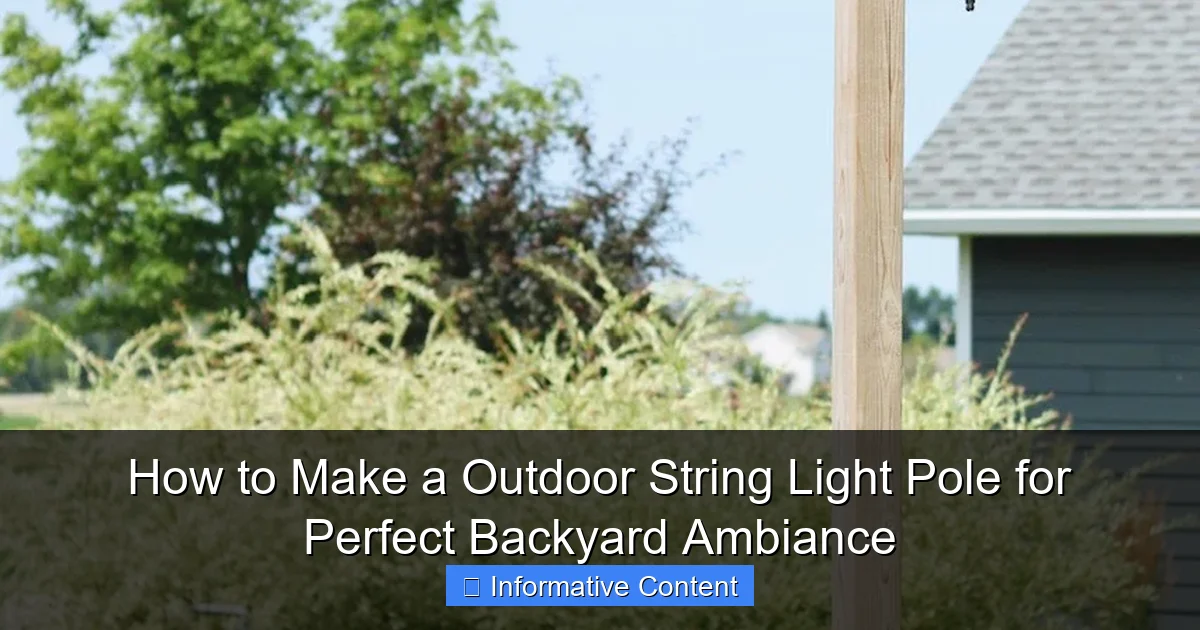
Visual guide about how to make a outdoor string light pole
Image source: sugarmaplenotes.com
For example, if you’re lighting a 12-foot dining table, you’ll want the pole to be tall enough (at least 8–10 feet) so the lights hang high enough to clear people’s heads but low enough to create intimacy. If you’re spanning lights from the pole to a distant structure, you’ll need a stronger pole to handle the tension. And if you’re placing the pole in the middle of a lawn, you’ll need a stable base that won’t sink or wobble.
Pro tip: Use painter’s tape or stakes to mark the exact location of your pole and potential anchor points (like trees or fences). Then, drape a long rope or extension cord along the path you want the lights to follow. This “mock-up” helps you visualize the layout and avoid costly mistakes later.
Check Local Regulations and Utilities
It’s easy to get excited and start digging, but don’t skip this critical step. In many areas, you need permits for permanent structures—especially if they exceed a certain height. Even if your pole is temporary, it’s smart to call 811 (in the U.S.) or your local utility company to have underground lines marked. Hitting a water line or electrical conduit with your shovel can ruin your weekend—and possibly your wallet.
Also, consider your yard’s drainage. If the pole is in a low-lying area that floods after rain, you may need to elevate the base or use a waterproof sealant. And if you live in a windy area, a tall, narrow pole might need extra bracing to stay upright.
Choose Your Pole Style and Materials
Your choice of materials will depend on your budget, design taste, and how permanent you want the pole to be. Here are three popular options:
- Metal conduit or rebar: Affordable and easy to work with. Great for a minimalist, industrial look. Use galvanized steel or PVC-coated metal for rust resistance.
- Wooden post: Warmer and more natural. Cedar or pressure-treated pine are durable and weather-resistant. You can stain or paint it to match your decor.
- PVC pipe: Lightweight and inexpensive. Ideal for temporary setups or renters. Paint it to look like metal or wood for a more polished look.
For most DIYers, a 10-foot wooden post (like a 4×4) is a solid choice—it’s sturdy, looks great, and is easy to modify. But if you’re going for a modern vibe, a sleek metal pole might be more your style.
Gathering Tools and Materials
Essential Tools
You don’t need a full workshop, but having the right tools makes the job faster and safer. Here’s what I recommend:
- Post hole digger or auger: For digging the foundation hole. A manual digger is cheaper, but an electric auger saves time if you’re installing multiple poles.
- Level: To ensure your pole is perfectly vertical. A cheap bubble level works fine.
- Shovel: For mixing and pouring concrete, and backfilling.
- Measuring tape: For marking heights and distances.
- Drill and screws: If you’re attaching hooks, brackets, or crossbeams.
- Saw: For cutting wood or PVC to size.
- Work gloves and safety glasses: Safety first!
Materials List (for a 10-foot Wooden Pole)
- One 10-foot 4×4 pressure-treated wooden post (or cedar for a natural look)
- One 40-pound bag of quick-setting concrete
- Four 1/2-inch diameter, 12-inch long eye bolts (stainless steel or galvanized)
- Waterproof wood sealant or exterior paint
- Optional: decorative post cap (to keep rain out and add style)
- Optional: crossbeam (for a “T” or “X” shape to hold more lights)
Note: If you’re using metal conduit, get a 3/4-inch diameter, 10-foot galvanized pipe and matching floor flange for the base. For PVC, a 2-inch diameter pipe works well—just reinforce it with a wooden dowel inside for strength.
Where to Buy
Most of these items are available at hardware stores like Home Depot, Lowe’s, or Menards. I’ve had good luck with online retailers for specialty parts (like decorative post caps or marine-grade eye bolts). If you’re on a tight budget, check local classifieds—sometimes people sell leftover lumber or hardware at a discount.
Step-by-Step Construction Guide
Step 1: Dig the Foundation Hole
The key to a stable pole is a solid foundation. For a 10-foot pole, dig a hole about 24–30 inches deep and 8–10 inches wide. The general rule: the deeper the hole, the more stable the pole. If you’re in a windy area, go deeper—36 inches is ideal.
Use your post hole digger to remove the soil, and save it in a wheelbarrow or tarp. You’ll need it later to backfill around the concrete. Make sure the hole is straight and free of rocks or roots.
Step 2: Prep the Pole
Before you set the pole, seal or paint it to protect it from rot and weather. I like to apply two coats of exterior wood sealant, letting each coat dry for 24 hours. If you want color, use exterior-grade paint in a shade that complements your yard (like white, black, or a soft gray).
Now, mark the pole where you’ll attach the eye bolts. For a simple “V” shape (great for two light strings), place two eye bolts 12 inches from the top, facing opposite directions. For a “T” shape (to hold four strings), add a horizontal crossbeam at the top with two more eye bolts. Use a measuring tape and level to ensure the marks are even.
Drill pilot holes for the bolts, then screw them in tightly. If you’re using a crossbeam, attach it with heavy-duty brackets or through-bolts.
Step 3: Set the Pole in Concrete
This is the most critical step. Place the pole in the hole and use your level to make sure it’s perfectly vertical. Ask a friend to hold it steady while you mix the concrete.
Follow the instructions on the bag—usually, you mix 1 part water to 2 parts concrete in a wheelbarrow. Pour the mixture into the hole around the pole, filling it to about 4 inches below ground level. Use a trowel to smooth the surface and slope it slightly away from the pole to help with drainage.
Let the concrete cure for at least 24 hours (longer in humid or cold weather). During this time, keep the pole braced with temporary supports—like stakes tied to the pole with twine—to prevent it from leaning.
Step 4: Backfill and Finish
Once the concrete is fully set, backfill the remaining space with the soil you saved. Tamp it down with a shovel or your foot to compact it. This adds extra stability.
If you want a more polished look, you can cover the concrete with decorative stones, mulch, or a metal collar. I’ve even seen people build small planters around the base—just make sure the pole stays accessible for future adjustments.
Step 5: Test Your Pole
Before hanging the lights, give the pole a gentle shake to check for wobble. It should feel solid and secure. If it’s wobbly, you may need to add more concrete or reinforce the base.
Hanging and Styling Your String Lights
Choosing the Right Lights
Not all string lights are created equal. For outdoor use, look for lights with:
- Weatherproof rating (IP44 or higher): Ensures protection from rain and dust.
- LED bulbs: Energy-efficient, long-lasting, and cool to the touch.
- Warm white or soft yellow light: Creates a cozy, inviting glow (avoid harsh white or blue).
- Connectable sets: Lets you extend the lights without multiple plugs.
For a 10-foot span, a 25-foot string is usually enough. If you’re connecting multiple strings, make sure your outlet can handle the total wattage (most outdoor outlets are 15-amp, which can handle up to 1,800 watts).
Hanging Techniques for a Professional Look
Here’s how to hang the lights like a pro:
- Start at the pole: Hook the first light string to one eye bolt. Let it hang loosely—don’t pull it tight yet.
- Attach to the anchor point: Run the string to your tree, wall, or another pole. Use a carabiner, hook, or zip tie to secure it. Leave a slight sag (about 6–12 inches) to prevent tension on the pole.
- Repeat for additional strings: If you’re using multiple strings, space them evenly (about 12–18 inches apart) for a balanced look.
- Use clips or hooks: For walls or fences, install small screw-in hooks or adhesive clips to keep the lights in place.
Pro tip: For a “canopy” effect (like in a restaurant patio), hang the lights in a crisscross pattern. Attach a second set of eye bolts lower on the pole (about 6 feet up) to create diagonal lines.
Styling Ideas to Elevate Your Space
Once the lights are up, don’t stop there! Here are a few ways to take your backyard ambiance to the next level:
- Add greenery: Wrap the pole with ivy, climbing roses, or fairy lights. Or place potted plants around the base.
- Use dimmers or timers: Control the brightness and set the lights to turn on at dusk. Smart plugs make this easy.
- Layer lighting: Combine string lights with lanterns, torches, or LED candles for depth.
- Create zones: Use the pole to define different areas—like a dining zone, a lounge zone, and a fire pit zone.
Maintenance and Safety Tips
Protecting Your Pole from the Elements
Even the best-built pole needs care. Here’s how to keep it looking great:
- Reapply sealant or paint every 1–2 years: Especially if you’re using wood.
- Inspect the base for cracks or shifting: Fill small cracks with exterior caulk.
- Check eye bolts for rust: Replace them if they show signs of corrosion.
- Remove snow and ice: Heavy snow can strain the pole. Gently brush it off.
Electrical Safety
Never overlook safety with outdoor electrical setups:
- Use GFCI outlets: Protects against electrical shocks. Test the outlet monthly.
- Avoid overloading: Don’t connect more than 3–4 light strings per outlet.
- Keep connections dry: Use outdoor-rated extension cords and cover plugs with waterproof covers.
- Turn off during storms: Lightning can damage electronics.
Data Table: Recommended Pole Specs by Use Case
| Use Case | Pole Height | Material | Foundation Depth | Recommended Lights |
|---|---|---|---|---|
| Patio dining area | 8–10 feet | 4×4 wood or metal | 24–30 inches | 25-ft warm white LED |
| Backyard canopy | 10–12 feet | Metal conduit or thick wood | 30–36 inches | 50-ft connectable LED |
| Pool or spa area | 7–9 feet | PVC (painted) or stainless steel | 24 inches (with concrete) | IP65-rated LED (waterproof) |
| Small balcony | 6–8 feet | PVC or thin metal | 18–24 inches (or use a weighted base) | 15-ft LED with battery pack |
Enjoying Your Perfect Backyard Ambiance
Building an outdoor string light pole isn’t just about adding light—it’s about creating a space where memories are made. Whether it’s a family dinner under the stars, a game night with friends, or a quiet moment with a book, your custom pole becomes the heart of your backyard. And the best part? You built it yourself. There’s a special pride in knowing that every twinkle of light is held up by your own hands.
Remember, the process doesn’t have to be perfect. Maybe your pole leans a little, or the lights sag more than you’d like. That’s okay! The goal isn’t perfection—it’s enjoyment. If something isn’t working, tweak it. Add more support, adjust the height, or try a different style of lights. Over time, you’ll find what works best for your space.
As the seasons change, so can your setup. In the fall, wrap the pole with fairy lights and pumpkins. In the winter, add a string of white lights and a wreath. Your pole is a blank canvas—let your creativity shine. And when guests compliment your beautiful backyard, don’t forget to share the story behind it. “I built that pole myself,” you’ll say, and watch their eyes light up—almost as much as the lights above.
Frequently Asked Questions
How do I choose the right materials for an outdoor string light pole?
Opt for weather-resistant materials like galvanized steel, aluminum, or pressure-treated wood to ensure durability. Avoid untreated metals or wood that can rust or rot when exposed to moisture. These materials will support your outdoor string light pole for years.
Can I install a DIY string light pole without professional help?
Yes! Most DIY outdoor string light pole projects use simple tools like post-hole diggers, levels, and concrete. Just ensure the pole is secured deep enough (12–18 inches) to withstand wind and tension.
How tall should my backyard string light pole be?
Ideal height is 7–9 feet for even light distribution and easy access for maintenance. Taller poles (up to 12 feet) work for large spaces but require stronger support and wider spacing between poles.
What’s the best way to anchor the pole in the ground?
Use quick-setting concrete to secure the pole in a hole 1/3 its height. Add gravel at the base for drainage, and let the concrete cure fully (24–48 hours) before hanging lights.
How do I hide the cords for a cleaner look?
Run cords through the inside of hollow poles or use cable clips to discreetly attach them to the pole’s exterior. For permanent setups, bury outdoor-rated extension cords under mulch or grass.
Can I make a portable outdoor string light pole?
Yes! Use weighted bases (like sandbags or planters) for freestanding poles, or attach the pole to a sturdy tripod. This works great for patios or renters who need temporary lighting.