Featured image for are led string lights waterproof
Image source: m.media-amazon.com
Most LED string lights are *not* fully waterproof, but many are water-resistant, designed to handle light rain or moisture—just don’t submerge them. Check the IP rating: IP65 or higher offers strong protection against water, while lower ratings like IP44 suit covered outdoor areas only. Always verify product specs to avoid damage or safety hazards.
Key Takeaways
- Check IP ratings: Verify IP65 or higher for true waterproofing.
- Indoor vs. outdoor: Use outdoor-rated lights for wet conditions.
- Sealed connections: Ensure plugs and joints are weatherproofed.
- Material matters: Silicone or rubber coatings enhance durability.
- Avoid submersion: Waterproof ≠ submersible; avoid deep water.
- Inspect regularly: Look for cracks or damage to maintain protection.
📑 Table of Contents
- Understanding Waterproof Ratings: What Do the Numbers Mean?
- Indoor vs. Outdoor LED String Lights: Key Differences
- Common Misconceptions About Waterproof LED String Lights
- Best Practices for Using LED String Lights Outdoors
- Top Waterproof LED String Lights: A Comparison Guide
- Conclusion: Making an Informed Decision
Understanding Waterproof Ratings: What Do the Numbers Mean?
When shopping for LED string lights, one of the first things you’ll notice is the IP (Ingress Protection) rating. This alphanumeric code—such as IP65, IP67, or IP68—is your first clue into how well the lights can withstand water exposure. But what do these numbers actually mean, and how do they affect your decision when choosing lights for outdoor use, patios, gardens, or even poolside decor?
The IP rating consists of two digits: the first indicates protection against solid particles like dust, and the second refers to protection against liquids, including water. For example, an IP65 rating means the device is fully dust-tight (6) and protected against water jets (5). An IP68 rating, on the other hand, means the lights are dust-tight and can be submerged in water beyond 1 meter for a specified duration. Understanding these ratings is crucial because not all “water-resistant” lights are truly waterproof.
Decoding the First Digit: Dust and Solid Ingress Protection
The first digit in the IP rating ranges from 0 to 6, with 6 being the highest level of protection. For LED string lights used outdoors, a rating of 5 or 6 is ideal:
- 0 – No protection
- 1 – Protection against objects >50mm (e.g., hands)
- 2 – Protection against objects >12.5mm (e.g., fingers)
- 3 – Protection against tools or wires >2.5mm
- 4 – Protection against objects >1mm (e.g., screws, nails)
- 5 – Dust protected (limited ingress, no harmful dust buildup)
- 6 – Dust-tight (complete protection)
For outdoor LED string lights, a rating of 5 or 6 ensures that dust, sand, and debris—common in gardens and patios—won’t infiltrate the internal components, which could lead to corrosion or short circuits over time.
Decoding the Second Digit: Water Ingress Protection
The second digit, which ranges from 0 to 9, tells you how well the lights resist water. Here’s what each number means in practical terms:
- 0 – No protection
- 1 – Protection against dripping water
- 2 – Protection against dripping water when tilted up to 15°
- 3 – Protection against spraying water (up to 60° from vertical)
- 4 – Protection against splashing water from any direction
- 5 – Protection against water jets (6.3mm nozzle, 30kPa)
- 6 – Protection against powerful water jets (12.5mm nozzle, 100kPa)
- 7 – Protection against immersion in water up to 1 meter for 30 minutes
- 8 – Protection against continuous immersion beyond 1 meter (depth and duration specified by manufacturer)
- 9K – Protection against high-pressure, high-temperature water jets (used in industrial settings)
For most residential outdoor applications—like stringing lights across a deck, pergola, or garden—an IP65 or IP66 rating is sufficient. These lights can handle rain, sprinklers, and even accidental splashes from a hose. However, if you plan to use the lights near a swimming pool or want to submerge them in water (e.g., in a water feature), you’ll need at least an IP67 or IP68 rating.
Pro Tip: Always check the manufacturer’s specifications for the exact test conditions behind the IP rating. Some companies may claim “waterproof” without an official IP rating, which can be misleading.
Indoor vs. Outdoor LED String Lights: Key Differences
Not all LED string lights are created equal. While indoor lights may look similar to their outdoor counterparts, they are engineered with different priorities in mind. Understanding the key differences between indoor and outdoor-rated LED string lights can save you from premature failure, safety hazards, and costly replacements.
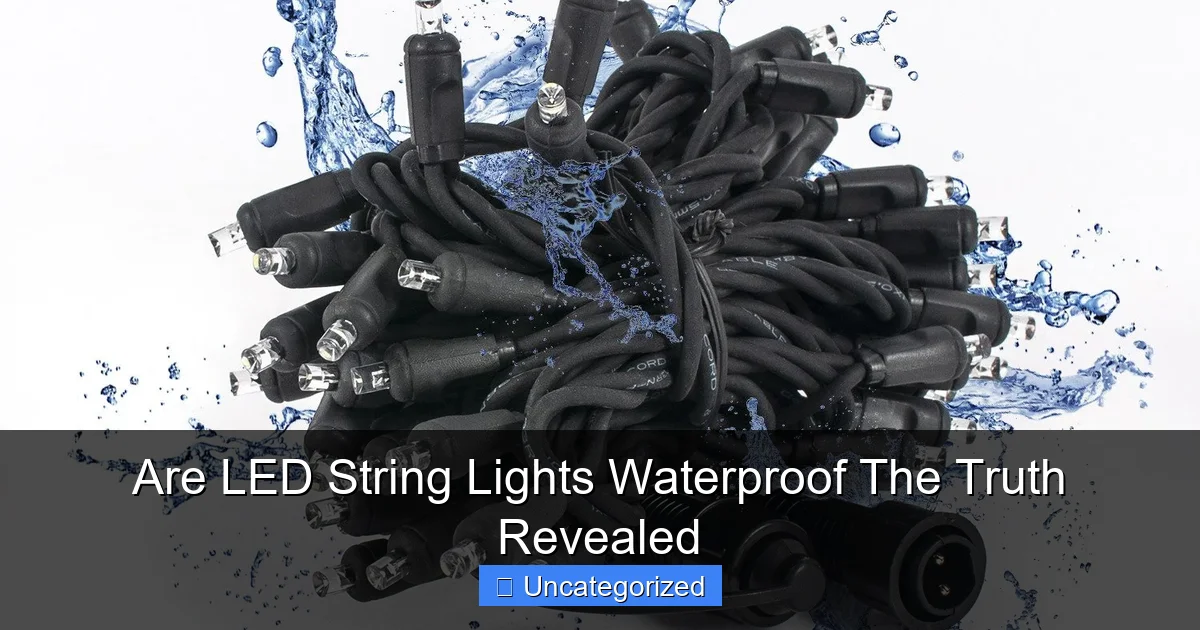
Visual guide about are led string lights waterproof
Image source: sklep.cd-lighting.pl
Materials and Construction
Outdoor LED string lights are built with weather-resistant materials that can endure UV exposure, temperature fluctuations, and moisture. Common features include:
- UV-stabilized plastic – Prevents yellowing and brittleness from prolonged sun exposure
- Silicone or rubber gaskets – Seal connections and bulb sockets to prevent water ingress
- Corrosion-resistant wires – Often tinned copper to resist rust and oxidation
- Thicker insulation – Protects against abrasion and moisture
In contrast, indoor lights may use thinner insulation, non-UV-resistant plastics, and lack sealing mechanisms. For example, a standard indoor LED string light might have a simple plastic bulb cover without gaskets, making it vulnerable to condensation or accidental spills.
Electrical Components and Safety Standards
Outdoor-rated lights often meet stricter electrical safety standards, such as:
- UL Listed for wet locations – Indicates the product has been tested and approved for use in wet environments (e.g., rain)
- CSA or CE certification – International standards for safety and performance
- Low-voltage transformers – Many outdoor sets operate at 12V or 24V to reduce shock risk
Indoor lights may only be rated for “damp” or “dry” locations, meaning they can handle humidity but not direct water exposure. Using an indoor light outdoors—even under a covered patio—can be dangerous if condensation or rain reaches the electrical components.
Practical Example: Choosing the Right Lights for Your Space
Imagine you’re decorating a covered porch with string lights. The area is partially exposed to wind-driven rain during storms. In this case, indoor lights with an IP20 rating (no water protection) are a poor choice. Instead, opt for outdoor-rated lights with at least an IP65 rating. These lights will:
- Resist water jets from rain and wind
- Withstand temperature swings from summer heat to winter frost
- Last longer due to UV-resistant materials
On the other hand, if you’re stringing lights inside a sunroom with high humidity (e.g., near a hot tub), look for “damp-rated” lights (IP44 or higher) rather than standard indoor models.
Common Misconceptions About Waterproof LED String Lights
The market is flooded with marketing terms like “waterproof,” “weatherproof,” and “all-weather,” but these words don’t always mean what you think. Misunderstanding these terms can lead to damaged lights, safety risks, or disappointment when your “waterproof” lights fail after a light rain.
Visual guide about are led string lights waterproof
Image source: sklep.cd-lighting.pl
Myth #1: “Waterproof” Means Submersible
Many consumers assume that “waterproof” means the lights can be fully submerged in water. This is not always true. For example:
- A light labeled “waterproof” with an IP65 rating can handle water jets but cannot be submerged.
- Only lights with an IP67 or IP68 rating are designed for submersion.
Real-World Example: A homeowner buys “waterproof” LED string lights for a backyard water feature, only to discover they stop working after a week because they’re not rated for immersion. Always check the IP rating, not just the marketing label.
Myth #2: “Weatherproof” = “Waterproof”
The term “weatherproof” is often used loosely. It may mean the lights are resistant to UV, wind, and temperature changes—but not necessarily water. For instance, a light might be weatherproof against sun and snow but only have an IP44 rating (splash-resistant). This is fine for covered patios but risky in open gardens during heavy rain.
Myth #3: All Outdoor Lights Are Interchangeable
Not all outdoor LED string lights are suitable for every environment. Consider these scenarios:
- Coastal areas: Salt air is highly corrosive. Look for lights with stainless steel or marine-grade components.
- High-humidity regions: Condensation can seep into sockets. Choose lights with sealed connectors.
- Areas with frequent storms: Wind-driven rain requires at least an IP66 rating.
Pro Tip: Read customer reviews for real-world insights. If multiple users report failures during rain, the lights may not be as “waterproof” as advertised.
Myth #4: The Plug and Power Source Don’t Matter
Even if the light string itself is waterproof, the plug, adapter, or transformer may not be. For example, a light set with an IP67-rated string but a non-waterproof plug can still fail if the plug gets wet. Always ensure the entire system—from plug to bulbs—is rated for outdoor use.
Best Practices for Using LED String Lights Outdoors
Choosing waterproof LED string lights is only half the battle. Proper installation, maintenance, and usage practices are equally important to ensure longevity, safety, and optimal performance. Follow these best practices to get the most out of your outdoor lighting.
Installation Tips for Maximum Durability
- Use waterproof connectors: When joining multiple light strings, use manufacturer-approved connectors or waterproof junction boxes. Avoid twisting wires together and taping them—this creates weak points for water ingress.
- Elevate the plug and adapter: Keep the power source (plug, transformer) off the ground and away from puddles. Use a weatherproof outlet box or a covered power strip.
- Secure lights properly: Use zip ties, hooks, or clips designed for outdoor use. Avoid nails or staples, which can damage insulation and create entry points for moisture.
- Leave slack in the cord: Tight strings are prone to snapping in high winds. Allow a slight droop to absorb tension.
Maintenance and Seasonal Care
- Inspect before each use: Check for cracked bulbs, frayed wires, or loose connections. Replace damaged components immediately.
- Clean regularly: Wipe down lights with a damp cloth to remove dust, pollen, and salt residue. Avoid abrasive cleaners that can damage coatings.
- Store properly in winter: If you live in a region with freezing temperatures, consider removing and storing lights indoors. Cold can make plastics brittle, and ice buildup may damage wires.
- Use a surge protector: Lightning strikes or power surges can fry even waterproof lights. A surge protector adds an extra layer of safety.
Creative Outdoor Applications (With Caution)
Waterproof LED string lights aren’t just for trees and patios. Get creative with these ideas—but always prioritize safety:
- Floating lights: Use submersible LED lights (IP68) in fountains or koi ponds. Never use non-submersible lights in water.
- Pathway lighting: Bury low-voltage lights in mulch or gravel (ensure they’re rated for ground contact).
- Poolside decor: Hang lights above the pool with a minimum IP66 rating to handle splashes.
- Outdoor dining: String lights over a pergola or gazebo for ambiance—just ensure the power source is weather-protected.
Warning: Never connect waterproof lights to a non-waterproof extension cord. The weakest link in the chain determines the system’s safety.
Top Waterproof LED String Lights: A Comparison Guide
With hundreds of options on the market, choosing the right waterproof LED string lights can feel overwhelming. To help you decide, we’ve compared five top-rated models based on key criteria: IP rating, durability, brightness, and value.
| Product | IP Rating | Bulb Type | Length | Waterproof Features | Best For | Price Range |
|---|---|---|---|---|---|---|
| Twinkle Star 50ft Outdoor String Lights | IP65 | LED Filament (Edison-style) | 50 ft | Rubber gaskets, UV-resistant PVC, 12V transformer | Porches, patios, gardens | $25–$35 |
| Brightech Ambience Pro | IP65 | LED Edison bulbs | 48 ft | Weatherproof sockets, shatterproof bulbs, ETL listed | Outdoor dining, weddings | $40–$50 |
| Koopower 100ft Submersible LED Strip | IP68 | Flexible LED strip | 100 ft | Fully sealed, 12V, cuttable every 3 LEDs | Water features, pools, aquariums | $60–$80 |
| Philips Hue Outdoor String Lights | IP65 | Smart RGB LED | 33 ft (expandable) | App-controlled, weatherproof, 24V | Smart homes, tech-savvy users | $100–$150 |
| GE 24ft Solar String Lights | IP65 | LED (warm white) | 24 ft | Solar panel, rechargeable battery, no wiring | Gardens, camping, off-grid use | $30–$40 |
Key Takeaways from the Comparison
- For versatility: The Twinkle Star and Brightech models offer excellent value for general outdoor use.
- For submersion: The Koopower strip is the only true submersible option (IP68).
- For smart features: Philips Hue integrates with Alexa/Google Assistant but costs more.
- For eco-friendliness: GE Solar lights are ideal for areas without outdoor outlets.
Pro Tip: Always verify the IP rating on the manufacturer’s website, not just the product listing. Some retailers mislabel items.
Conclusion: Making an Informed Decision
So, are LED string lights waterproof? The answer is it depends. Not all LED string lights are created equal, and understanding the nuances of IP ratings, construction materials, and proper usage is essential for making a safe, cost-effective choice. Whether you’re decorating a cozy patio, illuminating a garden path, or creating a magical ambiance for an outdoor event, the right waterproof LED lights can transform your space—without the risk of failure or safety hazards.
Remember, “waterproof” isn’t a one-size-fits-all term. Look beyond marketing claims and focus on the IP rating, certifications (e.g., UL, ETL), and real-world reviews. Invest in quality, follow best practices for installation and maintenance, and don’t cut corners on safety. With the right lights and care, your outdoor oasis can shine brightly for years to come—rain or shine.
Finally, when in doubt, choose lights rated for your most extreme expected conditions. A little extra protection today can save you from frustration and replacement costs tomorrow. After all, the best LED string lights aren’t just waterproof—they’re built to last, perform, and delight.
Frequently Asked Questions
Are LED string lights waterproof for outdoor use?
Most LED string lights are designed with weather-resistant materials and rated for outdoor use, but not all are fully waterproof. Check the IP (Ingress Protection) rating—IP65 or higher ensures protection against rain and splashes.
What does the IP rating mean for waterproof LED string lights?
The IP rating indicates dust and water resistance. For example, IP65 means the lights are dustproof and resistant to water jets, while IP67 can handle brief submersion. Always verify the rating before buying.
Can I leave LED string lights outside in the rain?
Yes, if they have a high waterproof rating (IP65 or above). However, prolonged exposure to heavy rain or snow may damage lower-rated lights or the plug, so opt for models with sealed connectors.
Are battery-powered LED string lights waterproof?
Some battery-powered LED string lights are waterproof, but the battery compartment may not be. Look for models with waterproof casings or store the battery box in a dry location.
Do waterproof LED string lights work in snow?
LED string lights with high IP ratings (like IP67) can withstand snow, but ensure the power source and connections are protected from moisture accumulation. Cold temperatures rarely affect LED performance.
Can I submerge LED string lights in water for a pool display?
Only use submersible LED string lights rated for underwater use (e.g., IP68). Standard “waterproof” lights may resist splashes but fail if fully submerged, risking electrical hazards.