Featured image for how to secure outdoor string lights
Image source: publicdomainpictures.net
Always anchor outdoor string lights to sturdy structures like eaves, posts, or railings using weather-resistant hooks or clips to prevent sagging and hazards. Ensure bulbs are spaced evenly and cords are secured along their entire path to avoid tripping or wind damage. For a safe, long-lasting glow, use outdoor-rated lights and inspect connections regularly.
Key Takeaways
- Choose weather-resistant lights: Opt for UL-listed or IP65-rated lights for durability in outdoor conditions.
- Use proper mounting hardware: Secure lights with hooks, clips, or zip ties rated for outdoor use.
- Inspect wires regularly: Check for fraying or damage to prevent electrical hazards.
- Install a drip loop: Prevent water from reaching outlets by creating a downward loop in the cord.
- Anchor lights firmly: Space supports evenly to avoid sagging and reduce strain on connections.
- Turn off when unused: Switch off lights during storms or extended absences for added safety.
📑 Table of Contents
Why Securing Outdoor String Lights Matters
Remember that magical evening when you strung up your outdoor lights for the first time? Maybe it was for a birthday, a summer BBQ, or just because you wanted to make your backyard feel cozier. The glow danced above your patio, casting soft shadows and setting the mood for laughter and conversation. But then—crack—a sudden windstorm, and suddenly your beautiful lights are dangling, tangled, or worse, sparking near a tree branch. That’s when it hits you: securing outdoor string lights isn’t just about aesthetics. It’s about safety, durability, and peace of mind.
Outdoor string lights are one of the easiest and most effective ways to transform your outdoor space. Whether you’re lighting up a pergola, wrapping them around a tree, or draping them across a fence, they create instant ambiance. But without proper installation, they can become hazards—falling, overheating, or even causing electrical issues. The good news? With a few smart strategies, you can enjoy that warm, inviting glow all year round without worrying about storms, pets, or curious kids. In this guide, I’ll walk you through exactly how to secure outdoor string lights, drawing from real-life experiences, common mistakes, and proven techniques to keep your lights shining safely.
Choosing the Right Lights and Hardware
Before you even think about hanging your lights, it’s essential to choose the right type of string lights and the correct hardware. Not all lights are built the same, and using the wrong setup can lead to sagging, breakage, or electrical risks. Let’s break this down.
Visual guide about how to secure outdoor string lights
Image source: p0.pikist.com
Types of Outdoor String Lights
There are three main types of outdoor string lights, each with its own pros and cons:
- Plug-in (Hardwired) String Lights: These are the most common. They come with a power cord and plug into an outdoor GFCI outlet. Great for permanent setups, but you’ll need to plan your layout around power sources.
- Solar-Powered String Lights: No wires, no outlets—just solar panels that charge during the day and light up at night. Perfect for areas far from power, but they may dim in cloudy weather or after a few hours.
- Low-Voltage LED String Lights: Often used with landscape lighting systems, these run on a transformer and are safer for damp areas. Ideal for long-term installations but require a bit more setup.
For most homeowners, plug-in LED string lights are the sweet spot—energy-efficient, long-lasting, and bright enough for entertaining. Just make sure they’re rated for outdoor use (look for “wet location” or “damp location” on the packaging). Indoor-rated lights can overheat or short out when exposed to rain or humidity.
Hardware That Actually Holds Up
You wouldn’t hang a heavy mirror with a thumbtack, right? The same logic applies to string lights. Here are the must-have hardware items:
- Outdoor-rated hooks or eye screws: These are typically made of stainless steel or galvanized metal to resist rust. Plastic hooks may snap under tension or UV exposure.
- Turnbuckles or tensioners: These small metal devices let you tighten the string light line, preventing sagging. Think of them like a mini winch for your lights.
- Zip ties (outdoor-grade): Use these to secure the cord to poles, railings, or beams. Choose UV-resistant ties to avoid them becoming brittle over time.
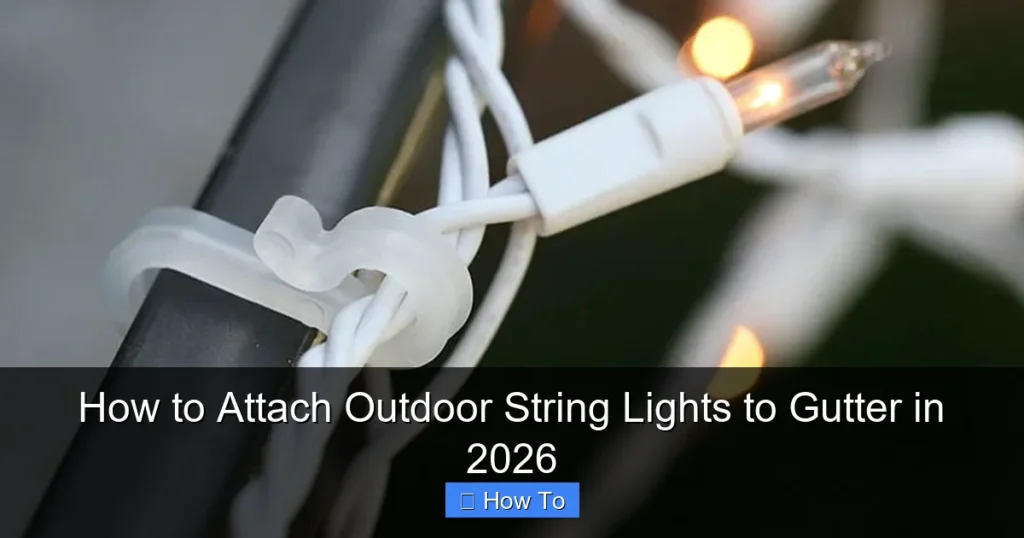
- Clips with rubber padding: Great for attaching lights to gutters or metal railings without scratching the surface.
Pro tip: Always buy hardware rated for outdoor use. I once used indoor drywall anchors on my pergola—big mistake. After a rainy week, they rusted and my lights fell into a puddle. Not only did I have to replace the lights, but I also had to clean up a minor electrical hazard. Learn from my oops moment!
Planning Your Layout and Installation Path
You wouldn’t start building a house without blueprints, and the same goes for your outdoor lighting. A thoughtful layout prevents tangles, reduces strain on the lights, and makes future maintenance easier.
Map Your Light Path
Start by sketching your outdoor space on paper or using a free app like SketchUp Free or Canva. Mark where you want the lights to go—over the dining table, around the fire pit, along the fence line. Then, measure the distance. Most string lights come in 25- or 50-foot lengths, and you can connect multiple strands, but there’s a limit (usually 2–3 strands max for plug-in lights, depending on wattage).
Example: If your patio is 30 feet long, you’ll need at least two 25-foot strands. But don’t just daisy-chain them end-to-end. Instead, plan a “loop” or “zigzag” pattern so the lights don’t pull too hard on one anchor point. This reduces sagging and makes the whole setup look more professional.
Identify Anchor Points
Anchor points are where you’ll attach the lights—walls, posts, trees, or railings. Here’s what to look for:
- Structural integrity: Make sure the anchor point can handle the tension. A flimsy fence post won’t cut it. Use a stud finder on walls or drill into solid wood/metal.
- Height and spacing: Hang lights 8–10 feet above ground for safety and visibility. Space anchor points every 3–5 feet to prevent sagging.
- Power source access: For plug-in lights, plan your path so the cord can reach an outlet without crossing high-traffic areas. Use extension cords only if they’re rated for outdoor use and protected from water.
Real-life example: I once tried to run my string lights from my house to a tree 20 feet away, but the tree had weak branches. After a few weeks, the weight of the lights snapped a branch, and the whole line went dark. Now, I use a sturdy metal pole (like a flagpole base) as a central anchor when spanning large open areas.
Use a “Test Hang” Before Finalizing
Before drilling holes or installing hardware, do a test hang with lightweight string or twine. This lets you see how the lights will drape and whether the spacing feels right. Adjust as needed—it’s much easier to move a piece of string than to patch a hole in your siding!
Step-by-Step Installation Techniques
Now for the fun part: actually hanging your lights! Here’s a step-by-step guide to do it safely and securely.
Step 1: Install Anchor Points
Using your layout plan, drill pilot holes and install eye screws or hooks. For wood, use a drill bit slightly smaller than the screw’s core. For masonry or stucco, use a masonry bit and anchors. If you’re attaching to a metal railing, use rubber-padded clips to avoid scratches.
Pro tip: Pre-install all hardware before you unbox the lights. It’s frustrating to realize you’re missing a hook halfway through!
Step 2: Attach the String Lights
Start at the power source. Plug in the lights and let them hang loosely from the first anchor point. Then, gently pull the cord toward the next anchor. Use zip ties or clips every 3–5 feet to secure the cord. Don’t pull too tight—you want a slight sag (about 6–12 inches) to allow for wind movement and temperature changes.
For long spans (over 10 feet), use a turnbuckle at one end. Attach one hook to the wall and the other to the light cord, then tighten the turnbuckle until the line is taut but not strained. This is a game-changer for preventing sagging!
Step 3: Secure Bulbs and Connectors
Outdoor string lights often have exposed bulbs or plastic sockets. To prevent them from swinging and breaking, use bulb clips or rubber grommets to hold each bulb in place. For connectors (where strands join), wrap them with electrical tape and then cover with a weatherproof silicone seal to keep moisture out.
Example: I once skipped sealing the connectors, and after a heavy rain, one strand flickered and died. A quick fix with silicone saved the day—and taught me a lesson!
Step 4: Protect the Cord
Where the cord runs along the ground or crosses a walkway, use cord covers (flexible plastic channels) to prevent tripping and protect against water. If you must run a cord over grass, bury it under a shallow trench and cover it with mulch or a rubber mat.
Step 5: Test and Adjust
Turn on the lights and walk around the space. Look for:
- Sagging or drooping sections
- Flickering bulbs
- Cords near water sources (like a sprinkler or pool)
- Any sharp bends in the cord (can damage internal wires)
Make adjustments as needed. It’s better to tweak now than to have a light fall into your hot tub later!
Weatherproofing and Long-Term Maintenance
Even the best-secured lights can fail if they’re not protected from the elements. Rain, UV rays, and temperature swings all take a toll. Here’s how to keep your lights shining for years.
Seal All Connections
As mentioned earlier, moisture is the #1 enemy of outdoor lights. Use dielectric grease on plug connections and waterproof tape (like butyl tape) on joints. For extra protection, slide a heat-shrink tube over connectors and use a hairdryer to seal it.
Trim Trees and Vegetation
Overhanging branches can rub against lights, causing wear. Trim them back at least 6 inches from the light line. Also, avoid wrapping lights directly around thin tree trunks—they can girdle the tree and kill it. Instead, use a tree-friendly wrap (like a fabric strip) to attach the cord.
Inspect Regularly
Check your lights every few months, especially after storms. Look for:
- Frayed or cracked cords
- Rusted or loose hardware
- Flickering or dim bulbs
- Loose connections
Replace damaged bulbs promptly—a single dead bulb can strain the rest of the circuit.
Winter Care
If you live in a cold climate, consider removing your lights in winter. Ice and snow add weight, and freezing temperatures can make cords brittle. If you keep them up, use cold-weather-rated lights and avoid overloading circuits.
Data Table: Weatherproofing Checklist
| Task | Frequency | Tools/Materials Needed |
|---|---|---|
| Inspect cords for damage | Monthly | Flashlight, gloves |
| Check hardware for rust | Quarterly | Screwdriver, wire brush |
| Seal connections | After storms or annually | Silicone seal, electrical tape |
| Trim nearby vegetation | Seasonally | Pruning shears, gloves |
| Test GFCI outlet | Every 3 months | Test button on outlet |
Creative and Safe Alternatives to Traditional Hanging
Not everyone has walls or posts to hang lights from. Maybe you have a small balcony, a rental home, or a yard with no permanent structures. Here are some clever, safe alternatives.
Use Freestanding Poles or Bases
Buy or build light poles from PVC, metal, or wood. Anchor them into heavy planters (fill with sand or concrete) or use ground spikes for grassy areas. This works great for patios, decks, or open yards.
Example: I use two 8-foot PVC poles with weighted bases on my deck. They hold my lights in a crisscross pattern and can be moved easily for parties or storage.
Attach to Railings or Fences with Clips
For balconies or pool areas, use rubber-padded S-hooks or tension rods to attach lights to railings. These won’t damage the surface and can be removed seasonally.
Hang from Trees with Rope or Wire
If you’re hanging from trees, use a non-conductive rope (like nylon) or steel cable with a rubber sleeve. Attach the rope to a sturdy branch using a tree strap (wide fabric or rubber) to prevent bark damage. Then, clip the lights to the rope every few feet.
Use Gutter Clips for Houses
For homes with gutters, gutter clips are a lifesaver. They hook onto the edge of the gutter and hold the light cord securely. No drilling required! Just make sure the clips are rated for outdoor use and won’t corrode.
Get Creative with Furniture
Have a pergola, umbrella, or outdoor dining set? Use magnetic clips or adhesive hooks to attach lights to metal frames. For wooden furniture, use small nails or screws with protective caps.
Final Thoughts: Enjoy the Glow, Safely
Securing outdoor string lights isn’t just about making them look good—it’s about creating a space where you can relax, entertain, and feel safe. Whether you’re wrapping lights around a tree, draping them over a pergola, or setting up a cozy nook on your balcony, a little planning and the right hardware go a long way.
Remember: start with quality lights and hardware, plan your layout like a pro, install with tension in mind, and maintain them regularly. Don’t skip the small details—like sealing connectors or trimming branches. They might seem minor, but they’re what keep your lights shining through storms, seasons, and years of memories.
And if you’re ever in doubt, test your setup before the big party. There’s nothing worse than realizing your lights are dangling over the grill just as your guests arrive. Trust me—I’ve been there!
So go ahead, string up those lights, and let your outdoor space glow. With these tips, you’ll enjoy that warm, inviting ambiance safely and securely—no matter the weather. After all, the best memories happen under the stars… and a few well-secured string lights.
Frequently Asked Questions
How do I secure outdoor string lights without damaging my walls or trees?
Use adhesive hooks, removable clips, or zip ties designed for outdoor use to avoid drilling or nailing. These options provide a sturdy hold while protecting surfaces, especially when paired with weather-resistant string lights.
What’s the best way to secure outdoor string lights in windy conditions?
Anchor lights tightly using tension wire or guide cables beneath them to reduce swaying. Ensure connections are secure and avoid loose loops, which can catch wind and strain fixtures.
Can I use nails or screws to install outdoor string lights?
While possible, screws or nails risk damaging surfaces and creating tripping hazards. Opt for removable outdoor-rated hooks or gutter clips instead—they’re safer and easier to adjust later.
How do I prevent my outdoor string lights from sagging over long distances?
Run a taut support cable (like aircraft wire) between anchor points and attach lights to it with zip ties or hooks. This distributes weight evenly and maintains a clean, professional look.
Are there specific tools to help secure outdoor string lights on patios or pergolas?
Yes, use S-hooks, cup hooks, or specialized pergola clamps for quick, damage-free installation. For permanent setups, stainless steel eye screws offer durability and strong support.
How do I safely secure outdoor string lights near electrical outlets?
Keep cords away from high-traffic areas using cord covers or conduit channels to prevent tripping. Always plug into a GFCI outlet and ensure connections are elevated or covered to avoid water damage.