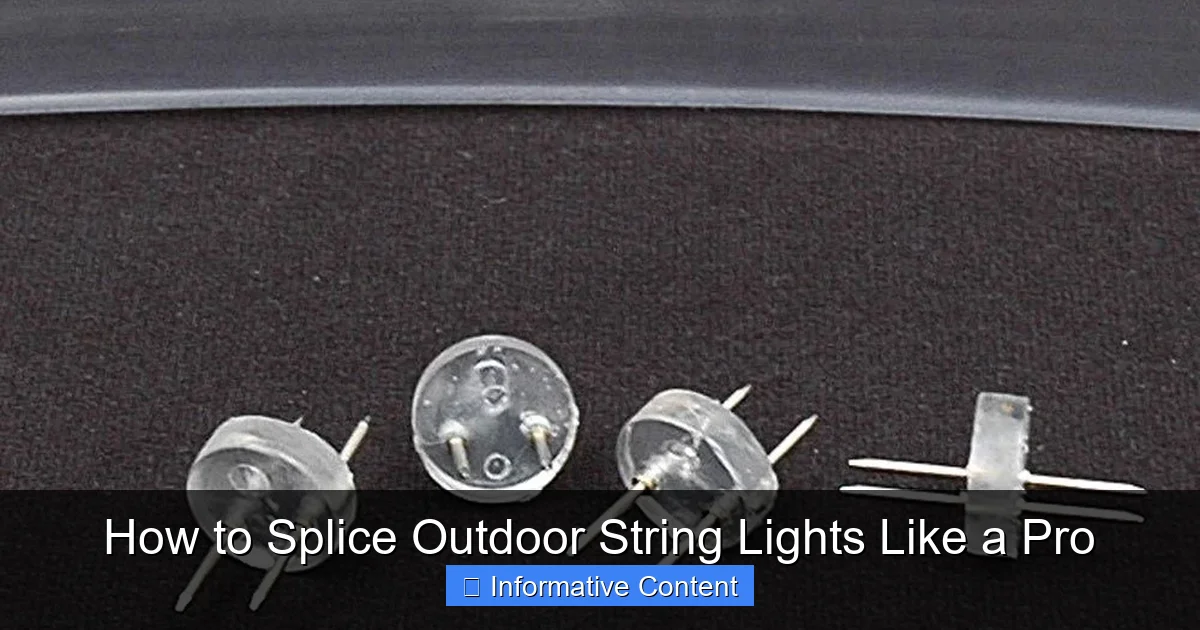
Featured image for how to splice outdoor string lights
Image source: noveltylights.com
Splicing outdoor string lights like a pro starts with cutting power and using a waterproof connector to ensure safety and durability. Always strip wires carefully, match colors precisely, and secure connections with heat-shrink tubing or silicone-filled wire nuts to prevent moisture damage. Test the circuit before finalizing—this simple step saves time and avoids future headaches.
Key Takeaways
- Turn off power first: Always disconnect electricity before splicing to prevent shocks.
- Use weatherproof connectors: Seal connections with waterproof materials for lasting durability.
- Strip wires carefully: Expose ½ inch of wire for secure, clean connections.
- Twist and cap tightly: Ensure wires are firmly twisted and capped to avoid shorts.
- Test before finalizing: Check lights work before sealing or hanging them outdoors.
- Insulate with heat shrink: Use heat shrink tubing for extra protection against moisture.
📑 Table of Contents
- Why Splicing Outdoor String Lights Matters
- Understanding Your String Lights: Types and Components
- Tools and Materials You’ll Need for Splicing
- Step-by-Step Guide to Splicing Outdoor String Lights
- Advanced Techniques: Extending, Customizing, and Repairing Sockets
- Common Mistakes and How to Avoid Them
- Final Thoughts: Light Up Your Outdoors with Confidence
Why Splicing Outdoor String Lights Matters
Picture this: It’s a warm summer evening, and you’re sitting on your patio, wrapped in a cozy blanket, sipping on a glass of wine. The sun has just dipped below the horizon, and the first stars are peeking through the twilight. You reach for the switch, eager to bathe your outdoor space in a soft, golden glow—only to find that your string lights are out. Not just one or two bulbs, but an entire section. Frustrating, right? This is where knowing how to splice outdoor string lights like a pro comes in handy.
Outdoor string lights aren’t just decorative; they transform your space into a welcoming retreat for family dinners, weekend gatherings, or quiet moments alone. But let’s face it—they’re also exposed to the elements. Wind, rain, snow, and temperature swings take a toll. Over time, cords fray, connections loosen, and wires break. Instead of tossing a $30 strand into the trash, splicing gives you the power to repair, extend, and customize your lights. Whether you’re a DIY newbie or a seasoned homeowner, mastering this skill saves money, reduces waste, and ensures your ambiance never flickers out.
Understanding Your String Lights: Types and Components
Know What You’re Working With
Before you grab the wire cutters, it’s essential to understand the type of string lights you have. Not all outdoor lights are created equal, and splicing methods vary based on design. Most common are **incandescent**, **LED**, and **solar-powered** string lights, each with unique pros and cons.
- Incandescent: The classic warm glow, but less energy-efficient and more prone to overheating. They’re often cheaper but don’t last as long outdoors.
- LED: Energy-saving, long-lasting (up to 50,000 hours), and cooler to the touch. They’re ideal for year-round outdoor use but require compatible splices to avoid damage.
- Solar-powered: Eco-friendly and easy to install since they don’t need an outlet. However, their internal batteries and circuitry make splicing trickier—best left for minor repairs only.
Anatomy of a String Light Strand
Every strand has a few key parts you’ll need to identify:
- Power cord: The main wire that connects to the outlet or solar panel.
- Socket wires: Thin wires running from the main cord to each bulb socket.
- Bulb sockets: Hold the bulbs and complete the circuit.
- Junction box (if present): A small plastic housing where wires meet—common in commercial-grade strands.
- Plug and end cap: The plug connects to power; the end cap seals the strand.
For splicing, you’re mainly working with the main power cord and sometimes the socket wires. If your lights have a series circuit (one wire runs through all bulbs), a single break can kill the whole strand. In parallel circuits (each bulb has its own connection), only one section goes out. Knowing your circuit type helps you diagnose issues and choose the right repair method.
Pro Tip: Test your lights before cutting. Plug them in and use a non-contact voltage tester to check for live wires. Safety first!
Tools and Materials You’ll Need for Splicing
Essential Toolkit for the Job
Splicing isn’t rocket science, but having the right tools makes the process smooth and safe. Here’s what you’ll need:
- Wire strippers: For cleanly removing insulation without nicking the copper wire.
- Needle-nose pliers: To twist wires together securely.
- Wire cutters: For snipping damaged sections.
- Electrical tape: Waterproof and UV-resistant—look for outdoor-rated tape.
- Heat-shrink tubing: Provides a professional, weatherproof seal (more on this later).
- Heat gun or lighter: To shrink the tubing.
- Multimeter: Optional but helpful for testing continuity.
- Silicone sealant: For extra protection in wet climates.
- Replacement bulbs and sockets: Just in case you need to swap out a faulty part.
Choosing the Right Splicing Method
There are three main ways to splice outdoor string lights:
- Twist-and-tape: Simple and fast, but less durable. Best for temporary fixes.
- Wire nuts: Screw-on connectors that hold wires together. More secure but can loosen over time.
- Heat-shrink splices: The gold standard for outdoor use. Creates a permanent, waterproof bond.
Real-World Example: I once had a 50-foot LED strand that stopped working halfway. After testing, I found a frayed section near a tree branch. I cut out the damaged part, stripped the wires, and used heat-shrink tubing to join the ends. Two years later, it’s still shining bright—even through winter storms.
Tip: For long-term durability, always use heat-shrink tubing for outdoor splices. It’s slightly more work, but it’s worth it. If you’re in a pinch, wire nuts with electrical tape can work, but check them annually.
Step-by-Step Guide to Splicing Outdoor String Lights
Step 1: Diagnose the Problem
Before cutting anything, figure out where the issue is. Plug in the lights and observe:
- If the whole strand is out, the break is likely in the main cord.
- If only a section is dark, check the socket wires or bulb connections.
- If flickering occurs, the problem might be a loose bulb or socket.
Use a multimeter set to continuity mode to trace the break. Touch the probes to each end of the wire—if the meter beeps, the circuit is intact. If not, you’ve found your splice point.
Step 2: Cut and Strip the Wires
Once you’ve located the damaged section:
- Unplug the lights. Safety first!
- Cut out the damaged portion with wire cutters. Remove about 3–4 inches to ensure clean ends.
- Strip 1 inch of insulation from each end of the main cord using wire strippers. You’ll expose the positive (usually red or black) and negative (usually white or clear) wires.
Caution: Don’t cut too much insulation. If the wires are too short, the splice will be weak. And never nick the copper—it causes resistance and heat.
Step 3: Join the Wires
For heat-shrink splices (recommended):
- Slide a piece of heat-shrink tubing (large enough to fit over the splice) onto one end of the wire. Set it aside for now.
- Twist the positive wires together clockwise using needle-nose pliers. Do the same for the negative wires. Ensure no copper is exposed.
- Slide the heat-shrink tubing over the twisted connections. Center it so it covers both ends of the splice.
- Use a heat gun or lighter to shrink the tubing. Move the heat evenly until the tubing seals tightly around the wires.
For wire nuts:
- Twist the wires together as above.
- Twist a wire nut clockwise onto each pair until snug.
- Wrap electrical tape around the nut and wire ends for extra protection.
Step 4: Weatherproof the Splice
This is where most DIYers cut corners—and regret it later. Outdoor splices need to survive rain, snow, and UV rays. Here’s how to protect yours:
- Heat-shrink tubing: Already waterproof. For extra safety, add a dab of silicone sealant inside the tubing before shrinking.
- Electrical tape: Wrap tightly in overlapping layers. Finish with a layer of outdoor-grade tape.
- Splice box (optional): For large repairs, use a small waterproof junction box to house the splice.
Pro Tip: Elevate the splice off the ground. Use a zip tie to attach it to a tree branch or gutter. Wet splices corrode fast!
Step 5: Test and Install
Before hanging the lights:
- Plug in the strand and check if all bulbs light up.
- Use a multimeter to test voltage at the splice (optional).
- If everything works, secure the splice and hang the lights as usual.
Real-World Tip: I once spliced a strand and tested it indoors—it worked fine. But when I hung it outside, it flickered. Turned out, the wind was tugging on the splice. I added a zip tie to anchor it, and the problem disappeared. Always test in real conditions!
Advanced Techniques: Extending, Customizing, and Repairing Sockets
Extending Your String Lights
Want to cover a larger area? Splicing lets you join two strands end-to-end. Here’s how:
- Cut the end cap off one strand and the plug off the other.
- Strip the wires and splice them using the heat-shrink method above.
- Weatherproof the splice.
- Use the plug from the second strand to power the combined length.
Note: Check the total wattage. Most outdoor circuits handle 10–15 amps (1,200–1,800 watts). Overloading can trip the breaker.
Repairing or Replacing Bulb Sockets
Sometimes, the issue isn’t the cord—it’s a loose or corroded socket. To fix it:
- Cut the socket wire 2 inches above and below the socket.
- Strip the wires and splice them to a replacement socket (available at hardware stores).
- Use heat-shrink tubing to seal the connections.
Pro Tip: If the socket is cracked, replace it. Don’t try to tape it—water will get in.
Creating Custom Lengths
Want to wrap lights around a pillar or drape them over a pergola? Cut a strand to size and add a plug:
- Measure and cut the strand to your desired length.
- Strip the cut end and attach a replacement plug (screw-on or crimp-on).
- Seal the connection with heat-shrink tubing.
Real-World Example: My neighbor wanted to light up a curved garden path. We cut three strands to different lengths, spliced them together, and added a timer plug. Now, the path glows like a fairy tale—no wasted wire!
Common Mistakes and How to Avoid Them
Mistake 1: Using Indoor Materials
Indoor electrical tape or wire nuts degrade outdoors. Always use outdoor-rated supplies. Look for labels like “UV-resistant” or “waterproof.”
Mistake 2: Skipping the Weatherproofing
A splice might work for a season, but without proper sealing, it’ll fail. Heat-shrink tubing is your best friend. If you use tape, wrap it at least three layers thick.
Mistake 3: Overloading the Circuit
Too many lights on one circuit? The breaker trips or wires overheat. Check your strand’s wattage and add it up. If you’re unsure, use a dedicated outdoor outlet or a timer with overload protection.
Mistake 4: Ignoring the Ground Fault
Outdoor outlets need GFCI (Ground Fault Circuit Interrupter) protection. If your outlet doesn’t have a “Test” and “Reset” button, upgrade it. It prevents shocks and fires.
Mistake 5: Not Testing Before Hanging
Always test the splice on the ground. I learned this the hard way when a strand fell from my roof because the splice failed mid-hang. Now, I test, secure, then hang.
Data Table: Splicing Method Comparison
| Splicing Method | Durability | Weather Resistance | Ease of Use | Best For |
|---|---|---|---|---|
| Twist-and-tape | Low | Low | High | Temporary fixes |
| Wire nuts + tape | Medium | Medium | High | Quick repairs |
| Heat-shrink tubing | High | High | Medium | Permanent outdoor splices |
Final Thoughts: Light Up Your Outdoors with Confidence
Splicing outdoor string lights isn’t just a handy skill—it’s a game-changer for creating a cozy, inviting space. Whether you’re repairing a broken strand, extending your setup, or customizing the perfect layout, knowing how to splice like a pro saves money, reduces waste, and ensures your lights shine bright for years.
Remember, the key is preparation and patience. Use the right tools, weatherproof your splices, and test before hanging. Don’t rush the process—take your time to get it right. And if you’re ever unsure, consult a licensed electrician for complex repairs or high-voltage setups.
So next time your string lights flicker out, don’t toss them. Grab your wire strippers, heat-shrink tubing, and a little confidence. With these steps, you’ll not only fix the problem but elevate your outdoor ambiance. After all, the best memories happen under the glow of well-placed, well-maintained lights. Happy splicing!
Frequently Asked Questions
How do I safely splice outdoor string lights without causing a short circuit?
To safely splice outdoor string lights, always disconnect the power source first. Use waterproof wire connectors or heat-shrink tubing to seal the connections and prevent moisture damage. This ensures durability and safety in all weather conditions.
Can I splice different types of outdoor string lights together?
Yes, you can splice different types of outdoor string lights, but ensure they have the same voltage and wattage to avoid overheating. Use a compatible connector or splice kit designed for outdoor use to maintain a secure, weatherproof connection.
What tools do I need to splice outdoor string lights like a pro?
Essential tools include wire strippers, waterproof connectors, electrical tape, and a voltage tester. For a professional finish, consider using heat-shrink tubing and a heat gun to seal the splice completely. These tools ensure a clean, long-lasting repair.
How do I fix a cut or broken wire in my outdoor string lights?
Strip the damaged ends of the wires, twist them together, and secure with waterproof connectors or solder. Wrap the splice with electrical tape or use heat-shrink tubing for added protection against the elements. This method restores functionality and extends the life of your lights.
Is it possible to splice LED outdoor string lights the same way as incandescent ones?
Yes, but LED lights require extra care due to their lower voltage and sensitive circuitry. Always match the voltage and polarity when splicing, and use connectors rated for LED systems to avoid damaging the lights.
How can I make my spliced outdoor string lights last longer?
Use high-quality, weatherproof materials like silicone-filled connectors or heat-shrink tubing to seal the splice. Regularly inspect connections for signs of wear and reseal as needed to keep your outdoor string lights functioning for years.