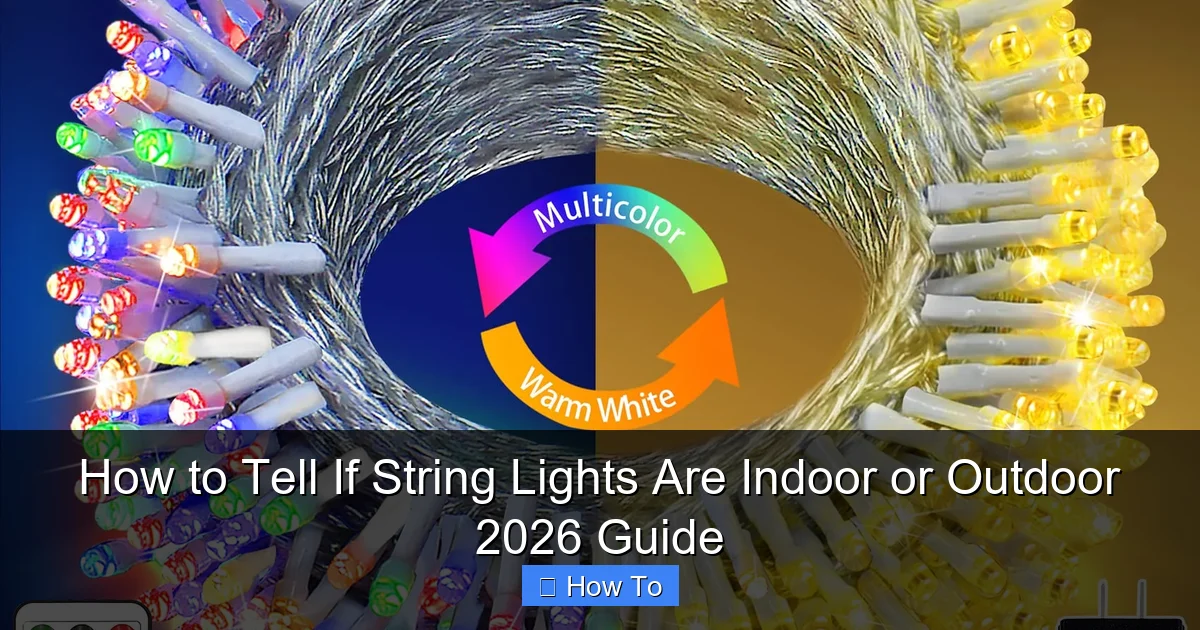
Featured image for how to tell if string lights are indoor or outdoor
Image source: m.media-amazon.com
Check the packaging or product label for an “outdoor” rating or IP44 (or higher) weatherproof certification—this is the clearest sign string lights are safe for exterior use. Look for thicker, UV-resistant rubber or PVC insulation and sealed bulb sockets, which protect against moisture and temperature changes, unlike flimsier indoor-only designs. When in doubt, assume unmarked lights are indoor-only to avoid safety hazards.
“`html
How to Tell If String Lights Are Indoor or Outdoor 2026 Guide
Key Takeaways
- Check the label: Look for “indoor” or “outdoor” clearly marked on packaging or tags.
- Inspect IP rating: Outdoor lights have IP44 or higher for weather resistance.
- Examine materials: Outdoor lights use UV-resistant, thicker, and waterproof materials.
- Look for plugs: Outdoor lights often have grounded or polarized plugs for safety.
- Test flexibility: Indoor lights are lighter and less durable than outdoor versions.
- Verify certifications: UL or ETL marks indicate safety compliance for outdoor use.
Why This Matters / Understanding the Problem
You’ve just unboxed a beautiful set of string lights—warm white, Edison-style, perfect for your patio or cozy reading nook. But wait: are they safe to hang outside? Or will they short-circuit in the first drizzle?
It’s a common dilemma. I’ve been there—hanging lights I thought were outdoor-safe, only to watch them flicker out after a summer storm. That’s when I learned the hard way: indoor and outdoor string lights aren’t interchangeable. Using indoor lights outside can lead to fire hazards, electrical damage, or even voided warranties.
That’s why this How to Tell If String Lights Are Indoor or Outdoor 2026 Guide exists. I’ll walk you through the signs, labels, and tests to know for sure—without guesswork. Whether you’re decorating for a wedding, a backyard BBQ, or just want safe, long-lasting ambiance, this guide has your back.
What You Need
Don’t worry—you won’t need a degree in electrical engineering. Here’s what you’ll need to check your lights:
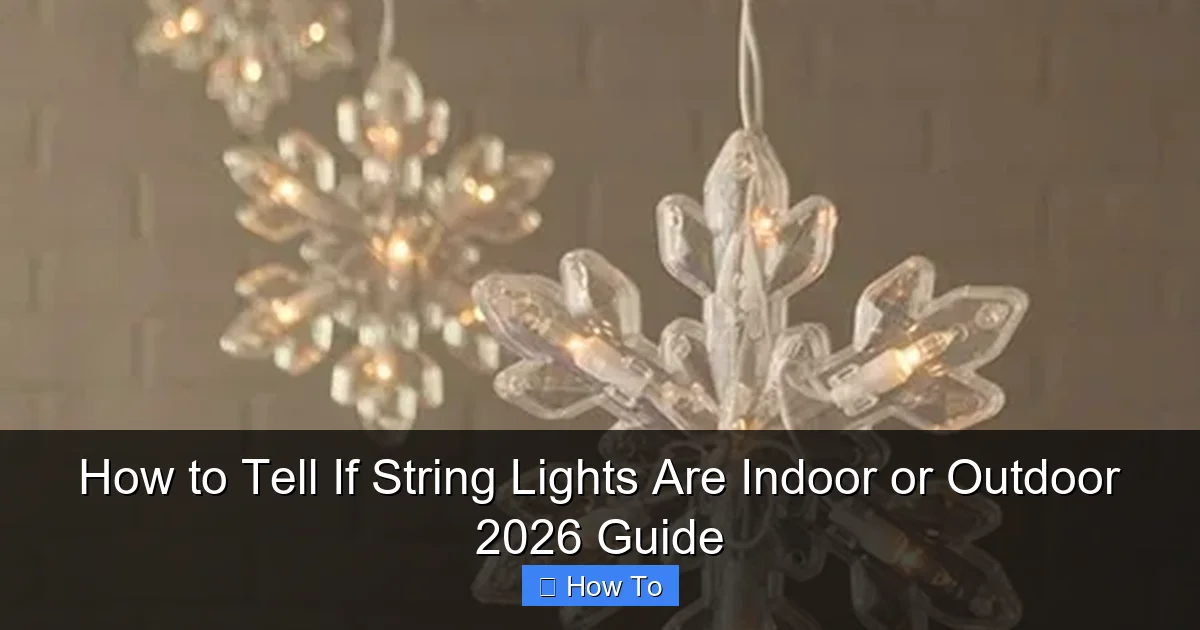
Visual guide about how to tell if string lights are indoor or outdoor
Image source: i5.walmartimages.com
- The string lights themselves (obviously)
- A flashlight or bright light source (to inspect labels and details)
- A magnifying glass (optional) – some labels are tiny
- A smartphone camera – to zoom in on fine print
- The original packaging or manual (if available)
- A multimeter (optional, but helpful) – for advanced users
Most of this is stuff you already have. The goal? Make this How to Tell If String Lights Are Indoor or Outdoor 2026 Guide as simple as checking a label on your coffee mug.
Step-by-Step Guide to How to Tell If String Lights Are Indoor or Outdoor 2026 Guide
Step 1: Check the Label for Safety Certifications
Start with the most reliable clue: safety certifications. These are your first line of defense.
Look on the plug, the cord, or near the bulb sockets. You’re hunting for labels like:
- UL Listed (Underwriters Laboratories) – common in North America
- ETL Listed (Intertek)
- CSA Certified (Canada)
- CE Mark (Europe)
Now, here’s the key: look for the words “Suitable for Outdoor Use” or “Wet Location Rated”. If it says “Indoor Use Only” or “Dry Location Only,” keep them inside.
I once found a set labeled “UL Listed” but with a tiny “Indoor Only” in parentheses. Sneaky, right? That’s why I always use my phone camera to zoom in.
Pro Insight: “UL Listed” doesn’t automatically mean outdoor-safe. Always check the *type* of listing. Outdoor-rated lights often have “Wet” or “Damp” ratings.
Step 2: Inspect the Plug and Cord for Weather Resistance
The plug and cord tell a lot about durability. Outdoor lights need thicker, more weather-resistant materials.
Here’s what to look for:
- Thick, rubberized cord – not thin, flimsy plastic
- Weatherproof plug cover – a rubber or silicone cap that seals the connection
- Strain relief at plug and socket ends – prevents fraying from bending
- No exposed metal on the plug – should be fully insulated
I remember buying a “budget” set from an online market. The plug had no cover, and the cord cracked after one rainy week. Lesson learned.
For your How to Tell If String Lights Are Indoor or Outdoor 2026 Guide, remember: outdoor cords are built like hiking boots. Indoor ones? More like slippers.
Warning: If the plug feels flimsy or the cord is thin and stiff, it’s likely indoor-only—even if the packaging says otherwise.
Step 3: Examine the Bulb Sockets and Seals
Outdoor lights need protection where it matters most: the bulb sockets.
Flip the lights over and look closely. Outdoor-rated sockets have:
- Rubber gaskets or O-rings around the socket base
- Water-resistant caps or covers (especially on Edison-style bulbs)
- No exposed metal threads – should be sealed
I once used indoor lights on a covered porch. The sockets had no seals. A light rain dripped down the cord and pooled in the sockets. One popped with a spark. Not cool.
Indoor sockets are usually open and metal. Outdoor ones are sealed like a submarine hatch. It’s that simple.
Pro Tip: Gently press around the socket. If it feels loose or wobbly, it’s not built for weather.
Step 4: Look for the IP (Ingress Protection) Rating
This is the tech-savvy part—but don’t panic. IP ratings are like a weather report for your lights.
You’ll see something like IP44, IP65, or IP67. The numbers tell you how well the lights resist dust and water:
- First digit (1–6): Dust resistance (6 = fully protected)
- Second digit (1–9): Water resistance (4 = splashes, 5 = low-pressure jets, 6 = strong jets, 7 = immersion up to 1m)
For outdoor use, aim for at least IP44 (splash-proof). For full outdoor exposure—like hanging from a tree—go for IP65 or higher.
I once bought lights labeled IP20. That means “no dust protection, no water resistance.” I used them under a gazebo. Big mistake. One thunderstorm, and they were toast.
This detail is crucial in your How to Tell If String Lights Are Indoor or Outdoor 2026 Guide. IP ratings are your best friend.
Note: If you can’t find an IP rating, assume the lights are indoor-only unless labeled otherwise.
Step 5: Test the Plug for Weatherproof Design
Outdoor plugs are built to keep water out. Here’s a quick test:
- Look at the plug’s prongs. Are they fully enclosed in rubber or silicone?
- Is there a seal or flap that covers the prong holes when not in use?
- Does the plug have a locking mechanism (like a twist-to-lock) for outdoor outlets?
Outdoor-rated plugs often have a rubber boot that fits snugly over the connection. Indoor plugs? Just bare prongs.
I learned this when I tried to plug indoor lights into an outdoor GFCI outlet. The connection wasn’t sealed. A light mist made it spark. I unplugged it fast.
For safety, always pair outdoor lights with an outdoor-rated outlet and a weatherproof cover—even if the lights are rated for outdoor use.
Pro Tip: Use a weatherproof outlet cover (available at hardware stores) to protect the plug connection from rain.
Step 6: Check the Packaging and Marketing Claims
Sometimes the truth is in the box. Re-examine the packaging or product description.
Look for phrases like:
- “All-weather string lights”
- “Outdoor-rated for rain and snow”
- “Suitable for patios, decks, and gardens”
- “Damp location approved”
But beware of vague terms like “weather-resistant” or “outdoor-inspired.” These mean nothing. Only specific ratings matter.
I once bought lights that said “great for patios” on the box. But the fine print? “Indoor use only.” Sneaky marketing.
For your How to Tell If String Lights Are Indoor or Outdoor 2026 Guide, always cross-check marketing claims with actual safety labels.
Warning: If the packaging shows lights hanging in rain or snow, but the label says “indoor only,” trust the label. The photo is staged.
Step 7: Do a “Feel Test” for Materials and Build Quality
Sometimes your hands know more than your eyes. Run your fingers over the lights.
- Outdoor lights: Thick, flexible, rubbery cord. Sockets feel solid and sealed.
- Indoor lights: Thin, stiff, or brittle cord. Sockets feel flimsy or hollow.
I once touched a set and felt tiny cracks in the cord. I didn’t even need to read the label—knew it was indoor-only.
Also, check the bulbs. Outdoor LEDs often have a protective lens or cover to prevent water entry. Indoor bulbs are usually bare.
This tactile check is a quick, reliable method—especially when labels are missing or faded.
Pro Insight: If the lights feel cheap or lightweight, they’re probably not built for the elements.
Step 8: Use a Multimeter for Advanced Testing (Optional)
If you’re tech-savvy and want to be 100% sure, use a multimeter.
Here’s how:
- Set the multimeter to continuity mode (beep when circuit is complete).
- Plug the lights in (but don’t turn them on).
- Touch one probe to the plug’s neutral prong, the other to the neutral socket.
- Do the same for hot and ground.
If you get continuity on all three, the wiring is intact. But this doesn’t confirm weather resistance—it just checks for breaks.
For outdoor safety, use the multimeter to check for insulation resistance (if your model has that setting). High resistance means the insulation is intact and safe.
This step is overkill for most people. But if you’re using lights in a commercial setting or high-moisture area, it’s worth the effort.
Note: Never test live circuits. Unplug the lights before using a multimeter on sockets.
Pro Tips & Common Mistakes to Avoid
After years of decorating—and a few electrical mishaps—here’s what I’ve learned:
- Don’t trust the price. Expensive doesn’t always mean outdoor-safe. I’ve seen $100 “luxury” lights with indoor-only ratings.
- Don’t assume “covered” means safe. A porch isn’t a guarantee. Wind can blow rain sideways. Always use outdoor-rated lights, even under cover.
- Check the transformer (if it has one). Some lights use an external power supply. If it’s not labeled “outdoor use,” keep it inside.
- Replace old lights. Even outdoor-rated lights degrade over time. If the cord is cracked or sockets are loose, retire them.
- Use timers and GFCI outlets. Outdoor lights should always plug into a Ground Fault Circuit Interrupter outlet for safety.
One mistake I made: I used indoor lights for a wedding arch under a tent. It rained. The lights sparked, and we had to switch to candles. Not the romantic vibe I planned.
For your How to Tell If String Lights Are Indoor or Outdoor 2026 Guide, remember: when in doubt, keep them in. It’s safer than risking a fire or shock.
Pro Tip: Label your lights. Use a permanent marker or tag: “OUTDOOR” or “INDOOR.” Saves time later.
FAQs About How to Tell If String Lights Are Indoor or Outdoor 2026 Guide
Q: Can I use indoor string lights outside if they’re under a covered patio?
Technically, yes—but it’s risky. Wind can blow rain sideways, and moisture can still reach the sockets. For true safety, use outdoor-rated lights. It’s not worth the risk of damage or fire. Stick with this How to Tell If String Lights Are Indoor or Outdoor 2026 Guide to be sure.
Q: What’s the difference between “damp location” and “wet location” ratings?
Great question. “Damp location” means the lights can handle humidity and occasional splashes—like a covered porch. “Wet location” means they can survive direct rain, snow, or even being hosed down. For full outdoor use, go for “wet location” rated.
Q: My lights say “IP44”—can I use them outside?
Yes—IP44 means they’re protected against splashing water from any direction. They’re safe for covered patios, decks, or pergolas. But not for direct, heavy rain. For full exposure, look for IP65 or higher.
Q: Are LED string lights safer for outdoor use than incandescent?
Yes, in two ways. LEDs run cooler (less fire risk) and are more energy-efficient. But the rating matters more than the bulb type. An LED light with an indoor-only label is still unsafe outside. Always check the safety label, not just the bulb.
Q: Can I modify indoor lights to make them outdoor-safe?
No. You can’t “upgrade” indoor lights. Adding sealant or tape isn’t safe or reliable. It can trap moisture and increase fire risk. Only use lights that are designed for outdoor use.
Q: What if the label is missing or faded?
When in doubt, assume they’re indoor-only. Look for other clues: thin cord, open sockets, no IP rating. If you can’t confirm safety, use them inside or replace them.
Q: Are solar-powered string lights outdoor-safe?
Most are—but check the battery compartment. It should be sealed and labeled for outdoor use. Solar panels are weatherproof, but the battery and wiring might not be. Always verify the rating.
Final Thoughts
Decorating with string lights should be fun, not stressful. The key to safe, beautiful lighting? Knowing the difference between indoor and outdoor.
This How to Tell If String Lights Are Indoor or Outdoor 2026 Guide gives you the tools to make smart choices. Check the labels. Inspect the plug and sockets. Look for IP ratings and safety certifications. Trust your hands—and your gut.
Remember: it’s not about perfection. It’s about safety. One spark can ruin a party—or worse.
So next time you’re hanging lights, pause. Ask: “Are these rated for outside?” If not, keep them inside. Your patio, your guests, and your peace of mind will thank you.
Now go light up your space—safely and beautifully.
“`