Featured image for can i shorten a string of christmas led lights
Image source: ledwatcher.com
Yes, you can shorten a string of Christmas LED lights—but only if they’re designed to be cut. Look for manufacturer markings or cut lines on the wiring; never slice blindly, as this risks damage or fire. Always disconnect power and follow safety guidelines to ensure a safe, successful modification.
Key Takeaways
- Check manufacturer guidelines: Always verify if your LED lights are designed to be shortened.
- Cut only at marked points: Never cut between bulbs; follow designated cut lines.
- Use proper tools: Sharp scissors or wire cutters ensure clean, safe cuts.
- Seal ends properly: Prevent moisture damage with waterproof caps or electrical tape.
- Test after shortening: Verify functionality before hanging the modified string.
- Avoid overloading circuits: Ensure shortened lights don’t exceed outlet capacity.
📑 Table of Contents
- The Magic of Christmas Lights and the Dilemma of Length
- Understanding How LED Christmas Lights Work
- Can You Shorten LED Lights? The Key Factors
- How to Shorten LED Lights Safely: A Step-by-Step Guide
- Risks and Alternatives to Shortening
- Data Table: LED Light Modification Guidelines
- Conclusion: Balancing Creativity and Safety
The Magic of Christmas Lights and the Dilemma of Length
Few things evoke the spirit of the holidays quite like the warm glow of Christmas lights. Whether draped across your roofline, wrapped around a tree, or twinkling in your windows, these tiny bulbs create a magical atmosphere that brings joy to young and old alike. Among the most popular choices today are LED Christmas lights, prized for their energy efficiency, long lifespan, and vibrant colors. However, as you plan your festive display, a common question arises: Can I shorten a string of Christmas LED lights? This seemingly simple query opens the door to a world of technical considerations, safety concerns, and creative solutions.
Imagine this: you’ve purchased a 25-foot string of LED lights, only to realize it’s far too long for your mantelpiece. You don’t want to leave excess wire dangling, nor do you want to buy a new set. The temptation to cut and shorten the string yourself is strong—but is it safe? The answer isn’t a straightforward yes or no. While some LED light strings can be modified, others cannot, and attempting to shorten the wrong type could lead to electrical hazards, voided warranties, or even fire risks. In this comprehensive guide, we’ll explore the ins and outs of shortening LED Christmas lights, covering everything from circuit types and soldering techniques to safety protocols and alternative solutions. By the end, you’ll know exactly when, how, and whether to modify your holiday lighting safely and effectively.
Understanding How LED Christmas Lights Work
The Basics of LED Light Circuits
Before diving into whether you can shorten a string of LED Christmas lights, it’s essential to understand how these lights function electrically. Unlike traditional incandescent bulbs, LEDs (Light Emitting Diodes) are semiconductor devices that emit light when an electric current passes through them. They operate on low voltage and are highly efficient, using up to 80% less energy than their incandescent counterparts.
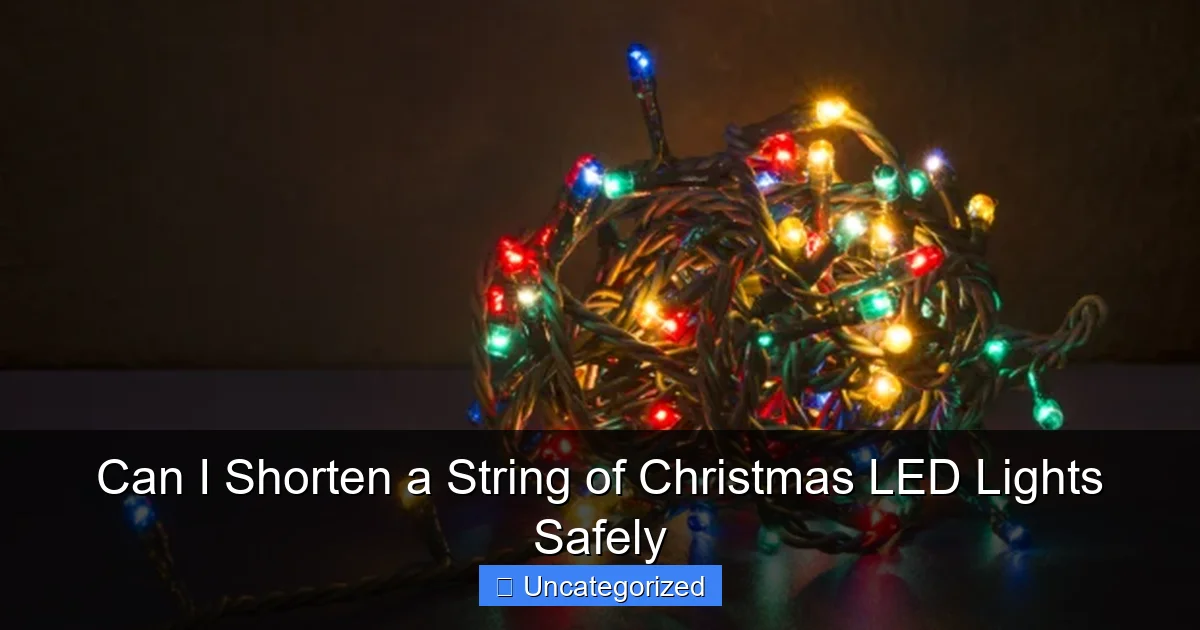
Visual guide about can i shorten a string of christmas led lights
Image source: stylemotivation.com
Most LED Christmas light strings use one of two primary circuit configurations: series circuits and parallel circuits. The type of circuit determines how the lights respond when one bulb fails and, crucially, whether the string can be safely shortened.
- Series circuits: In this setup, the current flows through each LED in sequence. If one bulb burns out or is removed, the entire string goes dark because the circuit is broken. Series strings are common in older or budget models.
- Parallel circuits: Here, each LED has its own path to the power source. If one bulb fails, the rest remain lit. Most modern LED strings use parallel or hybrid (series-parallel) designs to improve reliability.
Voltage and Wattage Considerations
LEDs require a specific voltage to operate correctly—typically 3 volts per diode, though this varies by manufacturer. Most commercial LED strings are designed for 120V household outlets (in North America) and use internal resistors and voltage dividers to regulate the current. When you cut a string, you disrupt this balance. For example, removing several bulbs from a series circuit reduces the total load, which can cause the remaining LEDs to receive too much voltage, leading to overheating or premature burnout.
Additionally, the wattage rating of the string is tied to its length. A 25-foot string might draw 4 watts, while a 50-foot version draws 8 watts. Shortening the string changes the power draw, which can affect how the transformer or driver (if present) performs. This is especially important for strings with built-in controllers, timers, or smart features.
Smart and Programmable LED Strings
Modern LED Christmas lights often come with advanced features like color-changing modes, app control, or music synchronization. These strings typically use addressable LEDs (e.g., WS2812B) or microcontrollers that rely on precise data and power delivery. Cutting such a string without understanding the data line (usually a third wire) can disable the entire string or damage the controller. For example, if you cut a string of smart RGB LEDs between the controller and the first LED, the rest won’t receive the signal, rendering them useless.
Can You Shorten LED Lights? The Key Factors
Type of Circuit: Series vs. Parallel
The most critical factor in determining whether you can shorten a string is its circuit type. Here’s what you need to know:
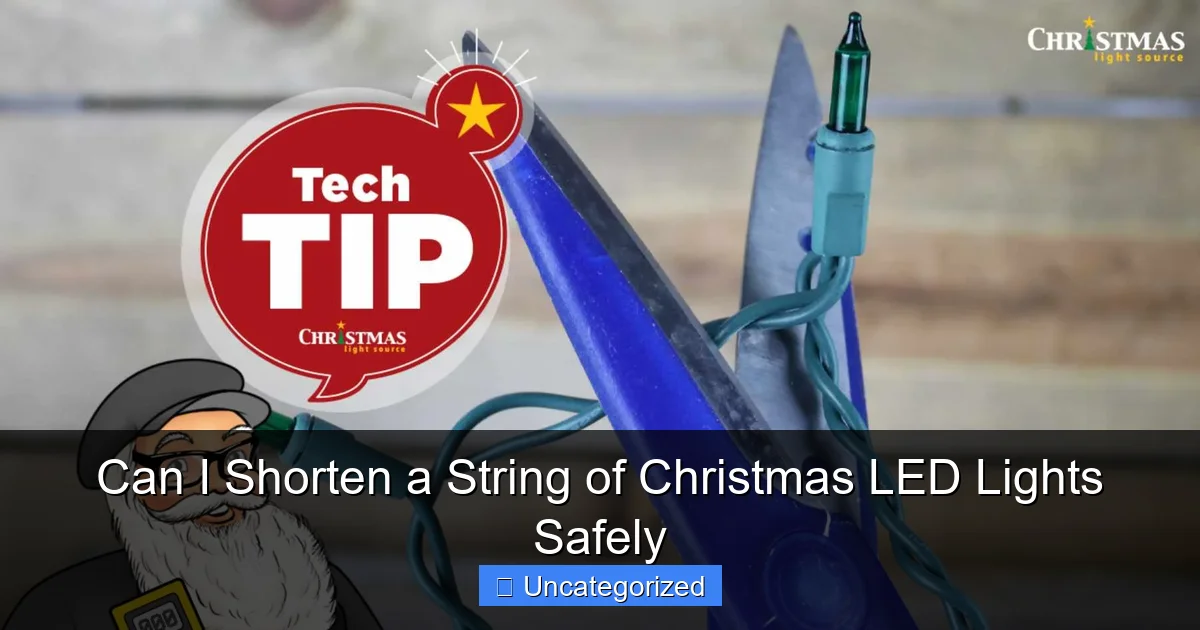
Visual guide about can i shorten a string of christmas led lights
Image source: christmas-light-source.com
- Series circuits: Generally not safe to shorten. Removing bulbs increases voltage across the remaining LEDs, risking damage. For instance, if a 20-bulb series string is designed for 120V (6V per bulb), removing 5 bulbs increases the voltage per remaining bulb to 7.5V—exceeding the LED’s tolerance.
- Parallel or hybrid circuits: Often modifiable. Because each bulb operates independently, you can remove sections as long as you reconnect the power lines properly. Look for strings labeled “end-to-end” or “connectable,” which are designed for extension or modification.
Pro Tip: Check the packaging or manual. Many manufacturers specify whether a string is “cuttable” or “non-cuttable.” If it’s not labeled, assume it’s not safe to modify unless you’re prepared to test and risk damage.
Presence of a Driver or Transformer
Some LED strings use a driver (a small box or adapter) to convert household voltage to the lower voltage required by LEDs. These drivers are calibrated for specific string lengths. Shortening the string may cause the driver to output excessive voltage, leading to overheating. For example, a 12V driver designed for a 50-foot string might output 15V to a 25-foot string, damaging the LEDs.
Strings without drivers (e.g., “plug-in” types) are more likely to be modifiable, but you must still ensure the voltage per bulb remains within safe limits. Use a multimeter to test voltage before and after modification.
Warranty and Safety Standards
Modifying a light string typically voids the manufacturer’s warranty. More importantly, altered lights may no longer meet UL (Underwriters Laboratories) or ETL safety certifications. These certifications ensure the product is safe for household use. If you shorten a string and it fails, causing a fire or electrical shock, insurance claims might be denied.
Example: A 2022 Consumer Product Safety Commission (CPSC) report found that 30% of holiday-related electrical fires involved modified or damaged lights. Always prioritize safety over convenience.
How to Shorten LED Lights Safely: A Step-by-Step Guide
Tools and Materials You’ll Need
Before starting, gather the following:
- Wire cutters/strippers
- Soldering iron and solder (rosin-core)
- Heat-shrink tubing or electrical tape
- Multimeter (to test voltage/current)
- Needle-nose pliers
- Heat gun or lighter (for heat-shrink tubing)
- Replacement connectors (optional, for end-to-end strings)
Step 1: Identify the Circuit Type
Test the string by removing one bulb. If the entire string goes dark, it’s a series circuit—do not attempt to shorten it. If only one bulb goes out, it’s likely parallel or hybrid, making it a candidate for modification.
Step 2: Determine the Cutting Point
For parallel or end-to-end strings, locate the wire junctions between bulbs. These are usually marked by small plastic caps or solder points. Cut between bulbs, not through a bulb socket. Use a multimeter to confirm the cut point is on the neutral (white) and hot (black) wires, not the ground (green/bare).
Step 3: Cut and Strip the Wires
Cut the string at the desired length, leaving at least 2 inches of wire on both sides of the cut. Strip ½ inch of insulation from each wire end. Caution: Avoid cutting the third wire (if present) in addressable strings—it carries data and must remain intact.
Step 4: Reconnect the Wires
Solder the corresponding wires together: black to black, white to white. For addressable strings, ensure the data wire (often yellow or blue) is also connected. Cover each solder joint with heat-shrink tubing or electrical tape to prevent shorts. Tip: Use a third hand tool to hold wires steady while soldering.
Step 5: Test the Modified String
Plug in the string and check for:
- Even brightness across all bulbs
- No flickering or overheating
- Proper function of modes (if applicable)
If issues arise, unplug immediately and recheck connections.
Step 6: Insulate and Secure
Seal the soldered joint with silicone sealant (for outdoor use) or wrap it in electrical tape. Secure the joint with a zip tie to prevent strain on the wires.
Risks and Alternatives to Shortening
Potential Risks of DIY Shortening
- Electrical hazards: Poor soldering can cause shorts, leading to sparks or fire.
- Reduced lifespan: Overvoltage or overheating shortens LED life.
- Voided warranty: Manufacturers often void warranties for modified products.
- Non-compliance: Altered lights may violate local electrical codes (e.g., NEC Article 411).
Real-World Example: In 2021, a homeowner in Ohio caused a small fire by shortening a string of series-connected LEDs. The fire started at a poorly insulated solder joint, igniting nearby decorations. The homeowner had no recourse due to the modified product.
Safer Alternatives to Shortening
Instead of cutting, consider these options:
- Use zip ties or clips to bundle excess wire neatly. This is ideal for mantels or railings.
- Choose pre-sized strings: Many brands offer 10-, 15-, or 20-foot options.
- Use extension cords to position the plug farther from the display.
- Buy cuttable strings: Look for “cut-to-length” or “modular” LED lights (e.g., Govee, Twinkly).
- Create a custom loop: Fold excess wire into a figure-eight pattern and secure it with a zip tie.
When to Avoid Shortening Altogether
Never shorten LED lights if:
- The string is series-connected (test by removing a bulb).
- It has a driver (check for a box on the plug).
- It’s smart or addressable (look for app control or data wires).
- You’re uncomfortable with soldering or electrical work.
Data Table: LED Light Modification Guidelines
| Light Type | Circuit Type | Can Be Shortened? | Tools Required | Risk Level |
|---|---|---|---|---|
| Standard Parallel | Parallel or Hybrid | Yes (with caution) | Soldering iron, heat-shrink tubing | Medium |
| Series-Connected | Series | No | None (do not cut) | High |
| Smart/Addressable | Data-driven (e.g., WS2812B) | Only if data line is preserved | Multimeter, data wire connector | High |
| Driver-Equipped | Varies | Not recommended | None | High |
| Cuttable/Modular | Parallel (pre-designed) | Yes (per manufacturer) | Replacement connectors | Low |
Conclusion: Balancing Creativity and Safety
Shortening a string of Christmas LED lights can be done safely—but only under the right conditions. If your string uses a parallel or hybrid circuit, lacks a driver, and isn’t smart-controlled, DIY modification is possible with careful soldering and insulation. However, for series-connected, driver-equipped, or addressable strings, the risks far outweigh the benefits. In these cases, opt for safer alternatives like bundling excess wire or purchasing pre-sized sets.
Remember, holiday lights are meant to bring joy, not danger. By understanding your string’s circuit type, respecting voltage limits, and prioritizing safety certifications, you can create a stunning display without compromising your home’s electrical integrity. As a final tip, always test modified lights for at least 24 hours before hanging them, and never leave them unattended while plugged in.
Whether you’re a DIY enthusiast or prefer to play it safe, the key is informed decision-making. With this guide, you’re equipped to make the right choice for your holiday setup. So go ahead—deck the halls with confidence, knowing that your festive lights are as safe as they are dazzling.
Frequently Asked Questions
Can I shorten a string of Christmas LED lights without damaging them?
Yes, you can shorten a string of Christmas LED lights, but it must be done carefully to avoid damaging the circuit. Always cut at designated points (usually marked by scissors icons) and seal the ends to prevent moisture damage.
Where should I cut a string of Christmas LED lights to shorten it?
Most LED light strings have clear “cut here” indicators, often near the plug or between bulbs. Follow the manufacturer’s guidelines to locate these points and use sharp scissors to avoid fraying wires.
Is it safe to shorten a string of Christmas LED lights myself?
Shortening LED lights is safe if you follow instructions and use insulated tools. However, improper cuts can cause shorts or fire hazards—always disconnect the lights before modifying them.
Can I shorten a string of Christmas LED lights with non-removable bulbs?
It’s possible, but riskier. Non-removable bulbs require precise cuts between connections and proper wire insulation afterward. Consider consulting a professional if you’re unsure.
What tools do I need to shorten a string of LED Christmas lights?
You’ll need sharp scissors or wire cutters, electrical tape, and optionally heat-shrink tubing for sealing. A multimeter can help test continuity after modifications.
Will shortening a string of Christmas LED lights affect its brightness or lifespan?
When done correctly, shortening won’t impact brightness or lifespan. Overloading the circuit by cutting too many bulbs, however, may strain the remaining lights—stick to the recommended max length.

