Featured image for vinyl fence string light hooks
Image source: i5.walmartimages.com
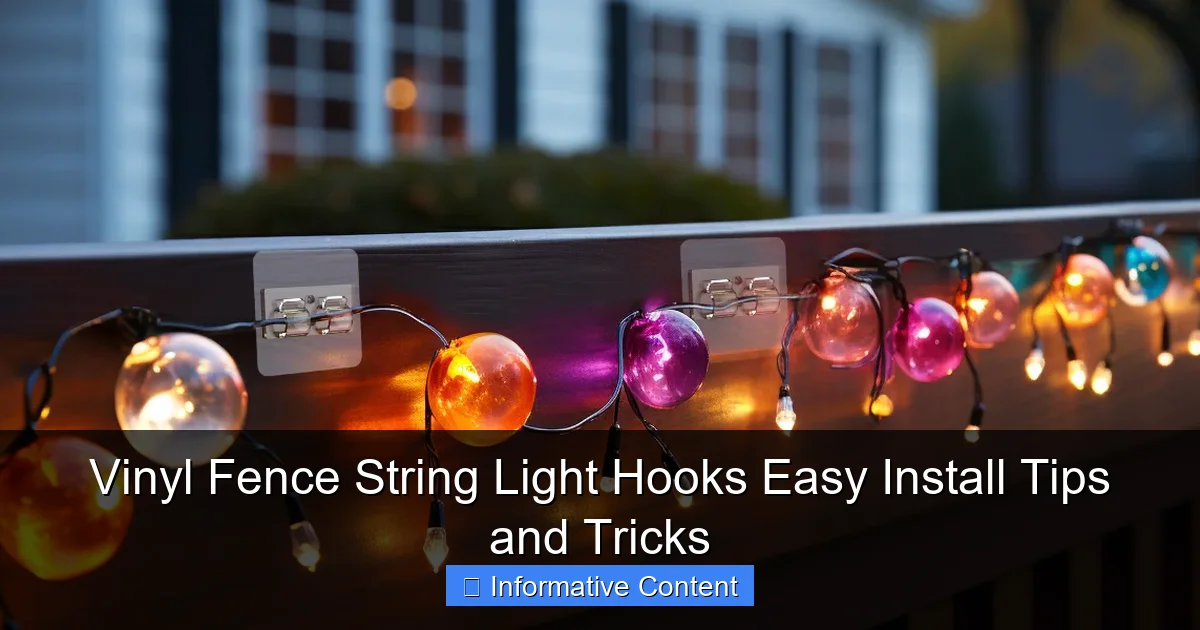
Vinyl fence string light hooks offer a secure, damage-free way to hang outdoor lighting without drilling or permanent modifications. Designed for easy installation and weather resistance, these hooks simply snap or clamp onto fence rails, making them perfect for seasonal décor or year-round ambiance. Transform your backyard in minutes with minimal effort and maximum visual impact.
Key Takeaways
- Choose durable hooks: Opt for UV-resistant, weatherproof vinyl hooks for long-term use.
- Measure spacing first: Plan hook placement to ensure even light distribution.
- Use a template: Create a guide for consistent, error-free hook installation.
- Secure tightly: Double-check hook attachment to prevent sagging or falling.
- Avoid overloading: Follow weight limits to protect fence and lights.
- Test before finalizing: Hang lights temporarily to adjust spacing and alignment.
📑 Table of Contents
- Why Vinyl Fence String Light Hooks Are a Game Changer
- Understanding Vinyl Fence String Light Hooks
- Choosing the Right Hooks for Your Fence
- Step-by-Step Installation: Easy Tips for a Flawless Setup
- Troubleshooting Common Problems
- Creative Uses Beyond String Lights
- Product Comparison Table
- Final Thoughts: Light Up Your Life (Without the Hassle)
Why Vinyl Fence String Light Hooks Are a Game Changer
Let’s be honest: setting up outdoor string lights on a vinyl fence can feel like trying to hang a picture frame without a hammer. You want the magic of twinkling lights, but the tools? Not so magical. Enter vinyl fence string light hooks—a simple, often overlooked solution that turns a frustrating chore into a five-minute task. I remember my first attempt at hanging lights on my vinyl fence. I used tape, zip ties, and even tried (and failed) to screw in tiny hooks. The result? A sagging, uneven mess that lasted all of one night before the wind took it down. Sound familiar?
That’s when I discovered the beauty of these tiny, mighty hooks. They’re not just about convenience—they’re about preserving your fence. Vinyl is durable, but it’s also sensitive to damage from nails, screws, or harsh adhesives. The right hooks protect your fence while giving you the freedom to create the perfect ambiance for backyard barbecues, holiday parties, or just a cozy evening under the stars. Whether you’re a DIY newbie or a seasoned pro, this guide will walk you through everything you need to know to install and use these hooks like a pro, with tips and tricks I’ve learned the hard way.
Understanding Vinyl Fence String Light Hooks
What Are They, and Why Do They Matter?
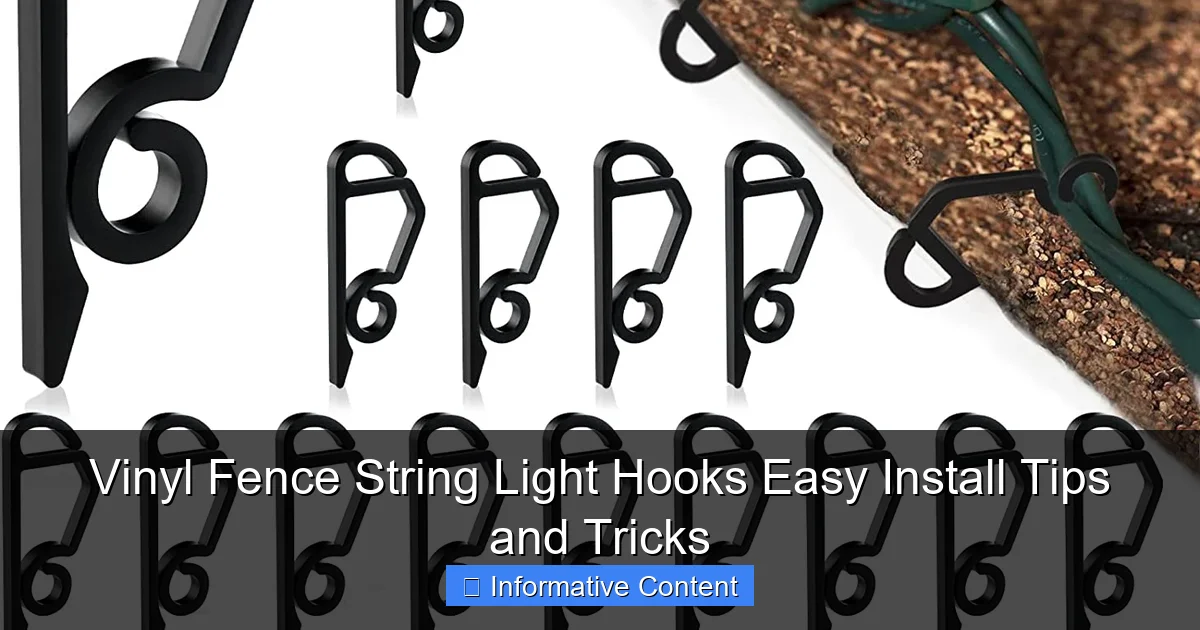
Vinyl fence string light hooks are small, purpose-built clips or brackets designed to attach string lights to vinyl fences without drilling, screwing, or damaging the material. Think of them as the “invisible helpers” of outdoor lighting. Most are made from durable plastic or coated metal, ensuring they won’t scratch your fence or rust over time. They come in various styles—some grip the fence’s top rail, others clip onto the pickets, and a few even slide into the grooves of the vinyl.
Visual guide about vinyl fence string light hooks
Image source: m.media-amazon.com
Why are they better than DIY alternatives? Because they’re designed specifically for vinyl’s smooth, slippery surface. Tape fails in humidity, zip ties cut into the material, and nails? Well, let’s just say they’re a one-way ticket to cracks and warping. These hooks distribute weight evenly, stay put in wind and rain, and remove easily when you’re ready to take the lights down. Plus, they’re reusable—so you’re not buying new supplies every season.
Types of Hooks and Their Best Uses
Not all hooks are created equal. Here’s a quick rundown of the most common types and where they shine (pun intended):
- Top-rail hooks: These clamp onto the flat top of your fence. They’re ideal for long, straight runs of lights and work best on fences with a wide, sturdy rail. Example: The “Fence Clip Pro” holds up to 10 lbs per hook—perfect for heavy-duty commercial lights.
- Picket clips: Designed to grip the vertical pickets, these are great for creating patterns (like zigzags or diamonds). They’re less visible, which gives a cleaner look. Pro tip: Use them for holiday lights where you want the focus on the bulbs, not the hardware.
- Groove slides: These slip into the small grooves of some vinyl fences. They’re nearly invisible and work well on fences with textured surfaces. Just make sure your fence has these grooves—otherwise, they’re useless!
- Adhesive-backed hooks: For fences with no top rail or pickets (like solid privacy styles), these stick to the surface. Look for UV-resistant adhesive—cheap ones peel off in summer heat.
My favorite? Top-rail hooks for their reliability. I used them to hang 50 feet of Edison bulb lights last summer, and they survived a thunderstorm with 40 mph winds. No sagging, no slipping. That’s the kind of peace of mind you want.
Choosing the Right Hooks for Your Fence
Measure Your Fence (Yes, Really)
Before buying hooks, measure your fence. I know—it sounds obvious. But I once bought “universal” clips that didn’t fit my fence’s 2.5-inch rail. Oops. Here’s what to check:
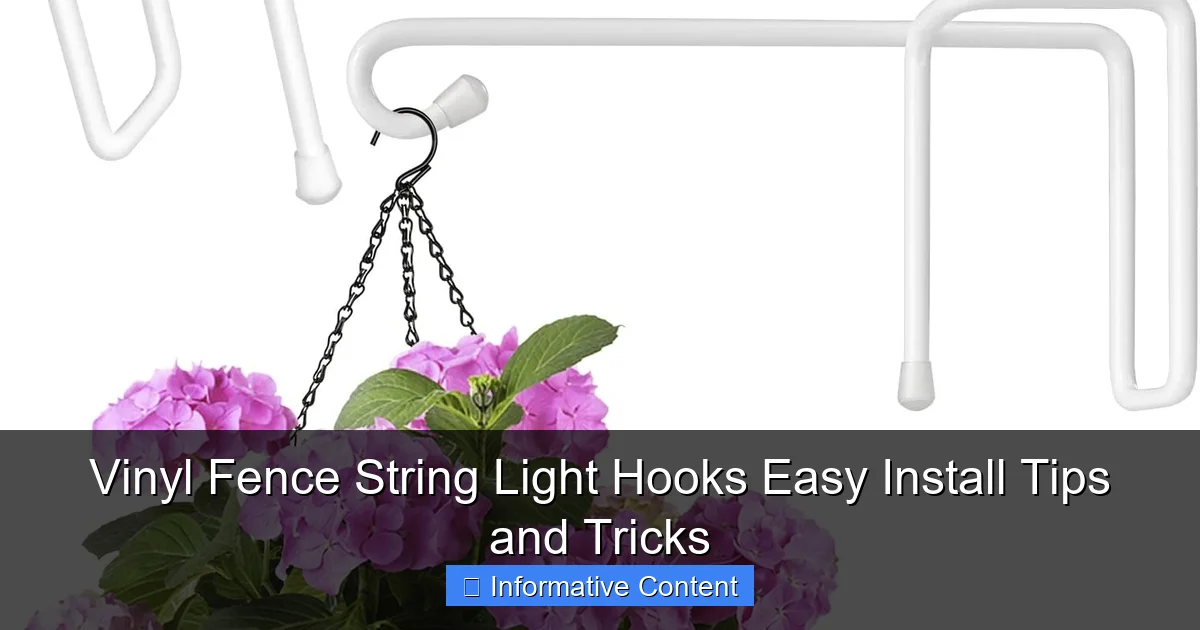
Visual guide about vinyl fence string light hooks
Image source: m.media-amazon.com
- Rail width: Most hooks fit rails 1.5–4 inches wide. Measure the flat top of your fence.
- Picket spacing: If using picket clips, note the gap between pickets. Standard is 1–2 inches, but older fences might vary.
- Weight capacity: Light strings (like mini LEDs) need hooks rated for 3–5 lbs. Heavy-duty lights (like commercial-grade) need 8+ lbs. Check the packaging—don’t guess.
Pro tip: Take a photo of your fence and bring it to the hardware store. Staff can help you match the hooks to your setup.
Material Matters: Plastic vs. Metal
Plastic hooks are lightweight, affordable, and won’t rust. But they can crack in extreme cold. Metal hooks (usually stainless steel or coated steel) are stronger but pricier. For coastal areas or regions with harsh winters, metal is worth the investment. For mild climates, plastic works fine.
One caveat: Avoid “budget” metal hooks with flimsy coatings. I learned this when a set of cheap hooks rusted in six months, staining my fence. Look for powder-coated or stainless steel—they’ll last years.
Where to Buy (And What to Avoid)
Skip big-box stores for specialty hooks. Instead, try:
- Home improvement stores: Lowe’s and Home Depot carry reliable brands like “Fence Clip Pro” and “VinylGrip.”
- Online retailers: Amazon and Etsy have niche options (e.g., “invisible” groove slides).
- Hardware specialty shops: They often stock heavy-duty hooks for commercial use.
Avoid generic “fence clips” on discount sites. Read reviews—if multiple people mention “broke in wind” or “didn’t fit,” keep looking.
Step-by-Step Installation: Easy Tips for a Flawless Setup
Prep Your Fence and Lights
Before you start, clean your fence. A damp cloth removes dust and pollen—this helps hooks grip better. Also, test your lights! There’s nothing worse than hanging 50 feet of string only to find a dead bulb. Plug them in, fix any issues, then unplug.
Spacing: The Key to Even Lighting
Spacing hooks too far apart causes sagging. Too close? Wasted hooks. For most fences, place hooks every 12–18 inches. Here’s how to do it right:
- Mark your spots: Use a tape measure and chalk to mark hook positions. For straight runs, align marks with fence posts. For curves, space them closer (8–10 inches).
- Start at the power source: If your lights have a plug end, install the first hook near your outlet. This reduces tension on the cord.
- Use a level: For straight runs, a small level ensures hooks are even. Slight misalignments are obvious at night!
Example: I used 15-inch spacing for my 20-foot fence. The lights hung perfectly straight—no “dip” in the middle.
Attach Hooks: No Tools Required (Usually)
Most hooks snap or slide on. For top-rail hooks:
- Open the clip by pressing the sides.
- Align it with your chalk mark.
- Snap it shut. You should hear a click.
For picket clips:
- Hook the top arm over the picket.
- Press the bottom arm against the picket until it grips.
Pro tip: If a hook feels loose, check that it’s fully seated. Some have adjustable tension—tighten the screw (if included) for a snug fit.
Hang the Lights: Work Smart, Not Hard
Start at the power source and work outward. For each hook:
- Loop the light’s cord through the hook’s opening.
- Don’t pull too tight—leave a slight slack (about 1 inch) between hooks. This lets the lights move slightly in wind without stressing the clips.
- For LED bulbs, position them facing down to avoid glare.
Bonus trick: Use a “light hanger” tool (a long pole with a hook) to reach high fences without a ladder. I used one for my 7-foot privacy fence—no sore back!
Troubleshooting Common Problems
Hook Slippage: Why It Happens and How to Fix It
Even the best hooks can slip. Causes and fixes:
- Dirty fence: Wipe with soapy water. Let dry.
- Wrong hook size: If the hook wiggles, replace it with a larger model.
- Wind: Add extra hooks in high-wind areas. Or, use a “wind clip” (a secondary hook that holds the cord in place).
My fix: I added a second clip every 3 feet during a windy holiday season. The lights stayed put—even in a nor’easter.
Sagging Lights: When to Add Support
Sagging happens when lights are too heavy or hooks are too far apart. Solutions:
- Reduce span: Move hooks closer (every 10–12 inches).
- Use a support wire: Run a thin steel cable along the fence and clip lights to it. This shares the weight.
- Choose lighter lights: Swap bulky bulbs for LED strips.
Example: My neighbor’s 100-foot string sagged in the middle. We added a support wire, and it looked perfect.
Weatherproofing for Year-Round Use
Want to keep lights up year-round? Weatherproof your setup:
- Seal connections: Use waterproof tape or silicone on plugs and splices.
- Protect outlets: Use a weatherproof cover for outdoor outlets.
- Inspect hooks: Check for cracks or rust every 3 months. Replace as needed.
Pro tip: In winter, remove lights if your area gets ice storms. Ice buildup can pull hooks off.
Creative Uses Beyond String Lights
Decorating for Holidays and Events
Hooks aren’t just for lights! Use them for:
- Garlands: Hang pine, eucalyptus, or fabric garlands for holidays.
- Signage: Clip paper signs for birthdays or yard sales.
- Ornaments: Attach lightweight decorations (think: plastic pumpkins or snowflakes).
My favorite: I used hooks to hang a “Happy Birthday” banner at my daughter’s party. It stayed put all day—no tape residue!
Functional Uses: From Garden to Storage
Get creative with hooks:
- Garden tools: Clip small tools (trowels, shears) to your fence for easy access.
- Hose storage: Use large hooks to coil hoses neatly.
- Pet leash holder: Hang leashes near your gate.
Example: My neighbor uses hooks to hang her bird feeders. The squirrels can’t reach them—win-win!
Product Comparison Table
| Product Name | Type | Weight Capacity | Best For | Price (per 10) | User Rating (5-star) |
|---|---|---|---|---|---|
| Fence Clip Pro | Top-rail | 10 lbs | Heavy-duty lights, long runs | $12.99 | 4.8 |
| VinylGrip Picket Clip | Picket | 5 lbs | Patterned lighting, holiday decor | $8.50 | 4.6 |
| GrooveSlide Invisible Hook | Groove slide | 3 lbs | Textured vinyl fences, minimalist look | $15.00 | 4.4 |
| WeatherTite Adhesive Hook | Adhesive | 4 lbs | Solid privacy fences, temporary use | $9.99 | 4.2 |
| SteelGrip Heavy Duty | Top-rail | 15 lbs | Commercial lights, windy areas | $18.00 | 4.7 |
Final Thoughts: Light Up Your Life (Without the Hassle)
Vinyl fence string light hooks might seem like a small detail, but they’re a big deal. They save time, protect your fence, and turn outdoor lighting from a headache into a highlight. Whether you’re decking your fence for the holidays, hosting a party, or just creating a cozy nook for summer nights, these hooks make it easy—and fun. Remember, the key is choosing the right hook for your fence, spacing them properly, and weatherproofing for longevity. Don’t be like my past self, wrestling with tape and zip ties. Invest in the right tools, and you’ll get years of twinkling, stress-free magic.
And if you’re still on the fence (literally), start small. Buy a pack of 10 hooks and test them on a 5-foot section. You’ll see how simple it is. Then, before you know it, your entire fence will be glowing—and you’ll be the envy of the neighborhood. Happy hanging!
Frequently Asked Questions
How do I install vinyl fence string light hooks without damaging the fence?
Vinyl fence string light hooks are designed to clip securely onto the fence’s top rail or post without screws or adhesives. Simply slide the hook over the edge and ensure it’s snug to prevent slipping. This method preserves your fence’s integrity while providing a stable hold.
Can vinyl fence string light hooks support heavy-duty or commercial string lights?
Most vinyl fence string light hooks are built to hold standard to medium-weight lights, but check the product’s weight rating before installation. For heavier commercial lights, opt for reinforced hooks or distribute weight evenly across multiple hooks to avoid sagging.
Do these hooks work with all types of vinyl fences?
Yes, most vinyl fence string light hooks are adjustable or designed to fit common fence profiles, including flat-top, scalloped, and routed rails. Confirm the hook’s compatibility with your fence’s thickness (usually 1–3 inches) before purchasing.
Are vinyl fence string light hooks weatherproof?
High-quality vinyl fence string light hooks are made from UV-resistant, rust-proof materials like stainless steel or durable plastic. They’re built to withstand rain, sun, and snow, making them ideal for year-round outdoor use.
How far apart should I space vinyl fence string light hooks?
Space hooks every 12–18 inches for optimal support, especially if using longer or heavier light strands. Closer spacing prevents sagging and ensures even light distribution along the fence line.
Can I reuse vinyl fence string light hooks for other decorations?
Absolutely! These versatile hooks work well for hanging garlands, wind chimes, or holiday ornaments. Just ensure the item’s weight and size are compatible with the hook’s design for secure placement.