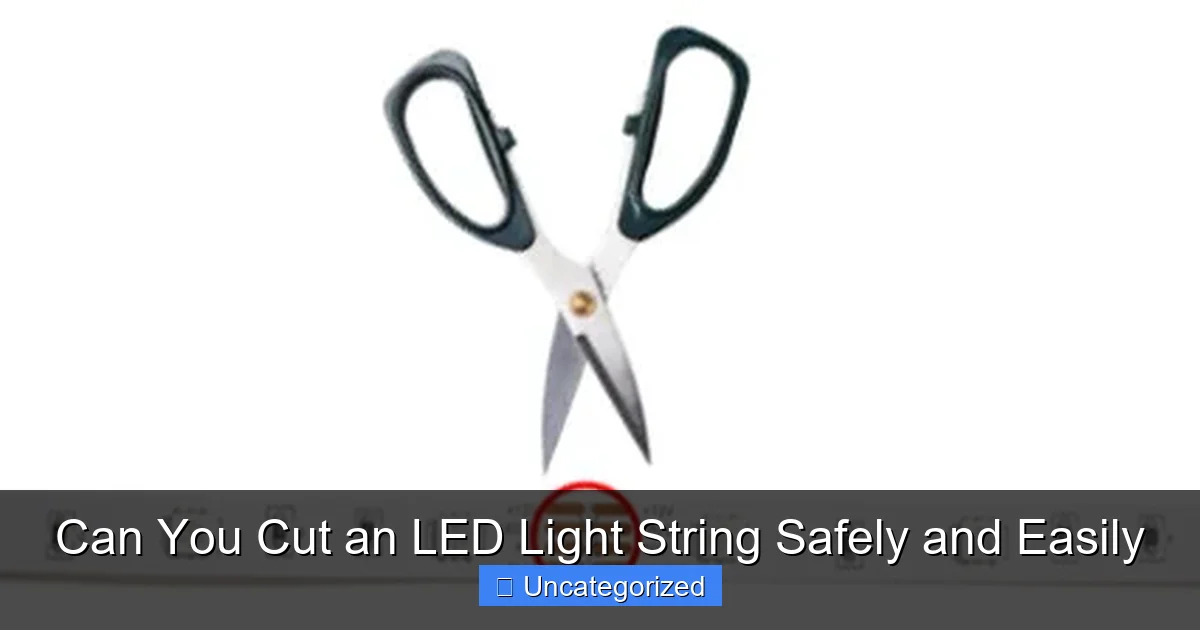
Featured image for can you cut an led light string
Image source: superlightingled.com
Yes, you can cut an LED light string safely—but only if it’s specifically labeled as “cuttable” or “segmented.” Doing so improperly can damage the circuit or create safety hazards, so always follow manufacturer guidelines and use sharp scissors at the designated cut points. Never cut non-cuttable strings, as this voids warranties and risks electrical failure.
Key Takeaways
- Only cut at marked points to avoid damaging the circuit.
- Use sharp scissors or wire cutters for a clean, safe cut.
- Seal cut ends with silicone to prevent moisture damage.
- Check voltage compatibility before connecting to power sources.
- Test after cutting to ensure remaining LEDs work properly.
- Never cut non-cuttable strings—risk of fire or electric shock.
- Measure twice, cut once to avoid shortening beyond needs.
📑 Table of Contents
- Can You Cut an LED Light String Safely and Easily?
- Understanding LED Light Strings: The Basics
- When Is It Safe to Cut an LED Light String?
- Tools and Materials for Cutting LED Strings
- Creative Uses for Cut LED Strings
- Troubleshooting Common Cutting Mistakes
- Data Table: Cuttable vs. Non-Cuttable LED Strings
- Conclusion: Cut Smart, Light Brighter
Can You Cut an LED Light String Safely and Easily?
Imagine decorating your home for the holidays, only to realize that the LED light string you purchased is either too long for your mantel or too short for your staircase. It’s a common dilemma faced by homeowners, DIY decorators, and event planners alike. LED light strings are incredibly versatile, offering energy efficiency, durability, and a wide range of colors and styles. But can you actually cut them to fit your desired length without damaging the lights or creating a safety hazard? The answer isn’t always straightforward, and it depends on the type of LED string you’re working with.
In this comprehensive guide, we’ll explore the ins and outs of cutting LED light strings safely and effectively. Whether you’re trimming a string to fit a specific space, repurposing leftover lights, or customizing your decor, understanding the technical aspects and safety precautions is crucial. From identifying cuttable versus non-cuttable strings to mastering the right tools and techniques, this article will equip you with everything you need to know. By the end, you’ll be able to make informed decisions, avoid costly mistakes, and even extend the life of your LED lights through smart modifications. Let’s dive in!
Understanding LED Light Strings: The Basics
How LED Light Strings Work
LED (Light Emitting Diode) light strings are designed differently from traditional incandescent bulbs. Instead of a single filament, each LED contains a semiconductor that emits light when an electric current passes through it. These strings are typically wired in either series or parallel configurations, which determines how they respond to modifications like cutting.
Visual guide about can you cut an led light string
Image source: ledvanceus.com
- Series wiring: All bulbs are connected end-to-end. If one bulb fails or the circuit is broken (e.g., by cutting), the entire string goes dark. Most older LED strings and non-cuttable models use this setup.
- Parallel wiring: Each bulb has its own independent path. Cutting one section doesn’t affect the rest of the string. This design is common in cuttable LED strings and rope lights.
Understanding the wiring is the first step in determining whether your LED string is cuttable. For example, a 50-light string with a single power source and no visible “cut points” is likely wired in series and should not be cut.
Types of LED Light Strings
Not all LED strings are created equal. Here’s a breakdown of common types and their cuttability:
- Non-cuttable strings: Often labeled “do not cut” or “non-modifiable.” These are typically series-wired and may have protective coatings or sealed connections. Cutting them will likely render the entire string unusable.
- Cuttable strings: Designed with pre-marked “cut points” (usually every 1–3 feet). These are parallel-wired and allow safe trimming. Common in commercial-grade lights and rope lights.
- Rope lights: Flexible, tube-shaped lights with embedded LEDs. Most are cuttable at marked intervals. Ideal for custom lengths.
- Smart LED strings: Bluetooth or Wi-Fi-enabled lights (e.g., Philips Hue). Cutting may disrupt app connectivity or power distribution.
Example: A 20-foot cuttable LED rope light from a hardware store might have cut points every 2 feet, allowing you to trim it to 14 feet without affecting the remaining 6 feet. In contrast, a 35-light holiday string from a department store with no cut marks should never be cut.
When Is It Safe to Cut an LED Light String?
Signs Your LED String Can Be Cut
Before reaching for the scissors, look for these indicators:
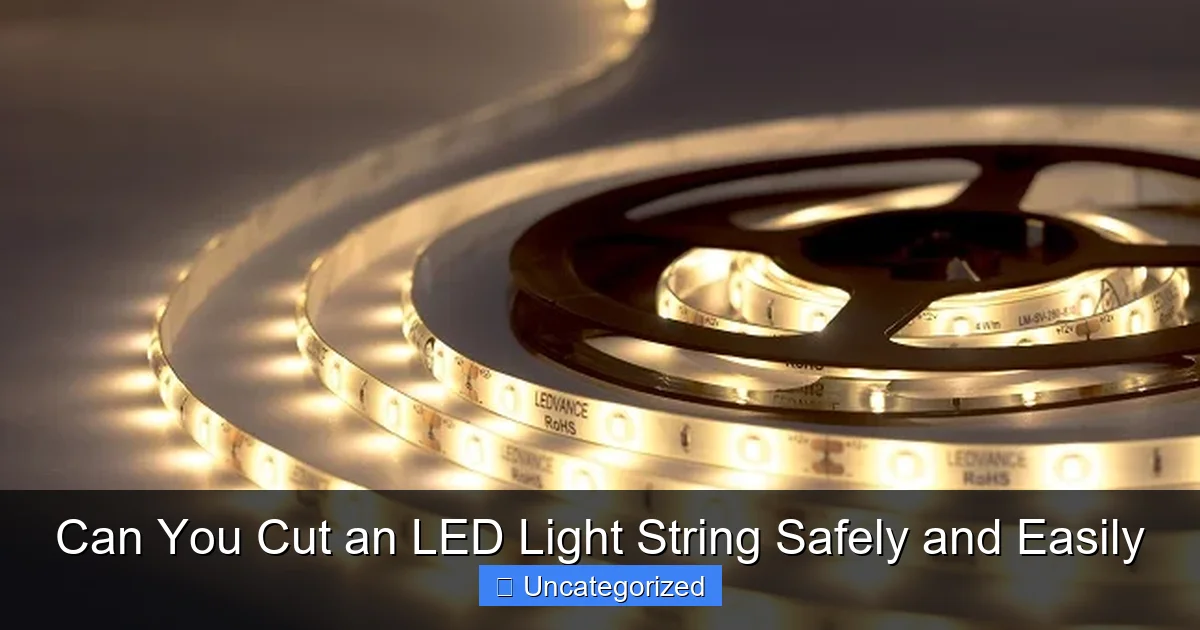
Visual guide about can you cut an led light string
Image source: ledvanceus.com
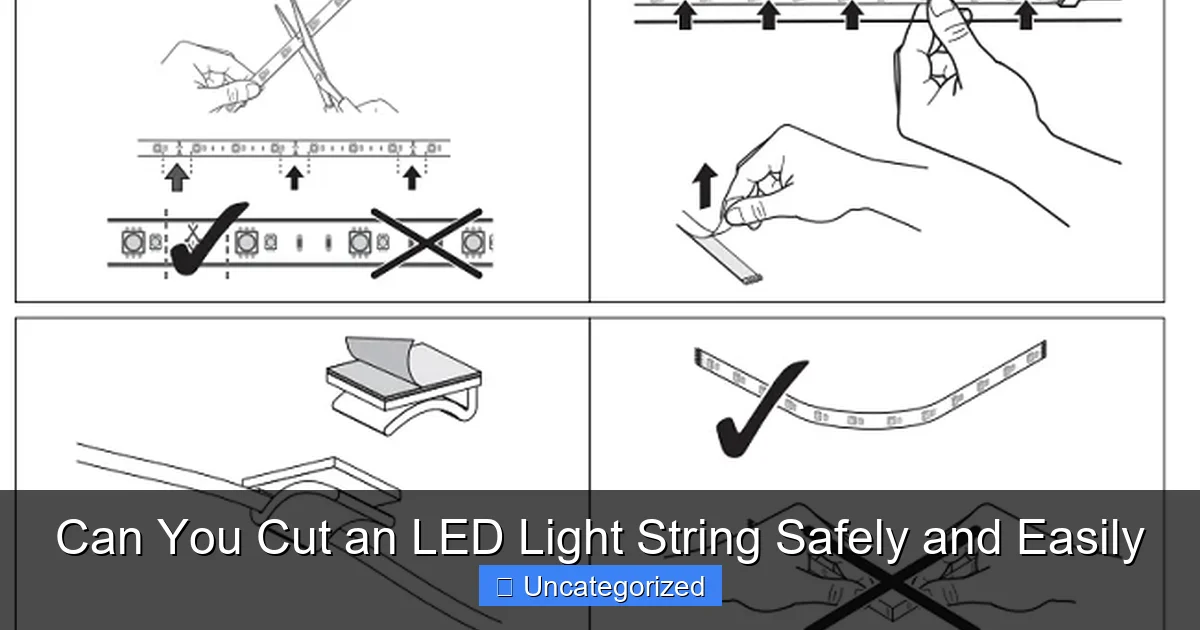
- Pre-marked cut points: Manufacturers often label safe cutting locations with lines, dots, or “cut here” text. These are usually near solder joints or connectors.
- Parallel wiring: If the string has multiple power sources (e.g., end-to-end connectors), it’s likely parallel-wired and cuttable.
- Product specifications: Check the packaging or manual for phrases like “cuttable,” “modular,” or “extendable.” For example, a product labeled “100-LED cuttable string with 10 cut points” is designed for customization.
- Voltage drop testing: Use a multimeter to check voltage at different points. If voltage remains stable after cutting a small section, the string is likely parallel-wired.
Risks of Cutting Non-Cuttable Strings
Cutting the wrong type of LED string can lead to:
- Complete failure: Series-wired strings will stop working entirely if cut.
- Fire hazards: Exposed wires or improper sealing can cause shorts or overheating.
- Voided warranties: Most manufacturers void warranties if the string is altered.
- Diminished brightness: Even if the string works, voltage drops may make LEDs flicker or appear dim.
Practical Tip: Test a small section first. Cut a 6-inch piece from the end and reconnect it to power. If the remaining lights still work, proceed with your main cut. If not, stop immediately.
Tools and Materials for Cutting LED Strings
Essential Tools
Having the right tools ensures a clean, safe cut:
- Wire cutters: Use sharp, precision cutters (not kitchen scissors) to avoid frayed wires. Example: Klein Tools 11063W.
- Wire strippers: For exposing wires if reattaching connectors.
- Heat-shrink tubing: Insulates exposed wires and prevents shorts.
- Electrical tape: Temporary insulation for quick fixes.
- Soldering iron: For permanent reconnections (optional but recommended).
- Multimeter: Tests continuity and voltage post-cut.
Step-by-Step Cutting Process
Follow these steps for a safe cut:
- Unplug the string: Always disconnect from power first.
- Locate the cut point: Find the manufacturer’s mark or a section with visible solder joints.
- Cut cleanly: Use wire cutters to snip through both the positive and negative wires. Avoid crushing the insulation.
- Insulate exposed wires: Slide heat-shrink tubing over the cut ends and use a heat gun to seal. If unavailable, wrap tightly with electrical tape.
- Test the string: Plug in both sections to ensure they work. Use a multimeter to check for continuity.
Pro Tip: For rope lights, cut at a 45-degree angle to prevent water ingress if used outdoors.
Creative Uses for Cut LED Strings
Custom Decor Projects
Cut LED strings unlock endless possibilities:
- Window frames: Trim a 10-foot string to fit a 6-foot window, leaving extra for the sides.
- Staircases: Cut a long string into 3-foot segments to line each step.
- DIY lanterns: Wrap cut strings around mason jars or geometric frames.
- Headboards: Create a starry-night effect by cutting strings to fit behind a bed.
Repurposing Leftover Sections
Don’t discard leftover lights! Use them for:
- Miniature displays: A 2-foot section can highlight a bookshelf or plant.
- Emergency lighting: Store cut strings in a power outage kit.
- Gift wrapping: Weave lights into ribbon for festive presents.
Example: A 50-foot cuttable string can be split into five 10-foot segments to decorate a backyard patio, with each segment controlled by its own timer.
Troubleshooting Common Cutting Mistakes
Problem: Lights Stop Working After Cutting
Solutions:
- Check for exposed wires causing a short. Re-insulate with heat-shrink tubing.
- Verify the cut wasn’t made between cut points. Recut at a marked location.
- Test the power supply. A weak adapter may not support the shorter length.
Problem: Uneven Brightness
Solutions:
- Ensure voltage consistency by using a multimeter. If voltage drops, add a secondary power source (e.g., a T-connector).
- For parallel-wired strings, balance the load by keeping sections roughly equal in length.
Problem: Water Damage (Outdoor Use)
Solutions:
- Seal cut ends with waterproof sealant (e.g., silicone caulk).
- Use outdoor-rated connectors instead of tape.
- Elevate cut points above ground level to avoid pooling water.
Data Table: Cuttable vs. Non-Cuttable LED Strings
| Feature | Cuttable LED Strings | Non-Cuttable LED Strings |
|---|---|---|
| Wiring | Parallel | Series |
| Cut Points | Pre-marked (every 1–3 ft) | None |
| Power Sources | Multiple (end-to-end connectors) | Single |
| Risk of Failure | Low (if cut properly) | High (100% failure) |
| Typical Use | Commercial displays, custom decor | Holiday trees, fixed installations |
| Price Range | $10–$30 (per 100 ft) | $5–$15 (per 100 ft) |
This table highlights key differences to help you choose the right string for your project. Always prioritize safety and manufacturer guidelines.
Conclusion: Cut Smart, Light Brighter
Cutting an LED light string isn’t just about shortening it—it’s about unlocking creative potential while respecting electrical safety. By understanding wiring types, identifying cuttable strings, and using the right tools, you can transform a standard light string into a custom decor element that perfectly fits your space. Whether you’re trimming a rope light for a cozy reading nook or repurposing leftover sections for a wedding arch, the key is to proceed with caution and confidence.
Remember, not all LED strings are meant to be cut. When in doubt, consult the manufacturer’s instructions or opt for pre-cuttable models designed for customization. With the knowledge from this guide, you’ll avoid common pitfalls like shorts, dimming, or complete failure. More importantly, you’ll gain the freedom to design lighting that’s as unique as your vision. So go ahead—measure twice, cut once, and let your creativity shine!
Frequently Asked Questions
Can you cut an LED light string without damaging it?
Yes, you can cut an LED light string safely if it’s designed for cutting (look for marked cut points). Always use sharp scissors or wire cutters to avoid frayed wires, and ensure the power is off before cutting.
Where should you cut an LED light string?
Only cut the LED light string at the designated cut points, usually marked by a scissor icon or wire loop. Cutting elsewhere may damage the circuit and render the remaining lights unusable.
What happens if you cut an LED light string too short?
Cutting the LED light string beyond the recommended length can disrupt the circuit, causing the remaining LEDs to stop working. Always measure twice and leave extra length for adjustments to avoid this issue.
Can you reconnect LED light strings after cutting?
Yes, you can reconnect cut LED light strings using solderless connectors or by soldering the wires. Ensure proper polarity (positive to positive, negative to negative) to maintain functionality.
Are all LED light strings safe to cut?
No, not all LED light strings are designed for cutting. Check the packaging or manual for “cuttable” labels. Non-cuttable strings lack marked points and may short-circuit if tampered with.
What tools do you need to cut an LED light string?
You’ll need sharp scissors, wire cutters, or a utility knife. For safety, also use electrical tape or heat-shrink tubing to seal the cut end if the string isn’t waterproof.