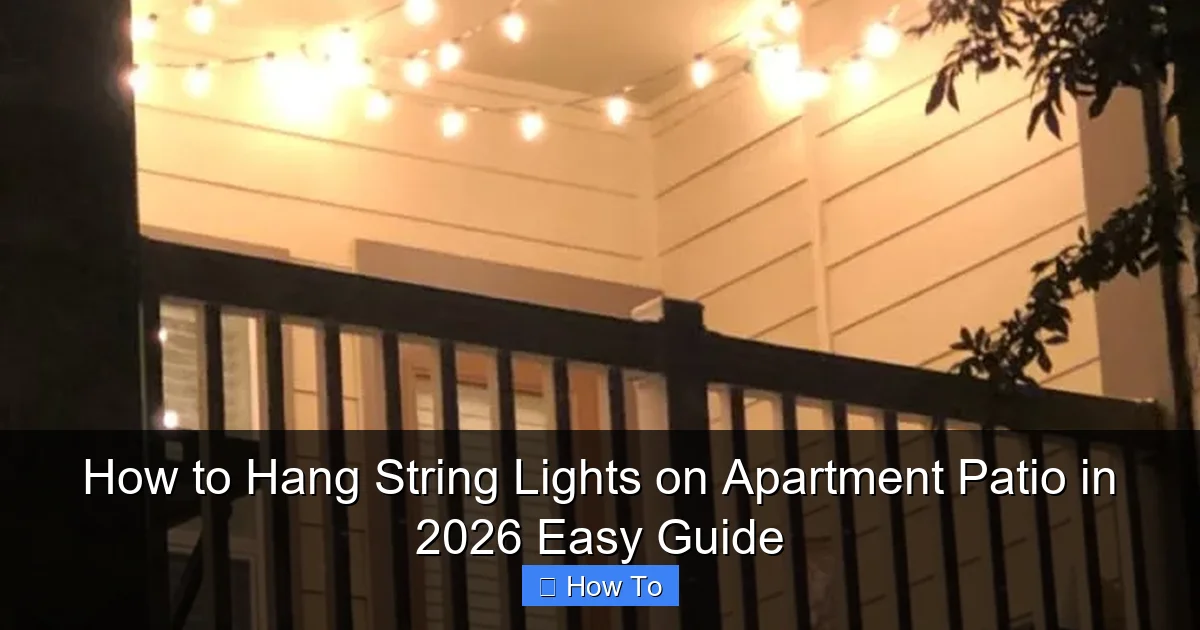
Featured image for how to hang string lights on apartment patio
Image source: i.pinimg.com
Transform your apartment patio into a cozy oasis in 2026 with simple, renter-friendly string light hacks—no drilling or permanent damage required. Use adhesive hooks, tension rods, or magnetic mounts to securely hang lights along railings, walls, or ceilings while following building guidelines. With weather-resistant lights and smart spacing, you’ll create a stunning ambiance in under an hour.
How to Hang String Lights on Apartment Patio in 2026 Easy Guide
Key Takeaways
- Choose removable hooks: Opt for damage-free adhesive or tension hooks for easy installation.
- Plan your layout first: Measure and sketch light placement to avoid mid-installation mistakes.
- Use LED string lights: They’re energy-efficient, safe, and ideal for apartment patios.
- Secure with zip ties: Reinforce connections on railings or posts for added stability.
- Check lease rules: Confirm with your landlord before making permanent changes.
- Test lights before hanging: Ensure they work to avoid re-hanging faulty strands.
Why This Matters / Understanding the Problem
Let’s be real: apartment patios can feel like afterthoughts. You finally get a rare outdoor space, and it’s either too small, too shaded, or just plain blah. But here’s the good news—string lights can transform that overlooked corner into a cozy, Instagram-worthy retreat. I learned this the hard way. A few years ago, my 4×6-foot balcony in Brooklyn looked like a storage zone. Then I tried hanging string lights. Game-changer.
The challenge? Most apartment patios come with rules. No nails. No drilling. No permanent damage. And let’s not forget wind, rain, and curious neighbors. That’s where this How to Hang String Lights on Apartment Patio in 2026 Easy Guide comes in. It’s not just about hanging lights—it’s about doing it safely, stylishly, and without getting a warning from your landlord.
Whether you’re hosting a summer BBQ, reading under the stars, or just want to feel like you’re in a rooftop bar every night, string lights are the secret. And in 2026, with smarter materials and renter-friendly hacks, it’s easier than ever. No tools required. No damage done. Just ambiance.
Personal insight: I once used command hooks on a brick wall—only to find them dangling by a thread after a rainstorm. Lesson learned: moisture-resistant materials and smart placement matter more than aesthetics.
What You Need
Before you start, gather your gear. The key is to use non-permanent, weather-smart tools that won’t violate your lease. Here’s my tried-and-true list:
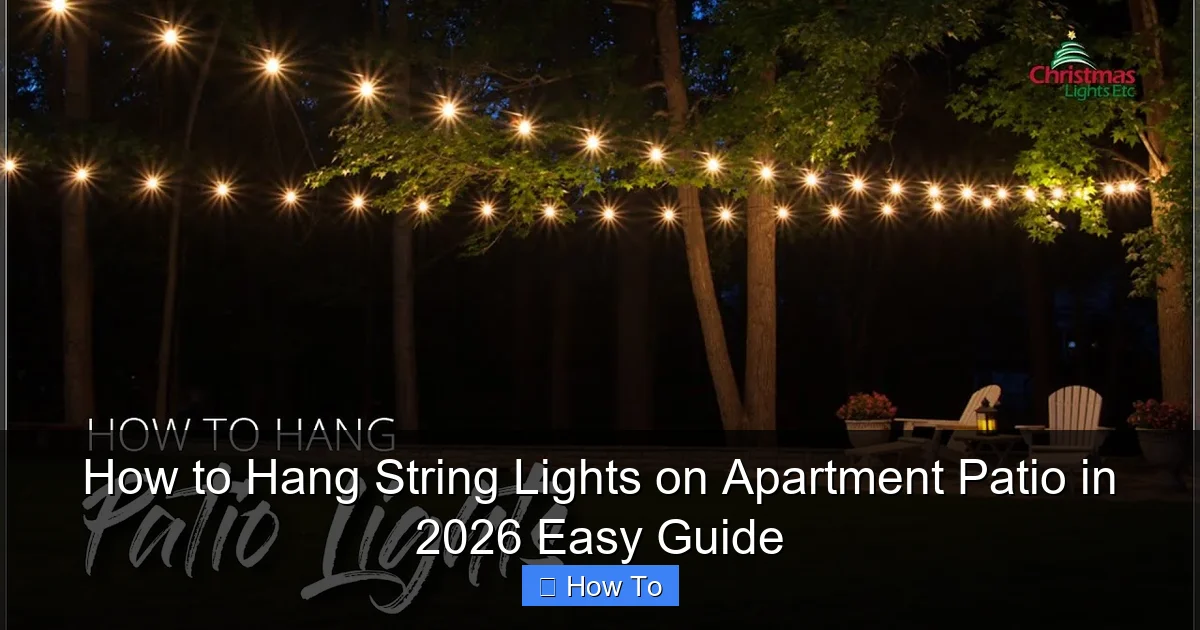
Visual guide about how to hang string lights on apartment patio
Image source: i.ytimg.com
- String lights (LED, weather-resistant, preferably battery-powered or with a low-voltage transformer) – I recommend 25–50 ft, depending on your space. Look for IP65 or higher waterproof rating.
- Adhesive hooks (heavy-duty, outdoor-rated) – Brands like Command Outdoor or Gorilla Heavy Duty work best. Avoid cheap dollar-store versions.
- Clamps or clips (silicone-coated, no-slip) – Great for railings, fences, or furniture.
- Zip ties (UV-resistant) – Use sparingly and only on non-porous surfaces like metal railings.
- Extension cord (if using plug-in lights) with outdoor-rated cover – Make sure it’s GFCI-protected for safety.
- Measuring tape – To plan spacing and avoid overhang.
- Scissors or wire cutters – For trimming zip ties or adjusting light strands.
- Optional: Light clips, tension wire, or a small ladder – Only if you’re going for a draped or canopy effect.
Pro tip: Buy 10–20% more lights than you think you need. It’s better to have extra than to run short mid-hang.
Step-by-Step Guide to How to Hang String Lights on Apartment Patio in 2026 Easy Guide
Step 1: Plan Your Layout (Before You Buy)
Don’t just start hanging. Take 10 minutes to sketch your patio. Where are the anchor points? Railings, walls, furniture, or even a small tree if you have one.
Ask yourself:
- Do I want a grid, zigzag, canopy, or perimeter style?
- Where will the power source be? (Battery lights save headaches here.)
- Will the lights drape over furniture or just frame the edges?
For small patios, I love a simple “U” shape—lights go up one side, across the back, and down the other. It creates a cozy, enclosed feel without overwhelming the space. This layout is perfect for the How to Hang String Lights on Apartment Patio in 2026 Easy Guide approach because it uses minimal anchors and looks intentional.
Warning: Avoid wrapping lights around thin railings or flimsy furniture. Wind can snap them or damage your setup.
Step 2: Test Your Lights First
Plug in (or turn on) your lights before hanging. Check every bulb. Nothing’s worse than spending 20 minutes hanging a strand only to find a dead section.
If you’re using battery-powered lights, test the switch and battery compartment. I once had a set that looked great—until I realized the battery died after 10 minutes. Now I keep spare batteries in a waterproof case.
Also, check the cord thickness. Thick, rubberized cords handle weather better than thin, flimsy ones. And if your lights have a timer or remote, test those too.
Step 3: Clean and Prep Your Surfaces
Adhesive hooks need clean, dry surfaces to stick. Wipe down walls, railings, or furniture with rubbing alcohol or a damp cloth. Let it dry completely.
Why? Dust, grease, or moisture can weaken adhesion. I learned this after my lights fell during a thunderstorm—turns out the railing had a thin layer of grime from my grill. Now I prep like I’m prepping for surgery.
For porous surfaces like brick or concrete, use outdoor-rated adhesive hooks with a stronger bond. Some even come with a primer wipe—use it.
Step 4: Install Anchor Points (The Smart Way)
Now for the fun part: placing your hooks or clamps. Here’s how to do it without damaging anything:
- For railings: Use silicone-coated clamps. They grip tight but don’t scratch. Place one every 12–18 inches for support.
- For smooth walls or glass doors: Use outdoor adhesive hooks. Press firmly for 30 seconds, then wait 24 hours before hanging lights (yes, really—patience pays).
- For metal or concrete: Use heavy-duty adhesive hooks with a metal backing. Or try magnetic hooks if you have a metal railing (rare, but possible).
- For furniture: Clamp lights to the back of a chair or table. Just make sure it’s stable and won’t tip.
Spacing is key. Too close, and the lights sag. Too far, and they look sparse. Aim for 12–16 inches between anchors.
Pro tip: Use a level or app (like “Bubble Level” on your phone) to keep hooks aligned. A crooked line ruins the vibe.
Step 5: Hang the Lights (With Tension in Mind)
Start at one end. Hook the first light bulb socket (or loop) onto your anchor. Gently pull the strand toward the next anchor—don’t yank it.
For a taut look, leave a little slack—about 1–2 inches per foot. This prevents sagging and gives a professional finish. If you’re using a canopy style (lights across the ceiling), use a tension wire or fishing line between hooks for extra support.
Here’s a trick: zigzag between anchors for a dynamic look. Just make sure each zigzag has its own support. I use this on my balcony to create depth without blocking airflow.
For battery packs or transformers, tuck them into a small waterproof container or behind a plant. Never leave them exposed to rain.
Step 6: Secure the Ends and Test the Flow
Once all lights are up, secure the ends. Use an extra clamp or adhesive hook to anchor the last bulb. This prevents wind from pulling the whole strand loose.
Now, plug in (or turn on) and step back. Walk around. Sit in your favorite chair. Does the light feel balanced? Are there dark spots? Adjust as needed.
If a section sags, add an extra anchor. If lights flicker, check connections. And if the battery pack dies fast, switch to a lower brightness setting or use rechargeable batteries.
Step 7: Weatherproof and Maintain
Your patio is outdoors—so expect weather. Here’s how to keep your lights shining:
- Use waterproof covers for plugs and battery packs. I keep mine in a small plastic bin with holes for the cord.
- Trim nearby plants so they don’t snag the lights.
- Check anchors monthly—especially after storms. Reapply adhesive if needed.
- Turn off during extreme weather (hurricanes, blizzards). Better safe than sorry.
For winter: If you live somewhere with snow, take lights down or use heavy-duty outdoor-rated strands. I leave mine up in NYC, but I use all-weather LED sets.
Step 8: Style It (Because Looks Matter)
Now that the lights are up, make them shine. Add:
- String light clips for extra sparkle (they hold individual bulbs).
- Fairy lights in glass jars for a boho touch.
- Outdoor pillows and a small rug to complete the cozy vibe.
I love draping a few extra strands over a folding chair or hanging a small plant near a light cluster. It feels intentional, not thrown together.
Pro Tips & Common Mistakes to Avoid
After years of trial, error, and a few near-disasters, here’s what I wish I knew sooner:
Pro Tip 1: Use battery-powered lights when possible. No cords = no tripping hazards, no outlet hunting, and no extension cord mess. I use 50-ft solar-powered sets—they charge during the day and glow at night.
Pro Tip 2: Mix light types for depth. Try warm white string lights with cool white fairy lights. Or add a single colored bulb for a pop. Just don’t overdo it.
Pro Tip 3: Label your battery packs. I use masking tape with the date. That way, I know which ones to replace first.
Common Mistake 1: Overloading anchors. One hook holding 5 lbs of lights? Nope. Use multiple hooks and distribute weight. I once hung 10 lbs on a single hook—it fell, broke a bulb, and scared my cat.
Common Mistake 2: Ignoring wind load. Lights act like sails in strong wind. Secure every 12 inches and avoid long, straight runs. Curved or zigzag lines handle wind better.
Common Mistake 3: Using indoor lights outdoors. They’ll short-circuit or fade fast. Always check the IP rating. IP65 or higher is ideal.
Common Mistake 4: Not reading your lease. Some apartments ban any hanging items. I had a friend who got a fine for “structural modification.” Always ask first.
FAQs About How to Hang String Lights on Apartment Patio in 2026 Easy Guide
Q: Can I hang string lights without hooks?
A: Yes! Use silicone clamps on railings, zip ties on metal frames, or even tuck lights into outdoor furniture crevices. I’ve even seen people use adhesive clips on glass doors. Just avoid anything that scratches or damages surfaces.
Q: What if my patio has no railing or walls?
A: Get creative. Hang lights from a retractable clothesline, a small pergola, or even a freestanding umbrella stand. I once used a tension rod between two walls—worked like a charm. For open patios, consider a portable light post or solar-powered ground stakes.
Q: Are battery-powered lights bright enough?
A: Modern LED battery lights are surprisingly bright. Look for “200+ lumens” or “dimmable” options. I use a 30-ft set with 200 LEDs—it lights up my whole 8×8 ft patio. And with a timer, it turns on at dusk automatically.
Q: How do I hide the cords?
A: Use cord clips, run cords behind furniture, or tuck them into planters. For plug-in lights, use a cord cover or paint the cord to match your wall. I once wrapped mine with twine—looked rustic and hid the mess.
Q: Can I leave string lights up year-round?
A: Only if they’re rated for all-weather use. Most battery-powered sets can handle rain and snow, but check the manual. I take mine down in December and rehang in March—keeps them lasting longer.
Q: What’s the best light color for a cozy feel?
A: Warm white (2700K–3000K) is my go-to. It feels inviting, not clinical. Cool white is great for modern spaces, but it can feel harsh. And colored lights? Save those for holidays or parties.
Q: Do I need to get landlord permission?
A: Always check. Even if you’re using adhesive hooks, some buildings have strict rules. I asked my landlord with a photo of my plan—got a “sure, as long as it’s removable.” Peace of mind is worth the email.
Final Thoughts
Hanging string lights on your apartment patio isn’t just about decor—it’s about creating a space that feels like yours. With this How to Hang String Lights on Apartment Patio in 2026 Easy Guide, you now have a renter-friendly, damage-free method that works in any weather.
Remember: start small. Try one strand first. See how it feels. Then expand. And don’t stress about perfection. Some of the best patios look a little messy—like they’re lived in.
So grab your lights, clean your railing, and get to it. In 2026, your patio doesn’t have to be an afterthought. It can be your favorite room in the house—just with better lighting.
And hey, if you mess up? No big deal. Adhesive hooks come off. Lights can be rehung. The goal isn’t flawless—it’s feeling good when you step outside.
Now go make some magic. And when you’re done, send me a photo. I’d love to see your glow-up.