Featured image for can you cut led light strings
Image source: superlightingled.com
Yes, you can cut LED light strings safely—but only if they’re labeled as “cuttable” or “cut-to-size.” Doing so without checking manufacturer guidelines can damage the circuit or create fire hazards. Always use sharp wire cutters and seal cut ends properly to maintain safety and functionality.
Key Takeaways
- Check manufacturer guidelines: Always verify if your LED string is designed to be cut.
- Cut only at marked points: Never cut outside designated sections to avoid damage.
- Use proper tools: Sharp scissors or wire cutters ensure clean, safe cuts.
- Seal cut ends: Prevent moisture damage by covering exposed wires after cutting.
- Test before installing: Confirm functionality post-cut to avoid wasted effort.
- Measure twice, cut once: Plan your length carefully to prevent over-cutting.
📑 Table of Contents
- The Magic of LED Light Strings – And the Burning Question: Can You Cut Them?
- Understanding LED Light String Construction: The Key to Safe Cutting
- How to Safely Cut LED Light Strings: A Step-by-Step Guide
- What Happens If You Cut the Wrong LED String? Risks and Consequences
- Creative Uses for Cut LED Light Strings: Beyond Basic Decor
- Data and Best Practices: When and How to Cut LED Strings
- Conclusion: Empower Your Lighting with Confidence
The Magic of LED Light Strings – And the Burning Question: Can You Cut Them?
LED light strings have transformed the way we illuminate our homes, events, and outdoor spaces. From the warm glow of holiday decorations to the vibrant hues of patio string lights and the soft ambiance of bedroom fairy lights, these energy-efficient, long-lasting bulbs offer unparalleled versatility. Their popularity isn’t just about aesthetics; LED lights consume up to 80% less energy than traditional incandescent bulbs, last up to 25,000–50,000 hours, and generate minimal heat, making them safer and more sustainable. Whether you’re decorating for Christmas, setting the mood for a romantic dinner, or adding flair to a garden party, LED light strings are a go-to solution for modern lighting needs.
But as versatile as they are, LED light strings often come in fixed lengths—sometimes too long, sometimes too short. This leads to a common and crucial question: Can you cut LED light strings safely and easily? The answer isn’t always straightforward. While cutting some LED strings is not only possible but encouraged for customization, others can be permanently damaged with a single snip. Misinformation, fear of voiding warranties, and concerns about safety (electrical hazards, fire risk, or reduced lifespan) make this a topic of much confusion. This comprehensive guide will demystify the process, helping you determine whether your specific LED string can be cut, how to do it properly, and what to look for to avoid costly mistakes. Whether you’re a DIY enthusiast, a home decorator, or a professional installer, understanding the ins and outs of cutting LED light strings will save time, money, and frustration.
Understanding LED Light String Construction: The Key to Safe Cutting
Before grabbing the scissors or wire cutters, it’s essential to understand how LED light strings are constructed. Not all LED strings are built the same, and their internal wiring determines whether they can be safely modified. The design of the circuit, the type of connection between bulbs, and the presence of specific components all play a role in the cutting decision.
Visual guide about can you cut led light strings
Image source: wikihow.com
Series vs. Parallel Circuits: The Core Difference
LED light strings typically use one of two wiring configurations: series or parallel.
- Series Circuit: In this setup, LEDs are connected end-to-end in a single path. Current flows from the power source through each bulb in sequence. If one LED fails or is cut, the entire circuit breaks, and the rest of the lights go out. This is common in older or lower-cost LED strings. Cutting a series-wired string almost always results in failure.
- Parallel Circuit: Here, each LED is connected to the main power lines independently, creating multiple paths for electricity. If one bulb fails or is removed, the others continue to function. Most modern, high-quality LED strings—especially those labeled “cuttable” or “end-to-end connectable”—use parallel wiring. These are the ones you can safely cut.
Example: A 50-foot string with 200 LEDs in parallel can be cut into two 25-foot segments, each still fully functional, provided you cut at designated points.
Identifying Cuttable LED Strings
Manufacturers often include clues on packaging or online descriptions to indicate whether a string is cuttable:
- Look for phrases like “cut to size,” “cuttable at intervals,” “end-to-end connectable,” or “modular design.”
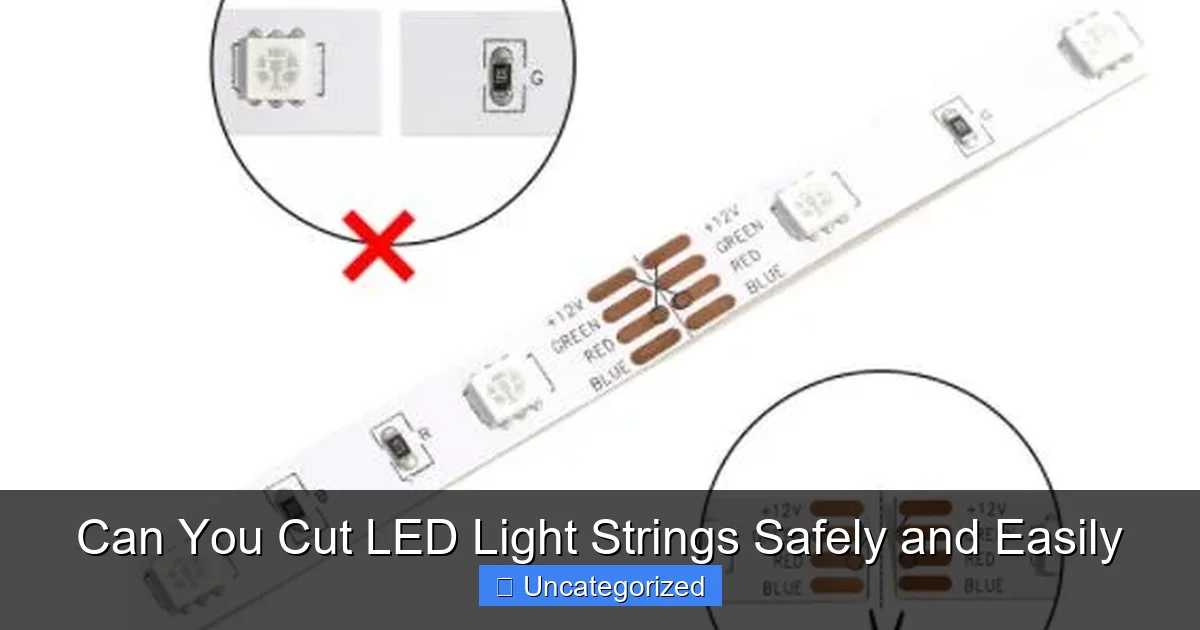
- Check for cut marks—small notches, arrows, or symbols on the wire every few inches (e.g., every 12 inches).
- Inspect the power supply unit (PSU) or plug. Cuttable strings often have a thicker, more robust PSU designed to handle multiple segments.
- Read the product manual or technical specifications. Reputable brands like Philips, GE, or Feit Electric clearly state cuttability.
Tip: If there’s no mention of cutting, assume it’s not safe. When in doubt, contact the manufacturer.
Types of LED Strings and Their Cutting Potential
Different types of LED strings have varying levels of cuttability:
- Standard String Lights (e.g., Christmas, patio): Often non-cuttable unless specified. Older models may be series-wired.
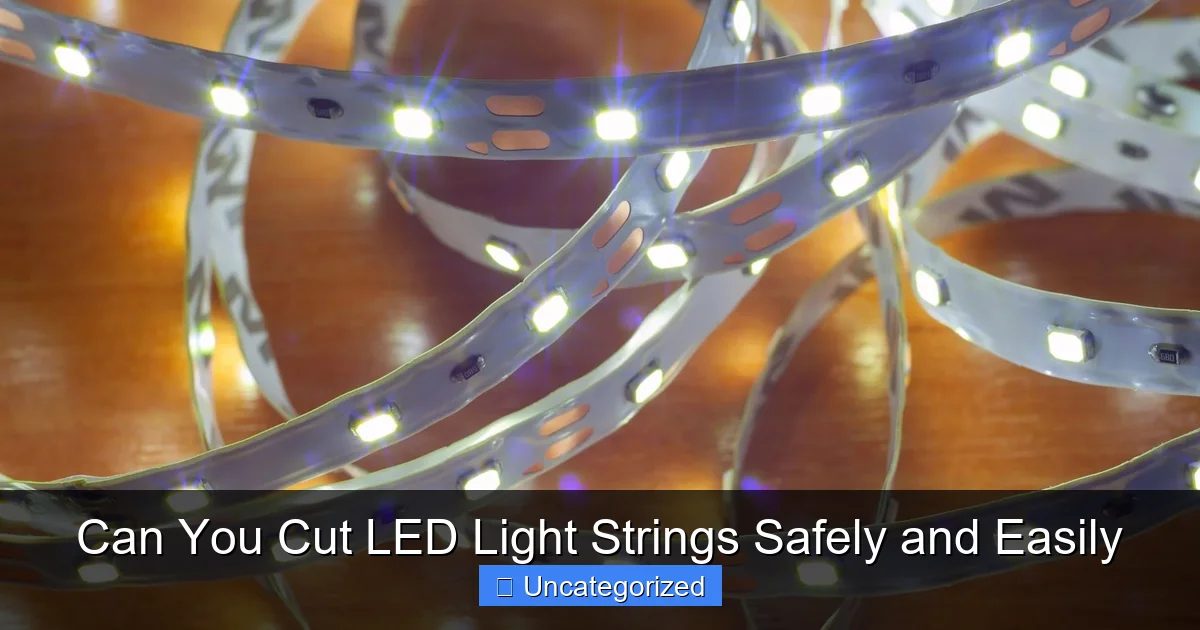
- Cuttable LED Tape (Strip Lights): Designed to be cut at designated points, usually every 2–6 inches. Ideal for under-cabinet, cove, or accent lighting.
- Commercial/Industrial LED Strings: Frequently modular and cuttable, used for large installations.
- Smart LED Strings (e.g., Wi-Fi or app-controlled): Some are cuttable, but cutting may disable smart features or require special connectors. Always check compatibility.
Understanding these distinctions ensures you don’t damage a non-cuttable string or waste money on one that can’t be customized.
How to Safely Cut LED Light Strings: A Step-by-Step Guide
Cutting a cuttable LED string is a straightforward process—but precision and safety are critical. Follow these steps to ensure a clean, functional result every time.
Visual guide about can you cut led light strings
Image source: lamphq.com
Step 1: Verify the String is Cuttable
Before making any cuts, double-check the product label, packaging, or manual. Look for:
- Cut marks (arrows, notches, or symbols)
- Instructions stating “cut at marked points”
- Parallel circuit design (often mentioned as “each bulb operates independently”)
Pro Tip: Use a multimeter to test continuity. Set it to continuity mode, touch the probes to the two wires in a section, and verify current flows even if a bulb is removed. If the circuit breaks, it’s likely series-wired and not cuttable.
Step 2: Gather the Right Tools
Using the wrong tools can fray wires, damage insulation, or create a fire hazard. Essential tools include:
- Sharp wire cutters or scissors (preferably flush cutters for clean cuts)
- Insulated gloves (optional but recommended for safety)
- Electrical tape or heat shrink tubing (for sealing cut ends)
- Wire strippers (if reattaching connectors)
- Multimeter (to test functionality post-cut)
Never use dull or oversized tools—they can crush or split the wires.
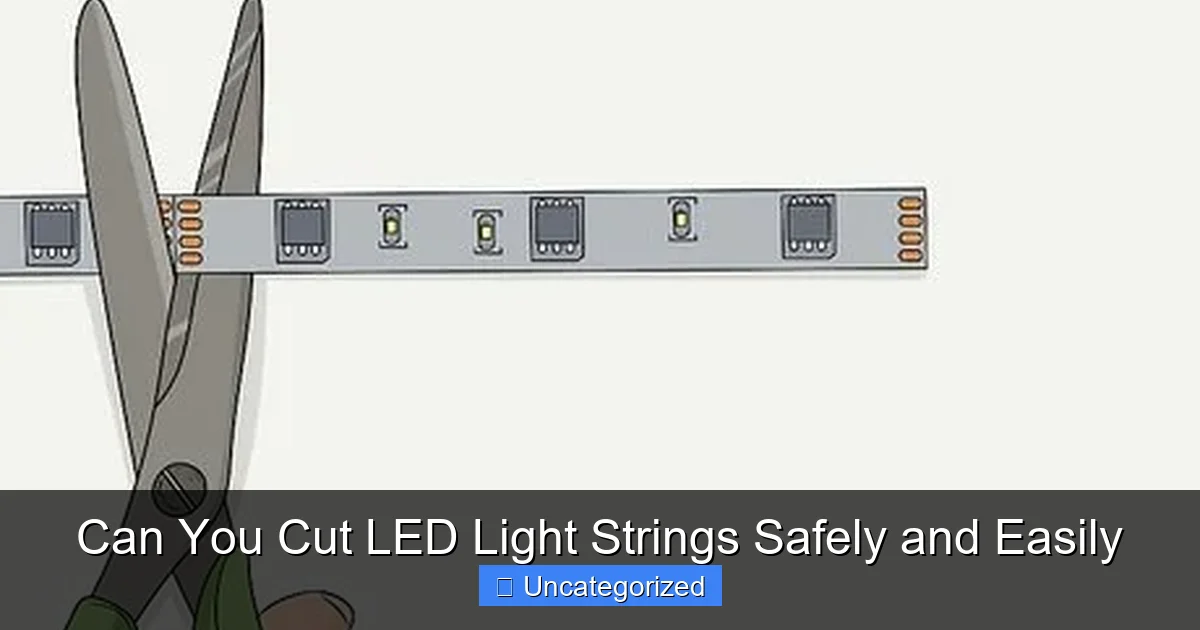
Step 3: Cut at Designated Points
Always cut only at the manufacturer’s marked intervals. These points are typically:
- Every 12–24 inches for string lights
- Every 2–6 inches for LED strips
- Between bulb sockets or at junction points
Align the cutter precisely with the cut mark. Make a single, firm cut—don’t saw back and forth, as this can damage internal wires.
Step 4: Seal the Cut End
Exposed wires are a safety hazard and can corrode over time. After cutting:
- Slide a piece of heat shrink tubing over the cut end (if available) and use a heat gun to seal it.
- Or wrap the end tightly with electrical tape, covering at least 1 inch of wire and ensuring no copper is exposed.
Warning: Never leave cut ends bare. This can lead to short circuits, electric shock, or fire.
Step 5: Test the Remaining Segment
Plug in the uncut portion to verify it still works. If lights don’t turn on:
- Check for loose or damaged wires at the cut point.
- Test continuity with a multimeter.
- Ensure the power supply is functioning.
If the segment fails, the original string may not have been cuttable, or the cut was made incorrectly.
Optional: Reconnect or Extend
To reuse the cut-off section, purchase LED string light connectors (available online or at hardware stores). These include:
- Inline splice connectors
- Extension cords with matching plugs
- End caps with power injection points (for long runs)
Follow the connector’s instructions to splice the segment to a new power source or another string.
What Happens If You Cut the Wrong LED String? Risks and Consequences
Cutting a non-cuttable LED string can lead to more than just a non-working decoration—it can create real safety hazards and financial losses. Understanding the risks helps you avoid costly mistakes.
Electrical Failure and Complete Burnout
Cutting a series-wired string breaks the circuit, causing the entire string to go dark. Even if the cut is made between bulbs, the flow of electricity stops at the break. Unlike parallel strings, there’s no alternative path for current.
Example: A 100-light series string cut in half leaves both 50-light segments completely non-functional. The only fix? Discarding both pieces.
Fire and Shock Hazards
Improperly cut wires with exposed copper can:
- Cause short circuits if live and neutral wires touch.
- Overheat due to resistance, potentially melting insulation or igniting nearby materials.
- Create a shock hazard if handled while plugged in.
Real-World Case: In 2021, a homeowner in Colorado cut a non-cuttable LED string, left the ends exposed, and later plugged it in. The resulting spark ignited a nearby curtain, causing $15,000 in damages. Firefighters cited the exposed wires as the cause.
Voided Warranties and No Returns
Most manufacturers explicitly state that modifying the string voids the warranty. If the string fails later, you won’t be able to return or exchange it. This is especially important for expensive smart or commercial-grade lights.
Damage to Power Supply
Cutting a string can sometimes overload the power supply if the remaining segment has too many bulbs or incorrect voltage. This can fry the transformer or plug, requiring replacement.
Wasted Time and Materials
Even if the string survives the cut, you may need to buy connectors, tape, or new lights to fix the result. A $20 string can turn into a $50+ repair project.
How to Recover (If You Cut the Wrong String)
If you accidentally cut a non-cuttable string:
- Don’t plug it in. This is the most important step to prevent hazards.
- Inspect the cut end. If wires are cleanly severed and no copper is exposed, you may be able to solder them together and insulate with heat shrink. This is only for advanced DIYers.
- Contact the manufacturer. Some offer repair services or replacement parts.
- Use it for spare parts. Salvage bulbs, sockets, or wire for other projects.
Lesson: Always test cuttability before cutting—better safe than sorry.
Creative Uses for Cut LED Light Strings: Beyond Basic Decor
Once you’ve mastered cutting LED strings, the creative possibilities are endless. Custom lengths open the door to innovative, space-saving, and artistic lighting solutions.
Tailored Lighting for Unique Spaces
Standard string lengths rarely fit odd-shaped areas. Cutting allows for perfect fits:
- Window frames: Cut a string to match the perimeter of a bay window, creating a glowing border.
- Stair railings: Install cut segments along each step, enhancing safety and ambiance.
- Bookshelves: Line the back edge with a custom-length strip for a floating effect.
Pro Tip: Use adhesive LED strips for flat surfaces and string lights for 3D structures.
DIY Lighting Projects and Art Installations
Cut LED strings are perfect for creative projects:
- Light-up signs: Spell out words or shapes by cutting and arranging segments. Use a wooden base and hot glue for stability.
- Hanging mobiles: Attach cut strings to a wire frame, creating a starburst or cloud effect.
- Room dividers: Weave cut strings through a sheer curtain for a shimmering partition.
Example: A wedding photographer used cut LED strings to create a backdrop of glowing hearts, each heart made from a 12-inch segment.
Energy Efficiency and Cost Savings
Cutting eliminates waste. Instead of using a 50-foot string for a 30-foot space, you can use a 30-foot segment and save the rest. This:
- Reduces energy consumption
- Lowers electricity bills
- Minimizes light pollution
Data Point: A 2023 study by the U.S. Department of Energy found that households using custom-cut LED strings saved an average of 15% on holiday lighting costs compared to those using full-length strings.
Smart Home Integration
For smart LED strings, cutting can enhance automation:
- Cut a string into zones (e.g., one for the dining room, one for the living room) and control each with a separate app or voice command.
- Use cut segments with motion sensors for outdoor security lighting.
Note: Ensure the smart controller supports multiple segments. Some require a central hub for each cut piece.
Data and Best Practices: When and How to Cut LED Strings
To help you make informed decisions, here’s a data-driven summary of best practices and key considerations for cutting LED light strings.
Cutting Compatibility Table
| LED String Type | Cuttable? | Cut Interval | Wiring Type | Special Notes |
|---|---|---|---|---|
| Standard Christmas String | No (unless specified) | N/A | Series | Check for “cuttable” label; most are not. |
| Patio String Lights | Yes (if marked) | Every 12–24 inches | Parallel | Use outdoor-rated connectors for weatherproofing. |
| LED Strip (Tape) | Yes | Every 2–6 inches | Parallel | Cut only at copper pads; use solderless connectors. |
| Smart LED String | Sometimes | Check manual | Parallel | May require app reconfiguration after cutting. |
| Commercial Grade | Yes | Every 6–12 inches | Parallel | Use industrial connectors; high voltage models. |
Best Practices Summary
- Always check for cut marks. Never guess.
- Use sharp, clean tools. Dull cutters damage wires.
- Seal cut ends immediately. No exceptions.
- Test before full installation. Plug in and verify.
- Label cut segments. Use tags or tape to identify lengths.
- Store unused segments safely. Wrap in plastic and keep dry.
When to Avoid Cutting
- If the string is not labeled as cuttable
- If you don’t have proper tools or insulation
- If the string is under warranty and modification is prohibited
- If you’re not comfortable with electrical work
Final Tip: When in doubt, buy multiple shorter strings instead of cutting one long one. It’s often safer and more reliable.
Conclusion: Empower Your Lighting with Confidence
So, can you cut LED light strings safely and easily? The answer is a resounding yes—but only if you know what you’re doing. With the right knowledge, tools, and precautions, cutting LED strings unlocks a world of customization, efficiency, and creativity. From perfectly fitted holiday decor to innovative DIY art, the ability to tailor your lighting transforms ordinary spaces into extraordinary ones.
Remember, the key lies in understanding your string’s construction. Look for parallel wiring, cut marks, and manufacturer guidance. Follow the step-by-step process: verify, cut, seal, test. Avoid the risks of electrical failure, fire hazards, and voided warranties by never cutting a non-cuttable string. And when you do cut, do it with purpose—whether to save energy, enhance safety, or express your artistic vision.
LED light strings are more than just decorations; they’re tools for expression, efficiency, and innovation. By mastering the art of cutting them, you take control of your lighting design, ensuring every bulb serves a purpose. So next time you’re faced with a string that’s too long or too short, don’t settle. With confidence and care, you can cut it to perfection—and light up your world exactly the way you want.
Frequently Asked Questions
Can you cut LED light strings to fit your space?
Yes, you can cut LED light strings, but only if they’re labeled as “cuttable” or “customizable.” Always follow the manufacturer’s guidelines to avoid damaging the lights or creating a safety hazard.
Where should you cut LED light strings safely?
Only cut LED light strings at the marked cutting points, usually indicated by small scissors icons or lines. Cutting elsewhere can damage the circuit and render the entire string unusable.
What tools do you need to cut LED light strings?
You’ll need a pair of sharp scissors or wire cutters to cleanly cut the wires. For waterproof LED light strings, consider using silicone sealant to protect the cut ends from moisture.
Can you cut LED light strings without affecting the rest of the strand?
Yes, as long as you cut at the designated points and the remaining section is still connected to a power source. Cutting outside these areas may break the circuit and cause the rest to stop working.
Are all LED light strings cuttable?
No, not all LED light strings are designed to be cut. Always check the product description for terms like “cuttable” or “customizable” before attempting to modify your lights.
Can cutting LED light strings void the warranty?
Yes, modifying LED light strings by cutting them often voids the manufacturer’s warranty. Always review the warranty terms before making any changes to avoid losing coverage.