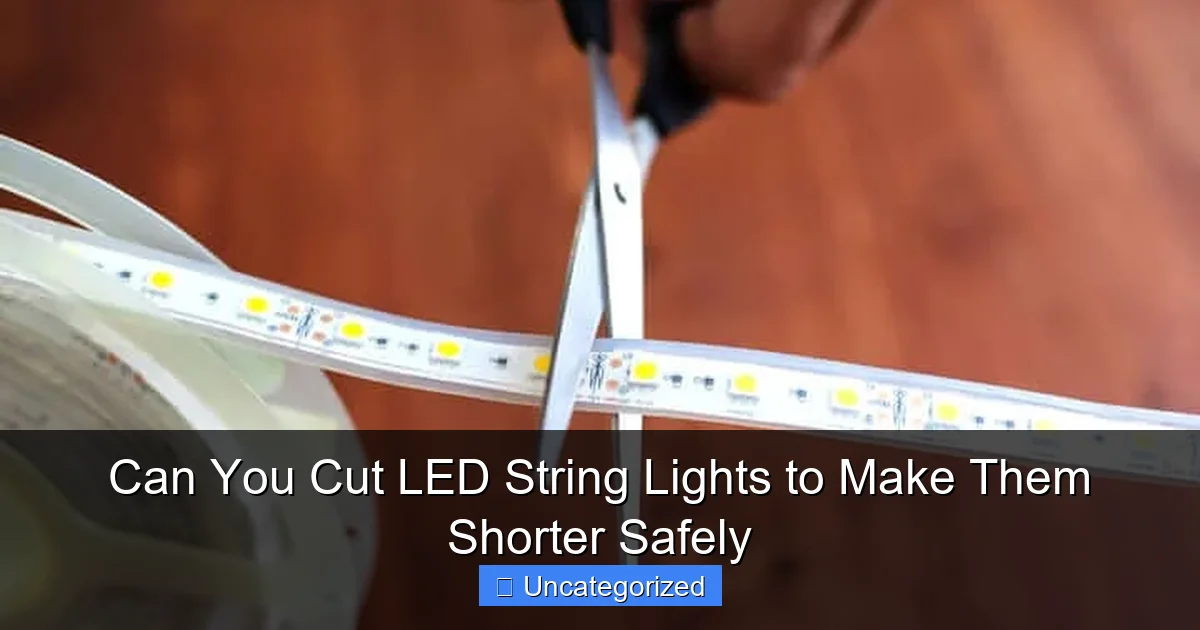
Featured image for can you cut led string lights to make them shorter
Image source: askthehomegeek.com
Yes, you can cut LED string lights to make them shorter—but only if they’re specifically labeled as “cuttable” or “cut-to-size.” Doing so safely requires following the manufacturer’s guidelines, usually involving cutting only at marked intervals to avoid damaging the circuit or creating a fire hazard. Never attempt to cut non-cuttable LED strings, as this can ruin the lights or pose serious safety risks.
Key Takeaways
- Check manufacturer guidelines: Always verify if your lights are marked as “cuttable” before attempting modifications.
- Cut only at designated marks: LEDs must be cut only at pre-indicated points to avoid damage or hazards.
- Use sharp tools: Clean cuts with scissors or wire cutters prevent frayed wires and ensure safety.
- Seal ends properly: Waterproofing cut ends protects against moisture and extends lifespan.
- Avoid cutting in series: Modifying one strand can disrupt the entire circuit—test before final cuts.
- Measure twice, cut once: Plan your length carefully to prevent irreversible mistakes.
📑 Table of Contents
- Can You Cut LED String Lights to Make Them Shorter Safely
- Understanding How LED String Lights Work
- Types of LED String Lights: Which Can Be Cut?
- Step-by-Step Guide to Safely Cutting LED String Lights
- Common Mistakes and How to Avoid Them
- Data Table: LED String Light Cuttability by Type
- Creative Uses for Shortened LED String Lights
Can You Cut LED String Lights to Make Them Shorter Safely
LED string lights have become a staple in modern home decor, offering a versatile and energy-efficient way to add ambiance to any space. From wrapping them around stair railings to draping them across ceilings, their flexibility makes them ideal for both indoor and outdoor use. However, one common question arises when homeowners or decorators find themselves with a string that’s just a little too long: Can you cut LED string lights to make them shorter safely? The short answer is: it depends. While some LED string lights are designed with cuttable sections, others are not—and attempting to modify the wrong type can lead to malfunctions, safety hazards, or even permanent damage.
Before reaching for the scissors, it’s essential to understand the type of LED string lights you’re working with, the electrical principles behind their design, and the best practices for modification. This guide dives deep into the mechanics of LED string lights, explores which models are safe to shorten, and provides step-by-step instructions for doing so without compromising performance or safety. Whether you’re a DIY enthusiast or a first-time decorator, this comprehensive resource will equip you with the knowledge to customize your lighting setup confidently and creatively.
Understanding How LED String Lights Work
To determine whether you can safely cut LED string lights, it’s crucial to first understand how they operate. Unlike traditional incandescent bulbs, LEDs (Light Emitting Diodes) are semiconductor devices that emit light when an electric current passes through them. Their efficiency, longevity, and compact size make them ideal for string lighting, but their circuitry is more complex than older lighting technologies.
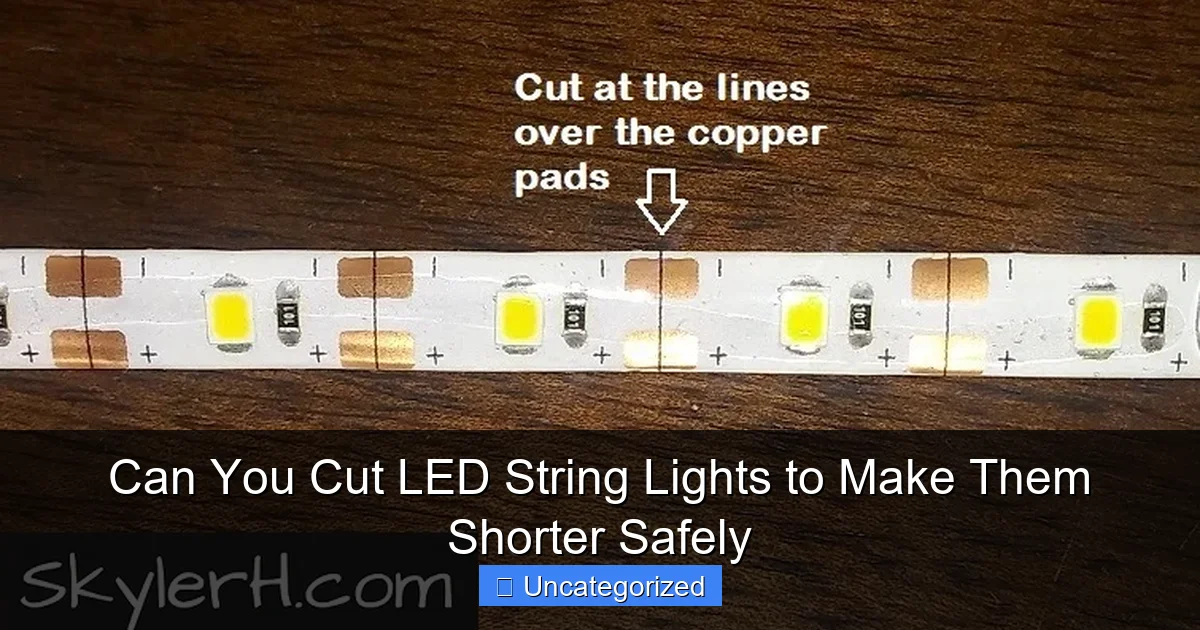
Visual guide about can you cut led string lights to make them shorter
Image source: skylerh.com
Series vs. Parallel Circuit Design
LED string lights typically use one of two circuit configurations: series or parallel. The wiring method determines whether cutting the string will disrupt the entire circuit or only a portion of it.
- Series Circuits: In a series configuration, the LEDs are connected end-to-end in a single path. The same current flows through each bulb. If one LED fails or is cut out, the entire circuit breaks, and the rest of the lights go out. Most non-cuttable LED strings use this design.
- Parallel Circuits: In a parallel setup, each LED (or group of LEDs) has its own path to the power source. If one section is disconnected or cut, the others continue to function. Cuttable LED strings often use parallel or hybrid (series-parallel) designs, allowing safe segmentation.
For example, a string with 100 LEDs in a series circuit will go dark if you cut it anywhere. But a 100-LED string with 10 segments of 10 LEDs in parallel can be safely cut between segments, leaving the remaining 90 LEDs lit.
Voltage and Power Supply Considerations
LEDs require a specific voltage to operate—typically 3V per LED, though this varies by model. String lights use a transformer or driver to convert household AC voltage (120V or 240V) to the lower DC voltage (usually 12V or 24V) needed for the LEDs. When cutting a string, you must ensure the remaining portion still receives the correct voltage. Cutting too much from a series string can drop the voltage below the threshold, causing dimming or failure. Always check the manufacturer’s specifications for voltage per segment.
Types of LED String Lights: Which Can Be Cut?
Not all LED string lights are created equal when it comes to customization. The ability to shorten a string depends on its construction, design, and intended use. Below are the most common types and their cuttability.
Visual guide about can you cut led string lights to make them shorter
Image source: lepro.ca
Cuttable LED String Lights (Safe to Modify)
These are specifically engineered for customization. Look for the following features:
- Segmented Design: Cuttable strings have visible cut marks—often indicated by a scissor icon or dotted line—every 3–10 LEDs. These marks show where the circuit can be safely interrupted without affecting the rest of the string.
- Low Voltage (12V/24V): Most cuttable strings operate at 12V or 24V DC, making them safer to handle and less prone to overheating after modification.
- End Caps and Connectors: Many cuttable strings include waterproof end caps or connectors that can be reattached after cutting, maintaining insulation and protection.
Example: A 10-meter cuttable LED strip with 300 LEDs has cut marks every 10 LEDs (30 per meter). You can cut at any mark, leaving a functional 6-meter section with 180 LEDs.
Non-Cuttable LED String Lights (Do Not Modify)
These strings lack segmentation and use a single continuous circuit. Cutting them will likely result in failure.
- Plug-in or Battery-Operated Mini Strings: Common for holiday decor, these often have 20–50 LEDs in series. Cutting one bulb breaks the entire circuit.
- High-Voltage Strings (120V/240V): Rare, but some older models run directly on household voltage. Cutting them exposes live wires, creating a fire or shock hazard.
- Non-Waterproof or Exposed Wires: Strings without protective sheathing or end caps should never be modified—re-exposed wires risk short circuits.
Tip: Check the product packaging or manual for phrases like “cuttable,” “customizable,” or “segmented.” If these terms are absent, assume the string is not designed for cutting.
Hybrid and Smart LED Strings
Smart LED strings (e.g., Wi-Fi or app-controlled) often use hybrid circuits. While some are cuttable, cutting them may disrupt data signals or power distribution. Always consult the manufacturer’s guidelines. For instance, Philips Hue Lightstrip Plus allows cutting at specific marks but requires a proprietary connector to reattach power.
Step-by-Step Guide to Safely Cutting LED String Lights
If your LED string lights are confirmed cuttable, follow this detailed process to shorten them without damage.
Step 1: Gather the Right Tools
- Sharp scissors or wire cutters: Dull tools can fray wires.
- Electrical tape or heat-shrink tubing: For insulating cut ends.
- Multimeter (optional): To test voltage after cutting.
- Waterproof end caps (if applicable): For outdoor strings.
Step 2: Identify Cut Marks
Locate the designated cut points. These are usually marked by:
- A scissor icon or “Cut Here” label.
- Dotted lines on the strip.
- Spacing between LED groups (e.g., 3–5 inches apart).
Example: A 5-meter string with cut marks every 10 LEDs means you can safely cut at the 20th, 30th, etc., LED. Cutting between the 25th and 26th LED (not at a mark) risks damaging the circuit.
Step 3: Power Off and Unplug
Always disconnect the string from the power source. For battery-operated lights, remove the batteries. This prevents short circuits or shocks during cutting.
Step 4: Cut at the Mark
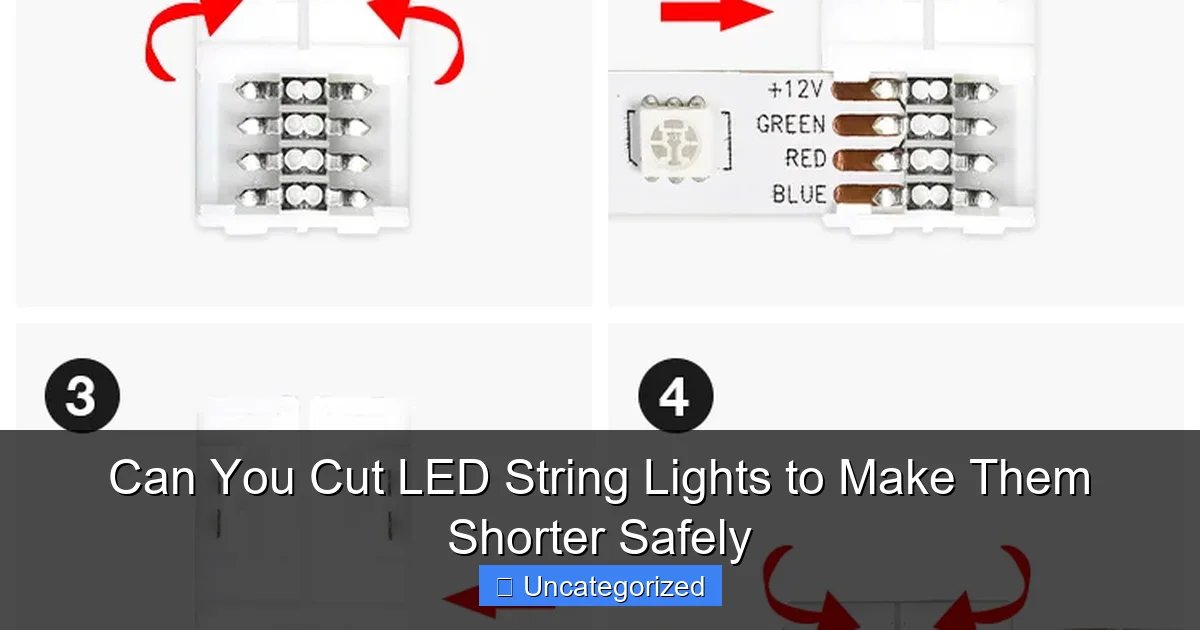
Use sharp scissors to make a clean, perpendicular cut at the designated mark. Avoid cutting at an angle or through an LED. For strip lights (e.g., LED tape), cut along the copper pads at the marked point.
Step 5: Insulate the Cut End
Exposed wires or copper pads can cause short circuits or corrosion. To protect the end:
- For wire-based strings: Wrap the end with electrical tape. For outdoor use, use waterproof tape or a silicone sealant.
- For strip lights: Apply a silicone end cap or use heat-shrink tubing. Slide the tubing over the cut end and heat it with a hair dryer to seal.
Pro Tip: Leave the power end (with the plug or connector) intact. Only cut the opposite end to preserve functionality.
Step 6: Test the Lights
Reconnect the string to power and verify that all remaining LEDs illuminate. If some sections are dim or off, the cut may have damaged the circuit. Use a multimeter to check voltage at the first LED after the cut.
Common Mistakes and How to Avoid Them
Even with cuttable lights, errors can lead to frustration or damage. Here are pitfalls to watch for.
Cutting at the Wrong Spot
One of the most frequent mistakes is ignoring cut marks. For example, cutting a 12V LED strip between segments—instead of at a marked copper pad—can break the circuit’s continuity. Always follow the manufacturer’s cut points.
Using the Wrong Tools
Blunt scissors can crush wires, while wire cutters with wide jaws may damage insulation. Use precision tools designed for electronics. For LED strips, a sharp craft knife or dedicated strip cutter is ideal.
Neglecting Insulation
Unprotected cut ends are prone to short circuits, especially in humid environments. A 2022 study by the National Fire Protection Association (NFPA) found that 12% of holiday lighting incidents involved exposed wires from DIY modifications. Always seal the end thoroughly.
Overloading the Power Supply
When shortening a string, ensure the remaining portion doesn’t exceed the power adapter’s capacity. For example, a 24V adapter rated for 100W can power up to 10 meters of a 10W/meter strip. Cutting it to 2 meters is safe, but extending it beyond 10 meters is not.
Ignoring Waterproofing
Outdoor strings require waterproof end caps. Using regular tape may fail in rain or snow. Invest in silicone sealant or manufacturer-recommended caps.
Data Table: LED String Light Cuttability by Type
| Type of LED String Light | Cuttable? | Voltage | Cut Marks? | Insulation Required? | Common Use Cases |
|---|---|---|---|---|---|
| Low-voltage cuttable strip | Yes | 12V/24V | Yes (scissor icons) | Yes (end caps) | Under-cabinet, cove lighting |
| Plug-in mini string (series) | No | 120V | No | N/A | Christmas trees, mantels |
| Battery-operated fairy lights | No | 3V (2xAA) | No | N/A | Wedding decor, centerpieces |
| Smart RGB strip (e.g., Philips Hue) | Yes (with connectors) | 24V | Yes (copper pads) | Yes (proprietary caps) | Accent lighting, home theater |
| Outdoor waterproof string | Yes (if segmented) | 12V/24V | Yes (dotted lines) | Yes (silicone seal) | Patios, gardens |
Creative Uses for Shortened LED String Lights
Once you’ve safely shortened your LED string lights, the creative possibilities expand. Here are practical applications:
- Custom-Length Decor: Trim a 20-foot string to 8 feet for a perfect fit around a headboard or mirror.
- Layered Lighting: Cut a long string into multiple shorter segments for a cascading effect on a bookshelf.
- Outdoor Path Markers: Use 1-foot segments to outline a garden path or driveway.
- DIY Lamps: Embed shortened strips into a wooden box or glass jar for a custom nightlight.
- Event Decor: Cut strings to match the exact length of a table runner or archway at weddings.
Example: A 15-meter string cut into three 5-meter pieces can illuminate a dining table, kitchen island, and living room shelf—each tailored to the space.
Remember: Always label cut ends (e.g., “Power End”) to avoid confusion during reinstallation. Store extra segments in a dry place for future projects.
Cutting LED string lights to make them shorter is not only possible but also a smart way to reduce waste and customize your lighting design. The key lies in knowing your string’s type, following manufacturer guidelines, and using proper tools and insulation techniques. While cuttable strings offer flexibility, never attempt to modify non-cuttable or high-voltage models—safety should always come first. By understanding circuit design, voltage requirements, and the risks of improper modification, you can transform a one-size-fits-all product into a perfectly tailored solution for your space. Whether you’re accentuating a cozy bedroom corner or illuminating an outdoor oasis, the ability to shorten LED lights empowers you to create lighting that’s as unique as your style. So grab your scissors, follow the steps in this guide, and light up your world—safely and beautifully.
Frequently Asked Questions
Can you cut LED string lights to make them shorter without damaging them?
Yes, many LED string lights can be safely shortened, but only at designated cut points (usually marked by scissors icons). Cutting elsewhere may damage the circuit or void the warranty.
Where should I cut LED string lights to make them shorter?
Look for clearly labeled cut marks—often small scissors symbols—between LEDs or at regular intervals. These points ensure the circuit remains intact and the remaining lights stay functional.
Do all LED string lights allow cutting to make them shorter?
No, not all LED string lights are designed for cutting. Always check the manufacturer’s instructions or product description for “cuttable” or “customizable length” features before attempting to modify them.
What happens if I cut LED string lights in the wrong place?
Cutting outside the marked cut points can break the circuit, causing the remaining LEDs to stop working. It may also expose wires, creating a safety hazard or permanently damaging the lights.
Can I reconnect LED string lights after cutting them to make them shorter?
Some cuttable LED string lights include connectors or soldering points for reattachment. However, most are designed for one-time use, so reconnecting often requires electrical expertise and waterproof sealing.
Are there tools needed to safely cut LED string lights to make them shorter?
Use sharp scissors or wire cutters for clean cuts at the marked points. For outdoor or waterproof models, seal the cut end with silicone or electrical tape to prevent moisture damage.