Featured image for can you dim led string lights
Image source: ledlightideas.com
Yes, you can dim LED string lights—but only if they’re specifically designed for dimming. Look for models labeled “dimmable” and pair them with a compatible dimmer switch to avoid flickering or damage. Always check product specs before dimming, as non-dimmable LEDs won’t respond safely or effectively.
Key Takeaways
- Check compatibility: Ensure your LED lights work with dimmers before installation.
- Use LED dimmers: Standard dimmers may damage LEDs; choose models designed for LEDs.
- Adjust brightness: Dimming reduces energy use and extends bulb lifespan.
- Test settings: Experiment with dimmer levels to find optimal ambiance and efficiency.
- Look for labels: Buy only dimmable LED strings with clear product markings.
- Install properly: Follow manufacturer wiring instructions to prevent flickering or failure.
📑 Table of Contents
- Understanding LED String Lights and Dimming Capabilities
- Types of LED String Lights and Their Dimming Potential
- How to Dim LED String Lights Safely and Effectively
- Common Problems and Troubleshooting
- Advanced Dimming Techniques for Ambiance and Efficiency
- Conclusion: Mastering the Art of Dimming LED String Lights
Understanding LED String Lights and Dimming Capabilities
What Are LED String Lights?
LED string lights are a modern, energy-efficient lighting solution that has become a staple in homes, gardens, and commercial spaces. Composed of tiny light-emitting diodes (LEDs) connected by thin, flexible wires, these lights offer a versatile and long-lasting alternative to traditional incandescent or fluorescent bulbs. Their compact size allows for intricate designs, from delicate fairy lights to bold, statement-making strands, making them ideal for holiday decorations, wedding backdrops, or everyday ambient lighting.
Unlike conventional lighting, LEDs produce light through electroluminescence, a process that generates minimal heat and consumes up to 90% less energy. This efficiency, combined with a lifespan often exceeding 25,000 hours, makes them a sustainable choice. However, one common question arises: Can you dim LED string lights? The answer isn’t as straightforward as it might seem, and understanding the nuances is crucial to achieving the perfect ambiance without damaging your lights.
Why Dimming Matters
Dimming isn’t just about reducing brightness; it’s a tool for setting moods, conserving energy, and extending bulb life. Imagine a cozy evening on the patio with softly glowing string lights or a romantic dinner under a canopy of twinkling stars. Without dimming, these scenarios lose their magic. Yet, not all LED string lights are created equal, and their compatibility with dimmers depends on several factors.
- Voltage requirements: Low-voltage (12V) and line-voltage (120V/240V) LEDs have different dimming needs.
- Driver type: Constant-current or constant-voltage drivers affect dimming behavior.
- Color temperature: Warm white vs. cool white LEDs may respond differently to dimmers.
For example, a 12V LED strip designed for outdoor use may require a trailing-edge dimmer, while a plug-in fairy light set might work with a basic rotary dimmer. The key lies in matching the right components—a topic we’ll explore in depth.
Types of LED String Lights and Their Dimming Potential
Plug-in LED String Lights
These are the most common type, often used for holidays or temporary decor. They typically operate on 120V (U.S.) or 240V (international) household power. Here’s what to know about dimming them:
Visual guide about can you dim led string lights
Image source: ledlightideas.com
- Pre-attached dimmer switches: Some models (e.g., GE Holiday Lights) include a built-in dimmer dial, allowing instant brightness control.
- External dimmers: For lights without built-in dimmers, a plug-in dimmer module (e.g., Lutron Credenza) can be added between the wall outlet and the lights. Ensure the dimmer is rated for LEDs, as traditional incandescent dimmers can cause flickering.
- Compatibility check: Look for “dimmable” on the packaging. Non-dimmable LEDs may fail or flicker when used with dimmers.
Practical Tip: Test a single strand first. If it flickers or buzzes, the dimmer isn’t compatible. Try a leading-edge (for magnetic transformers) or trailing-edge (for electronic transformers) dimmer, depending on the driver type.
Low-Voltage LED String Lights
Operating at 12V or 24V, these lights are popular for outdoor use, gardens, or under-cabinet lighting. They require a transformer to step down household voltage. Dimming options include:
- Dimming transformers: Replace the standard transformer with a dimmable model (e.g., Philips Hue Outdoor Transformer).
- Smart controls: Pair with a smart plug or app-controlled dimmer (e.g., TP-Link Kasa) for remote adjustments.
- 0-10V dimming: Professional-grade setups use a separate 0-10V control wire for smooth, flicker-free dimming.
Example: A 12V LED pathway light kit can be dimmed by installing a Lutron DVTV-10P dimmer at the transformer output. However, avoid overloading the dimmer—check the total wattage of all connected lights.
Smart LED String Lights
Brands like Philips Hue, Twinkly, and Nanoleaf offer app-controlled lights with advanced dimming features:
- App-based dimming: Adjust brightness via smartphone, voice commands (Alexa/Google Assistant), or schedules.
- Dynamic effects: Create custom scenes (e.g., “Sunset Glow” at 30% brightness).
- Zoning: Dim specific sections of a large installation independently.
Note: Smart lights often include built-in drivers, eliminating the need for external dimmers. However, ensure your Wi-Fi router supports the light’s protocol (Zigbee, Wi-Fi, etc.).
How to Dim LED String Lights Safely and Effectively
Step 1: Verify Dimmability
Before purchasing or modifying lights, confirm they’re dimmable:
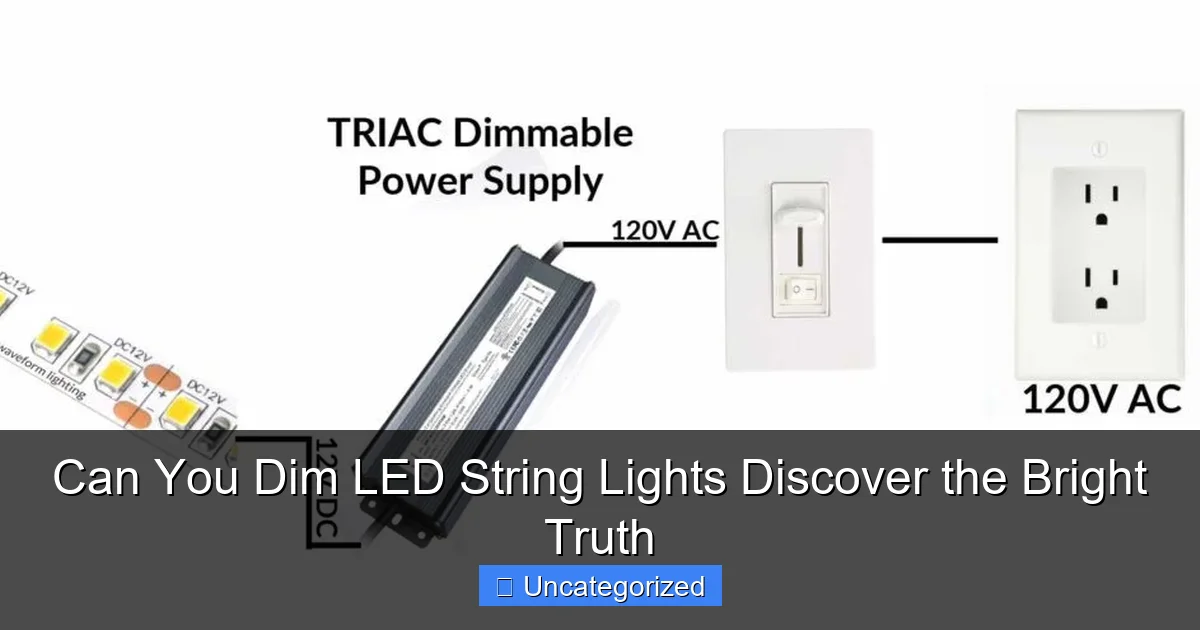
Visual guide about can you dim led string lights
Image source: waveformlighting.com
- Check the product manual or packaging for “dimmable” or “compatible with dimmers.”
- Look for a “dimmable” symbol (a circle with a line through it) on the bulb or controller.
- For older lights, test with a multimeter to ensure the driver supports PWM (Pulse Width Modulation) or analog dimming.
Warning: Forcing a non-dimmable LED to work with a dimmer can cause overheating, reduced lifespan, or failure. For example, a 50W non-dimmable LED strip paired with a 100W-rated dimmer may overheat the driver.
Step 2: Choose the Right Dimmer
Not all dimmers work with LEDs. Here’s a quick guide:
| Dimmer Type | Best For | Compatibility Notes |
|---|---|---|
| Rotary (Leading-Edge) | Incandescent/halogen | May cause flickering in LEDs; use only with dimmable LEDs. |
| Slide/Toggle (Trailing-Edge) | Low-voltage LEDs | Smooth dimming; ideal for 12V/24V lights. |
| Smart Dimmers | App-controlled LEDs | Requires Wi-Fi/Zigbee; check brand compatibility. |
| 0-10V Dimmers | Commercial/professional setups | Needs separate control wire; not for plug-in lights. |
Pro Tip: For plug-in lights, opt for a dimmer with a minimum load rating below your light’s wattage. For example, a 10W LED strand works better with a dimmer rated for 5W–50W than one requiring 25W minimum.
Step 3: Install and Test
Follow these steps for a flicker-free experience:
- Turn off power at the circuit breaker.
- Connect the dimmer according to the manufacturer’s instructions. For plug-in dimmers, simply insert between the outlet and lights.
- Restore power and test at 10%, 50%, and 100% brightness. Look for flickering, buzzing, or delayed response.
- If issues arise, try a different dimmer or consult an electrician.
Example: A homeowner installing Lutron Maestro dimmers for their 120V LED Christmas lights should set the dimmer to “LED mode” (if available) and avoid daisy-chaining multiple strands.
Common Problems and Troubleshooting
Flickering or Buzzing
These issues often stem from incompatibility between the dimmer and LED driver. Solutions include:
- Upgrade the dimmer: Replace a leading-edge dimmer with a trailing-edge model (e.g., Lutron Diva CL).
- Add a load resistor: For lights with very low wattage, a resistor can simulate a higher load, preventing flicker.
- Check connections: Loose wires or corroded terminals can cause erratic behavior.
Real-World Fix: A user with flickering garden lights replaced their 60W rotary dimmer with a Lutron Toggler LED+ dimmer (150W minimum load), eliminating the flicker.
Delayed Response or Ghosting
When lights stay dimly lit after turning off, it’s called “ghosting.” Causes and fixes:
- Leakage current: Use a dimmer with a “bypass” or “neutral wire” requirement.
- Capacitive coupling: Install a snubber circuit across the dimmer terminals.
- Faulty driver: Replace the LED driver with a compatible model.
Overheating Dimmers
Dimmers overheat when the total load exceeds their rating. For example, a 300W dimmer powering 400W of lights will fail. Always:
- Calculate the total wattage of all connected lights.
- Choose a dimmer with a 20% higher capacity than the load (e.g., 360W dimmer for 300W lights).
Advanced Dimming Techniques for Ambiance and Efficiency
Layered Lighting Design
Combine dimmable LED string lights with other sources for dynamic spaces:
- Task lighting: Use 50% brightness for reading nooks.
- Accent lighting: Dim to 20% for wall washes or art highlights.
- Ambient lighting: Set to 30–40% for evening relaxation.
Example: A bedroom with overhead LED strips (dimmed to 40%), a floor lamp (30%), and fairy lights (20%) creates a cozy, layered effect.
Energy Savings and Lifespan
Dimming LEDs can reduce energy use by 10–20% per 10% brightness decrease. A study by the U.S. Department of Energy found that dimming LEDs to 50% extends their lifespan by up to 20x. To maximize savings:
- Use motion sensors to dim lights in unoccupied areas.
- Program smart lights to dim automatically at sunset.
- Pair with timers for seasonal displays (e.g., dim holiday lights after midnight).
Color-Tuning and RGB Dimmers
RGB (color-changing) LED string lights require specialized dimmers:
- RGB controllers: Adjust brightness and color via remote or app (e.g., Govee DreamView).
- DMX dimmers: Professional systems use DMX512 protocols for complex color scenes.
Tip: For smooth color transitions, choose a controller with a high PWM frequency (≥1 kHz) to avoid visible flicker.
Conclusion: Mastering the Art of Dimming LED String Lights
The question “Can you dim LED string lights” has a resounding answer: Yes, but with precision. Success hinges on understanding your lights’ specifications—voltage, driver type, and dimming protocol—and pairing them with compatible hardware. Whether you’re using plug-in fairy lights, low-voltage garden strands, or smart RGB systems, the right dimmer transforms functional lighting into an art form.
Remember, safety is paramount. Always verify dimmability, choose quality dimmers, and test setups before full installation. For complex projects, consult an electrician. With these insights, you’re equipped to create enchanting spaces, save energy, and enjoy your LED string lights for years to come. The bright truth? Dimming isn’t just possible—it’s essential for unlocking their full potential.
Frequently Asked Questions
Can you dim LED string lights with a standard wall dimmer?
Most LED string lights require an LED-compatible dimmer switch, as standard dimmers may not work properly and can damage the lights. Always check the product specifications or packaging to confirm dimmability.
How do I know if my LED string lights are dimmable?
Look for labels like “dimmable” or “compatible with LED dimmers” on the packaging or product description. If unsure, contact the manufacturer to verify whether your LED string lights support dimming.
Can you use a remote control to dim LED string lights?
Yes, many modern LED string lights come with remote controls that include dimming functions. These remotes often offer adjustable brightness levels and color temperature options for added convenience.
Do dimmable LED string lights work with smart home systems?
Some dimmable LED string lights are compatible with smart home systems like Alexa or Google Assistant, but you’ll need a smart dimmer switch or hub. Check the product details to ensure integration with your system.
What happens if I try to dim non-dimmable LED string lights?
Using non-dimmable LED string lights with a dimmer can cause flickering, reduced lifespan, or permanent damage to the lights. Always match the lights to the correct dimmer type for safe operation.
Are there battery-powered LED string lights that can be dimmed?
Yes, many battery-powered LED string lights include built-in dimming features via a switch or remote. Just ensure the product explicitly states it’s dimmable before purchase.