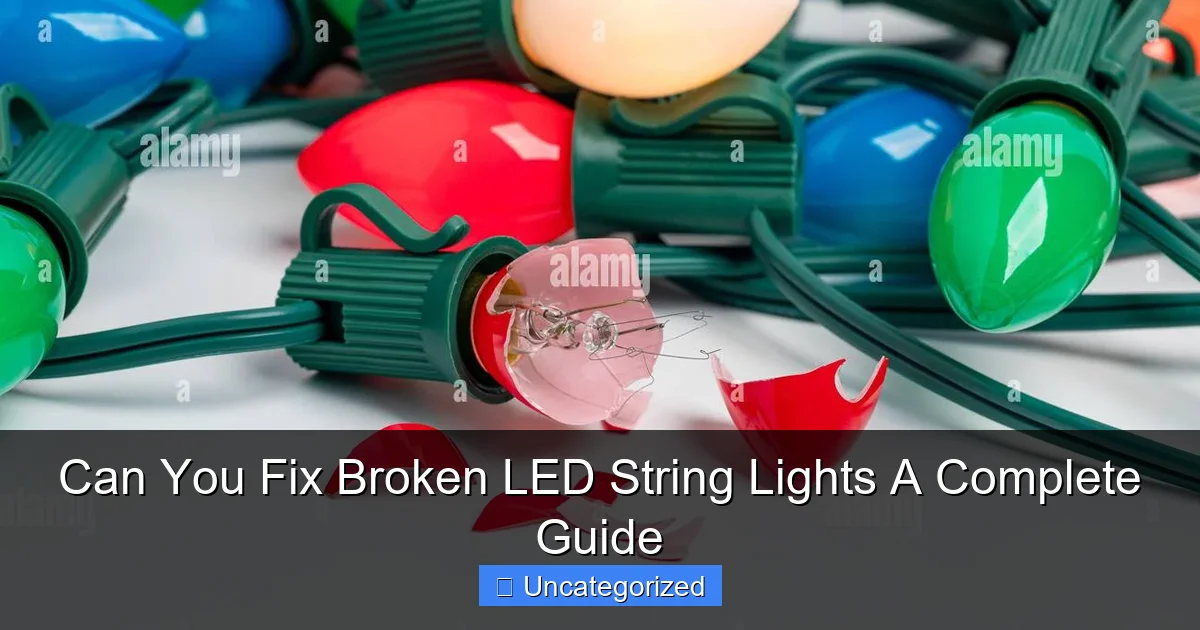
Featured image for can you fix broken led string lights
Image source: c8.alamy.com
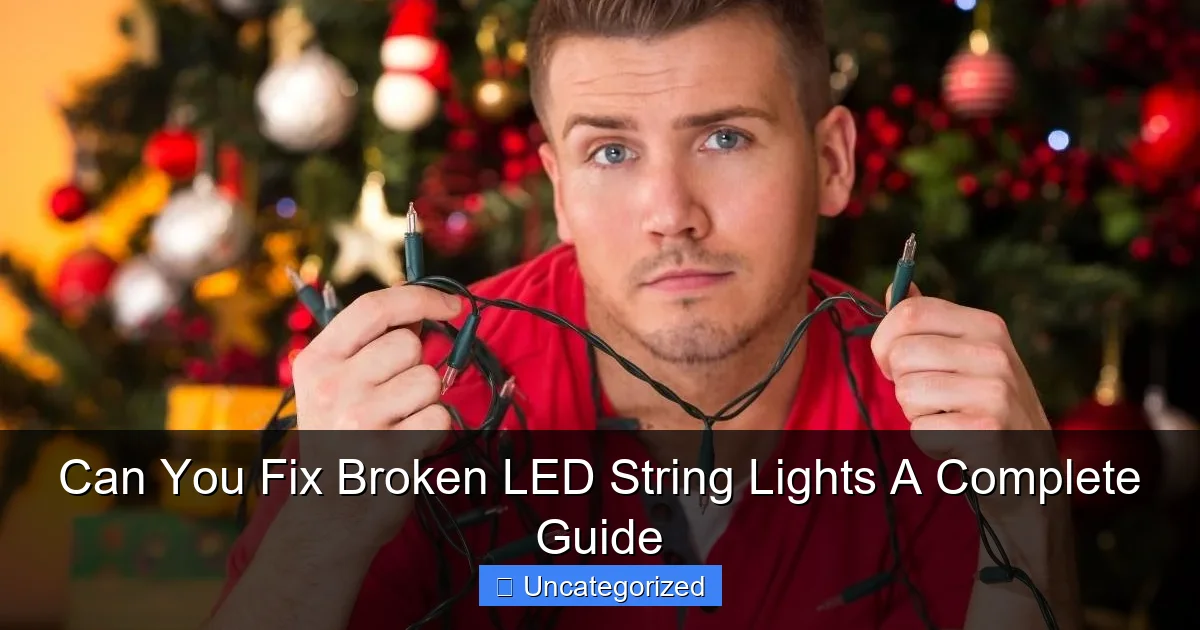
Yes, you can fix broken LED string lights with the right tools and a bit of patience, saving both money and the environment. Most issues—like dead bulbs, frayed wires, or faulty connections—can be repaired using simple techniques such as bulb replacement, soldering, or insulation tape fixes. This guide walks you through every step to get your lights shining bright again.
Key Takeaways
- Diagnose first: Test bulbs and connections to pinpoint the issue accurately.
- Replace bulbs: Swap out faulty LEDs with compatible ones for quick fixes.
- Check wiring: Inspect for frayed or loose wires and repair with solder or tape.
- Use a multimeter: Verify continuity and voltage to identify hidden electrical faults.
- Waterproof repairs: Seal connections with silicone to protect against moisture damage.
- Know when to quit: If the entire string fails, replacement may be more cost-effective.
📑 Table of Contents
- The Hidden Magic of LED String Lights
- Common Causes of LED String Light Failure
- Essential Tools and Materials for Repair
- Step-by-Step Repair Guide
- Advanced Troubleshooting for Complex Issues
- Prevention and Maintenance Tips
- Data Table: LED String Light Repair Quick Reference
- Conclusion: Keep the Lights Glowing
The Hidden Magic of LED String Lights
LED string lights have transformed the way we decorate our homes, gardens, and events. Whether draped across a patio, woven into a Christmas tree, or twinkling above a wedding reception, these delicate strands of light bring warmth, ambiance, and a touch of magic to any space. Unlike traditional incandescent bulbs, LED lights are energy-efficient, long-lasting, and available in a dazzling array of colors, shapes, and styles. From warm white fairy lights to color-changing smart LEDs, they’ve become a staple in modern decor.
But what happens when your beloved LED string lights go dark? A single flicker, a section that won’t light up, or an entire strand that refuses to turn on can be incredibly frustrating—especially during the holiday season or a special event. The good news? You can often fix broken LED string lights without having to toss them out and buy new ones. With a little patience, basic tools, and the right know-how, many common issues can be diagnosed and repaired at home. This guide will walk you through everything you need to know about troubleshooting, repairing, and maintaining your LED string lights to keep them glowing for years to come.
Common Causes of LED String Light Failure
Before diving into repair techniques, it’s essential to understand why LED string lights fail. Unlike old-fashioned incandescent bulbs, where a single burned-out bulb could take down an entire strand, LED systems are more complex. Their failure points are often subtle and require a methodical approach to diagnose. Below are the most common causes of LED string light malfunctions, each of which can be addressed with the right tools and techniques.
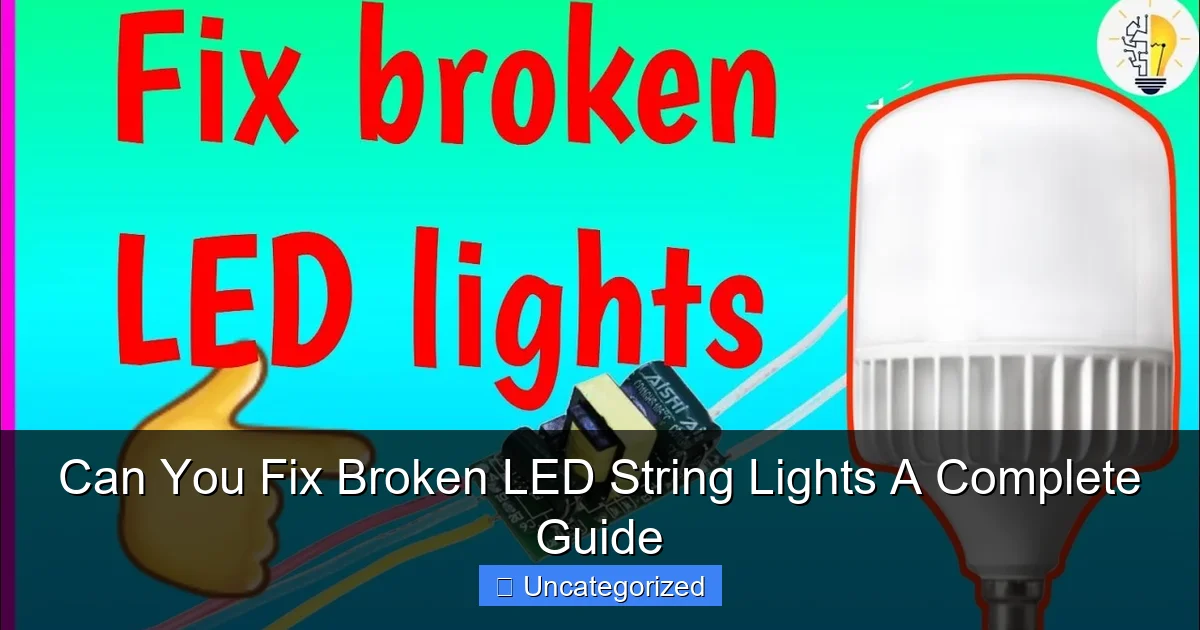
Visual guide about can you fix broken led string lights
Image source: i.ytimg.com
1. Loose or Damaged Connections
One of the most frequent culprits behind LED string light failure is poor electrical connection. This can occur at multiple points: the plug, the socket between bulbs, or where wires connect to the power supply. Over time, repeated plugging and unplugging, exposure to moisture, or physical stress from hanging can loosen connections or corrode metal contacts.
- Example: A strand of outdoor LED lights stops working after a winter storm. Upon inspection, the plug shows signs of water damage and greenish corrosion on the prongs. This indicates moisture ingress, which disrupts conductivity.
- Tip: Always unplug lights before handling. Use a magnifying glass to inspect plug contacts for tarnish or bent prongs.
2. Blown Fuses or Faulty Drivers
Most LED string lights have a small in-line fuse or driver unit near the plug. These components protect the circuit from power surges and regulate voltage. If the lights suddenly stop working after being plugged in, a blown fuse is often the cause. Similarly, a faulty driver (especially in smart or color-changing LEDs) can prevent the entire strand from functioning.
- Example: A 50-foot LED curtain light works for a few minutes, then shuts off. A multimeter test shows no voltage output from the driver. Replacing the driver restores functionality.
- Tip: Keep spare fuses (typically 3A or 5A) and know your light’s voltage (e.g., 12V, 24V, 120V).
3. Burned-Out or Damaged LEDs
While LEDs are long-lasting (typically 25,000–50,000 hours), they can fail prematurely due to overheating, voltage spikes, or manufacturing defects. In series-wired strands, a single dead LED can cause a “cascade failure” if not properly bypassed.
- Example: A section of 10 LEDs on a string is dark, but the rest glow. Using a LED tester (a small device that applies low voltage), you identify the third bulb as non-functional.
- Tip: Some LED strings have “shunt resistors” that allow current to bypass a dead LED. If yours don’t, replacement is necessary.
4. Wire Damage and Short Circuits
The thin wires in LED strings are vulnerable to fraying, kinking, or animal damage (especially outdoors). A short circuit occurs when exposed wires touch, bypassing the LEDs and potentially tripping the fuse or damaging the driver.
- Example: A squirrel chews through the insulation of an outdoor light strand. The lights flicker erratically. A visual inspection reveals a bare copper wire touching another conductor.
- Tip: Use electrical tape or heat-shrink tubing to insulate exposed wires. Avoid sharp bends during installation.
5. Moisture and Corrosion
Outdoor LED lights are designed to be weather-resistant, but prolonged exposure to rain, snow, or high humidity can lead to corrosion inside sockets or at solder joints. Moisture can also cause mold growth on wires, further degrading performance.
- Example: A bathroom LED mirror light flickers after a shower. The issue is traced to condensation inside the socket, causing intermittent contact.
- Tip: Use waterproof LED lights (IP65 or higher rating) for outdoor or high-moisture areas. Store lights in a dry place when not in use.
Essential Tools and Materials for Repair
Repairing LED string lights doesn’t require a professional electrician’s toolkit, but having the right tools on hand makes the process faster, safer, and more effective. Below is a curated list of essentials, along with tips on how to use them properly.
Visual guide about can you fix broken led string lights
Image source: santas.christmas
Basic Toolkit
- Multimeter: A digital multimeter is indispensable for testing voltage, continuity, and resistance. It helps identify open circuits, short circuits, and faulty components. Look for a model with a diode test function for LED-specific diagnostics.
- Wire Strippers: Used to remove insulation from damaged wires without nicking the copper strands. Choose a precision stripper for thin LED wires (typically 22–24 AWG).
- Needle-Nose Pliers: Ideal for gripping small wires, bending contacts, or removing fuses.
- Soldering Iron and Solder: For permanent repairs of broken wires or replacing LEDs. Use rosin-core solder (60/40 tin-lead or lead-free) and a 25–40W iron.
- Heat-Shrink Tubing and Lighter: Provides durable, insulated splices. Cut tubing to length, slide over the repair, and shrink with heat.
- Electrical Tape: Useful for temporary fixes or reinforcing heat-shrink seals. Use high-quality, UL-listed tape.
- LED Tester: A small, battery-powered device that applies safe voltage to test individual LEDs without removing them from the circuit.
Optional (But Helpful) Tools
- Magnifying Glass: For inspecting tiny solder joints or identifying micro-cracks in wires.
- Desoldering Pump or Braid: Removes excess solder from joints, useful when replacing components.
- Insulation Tester: Checks for wire insulation integrity, especially important for outdoor lights.
- Replacement LEDs and Fuses: Keep spares of the exact model used in your lights. Note bulb shape (e.g., 5mm, 3mm), voltage (e.g., 3V, 12V), and color (e.g., warm white, RGB).
Safety First
Always unplug the lights before starting any repair. Work on a non-conductive surface (e.g., wooden table) and wear insulated gloves if handling high-voltage strands. Never attempt repairs on lights that are still connected to power. For outdoor lights, consider using a GFCI (Ground Fault Circuit Interrupter) outlet to reduce shock risk.
Step-by-Step Repair Guide
Now that you have the tools, let’s walk through a systematic approach to fixing broken LED string lights. This method ensures you don’t miss critical issues and maximizes your chances of success.
Step 1: Visual Inspection
Start with a thorough visual check. Lay the entire strand on a flat surface and examine:
- The plug for bent prongs, cracks, or corrosion.
- All sockets for loose bulbs, discoloration, or moisture.
- Wires for fraying, kinks, or animal damage.
- The driver/fuse housing for bulges, burns, or leaks.
Tip: Use a flashlight and magnifying glass. Pay special attention to joints and bends, which are prone to stress fractures.
Step 2: Test the Plug and Fuse
- Unplug the lights and open the fuse compartment (usually a small sliding cover on the plug).
- Remove the fuse and test it with a multimeter in continuity mode. If the fuse is blown, replace it with an identical one (same amperage and voltage rating).
- Test the plug prongs with the multimeter. Set it to AC voltage and plug in the lights. You should read the rated voltage (e.g., 120V). If not, the plug or driver is faulty.
Example: A 120V plug reads 0V. The fuse is intact. This points to a driver or internal wiring issue.
Step 3: Check for Continuity
Use the multimeter’s continuity mode to test the circuit:
- Set the multimeter to continuity (usually a diode symbol with a sound wave).
- Touch one probe to the plug’s live prong and the other to the first LED’s positive lead. A beep indicates continuity.
- Move the second probe along the strand, testing each bulb socket and wire segment.
Tip: If the circuit breaks at a socket, the LED or solder joint may be the issue. If it breaks mid-wire, there’s likely a cut or short.
Step 4: Test Individual LEDs
For strands with dark sections, use an LED tester or multimeter:
- Remove the suspect LED from its socket (use pliers gently).
- Test it with the LED tester or multimeter’s diode mode. A working LED will light up faintly.
- If the LED fails, replace it with an identical one. Solder carefully to avoid overheating.
Note: Some LEDs are soldered directly to the wire. In this case, cut out the dead LED, strip the wires, and solder in a new one using heat-shrink insulation.
Step 5: Repair Wires and Splices
For damaged wires:
- Cut out the damaged section with wire cutters.
- Strip ½ inch of insulation from both ends.
- Twist the exposed wires together, solder, and cover with heat-shrink tubing.
- For short circuits, insulate exposed wires with electrical tape or heat-shrink.
Pro Tip: Use color-coded wires (red for positive, black for negative) to avoid polarity issues.
Step 6: Reassemble and Test
After repairs:
- Reinsert fuses, close the plug, and ensure all bulbs are seated.
- Plug in the lights and test in a low-risk area (e.g., indoors).
- If issues persist, recheck your work or consider professional help.
Advanced Troubleshooting for Complex Issues
Some LED string light problems go beyond basic repairs. These advanced issues often involve electronic components like drivers, microcontrollers, or specialized wiring configurations. Here’s how to tackle them.
1. Faulty Drivers and Power Supplies
LED drivers convert AC voltage to the low DC voltage LEDs require. A failing driver can cause dim lights, flickering, or complete failure. Signs include:
- Burn marks or bulging capacitors inside the driver.
- Overheating (feel the driver after 5 minutes of operation).
- No output voltage (test with a multimeter).
Solution: Replace the driver with an identical model. Note input/output voltage, wattage, and connector type. For smart lights, ensure the driver supports the control protocol (e.g., PWM for color-changing LEDs).
2. Series vs. Parallel Wiring Issues
LED strings use either series or parallel wiring:
- Series: All LEDs share the same current. If one fails, the entire section may go dark. Some strands have shunt resistors to bypass dead LEDs.
- Parallel: Each LED has its own circuit. A single failure doesn’t affect others.
Diagnosis: Use a multimeter to check if the circuit breaks at a specific LED (series) or if only that LED is out (parallel). For series strands without shunts, replace dead LEDs or install bypass resistors (typically 100–220 ohms).
3. Smart and RGB LED Problems
Smart LED lights (e.g., Bluetooth, Wi-Fi, or app-controlled) have microcontrollers that manage color, brightness, and patterns. Common issues include:
- App connectivity failure (reset the controller or re-pair).
- Incorrect color display (check for damaged RGB channels).
- Random flashing (often a loose connection or interference).
Tip: For RGB LEDs, test each color channel (red, green, blue) individually. A dead channel indicates a faulty LED or driver.
4. Battery-Operated Lights
Portable LED strings (e.g., for camping or events) run on batteries. Issues include:
- Corroded battery contacts (clean with isopropyl alcohol).
- Dead batteries (replace with fresh ones).
- Loose switch mechanisms (tighten or replace).
Prevention and Maintenance Tips
Preventing LED string light failure is far easier than repairing it. With proper care, your lights can last for decades. Here are key maintenance practices to adopt.
1. Proper Storage
- Coil lights loosely (avoid tight loops) to prevent wire kinking.
- Use a storage box or reel to protect from dust, moisture, and pests.
- For long-term storage, remove batteries to prevent corrosion.
2. Installation Best Practices
- Use plastic clips or hooks, not nails or staples, to avoid wire damage.
- Keep lights away from heat sources (e.g., radiators, grills) to prevent melting.
- For outdoor use, choose lights rated IP65 or higher. Cover plugs with waterproof caps.
3. Regular Cleaning
- Wipe bulbs with a dry or slightly damp cloth. Never submerge the plug.
- Remove leaves, spiderwebs, or dust from sockets to prevent shorts.
- Check for corrosion every few months, especially in humid climates.
4. Voltage and Surge Protection
- Use a surge protector for indoor lights to guard against power spikes.
- For outdoor lights, install a GFCI outlet to reduce shock and fire risk.
- Never overload circuits. Check the total wattage of your lights vs. outlet capacity.
5. Annual Inspection
Before each season, inspect all lights for:
- Bulb tightness (loose bulbs can cause arcing).
- Wire insulation integrity.
- Plug and socket condition.
Data Table: LED String Light Repair Quick Reference
| Issue | Possible Cause | Tools Needed | Repair Method | Estimated Time |
|---|---|---|---|---|
| Entire strand dead | Blown fuse, faulty driver, loose plug | Multimeter, spare fuse | Replace fuse, test driver, check plug | 15–30 mins |
| Section of lights out | Dead LED, broken wire | LED tester, soldering iron | Replace LED, repair wire | 30–60 mins |
| Flickering lights | Loose bulb, short circuit, driver issue | Multimeter, pliers | Tighten bulb, insulate wires, replace driver | 20–45 mins |
| Water damage | Corrosion, short circuits | Isopropyl alcohol, electrical tape | Clean contacts, dry, insulate | 30 mins |
| Smart lights unresponsive | App/controller failure | Smartphone, reset button | Reset, re-pair, update firmware | 10–20 mins |
Conclusion: Keep the Lights Glowing
LED string lights are more than just decorations—they’re symbols of celebration, comfort, and creativity. When they fail, it’s natural to feel a pang of disappointment. But as this guide shows, you can fix broken LED string lights in most cases with basic tools, patience, and a methodical approach. From diagnosing loose connections to replacing dead LEDs or repairing damaged wires, the skills you’ve learned here can save you money, reduce waste, and extend the life of your favorite lights.
Remember: prevention is just as important as repair. By storing lights properly, installing them carefully, and performing regular maintenance, you can avoid many common issues before they start. And when problems do arise, don’t rush to replace the entire strand—take a deep breath, grab your toolkit, and tackle the challenge. With the knowledge in this guide, you’re equipped to handle everything from simple fuse replacements to complex driver repairs.
So the next time your LED string lights flicker or go dark, don’t despair. Instead, see it as an opportunity to learn, tinker, and preserve the magic. After all, the glow of a successfully repaired light strand is even more satisfying than buying a new one. Keep shining!
Frequently Asked Questions
Can you fix broken LED string lights yourself?
Yes, you can often repair broken LED string lights with basic tools like a multimeter, wire cutters, and electrical tape. Simple issues like loose connections or a single dead bulb are usually fixable at home.
What are common causes of LED string light failure?
Common issues include water damage, frayed wires, loose bulbs, or a faulty power adapter. Identifying the root cause is the first step to fixing broken LED string lights effectively.
How do I troubleshoot LED string lights that won’t turn on?
Check the power source, fuse (if applicable), and inspect for visible damage like broken wires or loose bulbs. Use a multimeter to test continuity in the wiring if no obvious issues are found.
Can you replace individual bulbs in LED string lights?
Yes, if the LED bulbs are removable, you can replace individual ones using compatible replacements. Ensure the voltage and wattage match the original bulbs to avoid further damage.
Is it worth repairing broken LED string lights or should I buy new ones?
Repairing is cost-effective for minor issues, especially if the lights are high-quality or decorative. However, if the damage is extensive or the lights are old, replacement might be more practical.
How do I waterproof repaired LED string lights?
After fixing broken LED string lights, seal connections with silicone sealant or heat-shrink tubing. Ensure all exposed wires are insulated to protect against moisture, especially for outdoor use.