Featured image for can you put a dimmer on outdoor led string lights
Image source: m.media-amazon.com
Yes, you can put a dimmer on outdoor LED string lights—but only if they’re compatible with dimming technology. Using a non-dimmable LED with a dimmer can cause flickering, reduced lifespan, or failure, so always check the product specifications first. For best results, pair dimmable LEDs with a compatible low-voltage or PWM dimmer designed for outdoor use to safely control brightness and set the perfect ambiance.
Key Takeaways
- Check compatibility first: Ensure your LED string lights support dimming before adding a dimmer.
- Use outdoor-rated dimmers: Only install UL-listed dimmers designed for wet/damp locations.
- Match voltage requirements: Pair the dimmer with your lights’ voltage (e.g., 12V vs. 120V).
- Opt for PWM dimmers: Pulse-width modulation dimmers work best for smooth LED performance.
- Avoid cheap dimmers: Low-quality dimmers can damage LEDs or cause flickering.
- Test before full install: Verify dimmer and light functionality with a short setup first.
📑 Table of Contents
- Understanding LED Dimming Technology
- Types of Dimmers Suitable for Outdoor LED String Lights
- Step-by-Step Guide to Installing a Dimmer on Outdoor LED String Lights
- Common Mistakes to Avoid When Dimming Outdoor LED String Lights
- Enhancing Ambiance with Dimmed Outdoor LED String Lights
- Comparison of Popular Outdoor LED Dimmer Options
- Conclusion
Understanding LED Dimming Technology
How LEDs Differ from Traditional Lighting
Unlike incandescent or fluorescent bulbs, LEDs (Light Emitting Diodes) operate on entirely different principles, which significantly affects their dimming capabilities. Traditional bulbs use a filament that heats up to produce light, and dimming is achieved by reducing the voltage. LEDs, however, are semiconductor devices that rely on a specific electrical current to emit light. This means that simply lowering the voltage doesn’t work the same way and can lead to flickering, reduced lifespan, or failure to light at all.
To dim LED lights effectively, specialized methods such as pulse-width modulation (PWM) or analog dimming are used. PWM rapidly turns the LED on and off at varying intervals, which the human eye perceives as a continuous but dimmed light. Analog dimming adjusts the current flowing to the LED in a linear fashion. Outdoor LED string lights often come with built-in drivers or controllers that support these dimming methods, but not all do. Understanding the type of dimming your lights support is critical before attempting to add an external dimmer.
Compatibility: The Key to Successful Dimming
Not every outdoor LED string light is dimmable. Manufacturers typically specify whether a product is dimmable on its packaging or product description. Using a dimmer on non-dimmable LEDs can result in poor performance, damage to the lights, or even safety hazards. Always check the product label or manual for terms like “dimmable,” “compatible with dimmer switches,” or “works with PWM/analog dimmers.”
Even among dimmable LEDs, there are variations in compatibility. Some require low-voltage DC dimmers, while others work with standard AC line-voltage dimmers. For outdoor string lights, which are often 12V or 24V DC systems powered by a transformer, a low-voltage dimmer is typically required. Additionally, the dimmer must match the wattage load of the lights. For example, if your string lights consume 30 watts, the dimmer should support at least that load, preferably with a 20–30% buffer for safety.
Types of Dimmers Suitable for Outdoor LED String Lights
Low-Voltage DC Dimmers
Most outdoor LED string lights operate on low-voltage DC power (12V or 24V), especially those designed for safety and energy efficiency in wet environments. For these, a low-voltage DC dimmer is essential. These dimmers are installed between the power supply (transformer) and the string lights.
Visual guide about can you put a dimmer on outdoor led string lights
Image source: i.ytimg.com
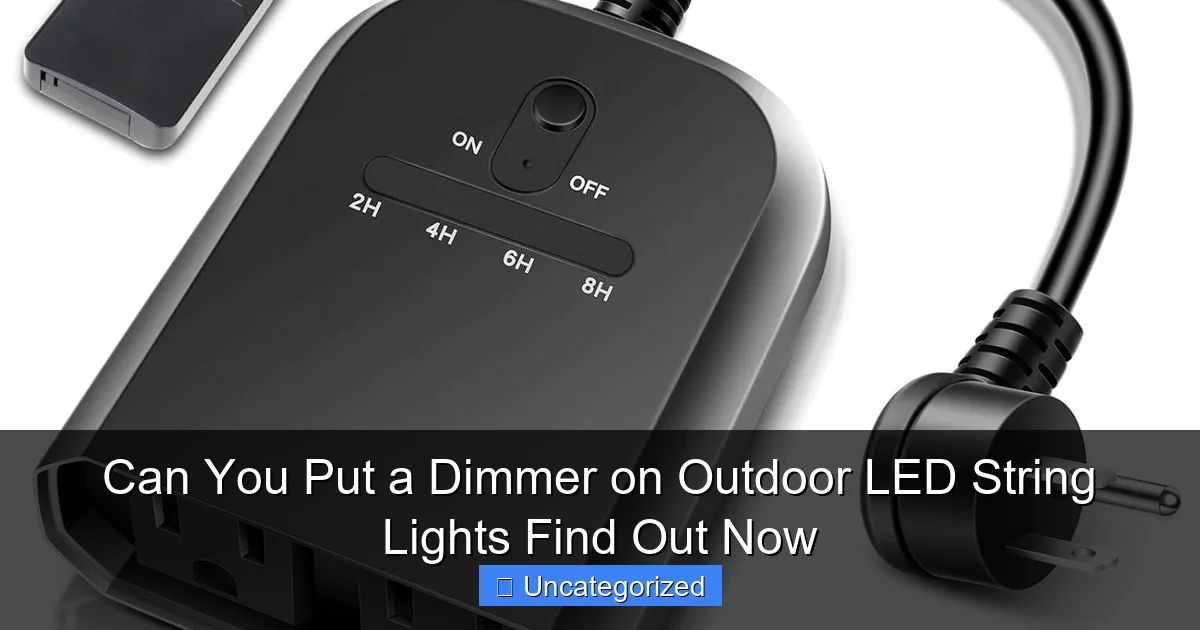
DC dimmers come in two main types: inline dimmers and remote-controlled dimmers. Inline dimmers are small modules that plug directly into the power cord, allowing you to adjust brightness with a dial. Remote-controlled dimmers use wireless signals (often RF or infrared) to control brightness from a distance. An example is the Philips Hue Outdoor Dimmer, which works with compatible 12V LED strips and string lights, allowing app-based or physical remote control.
Pro tip: When installing a DC dimmer, ensure the polarity is correct—LEDs are sensitive to reversed connections, which can damage them.
AC Line-Voltage Dimmers
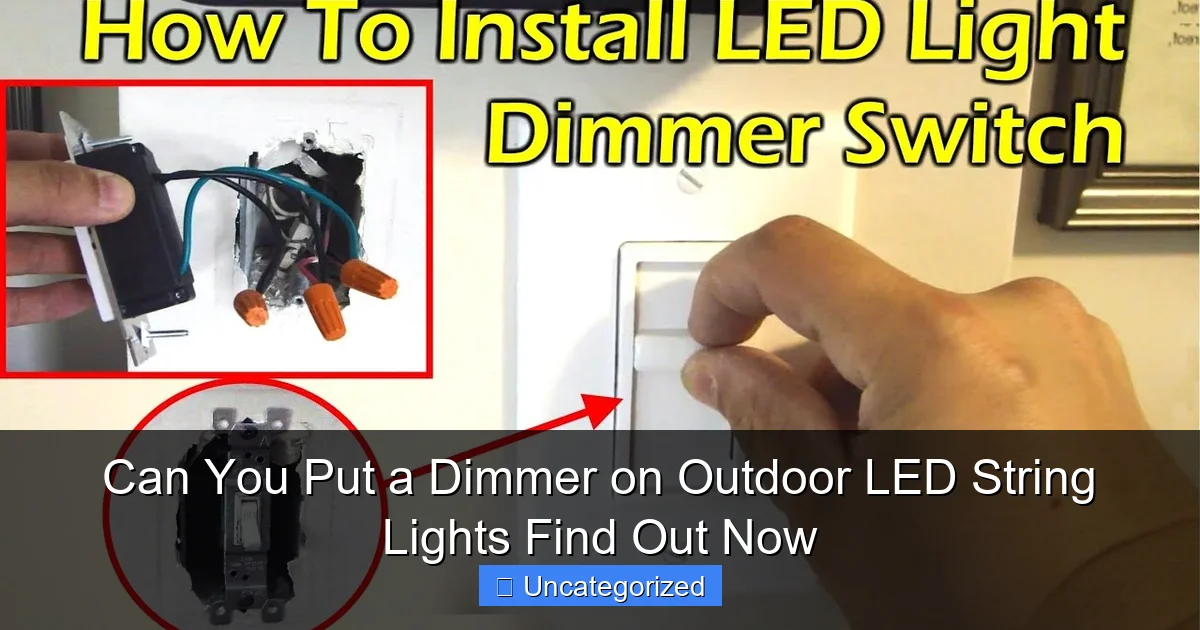
Some outdoor LED string lights plug directly into a standard 120V (or 230V) outdoor outlet without a separate transformer. These are less common but still available. For such setups, an AC line-voltage dimmer switch can be used. These are typically installed in a junction box or as a plug-in dimmer module.
AC dimmers must be rated for LED loads. Traditional incandescent dimmers often have a minimum load requirement (e.g., 40W), which many LED strings don’t meet. Using an underloaded dimmer can cause buzzing, flickering, or failure. Look for dimmers labeled “LED-compatible” or “low-wattage dimmers.” For example, the Lutron Diva LED+ Dimmer is designed for loads as low as 10W, making it suitable for long strings of LEDs.
Smart Dimmers and App-Controlled Systems
For tech-savvy users, smart dimmers offer advanced control over outdoor lighting. These can be integrated with home automation platforms like Google Home, Alexa, or Apple HomeKit. Smart dimmers allow scheduling, voice control, and dynamic lighting scenes (e.g., “dinner party” at 70% brightness, “night mode” at 30%).
Brands like Philips Hue, LIFX, and Nanoleaf offer outdoor-compatible LED string lights with built-in smart dimming. Alternatively, you can use a smart plug with dimming capabilities (e.g., TP-Link Kasa Smart Dimmer Plug) to control non-smart dimmable lights. However, ensure the smart plug supports the wattage and type (AC/DC) of your lights.
Step-by-Step Guide to Installing a Dimmer on Outdoor LED String Lights
Step 1: Confirm Dimmability and Voltage
Before purchasing any dimmer, verify two things: (1) your LED string lights are labeled as dimmable, and (2) the voltage matches the dimmer. For example, if your lights are 12V DC, a 12V DC dimmer is required. Never use a 24V dimmer on a 12V system—it can overload the lights.
Visual guide about can you put a dimmer on outdoor led string lights
Image source: storables.com
Check the power supply (transformer) for its output voltage and amperage. For instance, a transformer labeled “12V, 2A” can power up to 24 watts (12V × 2A). Calculate the total wattage of your string lights (e.g., 20 ft string at 1.5W/ft = 30W). If the total exceeds the transformer’s capacity, split the lights into multiple circuits or upgrade the transformer.
Step 2: Choose the Right Dimmer Type
Based on your setup, select the appropriate dimmer:
- DC inline dimmer: Best for 12V/24V systems with a transformer. Easy to install; no wiring required.
- AC plug-in dimmer: For 120V/230V systems without a transformer. Plug into the outlet, then plug the lights into the dimmer.
- Smart dimmer: For automation and remote control. Requires a compatible app or hub.
For example, if you have a 12V DC string light connected to a transformer, the iLIGHT 12V DC Inline Dimmer (rated for 60W) is a reliable choice. For a 120V system, the GE Enbrighten Outdoor Dimmer Plug (supports up to 300W) is ideal.
Step 3: Installation Process
For DC inline dimmers:
- Turn off power to the transformer.
- Cut the power cord of the LED string light (or use a pre-made extension with connectors).
- Strip the wires and connect the dimmer’s input to the transformer’s output and the dimmer’s output to the lights. Use waterproof connectors or heat-shrink tubing.
- Mount the dimmer in a weatherproof enclosure (e.g., a junction box) to protect it from rain and moisture.
- Restore power and test the dimmer.
For AC plug-in dimmers:
- Plug the dimmer into the outdoor outlet.
- Plug the LED string lights into the dimmer.
- Adjust the brightness using the dial or app.
Pro tip: Always install dimmers and wiring above ground level to avoid water pooling. Use outdoor-rated, UV-resistant cables and connectors.
Common Mistakes to Avoid When Dimming Outdoor LED String Lights
Ignoring Load Compatibility
One of the most frequent errors is using a dimmer with an incompatible load. For example, an AC dimmer rated for 60–150W may not work with a 20W LED string, causing flickering or failure. Always check the minimum and maximum load ratings of the dimmer and match them to your lights’ total wattage.
To calculate load: Multiply the voltage (V) by the current (A) or check the wattage listed on the lights. For multiple strings, add their wattages. If the total is 45W, choose a dimmer rated for 40–60W (with a 10–20% buffer).
Using Indoor Dimmers Outdoors
Indoor dimmers are not designed to withstand moisture, temperature fluctuations, or UV exposure. Using them outdoors can lead to corrosion, electrical shorts, or fire hazards. Always opt for outdoor-rated or weatherproof dimmers. Look for an IP65 or higher rating, which ensures protection against dust and water jets.
For example, the Leviton IP65 Outdoor Dimmer is sealed and can be mounted directly on a wall or post. In contrast, a standard indoor dimmer (IP20) should never be used outside, even under an eave.
Overlooking Polarity in DC Systems
DC systems require correct polarity (positive and negative connections). Reversing the wires can damage the dimmer or lights. Most dimmers and connectors use a keyed design (e.g., a notched plug) to prevent incorrect insertion. If splicing wires, mark the positive wire with red tape or a label.
When in doubt, use a multimeter to test polarity. Set the meter to DC voltage, connect the leads to the wires, and check if the reading is positive. If negative, reverse the connections.
Enhancing Ambiance with Dimmed Outdoor LED String Lights
Creating the Perfect Mood
Dimming transforms outdoor spaces from functional to atmospheric. For dining areas, dim to 60–70% for a cozy glow. For relaxation zones (e.g., a hammock or patio), 30–50% creates a tranquil ambiance. For entertainment spaces, use dynamic dimming—bright for games, dim for movies.
Example: A 50-ft string of warm-white LEDs (2700K) can be set to 80% for a backyard barbecue, then gradually dimmed to 40% as the party winds down. This mimics sunset lighting, enhancing the experience.
Energy Savings and Longevity
Dimming not only improves ambiance but also reduces energy consumption and extends LED lifespan. LEDs consume less power at lower brightness, and running them at 50% brightness can double their lifespan (from 25,000 to 50,000 hours, according to the U.S. Department of Energy).
Data from a 2022 study by the Lighting Research Center showed that dimming outdoor LEDs by 30% reduced energy use by 28% over a year. For a string consuming 30W, this saves ~78 kWh annually (at 8 hours/night).
Smart Scheduling for Convenience
Pair dimmers with timers or smart home systems to automate lighting. For example:
- Set lights to 100% at dusk for visibility, then dim to 50% at 10 PM.
- Use motion sensors to brighten lights when someone enters the yard.
- Create “away mode” to simulate occupancy with randomized dimming.
Smart dimmers like the Shelly Dimmer 2 (WiFi-enabled) allow these features without complex wiring.
Comparison of Popular Outdoor LED Dimmer Options
Below is a comparison of top-rated dimmers for outdoor LED string lights, based on compatibility, features, and user reviews:
| Product | Voltage | Max Load | Control Type | Weatherproof Rating | Price Range | Best For |
|---|---|---|---|---|---|---|
| iLIGHT 12V DC Inline Dimmer | 12V DC | 60W | Manual Dial | IP65 | $20–$30 | 12V DC string lights with transformer |
| GE Enbrighten Outdoor Dimmer Plug | 120V AC | 300W | Manual Dial | IP65 | $35–$45 | 120V LED strings without transformer |
| Philips Hue Outdoor Dimmer Switch | 12V DC (via Hue Bridge) | 150W | App/Remote | IP54 | $50–$60 | Smart home integration |
| Lutron Diva LED+ Dimmer (Outdoor Kit) | 120V AC | 150W | Manual/Remote | IP67 | $60–$70 | Hardwired AC systems |
| Shelly Dimmer 2 (WiFi) | 12–24V DC or 110–240V AC | 250W | App/Automation | IP20 (indoor), IP65 enclosure available | $40–$50 | Advanced automation users |
Note: IP ratings indicate weather resistance (e.g., IP65 = dust-tight and protected against water jets). Always install dimmers in a protected location or use a weatherproof enclosure.
For most users, the iLIGHT DC dimmer offers the best balance of affordability, reliability, and ease of use. For smart homes, the Philips Hue or Shelly options provide unparalleled control.
Conclusion
Adding a dimmer to outdoor LED string lights is not only possible but highly beneficial—when done correctly. The key lies in understanding your lights’ voltage, confirming their dimmability, and selecting a compatible, weatherproof dimmer. Whether you opt for a simple inline dial, a plug-in AC dimmer, or a smart system, dimming unlocks energy savings, extended lifespan, and unparalleled ambiance control.
Remember to avoid common pitfalls: mismatched loads, indoor dimmers in wet areas, and reversed polarity in DC systems. By following the steps outlined here and choosing a quality dimmer (see our comparison table), you can transform your outdoor space into a dynamic, inviting environment. From intimate dinners to festive gatherings, dimmed LED string lights elevate every moment under the stars.
So, can you put a dimmer on outdoor LED string lights? Absolutely—just do it the right way. With the right tools and knowledge, your backyard, patio, or garden will shine brighter (or softer) than ever before.
Frequently Asked Questions
Can you put a dimmer on outdoor LED string lights?
Yes, you can put a dimmer on outdoor LED string lights, but you’ll need a compatible LED dimmer switch designed for outdoor use. Standard indoor dimmers may not work properly and could damage the lights or pose safety risks.
What type of dimmer works best with outdoor LED string lights?
For outdoor LED string lights, use a low-voltage or trailing-edge dimmer switch rated for outdoor conditions and compatible with LEDs. Always check the product specifications to ensure compatibility with your specific lights.
Will using a dimmer reduce the lifespan of my outdoor LED string lights?
No, a properly matched dimmer won’t shorten the lifespan of your outdoor LED string lights. In fact, dimming can extend their life by reducing heat and power consumption, as long as the dimmer is designed for LEDs.
Can I install a dimmer on solar-powered outdoor LED string lights?
Most solar-powered LED string lights cannot be dimmed with a traditional dimmer switch because they rely on built-in solar controllers. However, some models include a manual brightness switch or app-based dimming options—check the manufacturer’s instructions.
Do I need a special outdoor-rated dimmer for LED string lights?
Yes, you should use an outdoor-rated dimmer to ensure safety and weather resistance. Indoor dimmers lack the necessary protection against moisture, which could lead to electrical hazards or malfunctions.
Can you put a dimmer on outdoor LED string lights without rewiring?
In most cases, yes—you can add a plug-in dimmer between the power source and the lights for a no-rewiring solution. Just ensure the dimmer is compatible with your LED wattage and outdoor conditions.