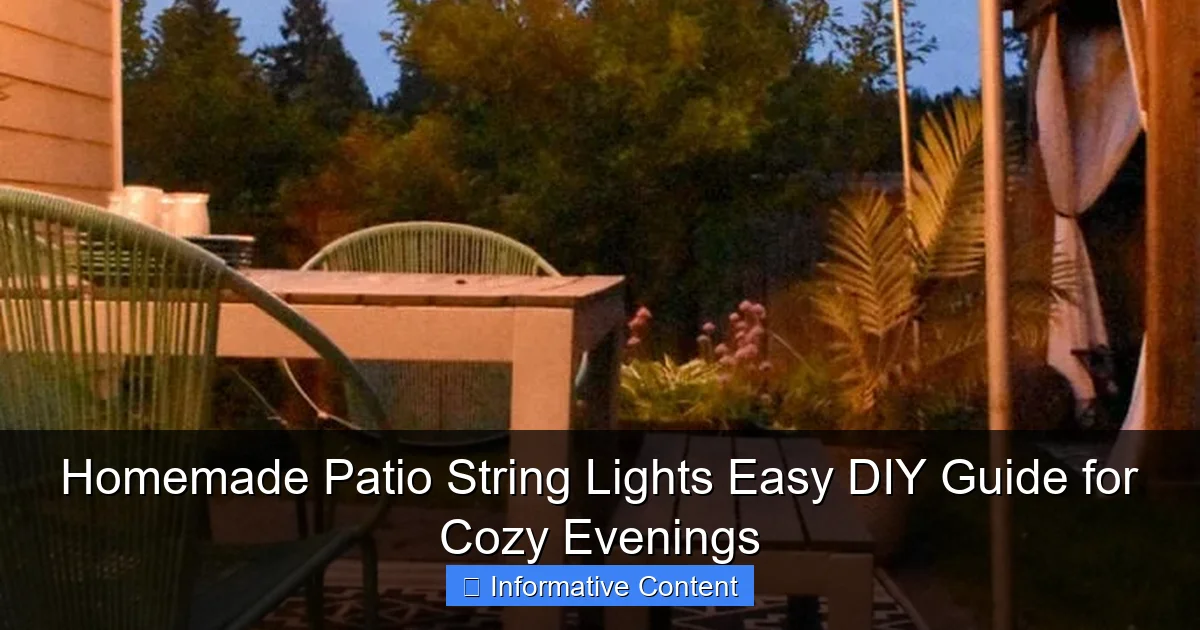
Featured image for homemade patio string lights
Image source: jessicawellinginteriors.com
Transform your outdoor space into a warm, inviting retreat with homemade patio string lights—an easy, budget-friendly DIY project that adds instant charm to any evening gathering. With simple materials and a few creative touches, you can craft custom lighting that enhances ambiance, boosts curb appeal, and extends your outdoor enjoyment well after sunset.
Key Takeaways
- Choose weather-resistant bulbs: Ensure durability with LED or solar-powered lights for long-lasting patio use.
- Plan your layout first: Sketch spacing and length to avoid mid-project adjustments and wasted materials.
- Use sturdy hanging hardware: Install hooks or clips rated for outdoor loads to prevent sagging or falls.
- DIY covers add style: Craft mason jar or paper lantern covers for unique, personalized light designs.
- Test lights before installing: Check connections and brightness early to troubleshoot issues efficiently.
- Prioritize safety: Always use outdoor-rated extension cords and GFCI outlets for electrical safety.
📑 Table of Contents
- Why Homemade Patio String Lights Transform Your Outdoor Space
- Choosing the Right Materials and Tools
- Planning Your Layout and Design
- Step-by-Step Installation Guide
- Maintenance, Weatherproofing, and Longevity
- Enhancing the Ambiance: Beyond the Lights
- Data Table: Comparing String Light Options
- Final Thoughts: Light Up Your Evenings
Why Homemade Patio String Lights Transform Your Outdoor Space
Imagine this: It’s a warm summer evening. The sun has just dipped below the horizon, painting the sky in soft hues of orange and pink. You’re sitting on your patio, wrapped in a light blanket, sipping a glass of wine or maybe a cold lemonade. Above you, a delicate web of homemade patio string lights twinkles like stars, casting a warm, inviting glow. The air is still, the mood is relaxed, and for a moment, life feels just right.
This isn’t a scene from a movie. It’s a moment you can create yourself—with a little creativity, some basic tools, and a few hours of DIY effort. Homemade patio string lights aren’t just about lighting up your backyard; they’re about crafting an atmosphere. Whether you’re hosting a small dinner party, enjoying a quiet night with your partner, or letting the kids play outside after dark, these lights add charm, warmth, and a touch of magic. And the best part? You don’t need to be an electrician or a professional crafter to pull it off. With the right guidance, anyone can create a stunning outdoor lighting display that feels uniquely theirs.
Choosing the Right Materials and Tools
Understanding Your Lighting Options
Before you dive into the DIY process, it’s essential to understand the types of lights available. The most popular choice for homemade patio string lights is LED bulbs. They’re energy-efficient, long-lasting, and come in a variety of colors and styles. Unlike traditional incandescent bulbs, LEDs don’t get hot, making them safer for outdoor use and reducing the risk of fire hazards—especially important if you’re draping lights over trees or wooden structures.
LEDs also come in different color temperatures: warm white (around 2700K) gives a cozy, candle-like glow, while cool white (4000K+) feels more modern and bright. For a romantic, intimate vibe, stick with warm white or even soft amber. If you want a playful, festive look, consider multicolor or color-changing LEDs with a remote control.
Another option is Edison-style bulbs. These vintage-inspired glass bulbs with visible filaments add a rustic, industrial charm. They’re perfect for patios with wooden decks, metal furniture, or a farmhouse aesthetic. Just keep in mind: they use more energy and can get warm, so they’re better suited for shorter-term displays or areas where people won’t be touching them.
Essential Tools and Supplies
You don’t need a full workshop to make homemade patio string lights, but a few key tools will make the job easier and safer:
- Measuring tape – To map out your space and ensure even spacing.
- Outdoor-rated extension cords – Look for ones labeled “for outdoor use” with a GFCI (Ground Fault Circuit Interrupter) for safety.
- Weatherproof light sockets or string light kits – These are designed to withstand rain, wind, and UV exposure.
- Zip ties, cable clips, or S-hooks – For securing lights without damaging surfaces.
- Drill with outdoor-rated screws – If you’re mounting to wood, brick, or metal.
- Voltage tester – To ensure no live wires after setup.
- Weatherproof electrical tape – For sealing any exposed connections.
Pro tip: Buy slightly more lights than you think you need. It’s better to have extra than to run short mid-installation. Also, consider buying a string light kit with pre-wired sockets. These save time and reduce the risk of wiring mistakes, especially if you’re a beginner.
Planning Your Layout and Design
Mapping Your Patio Space
Before hanging a single bulb, take time to plan your layout. Walk around your patio and visualize where the lights will go. Ask yourself:
- Do I want lights overhead (like a canopy), along railings, or wrapped around trees?
- Where will people sit, walk, or gather? You want light where it’s needed, not just for show.
- Are there power sources nearby? You’ll need access to an outdoor outlet or extension cord.
- Do I want symmetry or an organic, flowing look?
For example, if you have a pergola, drape lights in a zigzag pattern from one beam to another. If your patio is open, consider stringing lights between trees or from the house to a fence post. A popular design is the “canopy” effect—lights hung in parallel lines across the space, creating a ceiling of stars.
Use painter’s tape to mark anchor points. This lets you test the layout before drilling or permanently attaching anything. It’s a small step, but it prevents costly mistakes.
Creative Design Ideas
Your homemade patio string lights don’t have to be plain strings. Get creative! Here are a few ideas:
- Hanging Mason Jar Lights: Drill a small hole in the lid of a mason jar, thread a light through, and screw it in. Hang the jars from tree branches or hooks. The glass diffuses the light beautifully.
- Paper Lanterns: Use weather-resistant paper lanterns (available in bamboo or synthetic materials) to cover bulbs. They add texture and softness.
- Twine or Rope-Wrapped Cords: Wrap the cord in jute or cotton rope for a rustic look. Secure with knots or glue.
- Geometric Shapes: Use wireframes or wooden triangles to create 3D shapes (like stars or hexagons) with lights inside.
- Color Gradients: Alternate warm white, amber, and soft yellow bulbs for a sunset effect.
One reader, Sarah from Austin, shared her favorite trick: she uses old wine bottles as light holders. She cuts the bottom off, inserts a bulb, and hangs them upside down. “It looks like fireflies in bottles,” she says. “And it’s a great way to recycle!”
Step-by-Step Installation Guide
Preparing the Space
Safety first. Before you start, turn off the power to any outlets you’ll be using. Use a voltage tester to double-check. Clear the area of furniture, toys, or anything that could get in the way. If you’re working at night, use a headlamp or work light.
Next, lay out your lights on the ground to check for damage. Look for frayed wires, loose bulbs, or water damage—especially if using secondhand lights. Replace any faulty parts. If you’re building from a kit, assemble the sockets and wires according to the manufacturer’s instructions. Most kits are plug-and-play, but read the manual carefully.
Hanging the Lights
Now comes the fun part. Here’s a step-by-step method for a basic canopy-style installation:
- Mark anchor points every 12–18 inches along your desired path. Use a pencil or small nail to mark spots on beams, posts, or eaves.
- Install mounting hardware. For wood, use cup hooks or eye screws. For brick or stucco, use masonry anchors and screws. For metal railings, use S-hooks or zip ties.
- Start at the power source. Plug in the first string and work outward. This ensures you don’t run out of cord.
- Secure the lights at each anchor point. Don’t pull too tight—lights should hang in gentle curves, not straight lines. This prevents strain on the wires.
- Use zip ties or clips every 2–3 feet to keep the cord tidy and prevent sagging.
- Test the lights as you go. Plug in each section to make sure all bulbs are working before moving on.
- Seal connections with weatherproof tape if any wires are exposed (e.g., where two strings connect).
For tree installations, wrap lights around the trunk and major branches, but avoid wrapping too tightly. Trees grow, and tight wires can damage bark over time. Use clips or ties instead of nails.
Pro tip: If you’re hanging lights between two points (like a house and a tree), use a tension cable. It’s a thin steel wire you stretch between anchors, then clip the lights onto. This prevents sagging and makes the display look more professional.
Power and Safety Considerations
Never overload an outlet or extension cord. Most outdoor outlets can handle 15–20 amps. Check the wattage of your lights and add them up. If you’re using multiple strings, consider a power strip with surge protection—but only if it’s rated for outdoor use.
Always use a GFCI outlet or adapter. It cuts power instantly if it detects a ground fault (like water in a socket), preventing shocks. You can install a GFCI outlet yourself or use a GFCI-protected extension cord.
Finally, avoid running cords across walkways. If you must, cover them with a rubber cord protector or tape them down securely. No one wants to trip over a “romantic” lighting setup!
Maintenance, Weatherproofing, and Longevity
Protecting Your Lights from the Elements
Your homemade patio string lights will face sun, rain, wind, and temperature swings. To keep them shining year after year, take these steps:
- Use weatherproof sockets and cords labeled for outdoor use. Look for “IP65” or higher ratings—this means they’re dust-tight and protected against water jets.
- Seal bulb sockets with silicone caulk or electrical tape, especially if you’re using vintage-style bulbs.
- Store lights properly in winter. Coil them loosely (not too tight) and keep in a dry, cool place. Avoid plastic bags—they trap moisture. A cardboard box or fabric bag works better.
- Clean regularly. Wipe bulbs with a damp cloth to remove dust and spiderwebs. This improves brightness and reduces overheating.
One common mistake? Leaving lights up during storms. High winds can tear down strings or damage anchor points. If a storm is coming, unplug and take down lights if possible. At minimum, turn them off and secure loose cords.
Troubleshooting Common Issues
Even the best-laid plans can have hiccups. Here’s how to handle common problems:
- Flickering or dim lights: Check for loose bulbs, damaged wires, or overloaded circuits. Replace faulty parts.
- One section not working: Use a light tester or plug in a working string to isolate the issue. Often, it’s a single bad bulb or connection.
- Sagging cords: Add more anchor points or use a tension cable. For long runs, consider a second power source to reduce strain.
- Water in sockets: Dry thoroughly with a hair dryer (on low) before turning on. If damage is severe, replace the socket.
Sarah from Austin once had a raccoon chew through her extension cord. “Lesson learned,” she laughs. “Now I use conduit or run cords through PVC pipe. It’s not pretty, but it works.”
Enhancing the Ambiance: Beyond the Lights
Layering Light and Texture
Great lighting isn’t just about the bulbs—it’s about the whole scene. To elevate your homemade patio string lights, add layers:
- Path lights along walkways or stairs for safety and style.
- Lanterns or candles on tables for intimate, flickering light.
- Fairy lights in glass bottles or hanging planters for a whimsical touch.
- Uplighting on trees or shrubs to highlight greenery.
Texture matters too. Add a cozy rug, throw pillows, and a few potted plants. The lights will reflect off different surfaces, creating depth and warmth. One homeowner in Colorado uses a sheer white canopy with string lights woven through. “It looks like a cloud of stars,” she says. “And it softens the light beautifully.”
Smart Features and Automation
Want to impress your guests? Add smart features:
- Timer or dusk-to-dawn sensor – Automatically turns lights on at sunset and off at sunrise.
- Smart plugs – Control lights with your phone or voice assistant (e.g., “Hey Google, turn on patio lights”).
- Color-changing LEDs – Sync with music or change colors for holidays.
- Motion sensors – Great for security or surprise effects.
These upgrades are easy to add. Most smart plugs just plug into your existing outlet, and the lights plug into the smart device. No rewiring needed.
Seasonal and Thematic Ideas
Your lights can evolve with the seasons:
- Summer: Warm white or amber for cozy nights.
- Fall: Add orange or red bulbs, or hang them with pumpkins and gourds.
- Winter: Use cool white or blue for a frosty, magical effect.
- Holidays: Swap bulbs for red/green, blue/white, or multicolor.
One family in Portland changes their lights every month. “It keeps things fresh,” says the mom. “And the kids love helping pick the colors.”
Data Table: Comparing String Light Options
| Feature | LED String Lights | Edison Bulb Lights | Fairy Lights | Smart Color-Changing |
|---|---|---|---|---|
| Energy Use | Low (5–10W per 25 bulbs) | Medium (40–60W per 10 bulbs) | Very Low (3–5W per 100 LEDs) | Low to Medium (varies by color) |
| Lifespan | 25,000–50,000 hours | 1,000–2,000 hours | 10,000–20,000 hours | 20,000–30,000 hours |
| Cost (per 25ft) | $15–$30 | $30–$60 | $10–$25 | $30–$70 |
| Weather Resistance | High (IP65+) | Medium (IP44) | High (IP65+) | High (IP65+) |
| Best For | Year-round, energy-efficient lighting | Rustic, vintage aesthetics | Delicate, whimsical displays | Interactive, festive setups |
Remember: this table is a starting point. Always check individual product specs before buying.
Final Thoughts: Light Up Your Evenings
Creating homemade patio string lights isn’t just a weekend project—it’s an investment in your outdoor living experience. It’s about turning a simple space into a sanctuary. Whether you’re going for rustic charm, modern elegance, or playful fun, the right lighting sets the mood.
You don’t need perfection. A few bulbs out? A cord that sags a bit? That’s part of the charm. What matters is the feeling—the laughter, the quiet conversations, the way the light dances on someone’s face as they tell a story.
So grab your tools, sketch a plan, and get started. Start small if you’re nervous. Even a single string of lights over your dining table can make a difference. And once you’ve seen the magic for yourself, you’ll wonder how you ever lived without it.
Your patio is waiting. Let it shine.
Frequently Asked Questions
How do I make homemade patio string lights safely?
To ensure safety, always use LED bulbs with low heat output and weatherproof sockets. Check for frayed wires and secure connections before hanging your homemade patio string lights.
What materials do I need for DIY patio string lights?
You’ll need string light sockets, LED bulbs, a plug-in cord, zip ties or hooks, and a waterproof container for connections. For a rustic look, consider using mason jars or tin cans as shades.
Can I leave homemade patio string lights outside year-round?
Only if they’re specifically rated for outdoor and wet conditions. Most DIY versions aren’t designed for extreme weather, so take them down during heavy rain, snow, or storms.
How do I space homemade patio string lights evenly?
Measure your patio area and divide the total length by the number of bulbs for consistent spacing. Use a chalk line or tape measure to mark hook positions before installation.
Are homemade patio string lights cheaper than store-bought?
Yes, especially if you reuse materials or buy bulk components. Customizing your design with affordable parts often costs 30–50% less than pre-made commercial sets.
How can I make my DIY patio lights dimmable?
Use dimmable LED bulbs and install an inline dimmer switch compatible with low-voltage lighting. This lets you adjust brightness for cozy evenings or brighter gatherings.