Featured image for do it yourself personal led string lights
Image source: images.tcdn.com.br
Transform any space with custom DIY personal LED string lights using simple materials and easy-to-follow steps for a unique, ambient glow. From selecting energy-efficient LEDs to personalizing spacing and power sources, this guide empowers beginners and crafters to create stunning, one-of-a-kind lighting in minutes—perfect for bedrooms, patios, or events.
Key Takeaways
- Choose quality LEDs: Opt for durable, energy-efficient bulbs for long-lasting glow.
- Plan your design: Sketch layout before assembling to avoid mid-project changes.
- Use a soldering iron: Secure connections last longer than twist-on wire nuts.
- Add a switch: Install an inline switch for easy on/off control.
- Weatherproof outdoor lights: Seal connections with silicone for moisture protection.
- Personalize with colors: Mix warm and cool LEDs for custom ambiance.
📑 Table of Contents
- Why DIY Personal LED String Lights Are the Perfect Craft Project
- Essential Materials and Tools for Your DIY LED String Light Project
- Step-by-Step Guide to Building Your Custom LED String Lights
- Creative Ideas and Themes for Personalized LED String Lights
- Safety Tips and Troubleshooting Common Issues
- Where to Buy Components and Cost Breakdown
- Conclusion: Shine Bright with Your Handmade Glow
Why DIY Personal LED String Lights Are the Perfect Craft Project
Imagine wrapping a string of twinkling lights around your favorite potted plant, weaving them through a bookshelf to highlight your most cherished reads, or draping them along a bedroom headboard to create a dreamy, personalized glow. DIY personal LED string lights offer an affordable, creative, and highly customizable way to add warmth and ambiance to any space. Unlike mass-produced lighting, these handmade creations reflect your unique style, making them perfect for home decor, gift-giving, or even special events like weddings and parties.
The beauty of this DIY project lies in its simplicity. With basic materials and a little creativity, you can craft lighting that’s not only functional but also deeply personal. Whether you’re a seasoned crafter or a complete beginner, building your own LED string lights allows you to experiment with colors, shapes, lengths, and even smart features like remote controls or app connectivity. From cozy reading nooks to outdoor patios, the possibilities are endless—and the satisfaction of seeing your handmade creation shine is unmatched.
Essential Materials and Tools for Your DIY LED String Light Project
Before diving into your DIY personal LED string lights project, it’s crucial to gather the right materials and tools. The good news? Most of what you need is affordable and widely available online or at local hardware stores. Below is a comprehensive list to get you started.
Visual guide about do it yourself personal led string lights
Image source: flooringsurgeons.co.uk
Core Components
- LED String Lights (Bare or Pre-assembled): Choose between battery-powered, USB-powered, or plug-in options. Battery-powered lights are ideal for portable or temporary setups, while USB and plug-in versions work better for permanent installations. Look for LEDs with 30–100 bulbs per meter depending on your desired brightness.
- Power Source: Batteries (AA, AAA, or coin cell), USB cable with adapter, or AC/DC power supply. For longer strings, consider a 12V or 5V transformer with appropriate wattage.
- Wiring and Connectors: 22-gauge stranded copper wire (for flexibility), heat-shrink tubing, crimp connectors, and wire strippers. If you’re modifying existing strings, jumper wires and soldering tools may also be needed.
- Switch (Optional): A toggle, slide, or push-button switch adds convenience and control.
- Controller (Optional): Remote control units, motion sensors, or Bluetooth-enabled microcontrollers (like Arduino or ESP32) for smart functionality.
Tools You’ll Need
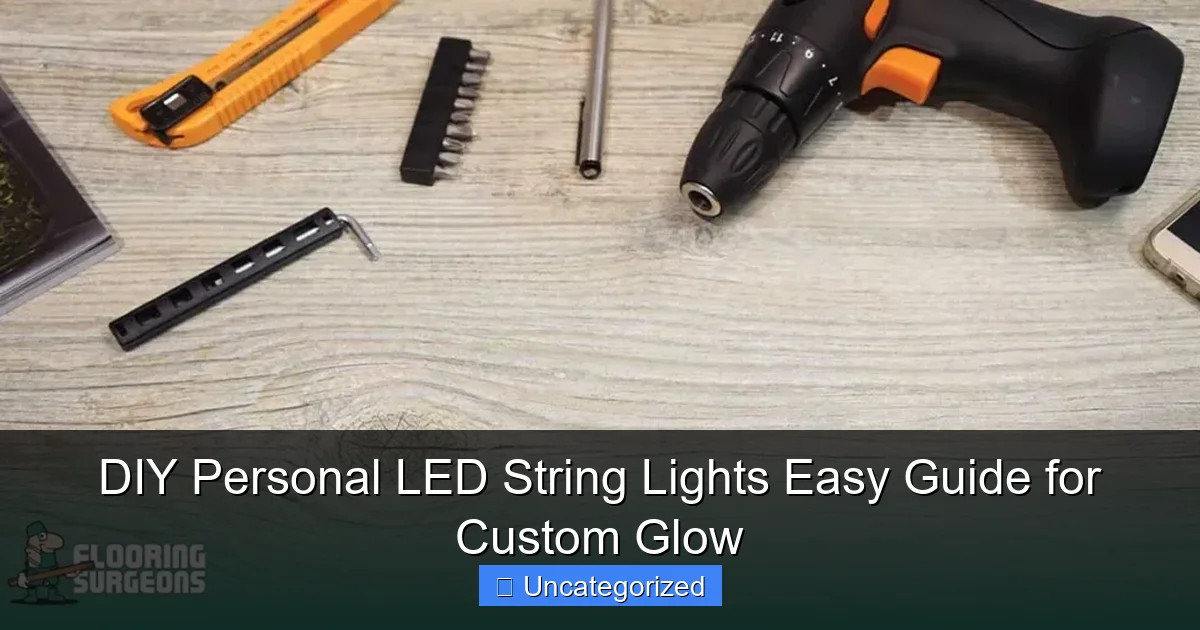
- Soldering Iron and Solder: For secure, durable connections. A 30–60W iron with a fine tip is ideal.
- Wire Strippers and Cutters: Essential for preparing and trimming wires.
- Hot Glue Gun: For insulating joints, securing components, and adding decorative elements.
- Multimeter: To test voltage, continuity, and troubleshoot connections.
- Heat Gun or Lighter: For shrinking heat-shrink tubing.
- Scissors, Pliers, and Helping Hands: For handling small parts and holding wires steady.
Decorative Add-ons
To make your DIY personal LED string lights truly unique, consider incorporating decorative elements:
- Mini Lanterns or Ornaments: Use small paper lanterns, glass beads, or 3D-printed shapes to house individual LEDs.
- Colored Filters or Diffusers: Gel sheets or translucent plastic can soften or tint the light.
- Natural Materials: Twine, driftwood, seashells, or dried flowers for a rustic or bohemian look.
- Personalized Tags: Wooden or metal tags with names, dates, or messages.
Pro Tip: Buy components in bulk if you plan multiple projects—LEDs and wires are often cheaper per unit when purchased in larger quantities. Also, consider eco-friendly options like solar-powered LEDs or recycled packaging materials.
Step-by-Step Guide to Building Your Custom LED String Lights
Now that you’ve gathered your materials, it’s time to bring your vision to life. This section walks you through a detailed, beginner-friendly process to create your DIY personal LED string lights. We’ll cover a basic battery-powered string with a switch, but you can adapt these steps for more advanced builds.
Visual guide about do it yourself personal led string lights
Image source: staticx.noticiasilimitadas.pt
Step 1: Plan Your Design and Length
Start by deciding where you’ll use the lights and how long the string should be. Measure the area (e.g., 2 meters for a headboard, 5 meters for a balcony railing). Sketch a layout noting where each LED will go. For even spacing, use a ruler or spacing guide. Pro tip: Add 10–15% extra length for connections and slack.
Step 2: Prepare the LEDs and Wiring
- If using bare LEDs (not pre-wired), note their polarity (anode/cathode). Most LEDs have a longer lead (positive) and a flat side on the base (negative).
- Cut your 22-gauge wire to the total length needed, plus extra for connections.
- Strip about 0.5 cm of insulation from both ends of the wire using wire strippers.
- For a parallel circuit (recommended for string lights), you’ll need two wires: one for positive (anode) and one for negative (cathode). Run them parallel to each other, spacing LEDs evenly along the length.
Step 3: Solder the LEDs
- Place the first LED between the two parallel wires. Bend its leads to touch the corresponding positive and negative wires.
- Heat the soldering iron and apply solder to each joint. Ensure a shiny, smooth connection—avoid “cold” solder joints (dull or grainy).
- Slide a small piece of heat-shrink tubing over each solder joint and shrink it with a heat gun to insulate and protect the connection.
- Repeat for each LED, spacing them evenly (e.g., every 10–15 cm). Use helping hands or tape to hold components steady.
Step 4: Add Power Source and Switch
- At one end of the string, connect the positive wire to a battery holder’s positive terminal (red wire). Solder securely.
- Connect the negative wire to the switch’s first terminal. Solder the switch’s second terminal to the battery holder’s negative terminal (black wire).
- Use heat-shrink tubing or electrical tape to insulate all connections.
- Insert batteries and test the circuit. If LEDs don’t light, use a multimeter to check for breaks in continuity.
Step 5: Insulate and Protect
- Apply hot glue over solder joints and connections for extra durability and water resistance (if using outdoors).
- For a polished look, wrap the entire string in decorative twine, fabric, or clear heat-shrink tubing.
- Label the power source (e.g., “Insert AA batteries here”) with a small tag.
Step 6: Optional Upgrades
- Remote Control: Add a pre-made LED controller (available online) between the battery and the string.
- USB Power: Replace the battery holder with a USB cable. Solder the positive wire to the USB’s red wire and the negative to the black wire.
- Smart Features: Use a microcontroller (e.g., Arduino) to program color changes, timers, or music synchronization.
Example: For a wedding centerpiece, create a 3-meter string with 30 warm-white LEDs, spaced 10 cm apart, powered by a USB cable (plugged into a power bank). Add tiny paper lanterns over each LED and wrap the string in ivory lace.
Creative Ideas and Themes for Personalized LED String Lights
One of the best aspects of DIY personal LED string lights is the freedom to tailor them to any theme, occasion, or personal preference. Below are inspiring ideas to spark your creativity, along with practical tips to execute them.
1. Seasonal and Holiday Themes
- Christmas: Use red and green LEDs with mini pine cones, cinnamon sticks, or tiny gift boxes. Add a battery-powered timer so lights turn on at sunset.
- Halloween: Craft a spooky string with orange and purple LEDs, plastic bats, and spiderweb-shaped diffusers. Use flickering LEDs for a ghostly effect.
- Summer: Wrap blue LEDs in seashells or starfish for a beachy vibe. Power with solar cells for outdoor use.
2. Room-Specific Decor
- Bedroom: Create a “starlight ceiling” by attaching LEDs to a sheer canopy or fishing line. Use soft white or blue LEDs for a calming ambiance.
- Kitchen: Hang a short string above a coffee bar with amber LEDs and mini coffee cup ornaments.
- Home Office: Weave LEDs through a bookshelf with book-themed tags (e.g., “Fiction,” “Travel”) on each LED.
3. Personalized Gifts
- Anniversary: Spell out a couple’s names or wedding date with letter-shaped LEDs (e.g., “J & A 2020”).
- Baby Shower: Craft a pastel-colored string with cloud and star shapes. Add a lullaby-playing microcontroller.
- Pet Lover: Use paw-print or bone-shaped LED covers for a pet’s play area.
4. Interactive and Smart Features
- Color-Changing: Use RGB LEDs and a remote to switch colors based on mood (e.g., blue for focus, red for romance).
- Sound-Activated: Program LEDs to pulse with music using a microphone sensor.
- App-Controlled: Connect to a smartphone app (via Bluetooth/Wi-Fi) for scheduling and customization.
5. Outdoor and Garden Lighting
- Pathway Lights: Bury LEDs in clear plastic tubes and place them along garden paths.
- Tree Wraps: Use waterproof LEDs to illuminate tree trunks or branches. Choose warm white for a cozy glow.
- Patio Ambiance: Hang strings between posts with mason jar “lamps” over each LED.
Pro Tip: For themed projects, use a color wheel to select complementary LED hues. For example, pair teal LEDs with coral ornaments for a tropical look, or gold LEDs with navy blue for an elegant touch.
Safety Tips and Troubleshooting Common Issues
While DIY personal LED string lights are generally safe, following best practices ensures longevity and prevents hazards. Here’s how to build safely and fix common problems.
Electrical Safety
- Low Voltage Only: Never use LEDs with high-voltage (120V/240V) AC power unless you’re experienced. Stick to 3–12V DC sources.
- Insulate All Connections: Use heat-shrink tubing, electrical tape, or hot glue to cover exposed metal.
- Check Polarity: Reverse polarity can damage LEDs or batteries. Test with a multimeter before finalizing.
- Ventilation: Solder in a well-ventilated area—fumes from melted flux can be irritating.
Battery and Power Safety
- Use Fresh Batteries: Old batteries may leak, corroding connections. Check expiration dates.
- Match Voltage: Don’t exceed the LED’s rated voltage. For example, a 3V LED needs a 3V source (2xAA batteries).
- Include a Fuse (Optional): For longer strings, add a 1A fuse to prevent overcurrent damage.
Common Problems and Fixes
| Issue | Likely Cause | Solution |
|---|---|---|
| LEDs not lighting | Loose solder joint, reversed polarity, or dead battery | Test with multimeter; re-solder joints; check battery voltage |
| Flickering lights | Loose connection or low battery | Inspect all solder joints; replace batteries |
| Overheating | Incorrect voltage or short circuit | Use a voltage regulator; check for exposed wires touching |
| Shortened lifespan | Excessive current (no resistor) or poor insulation | Add a current-limiting resistor; improve insulation |
| Water damage (outdoor use) | Insufficient sealing | Use waterproof LEDs; seal connections with silicone or heat-shrink |
Outdoor and Weatherproofing Tips
- Use IP65-rated LEDs for outdoor projects.
- Seal battery compartments with silicone caulk.
- Elevate batteries off wet surfaces (e.g., place in a plastic box).
- Test lights in a bowl of water (submerged) for 10 minutes before outdoor installation.
Where to Buy Components and Cost Breakdown
Creating your DIY personal LED string lights doesn’t have to break the bank. Here’s a guide to sourcing materials and estimating costs.
Top Places to Buy Components
- Online Retailers: Amazon, Adafruit, SparkFun, and AliExpress offer wide selections. Adafruit and SparkFun are ideal for beginners with tutorials.
- Local Stores: Home Depot, Lowe’s, and craft stores (Michaels, Joann) sell basic LEDs, batteries, and tools.
- Specialty Shops: For unique items (e.g., 3D-printed LED covers), check Etsy or local makerspaces.
Cost Breakdown (Example: 5-Meter String with 50 LEDs)
| Item | Quantity | Unit Cost | Total Cost |
|---|---|---|---|
| 50x Warm-white LEDs (3V) | 1 pack (100) | $8.00 | $4.00 (50% used) |
| 22-gauge wire (10 meters) | 1 roll | $6.00 | $3.00 (50% used) |
| AA battery holder | 1 | $2.50 | $2.50 |
| AA batteries (2-pack) | 1 pack | $4.00 | $4.00 |
| Toggle switch | 1 | $1.20 | $1.20 |
| Heat-shrink tubing (50 pieces) | 1 pack | $5.00 | $2.50 (50% used) |
| Decorative twine | 1 roll | $3.50 | $1.75 (50% used) |
| Total | $19.95 |
Note: Costs vary by region and supplier. Reuse tools (soldering iron, multimeter) for future projects to reduce expenses. For a USB-powered version, swap the battery holder for a USB cable (~$2).
Budget-Friendly Tips
- Buy pre-assembled LED strips (cut to size) if soldering isn’t your strength.
- Repurpose old string lights—salvage LEDs and wiring from broken sets.
- Use natural or recycled materials (e.g., twine, cardboard) for decor.
Conclusion: Shine Bright with Your Handmade Glow
Creating DIY personal LED string lights is more than a craft—it’s a celebration of creativity, individuality, and the joy of making something with your own hands. From the initial spark of an idea to the final glow of your finished project, every step is an opportunity to infuse your personality into your surroundings. Whether you’re crafting a romantic centerpiece, a playful room accent, or a heartfelt gift, these lights become a tangible expression of your style and care.
Remember, the beauty of DIY lies in its flexibility. Don’t be afraid to experiment: try new color combinations, integrate smart technology, or push the boundaries of traditional lighting designs. And with safety in mind and the right tools at your disposal, you can build lights that are not only beautiful but also durable and reliable. So gather your materials, fire up that soldering iron, and let your imagination guide the way. The next time you flip that switch, you’ll see more than light—you’ll see a story, a memory, a piece of you shining bright.
Frequently Asked Questions
What are DIY personal LED string lights and how do they work?
DIY personal LED string lights are customizable lighting solutions that let you create unique designs using flexible LED strips or fairy lights. They typically run on batteries or USB power and can be bent, cut, or arranged to fit your desired shape or space.
Can I cut or shorten my DIY personal LED string lights to fit a project?
Yes, many DIY personal LED string lights are designed to be cut at designated points, usually marked by scissor icons. Always check the manufacturer’s instructions to ensure safe cutting without damaging the circuit.
How do I power my DIY LED string lights for portable use?
Most DIY LED string lights use battery packs (AA or coin cell), USB connections, or portable power banks. Battery-powered options are ideal for temporary setups like parties or camping, while USB versions offer longer runtime with a power bank.
Are these LED string lights safe for indoor and outdoor DIY projects?
Many DIY personal LED string lights are rated for indoor use, but some come with waterproof or weather-resistant coatings for outdoor use. Always verify the IP rating (e.g., IP65) to ensure suitability for your environment.
What creative ways can I use DIY personal LED string lights?
You can use them for photo backdrops, headboards, holiday décor, custom signs, or even wearable art like illuminated costumes. Their flexibility makes them perfect for adding a custom glow to any craft or space.
Do I need special tools or skills to install DIY LED string lights?
No special tools are needed for most projects—just basic supplies like adhesive clips, tape, or string. The simple plug-and-play nature of DIY personal LED string lights makes them beginner-friendly and easy to customize.