Featured image for ideas for hanging string patio lights
Image source: i.pinimg.com
Transform your outdoor space with creative string patio light ideas that blend ambiance and functionality. From zigzag patterns across pergolas to draped canopies over dining areas, these lighting designs instantly elevate patios, decks, and gardens. Explore easy DIY installations using trees, poles, or railings to craft a magical nighttime retreat perfect for entertaining or unwinding.
Key Takeaways
- Plan your layout: Sketch light placement before hanging for balanced coverage.
- Use existing structures: Attach lights to trees, fences, or pergolas for easy installation.
- Mix heights creatively: Vary string light levels to add depth and visual interest.
- Anchor securely: Use hooks, zip ties, or poles to prevent sagging or damage.
- Choose weatherproof lights: Opt for durable, outdoor-rated string lights for longevity.
- Layer with other lighting: Combine string lights with lanterns or spotlights for ambiance.
📑 Table of Contents
- Why String Lights Are the Secret to a Magical Outdoor Space
- 1. Overhead Canopy: The Classic Ceiling of Light
- 2. Vertical Accents: Lighting Up Walls, Fences, and Trees
- 3. Zoned Lighting: Creating Functional Areas
- 4. Creative Structures: Beyond the Basics
- 5. Seasonal and Thematic Ideas: Lights That Tell a Story
- 6. Practical Tips and Pitfalls to Avoid
Why String Lights Are the Secret to a Magical Outdoor Space
There’s something undeniably enchanting about string lights. Whether it’s the soft glow of warm white bulbs against a summer night or the twinkling effect of fairy lights on a crisp fall evening, they have the power to instantly transform your patio into a cozy, inviting retreat. I remember the first time I strung up a few lights over my small backyard patio—what started as a simple DIY project turned into a full-blown obsession. Suddenly, my outdoor space felt like a destination, a place where friends lingered longer and conversations flowed easier.
If you’ve ever looked at your patio and thought, “It’s nice, but it could be more,” string lights might be the missing piece. They’re affordable, easy to install, and incredibly versatile. But here’s the catch: hanging them the right way is what separates a charming setup from a tangled mess. The good news? You don’t need to be an electrician or a design pro to pull it off. With a few creative ideas and some thoughtful planning, you can turn your patio into a dreamy, light-drenched oasis. Let’s dive into some of the best ways to hang string patio lights and make your outdoor space truly shine.
1. Overhead Canopy: The Classic Ceiling of Light
One of the most popular—and effective—ways to use string patio lights is to create an overhead canopy. This method mimics the feeling of dining or lounging under a starry sky, and it’s surprisingly simple to achieve. Think of it as building a “ceiling” of light that covers your entire seating or dining area.
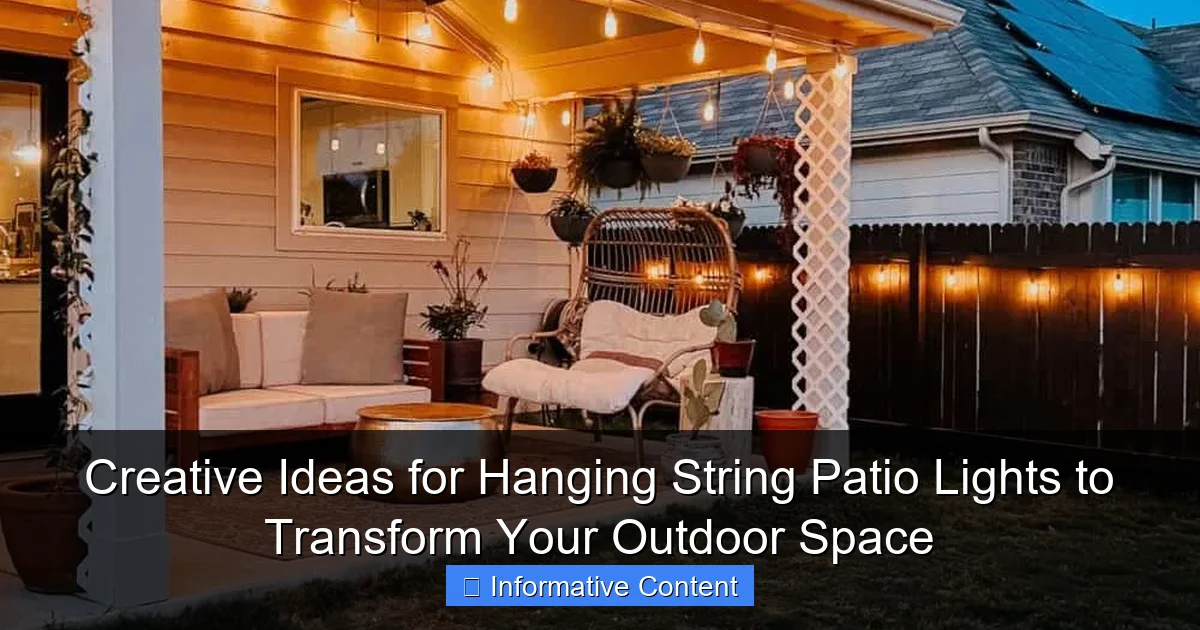
Visual guide about ideas for hanging string patio lights
Image source: loveandrenovations.com
How to Create a Grid Pattern
The key to a successful overhead canopy is a grid pattern. Start by running parallel lines of string lights across the length of your patio, then add perpendicular lines to form a crisscross effect. Use outdoor-rated hooks, screw eyes, or cable clips to anchor the lights to walls, fences, or posts. For a more permanent setup, consider installing a pergola or tension wire system.
- Spacing: Keep the lights 12–18 inches apart for a balanced look. Too close, and it feels crowded; too far, and it looks sparse.
- Height: Hang the lights 7–8 feet off the ground for optimal visibility and ambiance.
- Tip: Use a laser level to ensure your lines are straight—it’ll save you from a crooked mess.
Adding Depth with Multiple Layers
For a more dramatic effect, layer your lights. Hang a second set of string lights at a slightly different height or angle to create depth. For example, you could install a lower grid over a dining table and a higher one over a lounge area. This not only adds visual interest but also helps define different zones in your patio.
Pro tip: Mix bulb types—like globe lights for the main grid and fairy lights for the secondary layer—for a dynamic, textured look.
2. Vertical Accents: Lighting Up Walls, Fences, and Trees
Not all great lighting has to be overhead. Vertical installations can add drama and draw the eye upward, making your patio feel larger and more immersive. This is especially useful if you’re working with a small or narrow space.
Fence and Wall Backdrops
Turn your fence or exterior wall into a glowing backdrop by wrapping or draping string lights vertically. For a clean, modern look, use vertical zigzag patterns (think: a series of “V” shapes). For a rustic vibe, try a random draping technique—just let the lights hang loosely, like vines.
- Materials: Use adhesive hooks for lightweight lights on smooth surfaces, or screw-in hooks for heavier strands.
- Spacing: Leave about 6–12 inches between each vertical line for a balanced look.
- Tip: If your fence is made of wood, consider painting it a dark color (like charcoal or navy) to make the lights pop.
Tree Wraps and Canopy Climbers
If you have trees in or near your patio, don’t ignore them. Wrapping string lights around tree trunks or branches creates a magical, fairy-tale effect. Use fairy lights or micro LED strands for delicate, twinkling results.
- Method: Start at the base and spiral upward, securing the lights with zip ties or clips every few feet.
- Safety: Avoid overloading the branches, and never use nails or staples—they can damage the tree.
- Bonus: Add a few strands to lower branches to create a “floating” effect.
3. Zoned Lighting: Creating Functional Areas
Your patio likely serves multiple purposes—dining, lounging, cooking, and entertaining. Zoned lighting helps define these areas and makes the space more functional. It’s like giving each section its own “mood.”
Defining Dining and Lounge Zones
Hang a dense cluster of string lights directly over your dining table to create a focal point. For the lounge area, opt for a more diffused, ambient glow—like a canopy or wall-mounted lights. Use different bulb styles (e.g., warm white for dining, colored lights for lounging) to reinforce the separation.
- Example: Install a chandelier-style cluster of globe lights over the table, and use fairy lights draped over a nearby pergola for the lounge.
- Tip: Use dimmable lights or smart plugs to adjust the brightness for different occasions.
Kitchen and Bar Areas
If you have an outdoor kitchen or bar, highlight it with targeted lighting. Wrap string lights around the edges of the countertop or hang them under the cabinets. For a bar, try a “bottle chandelier” effect—drape lights inside clear glass bottles for a unique, DIY look.
- Materials: Use waterproof lights and outdoor-rated extension cords.
- Safety: Keep lights away from heat sources (like grills) to avoid melting or fire hazards.
4. Creative Structures: Beyond the Basics
Who says string lights have to hang from a wall or tree? With a little creativity, you can build custom structures that double as lighting installations and design features.
DIY Pergolas and Arbors
Build a simple pergola or arbor using pressure-treated lumber or metal poles. String lights across the top and sides for a permanent, elegant setup. For a rustic touch, use reclaimed wood or bamboo.
- Materials: Use 4×4 posts for stability, and add crossbeams for extra support.
- Tip: Paint the structure to match your patio’s color scheme.
Tension Wire and Cable Systems
For a sleek, modern look, install a tension wire system. Run heavy-duty cables between posts or walls, then hang your lights from the wires. This method is perfect for large patios or open spaces.
- Hardware: Use turnbuckles and eye bolts to tighten the cables.
- Spacing: Keep wires 3–4 feet apart for even light distribution.
- Bonus: Add sheer curtains or fabric panels to the cables for a romantic, boho vibe.
Hanging from Rafters and Eaves
If your patio is attached to your house, take advantage of the roof structure. Hang lights from the rafters or eaves using hooks or clips. This works especially well for covered patios or screened-in porches.
- Tip: Use a ladder with a stabilizer to avoid damaging the roof.
- Safety: Make sure the lights are rated for outdoor use and won’t overload the electrical circuit.
5. Seasonal and Thematic Ideas: Lights That Tell a Story
String lights aren’t just for summer. With a few tweaks, you can adapt your setup for different seasons, holidays, or even your personal style.
Holiday-Themed Displays
Switch up your bulbs to match the season. Use red and green lights for Christmas, orange and purple for Halloween, or pastel colors for Easter. For a festive touch, add ornaments or garlands to the strings.
- Example: Hang icicle lights for winter, or use solar-powered lights for eco-friendly holiday decor.
- Tip: Use a timer to automatically turn the lights on at dusk and off at midnight.
Bohemian and Romantic Styles
For a boho look, mix and match different types of lights—fairy lights, globe lights, and paper lanterns. Drape them over a hammock or hang them from a macramé wall hanging. For romance, add candle-style bulbs or string lights with a soft, flickering effect.
- Materials: Use natural elements like jute rope, driftwood, or woven baskets.
- Tip: Pair lights with outdoor rugs, throw pillows, and plants to complete the vibe.
Minimalist and Modern Aesthetics
If you prefer clean lines, opt for monochromatic lights (like all white or all warm white) and geometric patterns. Use a single strand of lights to outline your patio’s shape, or install a minimalist grid with evenly spaced bulbs.
- Example: Hang a single line of lights along the edge of your patio for a subtle, elegant touch.
- Tip: Use black or dark-colored wires to make them less noticeable.
6. Practical Tips and Pitfalls to Avoid
Even the most beautiful lighting setup can go wrong if you don’t plan ahead. Here are some practical tips to keep your project running smoothly—and avoid common mistakes.
Choosing the Right Lights
Not all string lights are created equal. Look for outdoor-rated, weatherproof lights with a high IP rating (IP65 or higher). LED lights are energy-efficient and last longer than incandescent bulbs.
- Bulb Types: Globe lights are great for general ambiance, while fairy lights work well for delicate effects.
- Length: Measure your patio carefully—you can always add more lights, but too many can overwhelm the space.
Power and Safety Considerations
Always use outdoor-rated extension cords and GFCI outlets. Avoid overloading circuits, and never run cords across high-traffic areas where they could be a tripping hazard.
- Tip: Use a power strip with surge protection to safeguard your lights.
- Safety: Check for frayed wires or damaged bulbs before installation.
Installation and Maintenance
Plan your layout before you start hanging. Use a pencil to mark hook locations, and test your lights before securing them. For long-term setups, clean the bulbs periodically to remove dust and debris.
- Tool Kit: Keep a ladder, level, measuring tape, and zip ties handy.
- Storage: If you’re taking the lights down seasonally, store them in a dry place to prevent tangling.
| Light Type | Best For | Lifespan (Hours) | Energy Use |
|---|---|---|---|
| LED Globe Lights | Overhead canopies, dining areas | 25,000–50,000 | Low |
| Fairy Lights | Tree wraps, boho styles | 10,000–20,000 | Very Low |
| Incandescent Bulbs | Classic, vintage looks | 1,000–3,000 | High |
| Solar-Powered Lights | Eco-friendly, low-maintenance setups | 5,000–10,000 | None (sun-powered) |
Hanging string patio lights is more than just a design choice—it’s a way to make your outdoor space feel like an extension of your home. Whether you’re creating a cozy nook for quiet evenings or a vibrant area for entertaining, the right lighting can make all the difference. The key is to start small, experiment with different styles, and don’t be afraid to make mistakes. Some of my favorite setups have come from trial and error, and that’s part of the fun.
Remember, your patio is a reflection of your personality. Use lights to highlight what you love—whether it’s a favorite tree, a cozy seating area, or a quirky DIY structure. And don’t forget to enjoy the process. There’s nothing quite like stepping back at the end of the day and seeing your patio glow with your own handiwork. So grab some lights, gather your tools, and start transforming your outdoor space tonight. You’ve got this.
Frequently Asked Questions
What are the best ways to hang string patio lights without drilling holes?
Use adhesive hooks, tension rods, or wrap lights around existing structures like pergolas, trees, or railings. These methods preserve your patio’s integrity while creating a magical glow. For renters, this is a perfect solution for temporary yet stunning lighting.
How can I create a unique design with string patio lights for my backyard?
Try geometric patterns like hexagons or zigzags, drape them in a canopy style, or outline pathways and seating areas. Mixing light colors or using globe-shaped bulbs adds a playful, personalized touch to your outdoor space.
Are there weather-resistant string patio lights for year-round use?
Yes, look for LED string lights with an IP65 or higher weatherproof rating. These are designed to withstand rain, snow, and UV exposure, making them ideal for permanent outdoor installations.
Can I hang string patio lights on a balcony with limited space?
Absolutely! Opt for vertical installations by wrapping lights around railings or hanging them in a cascading waterfall effect. Compact designs like zigzag or spiral patterns maximize impact in tight areas.
What’s the easiest way to hang string patio lights over a large patio?
Install temporary poles, use existing structures (e.g., eaves, fences), or create a grid pattern with guide wires. For seamless coverage, plan spacing between bulbs and secure them with zip ties or clips for stability.
How do I power string patio lights if I don’t have an outdoor outlet?
Use solar-powered string lights or a heavy-duty outdoor extension cord connected to an indoor outlet. For a wireless option, consider battery-operated lights with timers for convenience and energy efficiency.