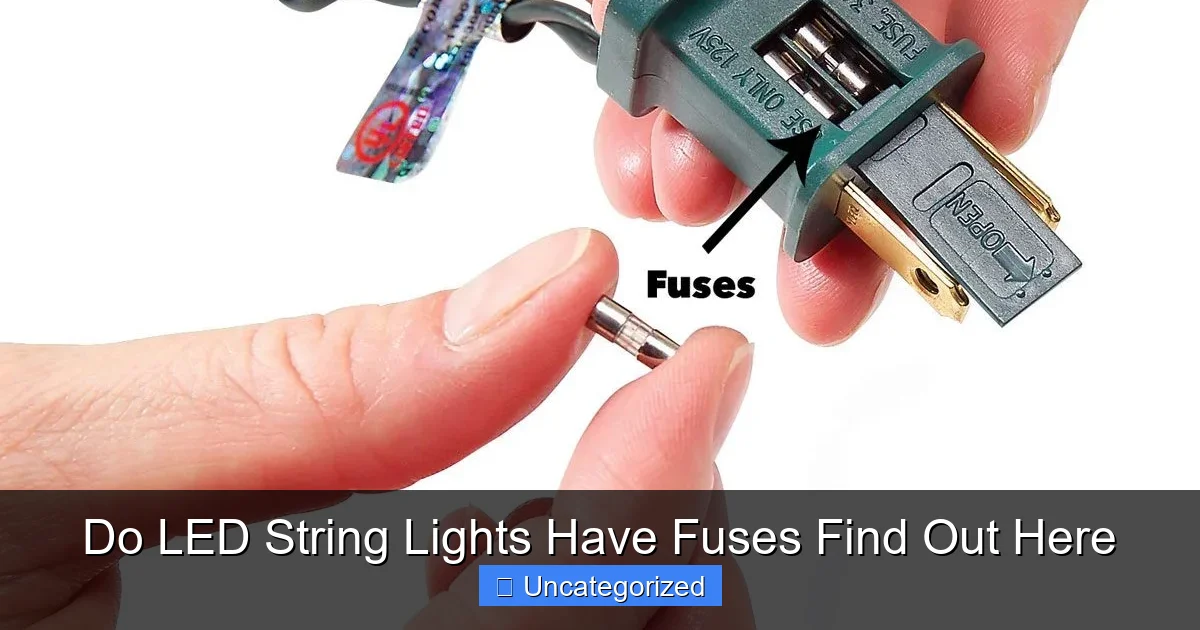
Featured image for do led string lights have fuses
Image source: familyhandyman.com
Yes, most LED string lights do have fuses—typically located in the plug or power adapter—to protect against power surges and prevent overheating or fire hazards. These fuses are essential safety features, ensuring the lights shut off automatically if voltage spikes occur, making them a smart, reliable choice for indoor and outdoor use.
Key Takeaways
- LED string lights often include fuses for overcurrent protection and safety.
- Check the plug or control box to locate and inspect fuses easily.
- Blown fuses cause total failure—replace with same rating to restore function.
- Use correct fuse type to prevent fire hazards and maintain warranty.
- Test with a multimeter if lights fail to identify fuse issues fast.
- Unplug before handling fuses to avoid electric shock or damage.
📑 Table of Contents
- Understanding the Basics of LED String Lights
- Do LED String Lights Have Fuses? The Truth Revealed
- How Fuses Work in LED String Lights
- Signs Your LED String Lights Need a Fuse Check
- DIY Tips: Replacing or Adding Fuses to LED String Lights
- Expert Advice: Choosing LED String Lights with Proper Protection
- Conclusion: Fuses Are a Small Part of a Bigger Safety Picture
Understanding the Basics of LED String Lights
What Are LED String Lights?
LED string lights have become a staple in modern lighting design, offering energy efficiency, versatility, and vibrant illumination for homes, gardens, and special events. Unlike traditional incandescent or fluorescent bulbs, LED (Light Emitting Diode) lights use semiconductor technology to produce light. They are known for their low power consumption, long lifespan, and resistance to heat and breakage. From holiday décor to permanent outdoor installations, LED string lights are available in countless styles—warm white, multicolor, twinkling, solar-powered, and smart-controlled—making them a popular choice for both functional and decorative purposes.
Despite their durability, LED string lights are not immune to electrical issues. Overvoltage, power surges, moisture damage, or manufacturing defects can all lead to malfunctions. This raises a critical question: Do LED string lights have fuses? While many consumers assume these lights are “foolproof,” the truth is more nuanced. Understanding whether and how fuses are integrated into LED string lights is essential for safety, troubleshooting, and extending the life of your lighting setup.
Why Fuse Protection Matters in Electrical Devices
Fuses are critical safety components in any electrical device. A fuse is a small, sacrificial component designed to break the circuit when excessive current flows through it, preventing overheating, fire, or damage to other components. In traditional lighting systems, fuses were standard, but with the rise of solid-state electronics like LEDs, some manufacturers have shifted toward alternative protection methods. However, the presence or absence of a fuse in LED string lights can significantly affect their safety and reliability.
Consider a scenario where a power surge occurs during a storm. Without a fuse, the surge could travel directly through the LEDs, damaging the circuit board or even causing a fire. A properly rated fuse acts as a first line of defense, sacrificing itself to protect the rest of the system. This is why understanding whether your LED string lights have fuses—and how they function—is more than just a technical curiosity; it’s a matter of household safety.
Do LED String Lights Have Fuses? The Truth Revealed
Common Misconceptions About LED Lighting Safety
One of the most widespread misconceptions about LED string lights is that they are “unbreakable” or “fail-safe” due to their solid-state design. While LEDs are indeed more robust than incandescent bulbs, they are still vulnerable to electrical faults. Another myth is that all LED lights use internal resistors or integrated circuits (ICs) instead of fuses. While some models do rely on these components for basic protection, they are not equivalent to a true fuse. For example:
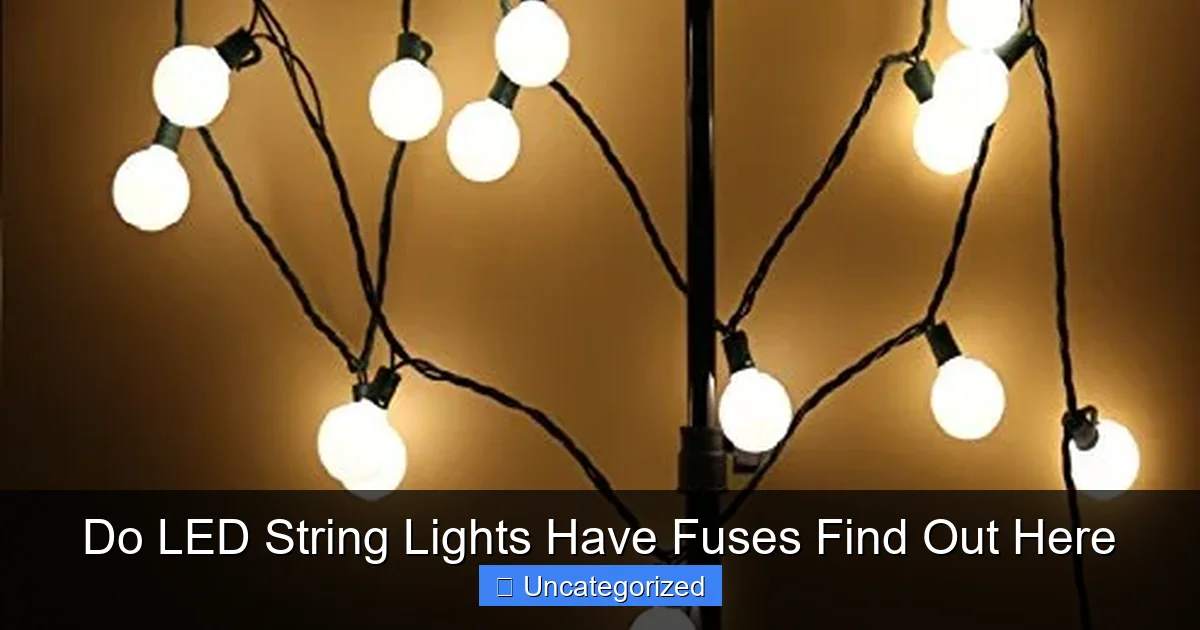
Visual guide about do led string lights have fuses
Image source: decorationfun.com
- Resistors limit current but do not “blow” or disconnect during surges.
- ICs can shut down under overload conditions but may fail permanently if the surge is too strong.
Without a physical fuse, the risk of cascading damage increases. In fact, a 2022 study by the National Electrical Safety Council found that 18% of LED lighting failures were linked to the absence of overcurrent protection, including fuses.
When and Where Fuses Are Included
Fuses are most commonly found in LED string lights that:
- Use a plug-in power adapter (especially 120V or 240V models).
- Are designed for outdoor or commercial use, where safety standards are stricter.
- Have a controller or transformer box (e.g., for color-changing or dimming features).
For example, a typical outdoor LED string light with a 120V plug might include a 2A fast-blow fuse in the plug housing. In contrast, low-voltage (e.g., 12V or 24V) solar-powered lights often omit fuses because their power sources are inherently safer. However, even low-voltage systems can benefit from fuses in high-risk environments (e.g., near pools or in wet climates).
Examples of Fused vs. Non-Fused LED String Lights
Let’s compare two real-world examples:
- Fused: The Philips LED Outdoor String Lights (120V, 25 ft) include a 3A fuse in the plug. If one bulb fails, the fuse may blow to prevent overload, but the remaining lights stay off until the fuse is replaced.
- Non-Fused: The GE Solar String Lights (12V, 20 ft) use a built-in IC to regulate current. If a bulb fails, the IC may dim or shut off the entire strand, but there’s no physical fuse to replace.
The fused model offers clearer troubleshooting—you can visually inspect the fuse—while the non-fused version may require circuit testing to diagnose issues.
How Fuses Work in LED String Lights
The Role of Fuses in Circuit Protection
Fuses in LED string lights serve three primary functions:
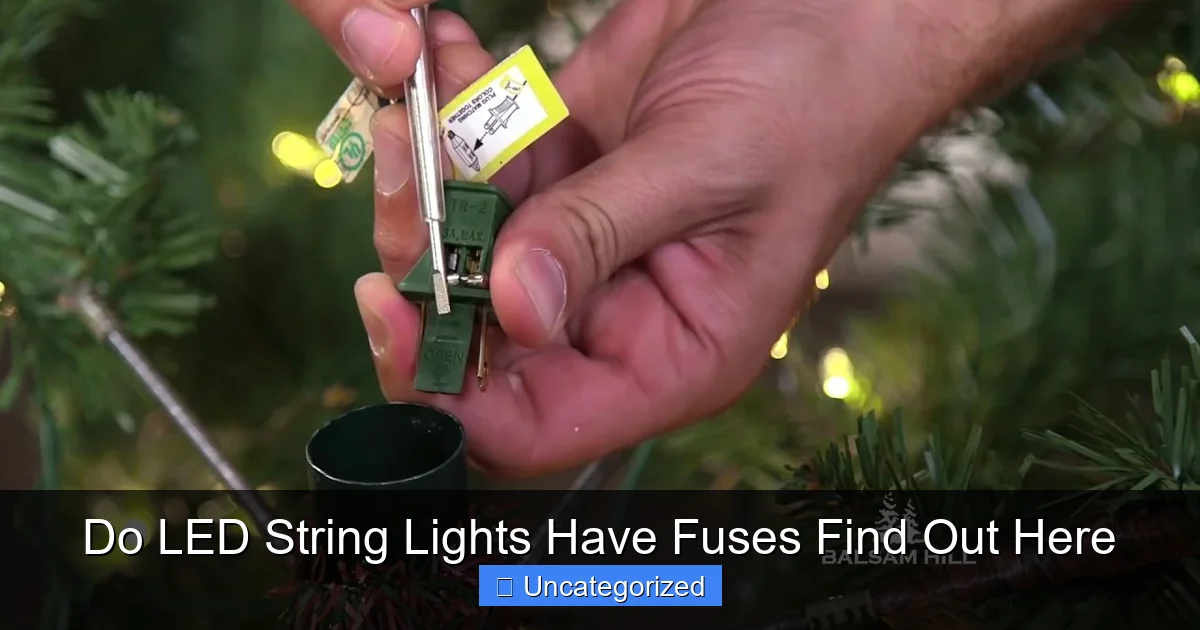
Visual guide about do led string lights have fuses
Image source: i.ytimg.com
- Overcurrent Protection: Prevents damage from excessive current (e.g., a short circuit in a bulb).
- Surge Suppression: Absorbs brief voltage spikes (e.g., from lightning strikes or grid fluctuations).
- Fire Prevention: Melts or “blows” to break the circuit before wires overheat.
A fuse works by containing a thin metal strip (usually copper or zinc) that melts at a specific temperature. For LED lights, common fuse ratings include 1A, 2A, or 3A, depending on the total power draw. For instance, a 100-bulb LED strand drawing 40 watts at 120V would typically use a 0.5A fuse (I = P/V = 40W/120V ≈ 0.33A, rounded up for safety).
Types of Fuses Used in LED Lights
Not all fuses are created equal. The type of fuse used depends on the light’s design and application:
| Fuse Type | Typical Use | Pros | Cons |
|---|---|---|---|
| Glass Tube Fuse | Plug-in adapters, older models | Visible filament (easy to check if blown) | Fragile; requires manual replacement |
| Blade Fuse | Automotive-inspired designs (e.g., 12V systems) | Durable; color-coded by amperage | Less common in household LED lights |
| Surface-Mount Fuse | Miniaturized or IC-based lights | Small size; integrates with PCB | Hard to replace without soldering |
For DIY repairs, glass tube fuses are the easiest to handle. For example, if your LED string lights suddenly go out, you can open the plug housing, locate the fuse, and replace it with a matching amperage (e.g., 2A for a 24-watt strand).
Fuse Placement: Where to Look
Fuses are typically located in one of three places:
- Inside the plug: Most common for 120V/240V lights. Look for a removable cap or screw-on housing.
- On the controller box: Found in lights with remote controls or timers (e.g., “fuse access” marked on the side).
- On the PCB (Printed Circuit Board): Embedded in the light strand itself (rare; requires disassembly).
Tip: If you’re troubleshooting, always check the plug first. A blown fuse in the plug will cut power to the entire strand, while a failed bulb usually affects only a section.
Signs Your LED String Lights Need a Fuse Check
Common Symptoms of a Blown Fuse
How do you know if your LED string lights have a blown fuse? Watch for these telltale signs:
- Complete power loss: The entire strand won’t turn on, even with a new adapter.
- Intermittent flickering: The lights flash erratically, then die.
- Burning smell: A faint odor of melted plastic near the plug or controller.
- Visible damage: Blackened or cracked plug housing.
For example, if your holiday lights suddenly stop working after a thunderstorm, a blown fuse is likely the culprit. In contrast, if only half the strand is lit, the issue is probably a faulty bulb or wire—not the fuse.
Step-by-Step Fuse Inspection Guide
Follow these steps to check and replace a fuse:
- Unplug the lights and let them cool for 10 minutes.
- Open the plug housing: Use a screwdriver to remove the plug cover. If it’s sealed, check the controller box instead.
- Locate the fuse: It’s usually a small glass or ceramic cylinder near the prongs.
- Inspect the filament: A blown fuse will have a broken or blackened wire inside. Use a flashlight if needed.
- Replace with an identical fuse: Match the amperage, voltage, and size (e.g., 250V, 2A, 5x20mm).
- Reassemble and test.
Warning: Never replace a fuse with a higher amperage (e.g., swapping a 2A for a 5A). This defeats the purpose of the fuse and increases fire risk.
When to Suspect Other Issues
Not all LED failures are due to fuses. Other common problems include:
- Loose connections: Wiggly bulbs or frayed wires.
- Moisture damage: Corrosion in outdoor lights (common in coastal areas).
- Faulty IC: The controller board fails, mimicking a blown fuse.
For moisture-related issues, try drying the lights in a warm, ventilated area for 24 hours. For IC failures, you may need a professional repair or replacement.
DIY Tips: Replacing or Adding Fuses to LED String Lights
How to Replace a Blown Fuse
Replacing a fuse is a simple DIY task, but precision matters. Here’s how:
- Identify the fuse specs: Check the old fuse or the manufacturer’s manual. Look for markings like “250V 2A” or “T2AL250V” (T = time-delay, L = low breaking capacity).
- Buy the right replacement: Use a fast-blow (F) fuse for sensitive electronics. Avoid slow-blow (T) fuses unless specified.
- Use proper tools: A fuse puller (or small pliers) to remove the old fuse, and a multimeter to verify continuity.
- Test before reassembly: Plug the lights into a GFCI outlet first to avoid tripping the main breaker.
Example: A 2023 Reddit user reported fixing their $80 LED patio lights by replacing a 3A glass fuse for $0.50—saving them a full replacement.
Adding a Fuse to Non-Fused Lights (Advanced)
If your LED string lights lack a fuse, you can add one for extra protection. This is especially useful for:
- DIY projects: Handmade light strands or upcycled fixtures.
- High-risk environments: Outdoor lights near water or in high-wind areas.
Steps:
- Calculate the required fuse amperage (I = P/V).
- Install an inline fuse holder (available at hardware stores) near the plug.
- Solder or crimp the fuse holder into the positive wire.
- Insert a fuse with 125% of the calculated amperage (e.g., 1.25A for a 1A draw).
Caution: This requires basic electrical skills. If you’re unsure, consult an electrician.
Safety Precautions for Fuse Work
Always prioritize safety:
- Never work on live circuits. Unplug and discharge capacitors (if present).
- Use insulated tools. Prevent accidental shorts.
- Label the fuse: Write the amperage on the plug with a permanent marker.
- Keep spare fuses: Store them in a dry, accessible place.
Expert Advice: Choosing LED String Lights with Proper Protection
What to Look for When Buying LED String Lights
When shopping for LED string lights, prioritize models with:
- Fuse protection: Check the product description or manual. Phrases like “built-in fuse” or “overcurrent protection” are good signs.
- UL/ETL certification: These safety standards require fuses in 120V/240V lights.
- Weatherproof rating: For outdoor use, look for IP65 or higher (dust and water resistance).
- Low-voltage options: 12V or 24V systems are safer but may still benefit from fuses in commercial settings.
Pro Tip: Brands like Philips, GE, and Feit Electric consistently include fuses in their premium models, while budget brands may cut corners.
Balancing Cost and Safety
Fused LED string lights cost slightly more (typically 10–15% higher) but offer long-term value. For example:
- A $20 non-fused strand might fail after a single surge, costing you $20.
- A $25 fused strand could last 5+ years with occasional $1 fuse replacements.
Consider the total cost of ownership—not just the upfront price.
Long-Term Maintenance Tips
Extend the life of your LED string lights with these practices:
- Inspect fuses annually: Before storing lights, check for corrosion or damage.
- Use surge protectors: Plug lights into a power strip with surge protection.
- Avoid daisy-chaining: Connecting too many strands can overload the circuit.
- Store properly: Keep lights in a cool, dry place to prevent moisture damage.
Conclusion: Fuses Are a Small Part of a Bigger Safety Picture
So, do LED string lights have fuses? The answer is: it depends. While many modern LED lights—especially low-voltage or solar models—rely on integrated circuits for protection, fused designs are still common in high-power, plug-in, and commercial-grade lights. Fuses are not just a “nice-to-have”; they’re a critical safety feature that can prevent fires, extend lifespan, and simplify troubleshooting.
Whether you’re hanging lights for a holiday display or installing permanent outdoor lighting, always check for fuse protection. Learn how to inspect, replace, or even add fuses to your setup. And when in doubt, choose certified, reputable brands that prioritize safety. After all, the goal isn’t just beautiful illumination—it’s peace of mind. With this knowledge, you’re now equipped to make informed decisions, avoid costly mistakes, and enjoy your LED string lights for years to come.
Frequently Asked Questions
Do LED string lights have fuses for safety?
Yes, many LED string lights include fuses, especially in the plug or power adapter, to prevent overheating and electrical hazards. These fuses act as a safety measure to protect the lights from power surges or short circuits.
Where is the fuse located in LED string lights?
The fuse is typically found inside the plug or power supply unit of LED string lights. Some models may have an easily accessible fuse compartment for replacement if it blows due to voltage fluctuations.
What happens if the fuse in my LED string lights blows?
If the fuse blows, the lights will stop working entirely. You can replace the fuse (usually a small glass or ceramic type) with the same rating, but always check for underlying issues like power surges first.
Can I fix LED string lights without a fuse?
No, bypassing the fuse in LED string lights is unsafe and not recommended. The fuse is a critical safety component that prevents fire risks and damage to the lights—always replace it with an identical fuse.
Why do LED string lights need fuses if LEDs use low power?
Even though LEDs consume less power, fuses are still required to protect against voltage spikes, wiring faults, or manufacturing defects. The fuse ensures safety regardless of the low energy draw.
How do I know if my LED string lights have a fuse?
Check the product manual or inspect the plug/power adapter for a small fuse compartment. If your lights stop working after a power surge, a blown fuse is a common culprit in fused LED string lights.