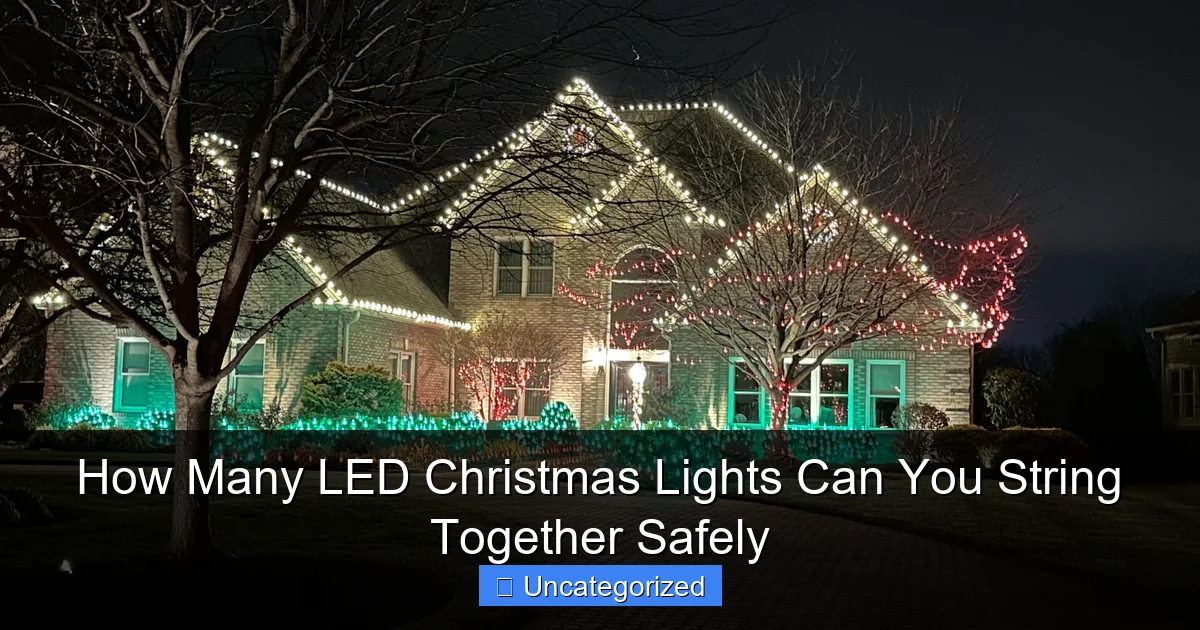
Featured image for how many led christmas lights can you string together
Image source: storage.googleapis.com
You can safely string up to 25 LED Christmas light sets together on a single circuit, thanks to their low wattage and energy efficiency—far more than traditional incandescent lights. Always check the manufacturer’s rating and use a circuit tester to avoid overloading and ensure a safe, dazzling holiday display.
Key Takeaways
- Check manufacturer limits: Always follow the max string count on packaging or manuals.
- Use LED-specific rules: Most LEDs allow 20–40+ strings, far more than incandescent.
- Verify wattage: Stay under 80% of circuit capacity to prevent overloads.
- Test connections: Plug in lights before hanging to spot failures early.
- Opt for parallel wiring: Choose lights with parallel circuits to avoid total outages.
- Use timers: Reduce fire risk by limiting runtime to 6–8 hours daily.
📑 Table of Contents
- The Magic of Stringing Christmas Lights: How Far Can You Go?
- Understanding Electrical Basics for LED Christmas Lights
- Manufacturer Guidelines and Safety Standards
- Calculating Your Safe Stringing Limit
- Data Table: Maximum LED Strings by Wattage and Circuit
- Common Mistakes and Safety Tips
- Advanced Techniques for Large Displays
- Conclusion: Light Up Safely This Holiday Season
The Magic of Stringing Christmas Lights: How Far Can You Go?
The holiday season brings with it a sense of wonder, and few things capture that magic quite like twinkling Christmas lights. Whether you’re decking the halls, illuminating your front yard, or creating a cozy ambiance indoors, LED Christmas lights have become the go-to choice for their energy efficiency, durability, and vibrant colors. But as you plan your festive display, one critical question often arises: how many LED Christmas lights can you string together safely?
While the allure of a dazzling, endless string of lights is undeniable, safety and practicality must guide your decisions. Overloading circuits, exceeding manufacturer limits, or ignoring electrical standards can lead to blown fuses, damaged lights, or even fire hazards. This guide dives deep into the science, safety guidelines, and real-world applications to help you create a stunning, worry-free holiday display. From understanding electrical loads to calculating maximum string lengths, we’ll cover everything you need to know to light up your season—without dimming your holiday spirit.
Understanding Electrical Basics for LED Christmas Lights
Before you start stringing lights, it’s essential to grasp the electrical fundamentals that determine how many LED Christmas lights you can safely connect. Unlike traditional incandescent lights, LEDs consume significantly less power, but they still operate within specific electrical parameters that must be respected.
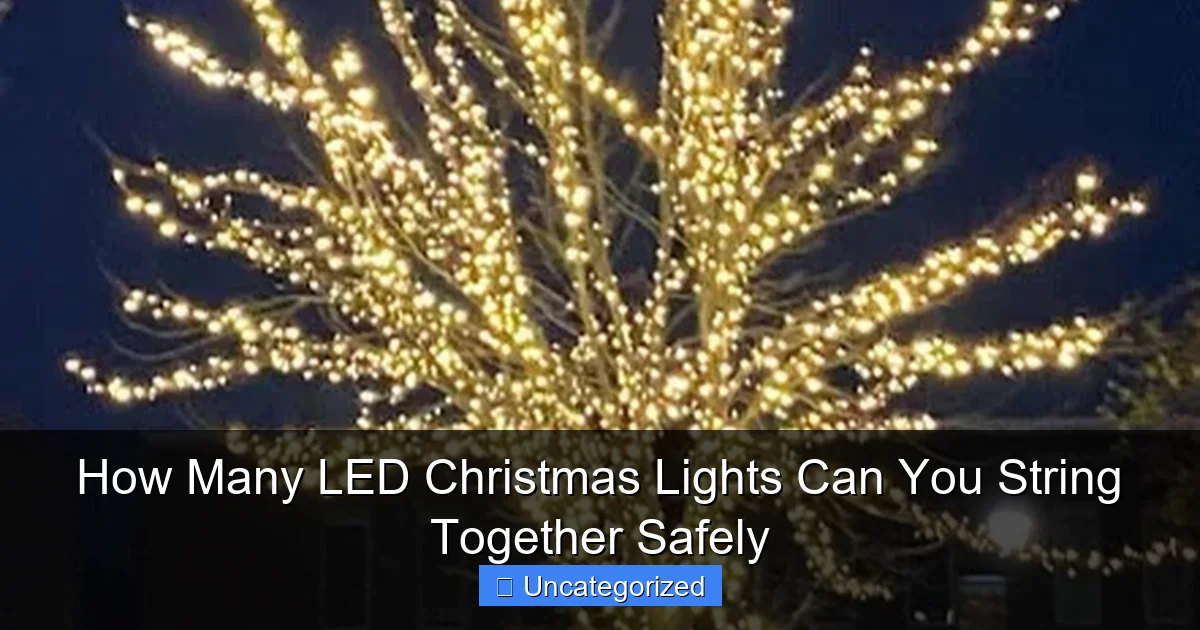
Visual guide about how many led christmas lights can you string together
Image source: storage.googleapis.com
Voltage, Amperage, and Wattage: The Core Metrics
Every LED light set comes with specifications for voltage (V), amperage (A), and wattage (W). Here’s how they relate:
- Wattage: The total power consumed by the lights. Most LED sets range from 4 to 10 watts per string.
- Amperage: The current drawn by the lights. For example, a 6-watt LED set on a 120V circuit draws 0.05A (6W ÷ 120V = 0.05A).
- Voltage: Standard household circuits in North America operate at 120V. Most LED lights are designed for this voltage.
Example: If a string of LED lights uses 8 watts, its current draw is 8 ÷ 120 = 0.067A. If you connect 10 such strings, the total current is 0.67A—well below the 15A or 20A circuit limits.
Why Wattage Matters More Than You Think
While LEDs are energy-efficient, their low wattage doesn’t mean you can ignore electrical limits. The 80% rule is a critical safety guideline: never load a circuit beyond 80% of its capacity. On a 15A circuit (1,800W), the safe limit is 1,440W. For a 20A circuit (2,400W), it’s 1,920W. Exceeding these thresholds risks overheating and tripped breakers.
For instance, if you’re using 10-watt LED strings, you could theoretically connect 144 strings to a 15A circuit (1,440W ÷ 10W = 144). But in practice, other appliances (TVs, ovens) share the circuit, so you’ll need to account for their usage too.
Series vs. Parallel Stringing: How It Affects Safety
LED lights can be wired in series (one after another) or parallel (branched off a main line). Most plug-in LED sets are wired in series, meaning the failure of one bulb can break the circuit (though many modern sets include bypass diodes to prevent this).
- Series stringing: Adds voltage drop with each added string, but current remains constant.
- Parallel stringing: Maintains consistent voltage but increases total current.
For safety, parallel stringing is generally preferred for large displays, as it reduces voltage drop and allows individual strings to operate independently.
Manufacturer Guidelines and Safety Standards
Manufacturers provide specific limits for how many LED Christmas lights can be strung together, and these guidelines are your first line of defense against electrical hazards. Ignoring them can void warranties and create fire risks.
Visual guide about how many led christmas lights can you string together
Image source: storage.googleapis.com
Checking the Manufacturer’s Label
Every LED light set includes a label with:
- Maximum number of connectable sets: Often 25, 40, or even 100 for high-quality LEDs.
- Total wattage: Critical for calculating circuit loads.
- Voltage and amperage ratings: Ensures compatibility with your home’s electrical system.
Pro Tip: Look for the UL (Underwriters Laboratories) or ETL (Intertek) certification mark. These indicate the lights meet rigorous safety standards.
Why Manufacturer Limits Exist
Manufacturers test their lights under controlled conditions to determine safe stringing limits. These tests account for:
- Voltage drop: Excessive stringing can cause dimming or flickering.
- Heat buildup: Overloaded strings may overheat, damaging the LEDs or wires.
- Plug and socket integrity: Repeated connections can weaken plugs, creating fire hazards.
Example: If a brand specifies “max 40 sets,” this means 40 identical strings can be safely connected. Don’t assume you can exceed this limit—even if the math seems to allow it.
When to Trust the Guidelines (and When to Be Cautious)
Manufacturer guidelines are reliable, but exceptions exist:
- Outdoor vs. indoor lights: Outdoor-rated LEDs can handle harsher conditions but may have stricter stringing limits.
- Extension cords: Using low-quality cords can reduce the safe number of connected lights.
- Older homes: Outdated wiring may not support modern LED loads safely.
If in doubt, consult an electrician or use a load calculator (discussed below).
Calculating Your Safe Stringing Limit
Now that you understand the basics, let’s dive into practical calculations to determine how many LED Christmas lights you can safely string together. This section walks you through step-by-step methods using real-world examples.
Step 1: Determine Your Circuit Capacity
Most homes have 15A or 20A circuits. To find your circuit’s capacity:
- 15A circuit: 15A × 120V = 1,800W → 80% rule = 1,440W max.
- 20A circuit: 20A × 120V = 2,400W → 80% rule = 1,920W max.
Example: If you’re using a 15A circuit, you can safely load up to 1,440W of lights and appliances combined.
Step 2: Check Individual Light String Wattage
Multiply the wattage of one light string by the number of strings you plan to use. For example:
- 8W per string: 1,440W ÷ 8W = 180 strings (theoretical max).
- 10W per string: 1,440W ÷ 10W = 144 strings.
But wait! This is the theoretical maximum. You must also consider:
- Other appliances on the same circuit: A TV (100W) and space heater (1,500W) could max out the circuit.
- Extension cords and power strips: These add resistance, reducing safe capacity.
Step 3: Use a Load Calculator
For precision, use an online Christmas light load calculator (many are free). Input your:
- Light string wattage.
- Number of strings.
- Other appliances on the circuit.
The calculator will tell you if you’re within safe limits.
Step 4: Factor in Manufacturer Limits
Even if your calculations allow 200 strings, if the manufacturer limits you to 40, follow the lower number. This ensures you’re not exceeding tested safety standards.
Real-World Example: A 50-String Display
Suppose you’re using 6W LED strings (0.05A each) and want to string 50 sets:
- Total wattage: 50 × 6W = 300W.
- Total amperage: 50 × 0.05A = 2.5A.
- Circuit check: On a 15A circuit (1,800W), 300W is just 20% of the 80% limit (1,440W). Safe!
But if you add a 100W TV and 200W heater to the same circuit, total load = 600W (42% of limit). Still safe, but you’d need to unplug the heater to add more lights.
Data Table: Maximum LED Strings by Wattage and Circuit
Below is a quick-reference table for common LED light wattages and circuit capacities. Use this as a starting point for your calculations.
| LED String Wattage | 15A Circuit (1,440W Safe Max) | 20A Circuit (1,920W Safe Max) | Manufacturer Limit (Typical) |
|---|---|---|---|
| 4W | 360 strings | 480 strings | 50–100 strings |
| 6W | 240 strings | 320 strings | 40–80 strings |
| 8W | 180 strings | 240 strings | 25–50 strings |
| 10W | 144 strings | 192 strings | 20–40 strings |
| 12W | 120 strings | 160 strings | 15–30 strings |
Note: Always prioritize the manufacturer’s limit over the circuit calculation. For example, even if your 15A circuit allows 360 strings of 4W lights, if the manufacturer limits you to 100, stick to 100.
Common Mistakes and Safety Tips
Even with careful planning, mistakes can happen. Here are the most common pitfalls—and how to avoid them.
Mistake 1: Ignoring the 80% Rule
Loading a circuit to 100% capacity is a recipe for tripped breakers. Always leave a 20% buffer. If your lights alone use 1,200W on a 1,440W circuit, you’ve only got 240W left for other appliances.
Mistake 2: Using Damaged or Low-Quality Extension Cords
Cheap cords can overheat, especially when daisy-chained. Use:
- Outdoor-rated cords for exterior displays.
- 14-gauge or thicker cords for heavy loads.
- Short cords (under 100 feet) to reduce voltage drop.
Mistake 3: Mixing LED and Incandescent Lights
While possible, mixing light types can cause compatibility issues. LEDs draw less power, so a circuit loaded with incandescent lights may not handle the same number of LED strings safely. Stick to one type per circuit.
Safety Tip: Use Timers and GFCI Outlets
To prevent overheating and electrical hazards:
- Timers: Automatically turn off lights after a set period (e.g., 6 hours).
- GFCI outlets: Cut power if a ground fault is detected, reducing fire risk.
Safety Tip: Inspect Lights Before Use
Before stringing, check for:
- Frayed wires.
- Cracked sockets.
- Burnt-out LEDs.
Replace any damaged sets to prevent short circuits.
Advanced Techniques for Large Displays
For those planning elaborate light shows, advanced techniques can help you maximize brightness without compromising safety.
Using Multiple Circuits
Instead of overloading one circuit, spread lights across multiple circuits. For example:
- Indoor lights: Use one circuit.
- Outdoor lights: Use a dedicated outdoor circuit.
- Roofline lights: Use a separate circuit to avoid voltage drop.
Parallel Stringing with Power Injection
For long runs (e.g., rooflines), use parallel wiring with power injection points every 100–200 feet. This maintains consistent brightness and reduces current load on each string.
Smart Controllers and LED Addressable Strips
For tech-savvy decorators, addressable LED strips (e.g., WS2812B) allow individual control of each LED. These require:
- A 5V power supply (not 120V).
- A microcontroller (e.g., Arduino, Raspberry Pi).
- Power injection every few meters to prevent dimming.
While more complex, these systems offer unparalleled flexibility and can handle thousands of LEDs safely.
Conclusion: Light Up Safely This Holiday Season
Stringing LED Christmas lights is a beloved tradition, but safety should always come first. By understanding electrical basics, respecting manufacturer limits, and calculating your safe stringing capacity, you can create a dazzling display without risking electrical hazards. Remember:
- Follow the 80% rule for circuit loading.
- Check labels for wattage and connectable set limits.
- Use timers and GFCI outlets to prevent overloads.
- Inspect lights before use.
Whether you’re illuminating a small tree or transforming your entire yard, these guidelines ensure your holiday lights shine brightly—and safely—for years to come. So go ahead, string those lights, and let the magic of the season sparkle!
Frequently Asked Questions
How many LED Christmas lights can you string together safely?
The number depends on the manufacturer and wattage, but most LED Christmas lights allow 20-30 sets in a single run. Always check the packaging or product manual for the “maximum connectable” rating to avoid overloading circuits.
Can you connect different brands of LED Christmas lights?
Mixing brands isn’t recommended, as they may have different voltage and wattage requirements. To ensure safety and performance, stick to one brand or series when stringing LED Christmas lights together.
How do I know if I’ve exceeded the safe limit for LED light strings?
If lights dim, flicker, or the cord feels warm, you may have too many LED Christmas lights connected. Use a power strip with overload protection and never exceed the manufacturer’s stated limit.
Does the length of the extension cord affect how many LED lights I can string?
Yes, longer cords can cause voltage drop, especially with high-wattage lights. For best results, keep extension cords under 100 feet and factor their length into your total load calculation.
Can I connect LED Christmas lights to incandescent sets?
No—LED and incandescent lights have different power draws, and combining them can overload the circuit. Always use separate runs for each type and follow their individual “how many LED Christmas lights can you string together” guidelines.
Are there special rules for outdoor LED light connections?
Outdoor LED Christmas lights should be rated for exterior use and connected via GFCI-protected outlets. The maximum number you can string together remains similar to indoor sets, but weatherproof connections are essential.