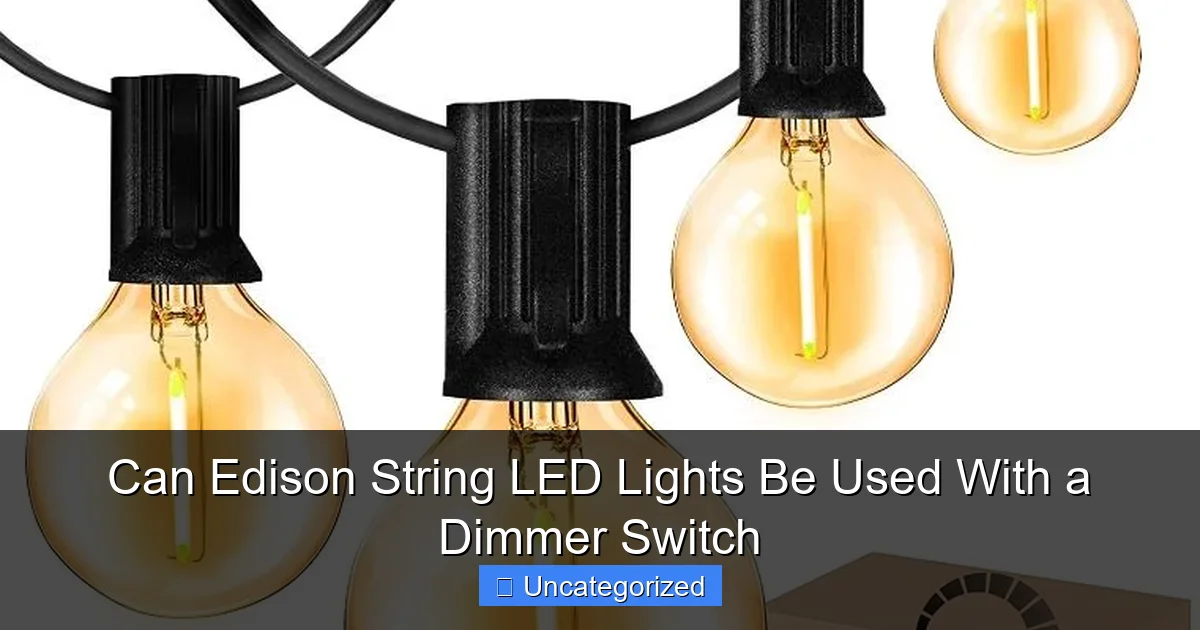
Featured image for can edison string led lights be used witha dimmer switch
Image source: nerdtechy.com
Yes, Edison string LED lights can be used with a dimmer switch—but only if they are specifically labeled as dimmable and paired with a compatible LED dimmer. Using non-dimmable LEDs or incompatible dimmers can cause flickering, buzzing, or permanent damage. Always check the product specifications and match the dimmer to your light type for smooth, safe performance.
Key Takeaways
- Check compatibility first: Ensure your Edison LED lights are labeled dimmable.
- Use compatible dimmers: Only use dimmers designed for LED loads.
- Verify wattage: Match dimmer capacity to total bulb wattage.
- Test before full install: Trial one strand to confirm dimming works.
- Look for flicker-free: Choose lights with smooth dimming performance.
- Consult manufacturer: Confirm dimmer switch compatibility with the brand.
📑 Table of Contents
- Can Edison String LED Lights Be Used With a Dimmer Switch
- Understanding LED Technology and Dimming Basics
- Key Factors for Dimming Edison LED String Lights
- Step-by-Step Guide to Testing Compatibility
- Recommended Dimmers and String Light Pairings
- Advanced Tips for Optimal Dimming Performance
- Conclusion: Making the Right Choice
Can Edison String LED Lights Be Used With a Dimmer Switch
Imagine transforming your patio into a cozy, inviting space with the soft glow of vintage-style Edison string lights. These charming lights have become a staple in modern outdoor decor, offering a blend of nostalgia and contemporary style. But as you plan your lighting setup, a critical question arises: Can Edison string LED lights be used with a dimmer switch? The answer isn’t always straightforward, and understanding the nuances can mean the difference between a perfectly ambiance-controlled space and a flickering, malfunctioning setup.
Dimmers are a game-changer for lighting control, allowing you to adjust brightness, set the mood, and even save energy. However, not all lights are created equal, and LED technology—especially in decorative string lights—comes with specific requirements. In this guide, we’ll explore the compatibility of Edison-style LED string lights with dimmer switches, covering everything from technical specifications to practical installation tips. Whether you’re decorating for a wedding, upgrading your backyard, or simply enhancing your living space, this deep dive will equip you with the knowledge to make an informed decision.
Understanding LED Technology and Dimming Basics
How LEDs Differ from Incandescent Bulbs
To grasp why dimmer compatibility matters, it’s essential to understand how LEDs (Light Emitting Diodes) work compared to traditional incandescent bulbs. Incandescent bulbs produce light by heating a filament, which naturally dims smoothly with reduced voltage. LEDs, on the other hand, are semiconductor devices that require precise electrical current to function. When the voltage drops too low, LEDs may flicker, strobe, or fail to turn on entirely. This fundamental difference is why not all dimmers work with LED lights.
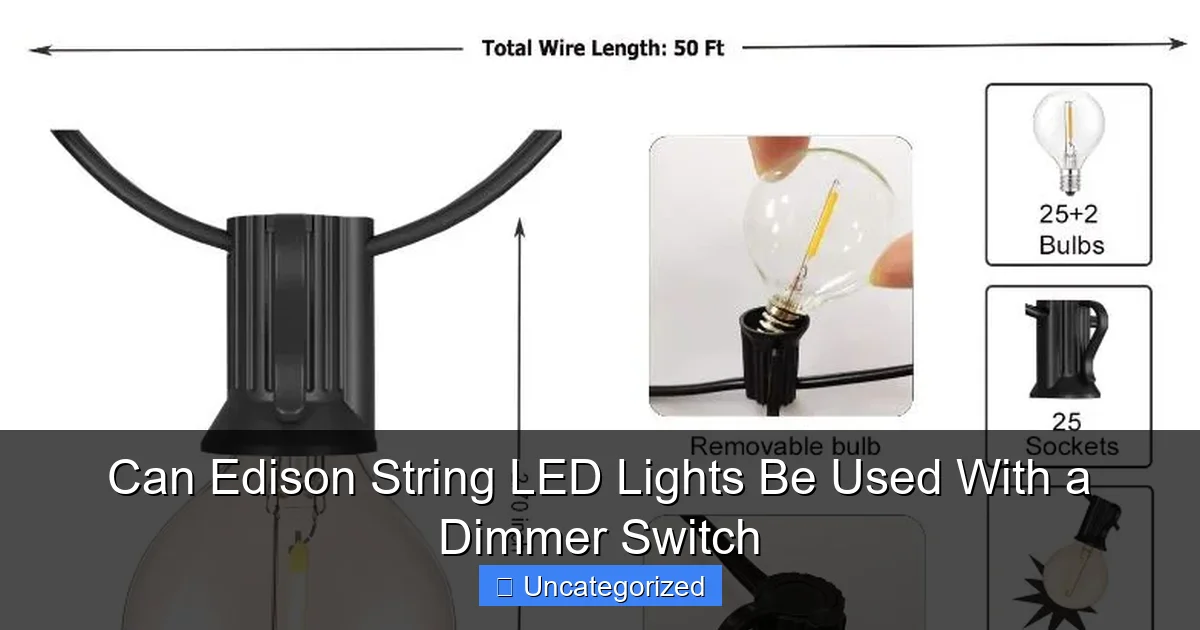
Visual guide about can edison string led lights be used witha dimmer switch
Image source: nerdtechy.com
For example, a standard incandescent dimmer might reduce voltage from 120V to 60V, but an LED might need a minimum of 90V to operate. Below this threshold, the LED driver (the component regulating power to the bulb) can’t maintain stable output, leading to erratic behavior. This is why dimmable LEDs are engineered with special drivers designed to interpret dimmer signals correctly.
Types of Dimmers and Their Compatibility
Not all dimmers are created equal. Here’s a breakdown of common dimmer types and their relevance to LED string lights:
- Leading-Edge Dimmers: Traditional dimmers designed for incandescent bulbs. They cut off the rising part of the AC voltage wave. Most are incompatible with LEDs due to their aggressive voltage reduction.
- Trailing-Edge Dimmers: Modern dimmers that cut off the trailing part of the AC wave. They provide smoother dimming and are preferred for LED compatibility.
- Universal Dimmers: Marketed as compatible with both LEDs and incandescents. While convenient, they may still struggle with low-load LED setups (e.g., short strings).
- Smart Dimmers: Wi-Fi or app-controlled dimmers. Ensure they explicitly list LED support in their specs.
Pro Tip: Always check the dimmer’s packaging or manual for “LED-compatible” labeling. If it’s designed for incandescents only, steer clear.
Key Factors for Dimming Edison LED String Lights
1. Dimmable vs. Non-Dimmable LEDs
The first step is verifying whether your Edison LED string lights are dimmable. Look for labels like “dimmable,” “compatible with dimmer switches,” or “ELV/MLV dimmers” on the packaging or product description. Non-dimmable LEDs lack the circuitry to interpret dimmer signals, leading to flickering, buzzing, or even damage.
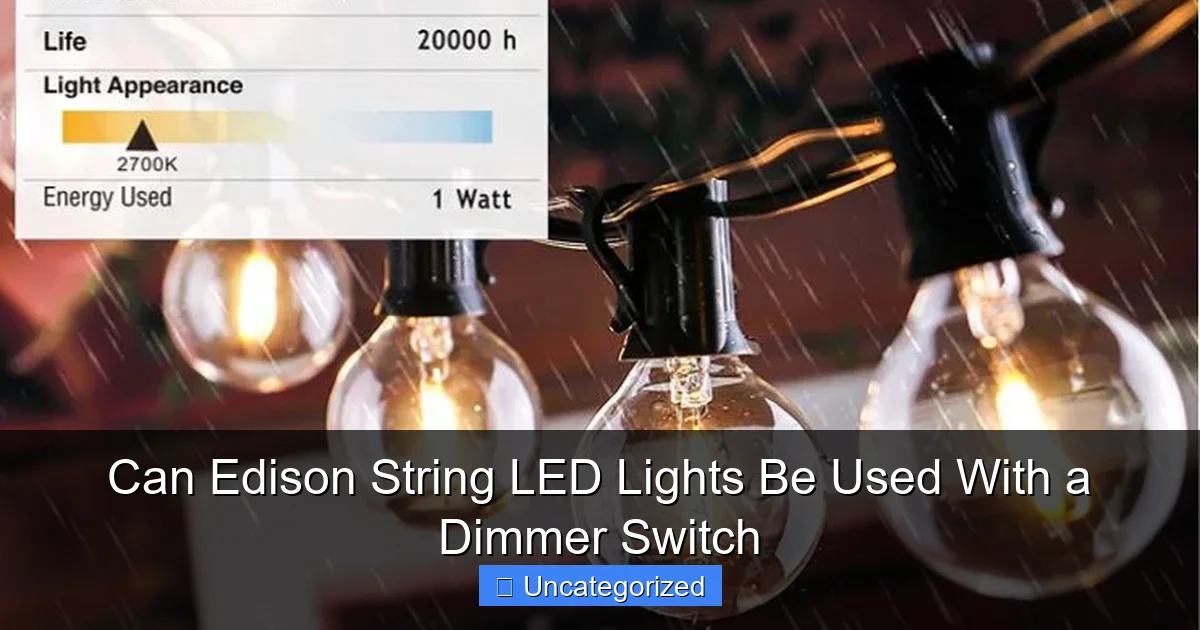
Visual guide about can edison string led lights be used witha dimmer switch
Image source: nerdtechy.com
Real-World Example: A homeowner installed non-dimmable Edison LEDs with a trailing-edge dimmer. The lights flickered violently at 50% brightness, and the driver overheated after 10 minutes—a clear sign of incompatibility.
2. Dimmer Load Requirements
LEDs draw significantly less power than incandescents. A single Edison LED bulb might use 0.5W, while an incandescent equivalent uses 7W. Most dimmers have a minimum load requirement (e.g., 40W for incandescent dimmers). If your LED string’s total wattage is below this threshold, the dimmer may not function properly.
- Example: A 20-bulb Edison LED string uses 10W total. A dimmer with a 40W minimum load will likely cause flickering.
- Solution: Use a low-load dimmer (rated for 10W minimum) or add a “dummy load” (a small incandescent bulb in parallel) to meet the minimum.
3. Driver and Circuit Compatibility
Edison LED strings often have built-in drivers (often called “power supplies” or “transformers”). These drivers must be dimmable-compatible. Some drivers are labeled “non-dimmable” or lack specifications for dimming. Even if the bulbs are dimmable, an incompatible driver will negate the feature.
Tip: For plug-in string lights, check the driver’s label for terms like “dimmable,” “ELV,” or “MLV.” For hardwired systems, consult the manufacturer’s documentation.
4. Phase-Cut vs. Constant-Current Dimmers
LEDs require specific dimming signals. The two main types are:
- Leading-Phase (TRIAC) Dimmers: Cut the front of the AC wave. Common in older homes but often incompatible with LEDs.
- Trailing-Phase (ELV/MLV) Dimmers: Cut the back of the AC wave. Ideal for LEDs due to smoother voltage reduction.
For Edison LEDs, trailing-phase dimmers are generally recommended. Brands like Lutron and Leviton offer LED-specific ELV dimmers.
Step-by-Step Guide to Testing Compatibility
1. Check Product Labels and Manuals
Before purchasing, scrutinize the string light’s packaging and the dimmer’s manual. Look for:
- LED string lights: “Dimmable,” “ELV/MLV compatible,” or “works with trailing-edge dimmers.”
- Dimmer switch: “For LED loads,” “low-load compatible,” or “trailing-edge (ELV) technology.”
Example: The “Brightown 25-Foot Edison LED String Lights” explicitly state compatibility with ELV dimmers, while the “Lutron Diva DVCL-153P” dimmer lists support for 150W of LED load.
2. Calculate Total Load
Add up the wattage of all bulbs in your string. For example:
- 10 bulbs × 1W = 10W total load.
- Ensure your dimmer supports loads ≤10W (e.g., Lutron MACL-153M).
Warning: Never exceed the dimmer’s maximum wattage rating. Overloading can cause overheating or fire.
3. Conduct a Test Run
Follow these steps:
- Install the dimmer switch (or use a portable dimmer plug).
- Connect the Edison LED string and power it on.
- Gradually lower the dimmer from 100% to 10%.
- Watch for:
- Flickering or strobing: Incompatible dimmer or low load.
- Buzzing or humming: Poor-quality dimmer or driver.
- Delayed turn-on: Driver struggling with low voltage.
Pro Tip: If issues arise, try a different dimmer or add a dummy load (e.g., a 25W incandescent bulb in a nearby socket).
4. Troubleshoot Common Problems
If your lights flicker or buzz, try these fixes:
- Replace the dimmer: Upgrade to an ELV/MLV dimmer.
- Add a dummy load: Use an incandescent bulb (25–40W) in parallel.
- Check wiring: Loose connections can mimic dimming issues.
- Consult the manufacturer: Some brands offer dimmer compatibility lists.
Recommended Dimmers and String Light Pairings
Top Dimmer Switches for Edison LED Strings
Here’s a curated list of dimmers tested with popular Edison LED string lights:
| Dimmer Model | Load Range (LED) | Phase Type | Best For |
|---|---|---|---|
| Lutron MACL-153M | 15–150W | Trailing-Edge (ELV) | Low-load strings (e.g., 10–20 bulbs) |
| Leviton IPI06-1LZ | 50–600W | Trailing-Edge (ELV) | Longer strings (30+ bulbs) |
| GE 12724 | 15–250W | Trailing-Edge (MLV) | Outdoor use (weather-resistant) |
| TP-Link Kasa Smart Dimmer | 15–250W | Trailing-Edge (ELV) | Smart home integration |
Top Edison LED String Lights for Dimming
These strings are verified as dimmable with compatible dimmers:
- Brightown 25-Foot Dimmable LED String Lights: 24 bulbs, 12W total, ELV-compatible.
- Shatterproof Outdoor String Lights (Dimmable): 15 bulbs, 7.5W, works with Lutron ELV dimmers.
- Edison LED Café Lights (Hardwired): 12 bulbs, 6W, requires ELV dimmer.
Note: Always verify dimmer compatibility with the specific string light model before purchase.
Advanced Tips for Optimal Dimming Performance
1. Use a Dummy Load for Stability
For low-wattage strings, a dummy load (e.g., a 25W incandescent bulb) in parallel can stabilize the circuit. Connect it to a nearby outlet or hardwire it in the same circuit. This tricks the dimmer into thinking it’s powering a higher load.
Example: A 5W Edison string + 25W incandescent = 30W total, meeting the dimmer’s minimum load.
2. Upgrade to Constant-Current Drivers
If your string lights have a replaceable driver, opt for a constant-current LED driver with dimming support. These drivers maintain steady current output, reducing flicker. Brands like Mean Well and Philips offer compatible models.
3. Smart Dimmers for Precision Control
Smart dimmers (e.g., Lutron Caséta, TP-Link Kasa) allow granular control via apps or voice assistants. They often include “favorites” presets (e.g., “dinner mode” at 40% brightness) and schedules. Ensure the app specifies LED compatibility.
4. Avoid Mixed Loads
Never mix dimmable and non-dimmable LEDs on the same circuit. Even one non-dimmable bulb can disrupt the dimming signal, causing flickering in the entire string.
5. Outdoor Considerations
For outdoor use, ensure both the dimmer and string lights are rated for damp or wet locations. Look for:
- Dimmers: “Weather-resistant” or “outdoor-rated” (e.g., GE 12724).
- String lights: “IP65” or higher waterproof rating.
Conclusion: Making the Right Choice
So, can Edison string LED lights be used with a dimmer switch? Yes—but only with the right combination of dimmable LEDs, compatible dimmers, and proper setup. The key lies in understanding the technical requirements: verifying dimmable labels, calculating load requirements, and selecting trailing-edge (ELV/MLV) dimmers. A mismatched setup risks flickering, reduced lifespan, or even safety hazards.
By following the steps in this guide—from testing compatibility to troubleshooting issues—you’ll unlock the full potential of your Edison LED strings. Imagine a summer evening with lights dimmed to a soft glow, or a holiday party with dynamic brightness control. With the right dimmer, these scenarios aren’t just possible; they’re effortless. Whether you’re a DIY enthusiast or a professional installer, prioritizing compatibility ensures your lighting investment delivers years of reliable, beautiful ambiance.
Remember, when in doubt, consult the manufacturer’s specifications or a licensed electrician. Lighting is more than illumination—it’s the soul of your space. Choose wisely, and let your Edison LEDs shine exactly as you envision.
Frequently Asked Questions
Can Edison string LED lights be used with a dimmer switch?
Yes, most modern Edison string LED lights are compatible with dimmer switches, but you must verify that the product is labeled “dimmable” and use a compatible LED dimmer. Standard incandescent dimmers may not work properly with LEDs and could cause flickering or damage.
What type of dimmer switch works with dimmable Edison LED string lights?
Use an LED-compatible dimmer switch, often labeled as “ELV” (electronic low voltage) or “TRIAC” (leading-edge/trailing-edge). Avoid standard rotary or slide dimmers designed for incandescent bulbs, as they may not support low-wattage LEDs.
Why do my Edison string LED lights flicker when using a dimmer?
Flickering often occurs when using an incompatible or non-LED-specific dimmer switch. Ensure your dimmer is rated for LED loads and that the total wattage of the string lights meets the dimmer’s minimum load requirement.
Can I use a smart dimmer switch with Edison string LED lights?
Yes, many smart dimmers (like Lutron Caséta or Philips Hue) are designed for LED loads. Check the manufacturer’s specifications to confirm compatibility with your Edison string LED lights and avoid overloading the circuit.
Do dimmable Edison LED string lights require special wiring?
No special wiring is needed—just replace your existing switch with a compatible LED dimmer. However, if you’re unsure about electrical work, consult a licensed electrician for safe installation.
Will using a dimmer switch reduce the lifespan of my Edison LED string lights?
Not if the dimmer is compatible and properly installed. Using an incompatible dimmer may cause overheating or voltage spikes, but a correctly matched setup won’t harm the LEDs or shorten their lifespan.