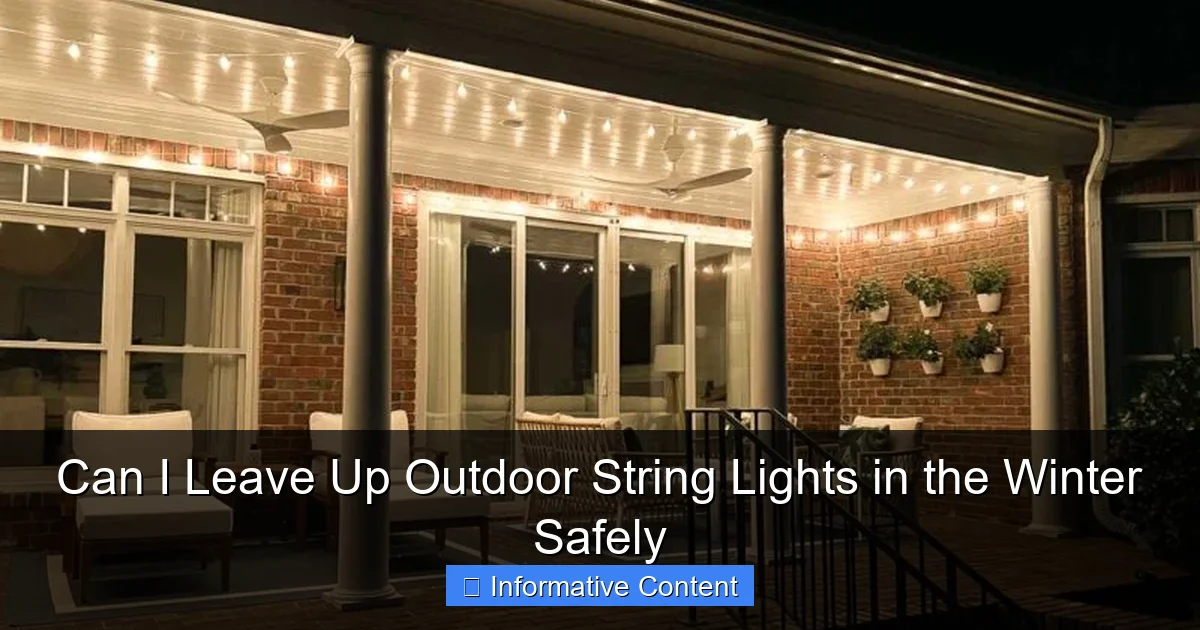
Featured image for can i leave up outdoor string lights in the winter
Image source: drivenbydecor.com
Yes, you can leave outdoor string lights up in winter if they’re rated for cold weather and installed properly. Look for lights labeled “all-season” or “weatherproof” and ensure connections are elevated and protected from snow and ice buildup. Regularly inspect for damage and use a ground-fault circuit interrupter (GFCI) to reduce electrical risks during snowy or wet conditions.
Key Takeaways
- Check bulb type: Use LED or cold-weather-rated bulbs for winter safety.
- Inspect wiring: Ensure cords are undamaged and rated for outdoor use.
- Secure properly: Anchor lights tightly to prevent wind damage in storms.
- Use GFCI outlets: Always plug into weatherproof, grounded outdoor outlets.
- Monitor weather: Remove lights during heavy snow or ice to avoid hazards.
- Clean before storing: Wipe down lights to prevent corrosion if taken down.
📑 Table of Contents
- Why Winter String Lights Are a Cozy Dilemma
- Are Your Outdoor String Lights Winter-Ready?
- Weather Challenges: Snow, Ice, and Wind
- Energy Efficiency and Cost: Running Lights All Winter
- Installation Tips for Winter-Proofing
- Real-World Examples and Lessons Learned
- Final Thoughts: Yes, You Can Leave Them Up—If You’re Smart About It
Why Winter String Lights Are a Cozy Dilemma
There’s something magical about outdoor string lights. Whether they’re draped over a pergola, wrapped around tree trunks, or strung across a patio, they instantly transform any outdoor space into a cozy, inviting retreat. I remember the first time I put up string lights in my backyard—it felt like I’d created my own little fairy-tale world. But as winter rolled in, I faced a real question: Can I leave up outdoor string lights in the winter safely?
You might be wondering the same thing. Maybe you’re tired of taking them down every year, or you love the way they look dusted with snow. Or perhaps you’re just curious if it’s even possible. The good news? Yes, you can leave outdoor string lights up during the winter—but there are some important things to consider. In this guide, I’ll walk you through everything you need to know to make your decision with confidence, from safety and durability to practical tips for keeping your lights shining all season long.
Are Your Outdoor String Lights Winter-Ready?
Check the Label: Indoor vs. Outdoor Rating
The first thing you need to do is check the label. Not all string lights are created equal, and this is especially true when it comes to weather resistance. Look for the IP (Ingress Protection) rating on the packaging or the product description. For outdoor use in winter, you’ll want lights with at least an IP44 rating. This means they’re protected against splashing water and small solid objects—perfect for rain, snow, and ice.
Visual guide about can i leave up outdoor string lights in the winter
Image source: can.se
For example, I once bought a set of “outdoor” lights that looked great in the summer but started flickering after a single snowstorm. Turns out, they were only rated IP33, which means they could handle light rain but not freezing temperatures or heavy snow. Lesson learned: always check the IP rating before making a purchase.
Pro tip: If the lights don’t have an IP rating, assume they’re not suitable for winter. Better safe than sorry!
LED vs. Incandescent: Which Handles Cold Better?
Not all bulbs are built for cold weather. Here’s the breakdown:
- LED lights are your best bet for winter. They’re energy-efficient, durable, and perform well in cold temperatures. In fact, many LED bulbs actually work *better* in the cold because heat can reduce their lifespan. Plus, they’re less likely to shatter if they get wet or freeze.
- Incandescent bulbs are more fragile. The glass bulbs can crack when exposed to freezing water, and the filaments are sensitive to temperature changes. They’re also less energy-efficient, which means higher electricity bills if you’re running them all winter.
I switched to LED string lights a few years ago, and it was one of the best decisions I made. They’re brighter, last longer, and handle the winter like champs. My neighbor still uses incandescent lights, and every January, he’s replacing half the bulbs. Not exactly the hassle-free winter vibe he was going for.
Material Matters: Cords and Sockets
The cord and socket material is just as important as the bulbs. Look for:
- Heavy-duty, rubberized cords that won’t crack in the cold. Cheap plastic cords can become brittle and snap when temperatures drop.
- Weatherproof sockets with protective covers or seals. Some brands even offer “snowproof” sockets with extra insulation.
- UL or ETL certification, which means the lights meet safety standards for outdoor use.
One winter, I left up a set of lights with thin plastic cords. By February, the cords were so brittle that a light snowfall caused them to break. Now, I only use lights with thick, rubber-coated cords. They’ve survived three winters and counting.
Weather Challenges: Snow, Ice, and Wind
Snow and Ice: The Biggest Threats
Snow and ice can cause serious problems for outdoor lights. Here’s how to prepare:
- Weight issues: Heavy snow can pull down lights, especially if they’re strung between trees or poles. I learned this the hard way when a foot of snow collapsed my entire setup. Now, I use stronger support lines (like paracord) and avoid overloading the lights with too many bulbs.
- Ice buildup: Ice can freeze bulbs in place, making them hard to replace. It can also cause short circuits if it melts and drips into sockets. To prevent this, I use lights with angled sockets that shed water more easily.
- Freezing temperatures: Extremely cold weather can make cords stiff and brittle. If you live in a region with harsh winters, consider using heated extension cords or outdoor-rated timers to keep the lights warm when not in use.
One year, I left my lights on 24/7 during a blizzard. The next morning, the sockets were full of ice, and half the bulbs were dead. Now, I use a timer to turn them off during heavy snowfall. It’s a simple fix that’s saved me a lot of headaches.
Wind and Storms: Securing Your Lights
Winter storms bring strong winds, which can whip your lights around and damage them. Here’s how to keep them secure:
- Use zip ties or clips to attach lights to sturdy supports (like gutters, railings, or metal poles). Avoid tying them directly to trees, as branches can break in high winds.
- Keep slack in the lines to reduce tension. If the lights are too tight, a gust of wind can pull them down.
- Inspect regularly after storms. I check my lights once a week during the winter to make sure nothing’s loose or damaged.
One winter, a storm with 50 mph winds tore through my backyard. I lost two strands of lights because they were tied too tightly to a thin tree branch. Now, I use stronger supports and leave some slack. The rest of my lights survived just fine.
Moisture and Corrosion: The Silent Killer
Moisture is one of the biggest enemies of outdoor lights. Here’s how to protect your investment:
- Seal the connections: Use dielectric grease or weatherproof tape to seal the ends of the lights where they connect to extension cords or other strands. This prevents moisture from getting in and causing corrosion.
- Elevate the sockets: If possible, position the sockets so they’re not sitting directly on the ground or snow. Moisture can seep in through the base and cause shorts.
- Store extra bulbs in a dry place: If a bulb burns out, you’ll want a replacement that’s not damp or frozen.
I keep a small container of dielectric grease in my garage and use it to seal every connection. It’s a quick step that’s saved me from countless electrical issues.
Energy Efficiency and Cost: Running Lights All Winter
How Much Will It Cost to Leave Lights On?
Let’s talk money. Running outdoor lights all winter can add up, but it’s not as bad as you might think—especially if you’re using LEDs. Here’s a rough estimate:
- LED lights: A 50-foot strand uses about 20 watts. If you run it for 5 hours a night, that’s 100 watt-hours per day, or 3 kWh per month. At $0.12 per kWh, that’s just $0.36 per month.
- Incandescent lights: A 50-foot strand uses about 200 watts. Same usage: 1,000 watt-hours per day, or 30 kWh per month. That’s $3.60 per month—10 times more than LEDs!
I run my LED lights for about 6 hours a night from December to February. My total energy cost? Less than $3. For comparison, my neighbor’s incandescent lights cost him over $30 for the same period. That’s a big difference!
Smart Timers and Solar Options
If you’re worried about cost or energy use, here are two smart solutions:
- Smart timers: These let you set your lights to turn on and off automatically. I use a dusk-to-dawn timer that turns the lights on at sunset and off at sunrise. It’s perfect for winter, when the days are shorter.
- Solar-powered lights: These are a great option if you don’t want to run an extension cord. Just make sure they’re rated for winter use—some solar panels don’t work well in snow or cold weather.
I switched to a smart timer last year, and it’s been a game-changer. I don’t have to remember to turn the lights on or off, and I’ve cut my energy use by about 30%.
Installation Tips for Winter-Proofing
Choose the Right Supports
The way you install your lights matters. Here’s what I’ve learned:
- Use sturdy anchors: For gutters or railings, use clips or hooks designed for outdoor use. Avoid nails or staples, which can damage surfaces and loosen over time.
- For trees: Use soft rope or fabric straps to avoid damaging the bark. I like to wrap the lights around the trunk in a spiral pattern to distribute the weight.
- For poles or fences: Use metal brackets or bungee cords to keep the lights secure.
One winter, I used plastic clips to attach lights to my wooden fence. By February, the clips had cracked, and the lights were sagging. Now, I use metal clips—they’re more expensive, but they last much longer.
Plan for Easy Access and Maintenance
Winter maintenance is easier if you plan ahead:
- Keep a ladder or step stool handy: You’ll need it to check the lights after storms or replace bulbs.
- Use extension cords with outlets near the lights: This makes it easier to plug in a new strand or timer.
- Label the strands: If you have multiple sets, label them so you know which one needs attention.
I keep a small toolbox in my garage with spare bulbs, zip ties, and a ladder. It’s saved me a lot of trips to the hardware store in the middle of winter.
When to Take Them Down (or Not)
You don’t have to take your lights down every year—but there are times when it’s a good idea:
- After a major storm: If your lights were damaged by wind, snow, or ice, it’s safer to take them down and inspect them.
- If you’re not using them: If you’re not enjoying the lights, why leave them up? Take them down and store them for next year.
- If they’re not winter-rated: If you’re unsure about the lights’ durability, it’s better to err on the side of caution.
I leave my lights up all year, but I take them down for a few weeks in the spring to clean them and check for damage. It’s a good way to extend their lifespan.
Real-World Examples and Lessons Learned
Here’s a quick table of what works (and what doesn’t) based on my own experience and feedback from other homeowners:
| Scenario | What Worked | What Didn’t Work |
| Heavy snowfall | LED lights with angled sockets | Incandescent bulbs with flat sockets |
| High winds | Metal clips on sturdy poles | Tying lights to thin tree branches |
| Freezing temperatures | Rubber-coated cords | Plastic cords that cracked |
| Moisture exposure | Dielectric grease on connections | Leaving sockets on the ground |
Final Thoughts: Yes, You Can Leave Them Up—If You’re Smart About It
So, can you leave up outdoor string lights in the winter safely? The answer is a resounding yes—as long as you choose the right lights, install them properly, and take steps to protect them from the elements. It’s not about avoiding winter entirely; it’s about preparing for it.
Think of it like winterizing your car. You don’t leave it outside with the windows down and expect it to run perfectly in the spring. You prepare it—change the oil, check the tires, maybe even use a cover. Your string lights deserve the same care. Invest in quality materials, plan for the weather, and don’t skip the small steps (like sealing the connections or using a timer).
At the end of the day, outdoor string lights are about creating joy. Whether it’s a quiet evening with a cup of cocoa or a festive holiday gathering, they add warmth and charm to the coldest months. So go ahead—string them up, leave them on, and enjoy the glow. Just do it the smart way. Your lights (and your wallet) will thank you.
Frequently Asked Questions
Can I leave outdoor string lights up in the winter safely?
Yes, you can leave outdoor string lights up in the winter if they are rated for year-round outdoor use and properly installed. Check the manufacturer’s guidelines to ensure they can withstand freezing temperatures, snow, and moisture.
Will winter weather damage my outdoor string lights?
Extreme cold, ice, and heavy snow can damage wiring and sockets if the lights aren’t designed for harsh conditions. Look for weather-resistant outdoor string lights with durable, insulated materials to minimize risks.
How do I protect outdoor string lights from snow and ice?
Install lights under eaves or covered areas to reduce direct exposure to snow. Use clips or hooks designed for outdoor use to prevent sagging, which can lead to ice buildup and damage.
Can I leave solar-powered string lights up in winter?
Solar-powered lights can remain up in winter, but their performance may decrease due to shorter daylight hours and snow cover. Opt for models with detachable solar panels or backup battery options for reliability.
Do I need to turn off outdoor string lights during winter storms?
While not always necessary, turning them off during severe storms or heavy snowfall can prevent electrical issues and extend their lifespan. A timer or smart plug makes this easier to manage.
Are LED string lights better for winter than incandescent ones?
Yes, LED outdoor string lights are more winter-friendly—they generate less heat, are more energy-efficient, and better tolerate freezing temperatures. Incandescent bulbs are more prone to cracking in extreme cold.