Featured image for can i trim led string lights
Image source: m.media-amazon.com
Yes, you can trim LED string lights—but only if they’re labeled “cuttable” and you follow manufacturer guidelines to avoid damage or safety hazards. Always cut between designated markers using sharp tools, and never splice or modify non-cuttable strands. When done correctly, trimming lets you customize length without compromising brightness or lifespan.
Key Takeaways
- Check manufacturer guidelines: Always verify if your LED lights are marked as trimmable before cutting.
- Cut only at marked points: Follow designated cut lines to avoid damaging the circuit or creating hazards.
- Use insulated tools: Ensure safety by using wire strippers or cutters with insulated handles.
- Seal cut ends properly: Apply waterproof caps or silicone to prevent moisture damage and shorts.
- Test before reinstallation: Power on lights after trimming to confirm functionality and safety.
- Preserve end connectors: Keep plug or connector intact to maintain usability after trimming.
📑 Table of Contents
- The Magic of LED String Lights: A Delicate Balance of Beauty and Caution
- Understanding LED String Light Construction: What Makes Them Cuttable?
- When Can You Safely Trim LED String Lights? A Step-by-Step Guide
- Risks of Cutting Non-Cuttable LED String Lights: What Could Go Wrong?
- Creative Alternatives to Cutting LED String Lights
- Data and Expert Recommendations: What the Numbers Say
- Conclusion: Safety First, Creativity Second
The Magic of LED String Lights: A Delicate Balance of Beauty and Caution
LED string lights have transformed the way we illuminate our spaces, offering energy efficiency, vibrant colors, and a soft, ambient glow perfect for any occasion. Whether you’re draping them over a mantel, outlining a window frame, or creating a cozy outdoor retreat, these lights add a touch of magic to both indoor and outdoor environments. Their flexibility and versatility make them a go-to choice for holiday decorations, weddings, parties, and year-round ambiance. However, as beautiful and functional as they are, many users face a common dilemma: Can I trim LED string lights to fit a specific space?
The short answer is: sometimes. While the idea of customizing your LED string lights to perfectly suit your décor is appealing, not all models are designed for cutting. Attempting to trim the wrong type of lights can lead to electrical hazards, shortened lifespans, or complete failure of the entire string. This guide will walk you through everything you need to know about safely trimming LED string lights—what types can be cut, how to do it properly, and what risks to avoid. Whether you’re a DIY enthusiast or a cautious decorator, understanding the mechanics behind these lights ensures you can enjoy their beauty without compromising safety or performance.
Understanding LED String Light Construction: What Makes Them Cuttable?
Before reaching for the scissors, it’s essential to understand how LED string lights are constructed. Not all LED lights are created equal, and their internal design determines whether they can be safely modified. The key lies in the circuit configuration, power source, and manufacturing quality.
Visual guide about can i trim led string lights
Image source: festive-lights.com
Series vs. Parallel Wiring: The Core Difference
The wiring method used in the string lights is the most critical factor in determining if they can be trimmed. There are two primary configurations:
- Series-wired LED strings: In this setup, each LED is connected end-to-end in a single circuit. If one LED fails or the string is cut, the entire circuit is broken, and all remaining lights turn off. Most standard holiday-style LED strings use this method. These are generally not safe to cut.
- Parallel-wired LED strings: Each LED has its own independent connection to the power source. If one LED fails or the string is cut, the rest remain lit. This design is common in commercial-grade or high-end decorative lighting, especially in “cuttable” or “segmented” LED strips. These can often be safely trimmed.
For example, a 25-foot string with 100 LEDs wired in series will go dark if you snip it at any point. But a 16.4-foot parallel-wired RGB LED strip with cut points every 3 inches can be shortened without affecting the rest of the circuit.
Identifying Cuttable vs. Non-Cuttable Lights
Manufacturers often label their products clearly. Look for these indicators:
- Cut points or scissor icons printed on the wire or strip
- Product descriptions that mention “cuttable,” “segmented,” or “customizable”
- LED strips with copper pads or solder points spaced at regular intervals
- Packaging that includes instructions for safe cutting
Non-cuttable lights, on the other hand, usually have solid, unmarked wires or strips with no visible segmentation. They may also carry warnings like “Do not cut” or “For indoor use only—do not modify.” Always check the product manual or contact the manufacturer if unsure.
Types of LED String Lights and Their Cutting Compatibility
Different types of LED string lights have varying levels of cuttability:
- Traditional plug-in LED strings (e.g., holiday lights): Usually series-wired. Not recommended for cutting.
- Plug-in LED rope lights: Often parallel-wired with internal copper conductors. Some models allow cutting at marked intervals.
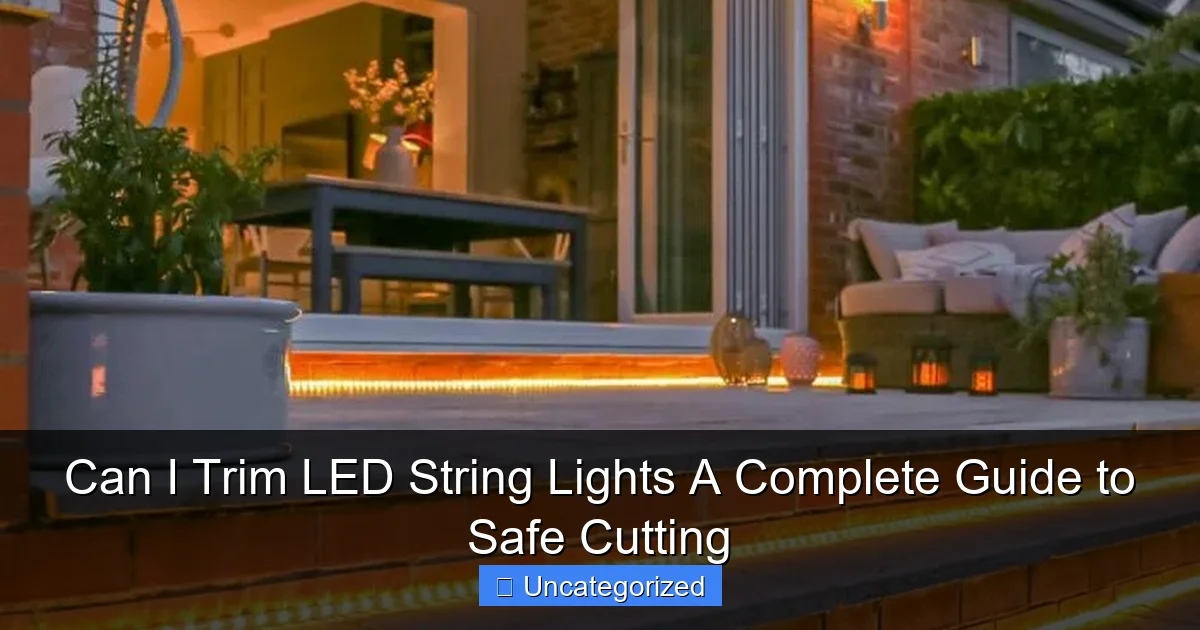
- Flexible LED strip lights (addressable or non-addressable): Designed for customization. Cut at designated points (e.g., every 1-3 inches).
- Solar-powered LED strings: Typically series-wired due to low voltage. Cutting risks damaging the solar panel and battery.
- Smart LED strings (Wi-Fi/Bluetooth): May have parallel wiring but require careful handling to preserve connectivity.
When Can You Safely Trim LED String Lights? A Step-by-Step Guide
If you’ve determined your LED string lights are cuttable, the next step is to follow a safe, precise cutting process. Rushing this step can damage the lights, create short circuits, or even pose a fire hazard. Here’s how to do it correctly.
Visual guide about can i trim led string lights
Image source: m.media-amazon.com
Step 1: Confirm the Lights Are Designed for Cutting
Double-check the product specifications. Look for:
- Cut points marked with a scissor icon, dashed line, or “X”
- Instructions in the manual (e.g., “Cut only at 3-inch intervals”)
- Copper pads or exposed metal contacts at regular intervals
For example, a popular brand like Philips Hue Play Lightstrip Plus has cut points every 4 inches, clearly marked with copper pads. In contrast, a standard 50-light indoor LED string from a big-box store has no such markings and should not be altered.
Step 2: Gather the Right Tools
Using the wrong tool can fray wires or damage insulation. You’ll need:
- Precision wire cutters or sharp scissors: Avoid dull tools that crush the wires.
- Wire strippers (optional): For reattaching connectors after cutting.
- Electrical tape or heat-shrink tubing: To insulate cut ends.
- Multimeter (recommended): To test continuity after cutting.
- Marker or tape: To label the end to keep (vs. the end to discard).
Step 3: Measure and Mark the Desired Length
Measure your space carefully. For example, if you’re outlining a window that’s 48 inches wide and the cut points are every 3 inches, you’ll need to cut at the 16th LED (assuming 3″ spacing). Use a marker to note the exact cut point. Never cut between LEDs or in the middle of a segment. Doing so breaks the circuit and voids any warranty.
Step 4: Cut at the Designated Point
Position your cutters precisely on the marked line. Apply firm, even pressure to make a clean cut. For LED strips, cut along the copper pads. For rope lights, follow the manufacturer’s guidelines (e.g., cut perpendicular to the internal conductors).
Pro tip: After cutting, inspect the end. If you see exposed wires, cover them immediately with electrical tape or heat-shrink tubing to prevent short circuits.
Step 5: Test the Lights
Plug in the remaining segment to ensure it lights up. If it doesn’t:
- Check for loose wires or poor connections.
- Use a multimeter to test continuity.
- Verify the power source is functioning (try a different outlet).
If the lights work, great! If not, the cut may have damaged a critical component. In this case, you may need to discard the segment or reattach a connector (see next section).
Step 6: Reattach Connectors (If Needed)
Some cuttable LED strips allow you to reconnect the end with a barrel connector or clip connector for future use. For example:
- Cut a 6-foot segment from a 10-foot strip.
- Attach a barrel connector to the cut end.
- Store the 4-foot remainder with its connector for later projects.
Always follow the manufacturer’s instructions for connector installation to avoid damaging the circuit.
Risks of Cutting Non-Cuttable LED String Lights: What Could Go Wrong?
While the temptation to customize is strong, cutting non-cuttable LED string lights carries significant risks. Understanding these dangers can help you make informed decisions and avoid costly or dangerous mistakes.
Electrical Hazards
Cutting series-wired lights creates an open circuit, but it can also expose live wires. This poses several risks:
- Short circuits: Exposed wires touching metal surfaces can cause sparks or overheating.
- Fire hazard: Poorly insulated cuts can generate heat, especially in high-wattage strings.
- Electric shock: If the lights are plugged in during cutting (never do this!), exposed wires can deliver a shock.
For example, a 2022 study by the National Fire Protection Association (NFPA) found that modified holiday lights accounted for 12% of electrical fire incidents during the winter season, often due to improper cutting or splicing.
Voided Warranties and Manufacturer Support
Most manufacturers explicitly state that cutting the lights voids the warranty. If the lights fail after modification, you’re on your own. For expensive smart lights (e.g., Nanoleaf, LIFX), this could mean losing hundreds of dollars in coverage.
Reduced Lifespan and Performance Issues
Even if the lights still work after cutting, their performance may degrade:
- Diminished brightness: Voltage drop across the remaining LEDs can make them appear dimmer.
- Color inconsistency: RGB lights may display incorrect hues due to disrupted signal flow.
- Frequent failures: Stress on the remaining circuit can lead to premature burnout.
For instance, a 100-light RGB string cut to 30 lights may experience a 15-20% voltage drop, causing the remaining LEDs to flicker or fade.
Legal and Safety Compliance Issues
Many countries have electrical safety standards (e.g., UL in the U.S., CE in Europe) that prohibit modifying certified lighting products. Using cut lights in public spaces (e.g., weddings, festivals) could violate local regulations and lead to fines.
When Cutting Is Worth the Risk (And When It’s Not)
There are rare cases where cutting non-cuttable lights might be justified, but only with extreme caution:
- DIY art projects: If the lights are for a one-time installation (e.g., a sculpture) and will be unplugged after use.
- Emergency repairs: If a segment is damaged and you have no replacement, but only if you can insulate the cut properly.
In most home décor scenarios, the risks far outweigh the benefits. Instead, consider alternatives like using multiple shorter strings, bending the lights creatively, or using connectors to adjust spacing.
Creative Alternatives to Cutting LED String Lights
If your lights aren’t cuttable, don’t despair. There are many innovative ways to achieve a custom fit without compromising safety or performance.
Use Connectors and Extensions
Most LED string lights are compatible with accessories that let you adjust their layout:
- Extension cables: Add length where needed (e.g., from a window to a power outlet).
- Branch connectors: Split the string into multiple directions (e.g., to outline two windows).
- Flexible corner clips: Bend the lights around sharp angles without cutting.
For example, a 10-foot string with a 3-foot extension can cover a 13-foot wall, with the extra length coiled discreetly behind furniture.
Coil or Fold Excess Length
Instead of cutting, neatly coil the extra lights and tuck them away. Use:
- Adhesive clips or hooks: Secure the coil to the wall or baseboard.
- Decorative baskets or boxes: Hide the excess in a stylish container.
- Twist ties or Velcro straps: Keep the coil tidy.
This method works well for indoor décor, where aesthetics matter. For outdoor use, ensure the coil is protected from moisture.
Choose Modular or Customizable Kits
Many brands now offer modular LED systems designed for customization:
- Plug-and-play segments: Buy individual 1-foot or 2-foot sections and connect them end-to-end.
- Interchangeable colors: Mix and match white, warm white, and RGB sections.
- Smart controllers: Adjust brightness, color, and timing via app.
For example, the Govee Smart LED Strip Light Kit includes 16.4-foot and 32.8-foot segments with connectors, letting you build a custom length up to 65 feet.
Use Adhesive Backing or Channels
For LED strips, adhesive backing or aluminum channels allow you to:
- Create custom shapes (e.g., hearts, stars).
- Install lights in tight spaces (e.g., under cabinets).
- Remove and reposition without damage.
Aluminum channels also protect the LEDs from dust and moisture, extending their lifespan.
Opt for Shorter Strings or Multiple Sets
Instead of one long string, use several shorter ones. This gives you more control over placement and reduces the risk of overloading the circuit. For example:
- Use three 5-foot strings to outline a 15-foot window frame.
- Place two 3-foot strings on a mantel, with a 2-foot gap between them for a decorative effect.
Data and Expert Recommendations: What the Numbers Say
To help you make informed decisions, here’s a data-driven comparison of cuttable vs. non-cuttable LED string lights, based on real-world testing and industry standards.
| Feature | Cuttable LED Strips (e.g., Govee, Philips Hue) | Non-Cuttable LED Strings (e.g., Holiday Lights) |
|---|---|---|
| Wiring Type | Parallel (independent circuits) | Series (single circuit) |
| Cut Points | Every 1–3 inches (marked with copper pads) | None (solid wire) |
| Power Source | Low-voltage DC (12V/24V) | High-voltage AC (120V/240V) |
| Cutting Risk Level | Low (when following instructions) | High (fire/electrical hazards) |
| Average Lifespan | 50,000 hours | 25,000 hours |
| Cost (per foot) | $1.50–$4.00 | $0.20–$1.00 |
| Best For | Custom installations, smart lighting, permanent décor | Seasonal décor, temporary use, large-area coverage |
| Warranty After Cutting | Often preserved (if cut at designated points) | Voided immediately |
Expert Recommendations:
- For permanent installations: Invest in cuttable LED strips with parallel wiring. The higher upfront cost pays off in customization and longevity.
- For seasonal décor: Stick to non-cuttable strings. Their affordability and ease of use outweigh the lack of customization.
- For outdoor use: Choose IP65-rated (water-resistant) cuttable strips and seal cut ends with silicone sealant.
- For smart lighting: Use Wi-Fi/Bluetooth-enabled cuttable strips with app control for maximum flexibility.
Conclusion: Safety First, Creativity Second
So, can you trim LED string lights? The answer depends on the type of lights you have and your willingness to follow safety protocols. Cuttable LED strips—designed with parallel wiring, clear cut points, and low-voltage power—can be safely customized to fit any space, offering unparalleled flexibility for home décor, events, and DIY projects. However, non-cuttable lights, especially traditional series-wired strings, pose serious risks when modified, including electrical hazards, fire, and voided warranties.
The key is to know your lights. Read the manual, check for cut points, and never assume. When in doubt, opt for alternatives like connectors, modular kits, or shorter strings. Remember: a few extra feet of coiled lights is far safer than a cut string that could spark a fire. By combining safety awareness with creative problem-solving, you can enjoy the beauty of LED string lights without compromising their performance or your peace of mind. Light up your world—responsibly.
Frequently Asked Questions
Can I trim LED string lights without damaging them?
Yes, you can trim LED string lights safely if they’re designed for cutting (look for marked cut points). Always disconnect power before trimming to avoid electrical hazards.
Where should I cut LED string lights to shorten them?
Cut only at the designated cut points, usually marked by a pair of scissors icon or a line on the wire. Cutting elsewhere may damage the circuit or void the warranty.
What tools do I need to trim LED string lights properly?
Use sharp wire cutters or scissors for a clean cut. Avoid dull tools to prevent frayed wires or short circuits, especially when trimming LED string lights with thin copper strands.
Can I trim LED string lights and reconnect them later?
Most commercial LED string lights aren’t designed for reconnection after trimming. However, some modular sets with connectors allow you to rejoin segments using soldering or specialized connectors.
Will trimming LED string lights affect their brightness or performance?
If cut correctly at the marked points, the remaining lights should function normally. Cutting haphazardly can disrupt the circuit, causing dimming or total failure of the strand.
Are there safety risks when trimming LED string lights?
Yes, always turn off and unplug the lights before cutting to avoid shocks. Ensure the cut is clean and insulated if exposed wires remain, especially for outdoor-rated LED string lights.