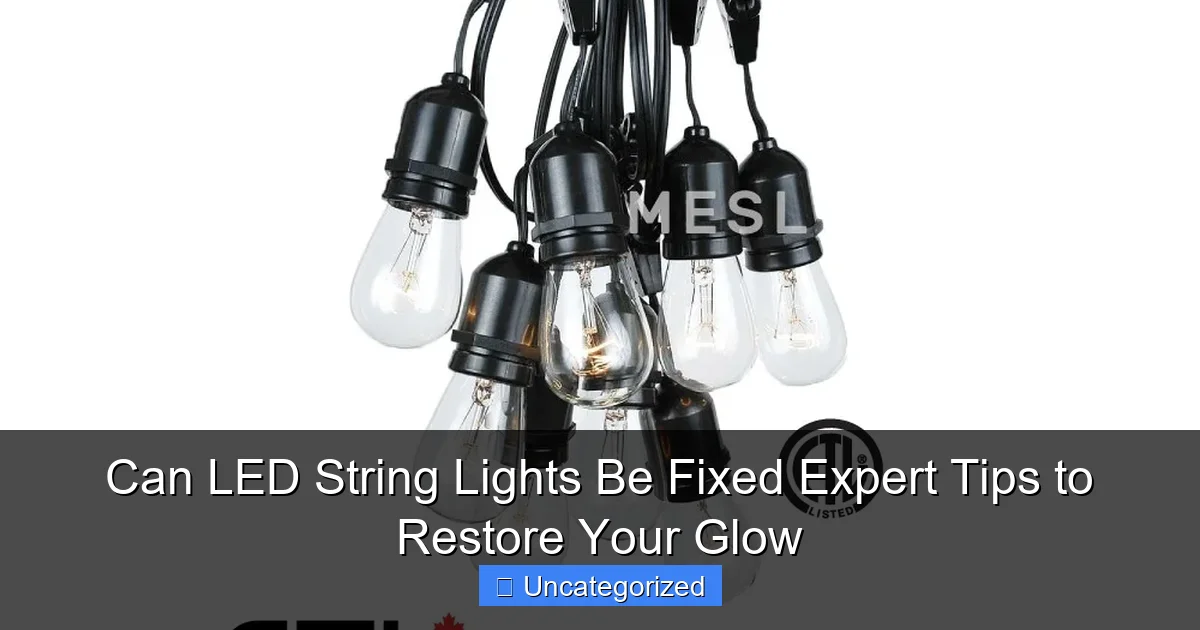
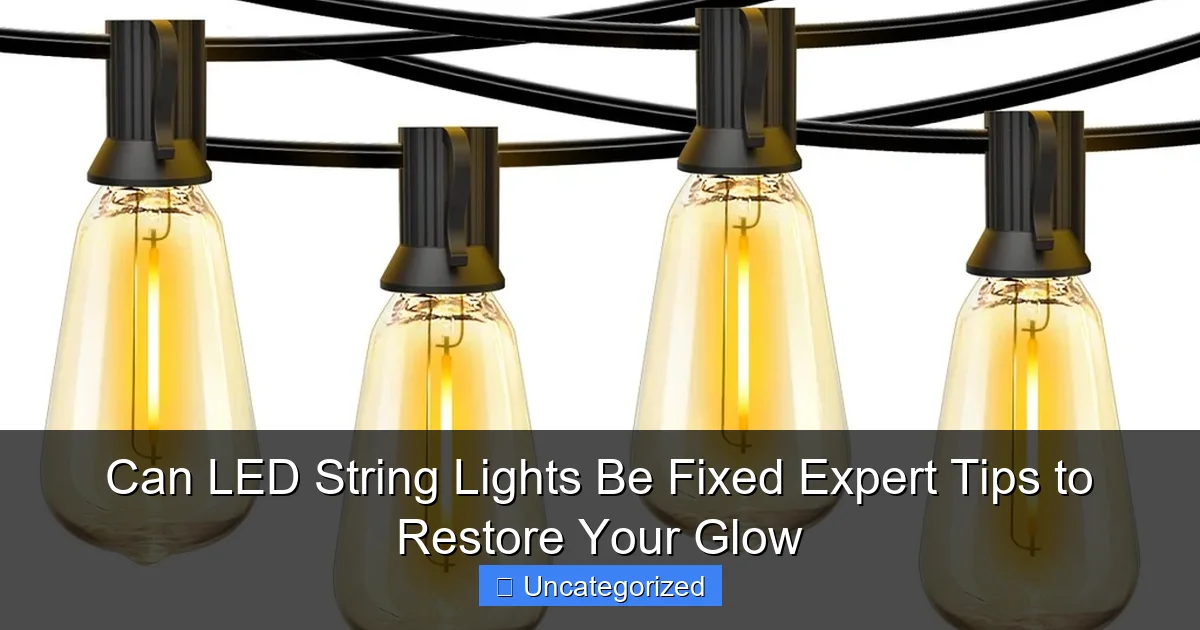
Featured image for can led string lights be fixed
Image source: modernelectricaltt.com
Yes, LED string lights can often be fixed with simple troubleshooting like checking for loose bulbs, testing the fuse, or using a multimeter to identify breaks in the circuit. Most common issues—such as flickering, partial outages, or complete failure—are repairable without replacing the entire strand, saving time and money.
Key Takeaways
- Diagnose first: Check for loose bulbs, frayed wires, or damaged sockets before attempting fixes.
- Use a multimeter: Test for voltage issues to pinpoint electrical faults accurately.
- Replace faulty bulbs: Swap out dead bulbs with compatible replacements to restore light.
- Repair wires safely: Solder broken wires and insulate properly to prevent future damage.
- Check the plug: Ensure the power source and fuse are functioning correctly.
- Prevent moisture damage: Use waterproof sealants on connections for outdoor lights.
📑 Table of Contents
- The Magic of LED String Lights and the Frustration of Failure
- Understanding How LED String Lights Work
- Diagnosing the Problem: Step-by-Step Troubleshooting
- Common LED String Light Issues and How to Fix Them
- Advanced Repair Techniques for DIY Enthusiasts
- When to Repair vs. Replace: A Practical Guide
- Conclusion: Restore the Glow, One Light at a Time
The Magic of LED String Lights and the Frustration of Failure
There’s something undeniably magical about LED string lights. Whether they’re draping across a patio, outlining a holiday tree, or adding a soft glow to a bedroom, these tiny lights have the power to transform any space into a cozy, festive, or romantic haven. Their energy efficiency, long lifespan, and versatility have made them a staple in homes, weddings, and commercial displays alike. But what happens when that magic fades? When one strand flickers erratically, another goes dark entirely, or the entire set fails to light up? The immediate reaction is often frustration—and the question that follows: Can LED string lights be fixed?
The good news is that, in many cases, the answer is a resounding yes. Unlike incandescent bulbs, which often fail catastrophically due to filament burnout, LED string lights are more resilient and offer multiple opportunities for repair. With a little patience, basic tools, and the right troubleshooting approach, you can often restore your lights to full working order—saving money, reducing waste, and preserving the ambiance you’ve carefully curated. This guide will walk you through the most common causes of LED string light failure, how to diagnose the issue, and expert-backed repair techniques to get your glow back.
Understanding How LED String Lights Work
The Anatomy of an LED String Light Set
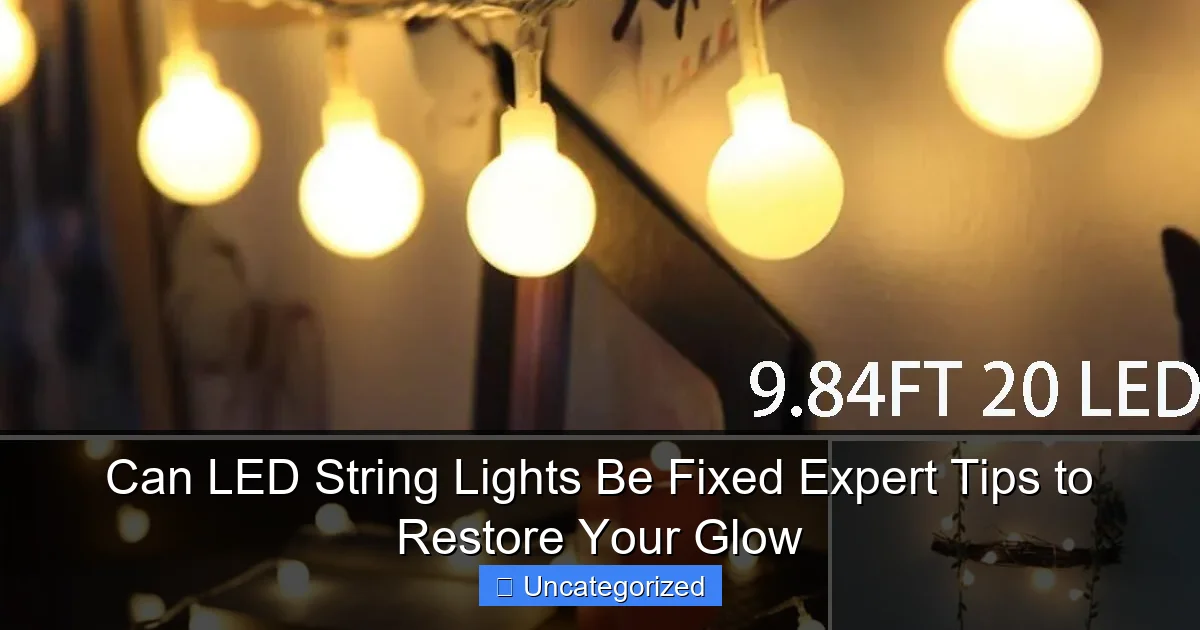
Before diving into repairs, it’s essential to understand how LED string lights are constructed. Most LED strings consist of several key components:
Visual guide about can led string lights be fixed
Image source: i5.walmartimages.com
- LED bulbs: Light Emitting Diodes that produce light when an electric current passes through them. They are typically encased in plastic or epoxy.
- Wires and circuit paths: Thin copper wires that carry electricity from the power source to each LED. These are often coated in PVC insulation.
- Controller box (optional): Houses batteries or connects to an AC adapter, and may include a timer, remote, or mode selector.
- Plug or adapter: Converts household voltage (120V AC) to the low-voltage DC current (usually 3–5V) required by LEDs.
- Connectors and junctions: Where multiple strands connect, or where the plug meets the first LED.
Unlike traditional incandescent strings, where each bulb is in series and a single failure can kill the entire strand, many LED sets use a parallel circuit or series-parallel configuration. This means that if one LED fails, others may continue to work—though flickering or dimming can still occur due to voltage imbalances.
Common Circuit Types and Their Repair Implications
LED strings come in two primary wiring configurations, each with different failure patterns:
- Series circuits: All LEDs are connected end-to-end. If one LED fails (especially if it burns out or opens), the entire circuit breaks, and no lights turn on. However, some modern series strings use a shunt resistor across each LED. If the LED fails open, the resistor bypasses it, allowing the rest of the string to remain lit. This is common in holiday lights.
- Parallel circuits: Each LED has its own path to the power source. A single LED failure won’t affect others, but voltage regulation becomes critical. If one LED draws too much current, it can cause others to dim or overheat.
- Series-parallel (most common): The string is divided into groups of 20–50 LEDs in series, and these groups are connected in parallel. If one group fails, only that section goes dark. This design allows for partial functionality and easier troubleshooting.
Understanding your string’s configuration helps determine whether a single dark LED means a simple bulb replacement or a deeper circuit issue. For example, if one section is out but the rest glows, you likely have a series-parallel setup with a failed group.
Diagnosing the Problem: Step-by-Step Troubleshooting
Step 1: Check the Power Source
Before assuming a bulb or wire is faulty, rule out power issues:
Visual guide about can led string lights be fixed
Image source: cf.shopee.ph
- Test the outlet: Plug in another device to confirm the outlet is working.
- Inspect the adapter: Look for signs of overheating, frayed wires, or loose connections. Use a multimeter to test the adapter’s output voltage. It should match the rating on the label (e.g., 4.5V DC). If it reads 0V or significantly lower, replace the adapter.
- Battery-powered sets: Replace or recharge batteries. Corroded terminals can also cause failure—clean with vinegar and a cotton swab.
Pro tip: If the lights flicker when you wiggle the plug, the adapter or internal wiring may be loose. Try bending the plug slightly to see if contact improves.
Step 2: Inspect for Visible Damage
Walk along the entire string and look for:
- Kinks, cuts, or frayed insulation in the wire
- Burn marks or melted plastic near bulbs or connectors
- Water damage (common in outdoor sets left in the rain)
- Corrosion on metal contacts (especially in battery compartments)
If you find a damaged section, it may be the culprit. For example, a kinked wire can sever the internal conductor, breaking the circuit. In such cases, repair or replace the damaged segment.
Step 3: Identify the Failure Pattern
Observe how the lights behave:
- Entire string is dark: Likely a power issue, blown fuse (in the plug), or broken wire at the start.
- One section is out: Suggests a failure in a series group—possibly a dead LED or broken wire within that segment.
- Flickering or dimming: Could be a loose connection, failing adapter, or a “short” in one LED drawing excess current.
- Random blinking: May indicate a failing controller or moisture in the circuit.
For example, if only the first 20 LEDs are dark but the rest work, the issue is likely in the first series group. If the lights flicker when you move the string, suspect a broken wire or loose solder joint.
Step 4: Use a Multimeter for Precision Testing
A digital multimeter (available for $15–$30) is invaluable for diagnosing electrical issues:
- Set the multimeter to continuity mode (looks like a sound wave symbol).
- Touch one probe to the metal contact at the plug’s positive terminal and the other to the first LED’s contact. A beep means continuity—no break in the wire.
- Repeat along the string, checking continuity between each LED’s contacts.
- To test individual LEDs, set the multimeter to diode mode. Place probes across the LED leads. A functioning LED will show a voltage drop (1.8–3.3V, depending on color). No reading or infinite resistance indicates a dead LED.
Note: Never test LEDs while powered—this can damage the multimeter or LED.
Common LED String Light Issues and How to Fix Them
Dead or Flickering LEDs
Problem: One or more LEDs are dark, flicker, or glow dimly.
Causes:
- LED failure (most common)
- Loose solder joint at the LED base
- Voltage drop due to long wire runs or faulty adapter
Repair Methods:
- Replace the LED: If the LED is in a socket (common in “mini” strings), simply unscrew the old bulb and insert a new one. Ensure the replacement matches the voltage and color. For soldered LEDs (often in “molded” or “shatterproof” styles), use a soldering iron to remove the old LED and install a new one. Match the polarity—LEDs are directional.
- Resolder loose joints: Gently heat the solder point with a soldering iron. Add a drop of fresh solder if needed. Avoid overheating, which can damage the LED.
- Boost voltage (cautiously): If multiple LEDs are dim, the adapter may be underpowered. Try a higher-output adapter (e.g., 5V instead of 4.5V), but don’t exceed the string’s rated voltage. Alternatively, shorten the string or add a parallel power feed.
Example: A 100-light string with 10 dead LEDs in the middle likely has a series-parallel setup. Use a multimeter to identify the failed group, then replace the dead LEDs or resolder connections.
Broken or Damaged Wires
Problem: The string is cut, kinked, or has exposed copper.
Causes:
- Physical damage from storage, pets, or weather
- Repeated bending at stress points (e.g., near plugs)
Repair Methods:
- Splice the wire: Cut out the damaged section. Strip 1/2 inch of insulation from both ends. Twist the matching wires (positive to positive, negative to negative) and solder. Cover with heat-shrink tubing or electrical tape.
- Use a wire connector: For a quick fix, use a waterproof wire connector (e.g., Wago lever nut) to join the wires. Ideal for outdoor repairs.
- Reinforce stress points: After repair, add a dab of hot glue or silicone sealant to the plug and connector areas to prevent future breaks.
Pro tip: If the break is near the plug, consider replacing the plug entirely with a new one (available at hardware stores).
Controller or Adapter Failure
Problem: The lights don’t turn on, or the controller modes don’t work.
Causes:
- Faulty adapter (most common)
- Water damage in the controller
- Failed internal circuitry
Repair Methods:
- Replace the adapter: Match the voltage, current (mA or A), and polarity (check the plug’s center pin). A mismatched adapter can damage the lights.
- Clean the controller: If the controller is wet or corroded, dry it completely. Use isopropyl alcohol and a soft brush to clean contacts. Reassemble and test.
- Bypass the controller (advanced): If the controller is faulty but the string works when directly powered, you can cut the controller out and connect the string directly to the adapter. This removes remote/timer functions but restores basic lighting.
Example: A string with a non-responsive remote but working lights likely has a failed controller. Try bypassing it or replacing the batteries in the remote.
Water Damage and Corrosion
Problem: Lights fail after rain exposure or storage in damp areas.
Causes:
- Moisture in sockets or connectors
- Corroded metal contacts
- Short circuits from water bridging wires
Repair Methods:
- Dry thoroughly: Hang the string in a warm, dry area for 24–48 hours. Use a hairdryer on low heat to speed drying.
- Clean corrosion: Use vinegar or isopropyl alcohol on a cotton swab to remove green/white buildup. For severe corrosion, replace the affected section.
- Seal connections: Apply silicone sealant to plugs, sockets, and splices. Use waterproof connectors for outdoor use.
Advanced Repair Techniques for DIY Enthusiasts
Rewiring the Entire String
For heavily damaged or custom-length strings, rewiring may be the best solution:
- Remove all old LEDs and wires, preserving the plug and adapter.
- Cut new 22-24 gauge wire to the desired length. Use stranded wire for flexibility.
- Solder LEDs to the wire, spacing them evenly. Use a breadboard or template to maintain spacing.
- Connect the first LED to the adapter’s positive wire, and the last LED to the negative wire.
- Test before final assembly. Insulate all connections.
Tip: For waterproof strings, use silicone-coated wire and seal all solder joints with heat-shrink tubing.
Using a LED Tester or Light Keeper Tool
Specialized tools like the Light Keeper Pro can simplify troubleshooting:
- Insert the tool into the plug and press the trigger. It sends a high-voltage pulse to “jump-start” weak LEDs or bypass dead ones.
- The tool also detects shorts in the circuit.
- While not a permanent fix, it can revive strings with marginal failures.
Note: These tools work best on series-wired strings with shunt resistors. They may not help with parallel or complex setups.
Upcycling and Creative Repairs
When a full repair isn’t feasible, get creative:
- Salvage parts: Extract working LEDs and wires for future projects.
- Create a “patchwork” string: Combine sections from multiple broken strings into a custom design.
- Convert to battery power: Remove the adapter and connect the string to a 3V battery pack (e.g., 2x AA). Ideal for portable use.
When to Repair vs. Replace: A Practical Guide
Factors to Consider
Not all LED string lights are worth repairing. Use this table to decide:
| Factor | Repair Recommended? | Why |
|---|---|---|
| Cost of repair vs. replacement | Yes if < $10–$15 | New strings cost $10–$50. If repair parts (soldering iron, wire, LEDs) exceed this, replacement is cheaper. |
| Sentimental or custom value | Yes | Handmade, vintage, or heirloom strings are worth the effort. |
| Extent of damage | Yes if < 20% damaged | Repairing a few dead LEDs or a short wire break is feasible. Rewiring 80% of a string is impractical. |
| Time and skill required | Yes if you enjoy DIY | Repairing requires patience and basic electronics skills. If you dislike soldering, replacement may be better. |
| Yes | Repairing reduces e-waste. A single broken string can contain 50+ small plastic parts. |
Signs It’s Time to Replace
- More than 30% of LEDs are dead or flickering
- Multiple wire breaks or extensive corrosion
- No compatible replacement parts available (e.g., obsolete LED type)
- The string is older than 5–7 years (LEDs degrade over time)
- You lack the tools or desire to repair it
Pro tip: When replacing, choose strings with replaceable bulbs or modular designs for easier future repairs.
Conclusion: Restore the Glow, One Light at a Time
LED string lights are more than just decorations—they’re symbols of warmth, celebration, and creativity. While it’s tempting to toss them in the trash when they fail, the reality is that most LED string lights can be fixed with the right approach. From simple bulb replacements to advanced rewiring, the repair process not only saves money but also fosters a deeper connection with the technology we use every day.
By understanding how your lights work, diagnosing issues systematically, and applying the repair techniques outlined here, you can extend their lifespan and reduce waste. Whether you’re reviving a cherished holiday set, a wedding backdrop, or a cozy bedroom accent, the glow is worth the effort. So next time your lights go dark, don’t despair—grab your multimeter, solder, and a cup of coffee, and get ready to bring the magic back. After all, every repaired light is a small victory for sustainability, craftsmanship, and the enduring joy of a well-lit space.
Frequently Asked Questions
Can LED string lights be fixed if some bulbs aren’t working?
Yes, LED string lights can often be fixed by identifying the faulty bulb or loose connection. Try replacing the defective bulb or checking for damaged wiring in the affected section.
How do I troubleshoot LED string lights that won’t turn on?
Start by testing the outlet and checking the fuse in the plug (if applicable). Inspect for visible wire damage or loose connections, as these are common causes of failure in LED string lights.
Why do my LED string lights flicker, and can I fix them?
Flickering is usually caused by loose bulbs, voltage fluctuations, or a failing power adapter. Tighten bulbs, use a surge protector, or replace the adapter to resolve the issue.
Can I repair cut or damaged wires in LED string lights?
Yes, you can repair cut wires by stripping the damaged section, reconnecting the wires with solder and heat-shrink tubing, or using waterproof connectors. Always disconnect power before attempting repairs.
Are replacement parts available for broken LED string lights?
Many manufacturers offer replacement bulbs, plugs, and controllers for LED string lights. Check the product manual or contact the seller to source compatible parts for your model.
Can LED string lights be fixed if water damaged?
If water-damaged, dry the lights thoroughly before inspecting for corrosion or short circuits. If the damage is minor, cleaning the contacts and replacing affected components may restore functionality.