Featured image for can you cut a string of led christmas lights
Image source: m.media-amazon.com
No, you should never cut a string of LED Christmas lights—doing so can damage the circuit, create fire hazards, and void any safety certifications. Most LED light strings are not designed to be shortened, and even “cut-to-size” versions require precise handling and proper sealing to remain safe. Always check manufacturer guidelines before attempting any modifications.
Key Takeaways
- Never cut LED lights mid-string: This can damage the circuit and create safety hazards.
- Check for cut marks: Only trim at designated points to avoid ruining the lights.
- Use proper tools: Sharp scissors or wire cutters ensure clean, safe cuts.
- Seal ends properly: Prevent moisture damage with silicone or electrical tape.
- Test before decorating: Always verify functionality after cutting or splicing.
- Opt for custom-length sets: Safer than modifying existing strings for perfect fit.
📑 Table of Contents
- Can You Cut a String of LED Christmas Lights Safely?
- Understanding How LED Christmas Lights Work
- When Is It Safe to Cut LED Christmas Lights?
- Risks and Dangers of Cutting LED Lights Improperly
- Safe Alternatives to Cutting LED Christmas Lights
- Step-by-Step: How to Cut LED Lights (When It’s Safe)
- Final Thoughts: Prioritize Safety Over Convenience
Can You Cut a String of LED Christmas Lights Safely?
Every holiday season, homes around the world light up with dazzling displays of LED Christmas lights. These energy-efficient, long-lasting decorations have become a staple of festive decor, adorning trees, windows, rooftops, and railings. However, one common question arises among DIY decorators: Can you cut a string of LED Christmas lights safely? Whether you’re trying to fit a light strand around a small wreath, avoid excess wiring on a compact porch, or create a custom lighting arrangement, the idea of trimming a string of lights might seem like a practical solution. But before you reach for the scissors, it’s essential to understand the risks, limitations, and safe methods involved.
LED Christmas lights have revolutionized holiday lighting. Unlike traditional incandescent bulbs, LEDs consume less power, generate minimal heat, and can last up to 25,000 hours or more. They’re also more durable and eco-friendly. However, their internal wiring and electronic components are more sensitive to damage than older light types. Cutting them improperly can lead to electrical hazards, fire risks, or permanent damage to the entire strand. This guide will walk you through everything you need to know about modifying LED light strings—what’s safe, what’s not, and how to achieve your desired lighting setup without compromising safety or performance.
Understanding How LED Christmas Lights Work
Basic Components of LED Light Strings
To determine whether you can safely cut LED Christmas lights, it’s crucial to understand their internal structure. A typical LED light string consists of several key components:
Visual guide about can you cut a string of led christmas lights
Image source: christmaslightsetc.com
- LED bulbs: These are the light-emitting diodes that produce illumination. Each bulb contains a semiconductor chip that emits light when an electric current passes through it.
- Wires: Most LED strings use two main wires—positive (live) and negative (neutral)—running the length of the strand. Some higher-end models may include a third wire for data signals, especially in programmable or color-changing sets.
- Resistors: These are often built into each LED socket or the plug to regulate current and prevent overheating.
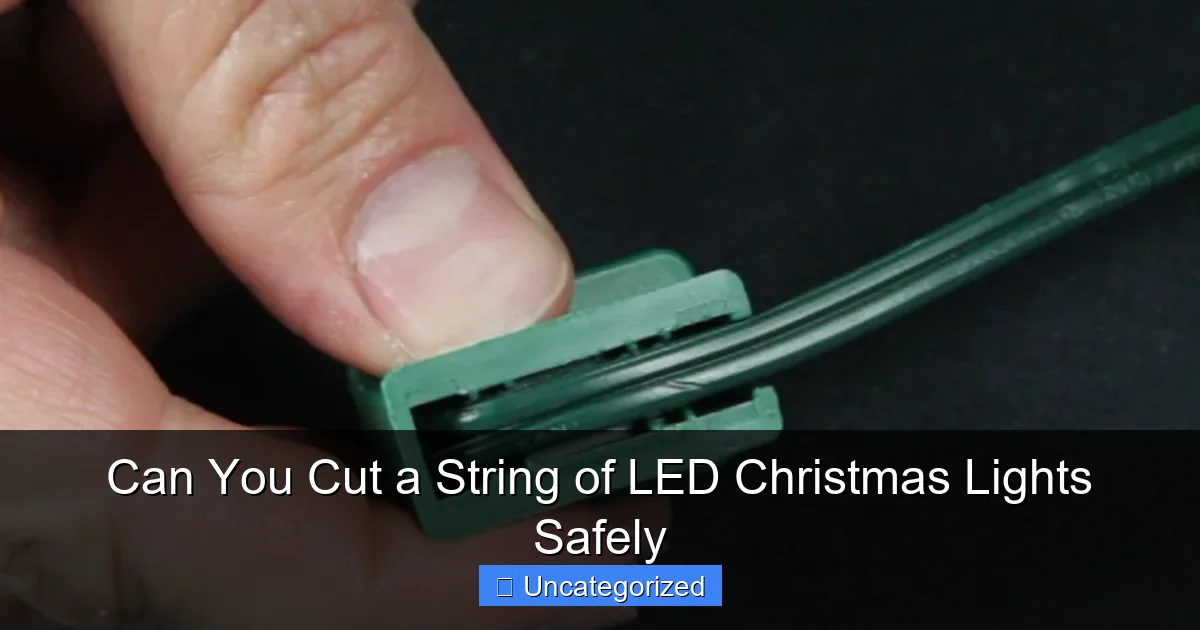
- Plug and end connector: The plug supplies power, while the end connector (often called a “tail” or “end cap”) allows for daisy-chaining multiple strands. Some sets include a fuse in the plug for added safety.
- Controller (optional): For multi-color or animated lights, a small controller box may manage patterns, brightness, and color changes.
Unlike older incandescent strings, where each bulb operated independently (series-parallel design), many modern LED strings use a series circuit, meaning all bulbs are connected in a single path. This has significant implications when cutting the strand.
Series vs. Parallel Circuit Design
The circuit design of your LED lights determines whether cutting them is even possible. There are two main configurations:
- Series circuit: All LEDs are connected one after another in a single line. If one bulb or section is cut or removed, the entire circuit breaks, and the remaining lights will not work. This is common in lower-cost or basic LED strings.
- Parallel circuit: Each LED or group of LEDs has its own independent path. Cutting one section doesn’t necessarily disrupt the rest of the strand. This design is more complex and typically found in premium, customizable lights.
For example, a 50-bulb series LED string will go dark if you cut it at any point because the electrical current can no longer flow through the entire loop. In contrast, a parallel-configured string with 50 bulbs divided into 10 groups of 5 (each group in parallel) can sometimes have individual groups removed or cut without affecting the others—though this still requires careful rewiring.
Why Circuit Design Matters for Cutting
Knowing your light strand’s circuit type is the first step in determining whether cutting is safe or feasible. Most standard retail LED strings (like those from major brands such as GE, Philips, or Holiday Living) use series circuits. This means cutting them without rewiring will almost certainly disable the entire string. However, some specialty products—such as LED rope lights, addressable LED strips (like NeoPixels), or modular light sets—are designed for customization and can be safely cut at designated points.
When Is It Safe to Cut LED Christmas Lights?
LED Strips and Rope Lights: Designed for Cutting
Not all LED holiday lights are created equal. While traditional plug-in light strings are generally not meant to be cut, certain types are specifically engineered for customization:
Visual guide about can you cut a string of led christmas lights
Image source: i.ytimg.com
- LED strip lights: These are flexible, adhesive-backed strips of LEDs (often 12V or 24V DC) used for under-cabinet lighting, cove lighting, or accent decor. They have clearly marked cut lines (usually every 1–3 LEDs) and can be safely cut with scissors or a utility knife. After cutting, you can reconnect segments using solderless connectors or soldering.
- LED rope lights: These consist of small LEDs embedded in a clear plastic tube. Many rope lights have pre-marked cut points (often every 12–18 inches) and can be cut and reconnected with end caps or splice kits. Always verify the manufacturer’s instructions.
- Modular or plug-and-play systems: Some brands (e.g., Twinkly, Govee, or LIFX) offer smart LED sets with detachable segments. These are designed to be reconfigured without cutting wires.
Example: A 16-foot LED strip light with 300 LEDs might have cut lines every 2 inches. If you only need 10 feet, you can safely cut it at the 10-foot mark (at a designated cut line), then cap the cut end with an end cap to prevent fraying and moisture exposure.
Specialty LED Strings with Cut Points
Some manufacturers produce “cuttable” LED Christmas lights. These are rare but exist for niche markets. They feature:
- Clearly labeled cut zones (often with a small scissor icon or dashed line)
- Reinforced wiring at cut points
- Instructions for safe reconnection using waterproof connectors or solder
Always check the packaging or product description. Look for phrases like “cuttable,” “customizable,” or “modular.” For instance, a product labeled “50-foot cuttable LED string with 250 LEDs, cut every 2 feet” is designed for modification. Never assume a standard string is cuttable—this is a common mistake that leads to ruined lights.
When Cutting Is Not Safe
In most cases, cutting a standard plug-in LED Christmas light string is not safe or recommended. Here’s why:
- Series circuit failure: As mentioned, cutting breaks the circuit, rendering the rest of the lights useless.
- Exposed live wires: Cutting without proper insulation can expose live electrical components, creating a shock or fire hazard.
- Voided warranty: Modifying lights often voids the manufacturer’s warranty, leaving you liable for any damage.
- Moisture damage: Outdoor lights are sealed against rain and snow. Cutting compromises this seal, increasing the risk of short circuits in wet conditions.
Tip: If you need a shorter length, consider purchasing a dedicated shorter string or using zip ties to neatly bundle excess lights rather than cutting them.
Risks and Dangers of Cutting LED Lights Improperly
Electrical Hazards
The most serious risk of cutting LED lights is electrical shock or fire. Even low-voltage LED strings (typically 24–36V AC) can carry enough current to cause injury if mishandled. High-voltage strings (120V AC, common in North America) pose an even greater danger. Exposed wires can:
- Arc or spark when touched, especially in humid environments
- Overheat if not properly insulated
- Cause a short circuit if the positive and negative wires touch
Example: A homeowner cut a 120V LED string to fit around a small window, then taped the ends with electrical tape. A few days later, the tape loosened, the wires touched, and a small fire started in the wall cavity. This could have been prevented by using a shorter string or a professional splicing method.
Damage to the Light Strand
Even if you avoid electrical hazards, cutting can permanently damage the lights. Common issues include:
- Burnt-out LEDs: Improper soldering or overheating during repair can destroy nearby bulbs.
- Frayed wires: Cutting with dull scissors or a knife can damage the copper strands inside, reducing conductivity.
- Loose connections: If you attempt to splice wires, a poor connection can cause flickering, dimming, or intermittent outages.
Additionally, many LED strings have built-in fuses or resistors in the plug. If you cut too close to the plug, you may remove these safety components, increasing the risk of overheating.
Voiding Safety Certifications
Most LED Christmas lights are certified by safety organizations like UL (Underwriters Laboratories), ETL, or CSA. These certifications require the product to meet strict electrical and fire safety standards. Cutting or modifying a certified light string voids this certification, meaning it no longer meets safety standards. This could be a problem if:
- You file an insurance claim after a fire
- An inspector checks your holiday display (e.g., for commercial properties)
- You sell or donate the lights later
Always look for the safety certification label on the plug or packaging. If it’s missing or you’ve altered the product, you’re assuming the risk.
Safe Alternatives to Cutting LED Christmas Lights
Use Multiple Shorter Strings
The simplest and safest solution is to avoid cutting altogether by using multiple shorter light strings. For example:
- Instead of cutting a 50-foot string for a 20-foot roofline, use two 25-foot strings or five 10-foot strings.
- For a small tree, choose a 20-bulb mini string instead of trimming a 50-bulb strand.
Many manufacturers offer light sets in various lengths (5ft, 10ft, 25ft, 50ft, 100ft). Mixing and matching allows for precise coverage without modification. Use zip ties, light clips, or adhesive hooks to secure excess wiring neatly.
Use Extension Cords and Splitters
If you need to cover a large area with limited outlets, use:
- Outdoor-rated extension cords: These allow you to position lights farther from the power source.
- Power splitters (Y-adapters): These let you plug multiple strings into one outlet, reducing the need for long runs.
- Timer or smart plugs: These help manage power consumption and prevent overloading circuits.
Tip: Never daisy-chain more than three standard light strings (or the manufacturer’s recommended maximum) to avoid overloading the circuit.
Use Bendable or Flexible Lighting Options
For custom shapes or tight spaces, consider:
- LED rope lights: These can be bent into curves and cut at marked points.
- LED icicle lights with adjustable drops: Some models let you shorten individual strands.
- Net lights: These are pre-arranged in grids and can be folded or tucked to fit odd shapes.
For example, a 10-foot net light can be folded in half to cover a 5-foot area, with the excess neatly tucked behind a bush or railing.
Step-by-Step: How to Cut LED Lights (When It’s Safe)
Only Cut Lights Designed for Modification
Never attempt to cut standard plug-in LED strings. Only proceed if:
- The product is explicitly labeled as “cuttable” or “modular”
- Cut points are clearly marked
- You have the proper tools and skills
For this section, we’ll assume you’re working with a 12V LED strip light with marked cut lines.
Tools and Materials Needed
- Sharp scissors or utility knife
- Wire strippers (if splicing)
- Soldering iron and solder (optional)
- Heat-shrink tubing or waterproof electrical tape
- LED strip connectors (solderless, if available)
- Multimeter (to test continuity)
Step-by-Step Cutting and Reconnection
- Turn off and unplug the lights. Always work on de-energized circuits.
- Identify the cut line. Look for a dashed line, scissor icon, or small copper pads between LEDs. This is the only safe place to cut.
- Cut cleanly. Use sharp scissors or a knife to cut straight across the line. Avoid jagged edges.
- Inspect the cut ends. You should see exposed copper pads (for strips) or wires (for rope lights).
- Reconnect or cap the ends.
- For LED strips: Use a solderless connector or solder wires to a new power source. Cover with heat-shrink tubing.
- For rope lights: Use a waterproof end cap or splice kit. Seal with silicone sealant if outdoors.
- Test the lights. Plug in and verify both sections work. Use a multimeter to check for shorts.
- Insulate and protect. Wrap all connections with waterproof tape or enclosures, especially for outdoor use.
Data Table: Cutting Compatibility by LED Light Type
| Light Type | Cuttable? | Cut Points | Reconnection Method | Risk Level |
|---|---|---|---|---|
| Standard Plug-in LED String | ❌ No | None | Not applicable | High |
| LED Strip Light (12V/24V) | ✅ Yes | Every 1–3 LEDs | Solderless connectors or solder | Low (if done correctly) |
| LED Rope Light | ✅ Yes (some models) | Every 12–18 inches | Splice kits, end caps | Medium |
| Modular LED String | ✅ Yes | At segment joints | Plug-and-play connectors | Low |
| Smart LED String (e.g., Twinkly) | ❌ No (unless specified) | None | Not applicable | High |
Final Thoughts: Prioritize Safety Over Convenience
So, can you cut a string of LED Christmas lights safely? The answer is nuanced. While certain types—like LED strip lights, rope lights, and modular systems—are designed for cutting and can be modified with proper technique, the vast majority of plug-in LED Christmas light strings are not safe to cut. Doing so risks electrical hazards, fire, permanent damage, and voided warranties.
The best approach is to choose the right tool for the job. Instead of cutting, invest in appropriately sized light strings, use extension cords, or opt for flexible lighting options. When customization is essential, select products explicitly labeled as cuttable and follow the manufacturer’s instructions to the letter. If you’re unsure, consult a licensed electrician—especially for large installations or permanent setups.
Remember, holiday lighting is about joy, beauty, and celebration. Don’t let a shortcut compromise your safety or the safety of your home. By understanding how LED lights work, respecting their limitations, and using safe alternatives, you can create a stunning, secure display that shines brightly all season long. Stay safe, stay bright, and happy holidays!
Frequently Asked Questions
Can you cut a string of LED Christmas lights without damaging them?
Yes, you can cut a string of LED Christmas lights, but only if they are specifically labeled as “cuttable” or “segmented.” These lights have designated cut points, usually marked by a line or icon, where it’s safe to trim the wire without affecting the rest of the circuit.
Where can I safely cut LED Christmas light strings?
Look for small scissor or cut icons along the wire—manufacturers typically mark safe cutting points. These are usually located between individual light segments or at specific intervals, ensuring the remaining lights stay functional after cutting.
What happens if I cut a string of LED lights in the wrong spot?
Cutting outside designated areas can break the circuit, causing the entire string to stop working. Non-cuttable strings lack internal parallel wiring, so even one misplaced cut can disrupt power flow to all LEDs.
Can you cut a string of LED Christmas lights to fit a smaller space?
Absolutely—cuttable LED strings are designed for customization. Just measure your space, locate the nearest safe cut point, and trim carefully with wire cutters to avoid damaging the remaining lights.
Do LED Christmas lights lose brightness after being cut?
No, if cut correctly at marked points, the remaining LEDs will maintain full brightness. Cutting improperly, however, can cause voltage drops or dead sections due to broken connections.
How do I know if my LED string is safe to cut?
Check the product packaging or manual for terms like “cuttable,” “trim-to-fit,” or “customizable.” If there are no markings or instructions, assume the string isn’t designed for cutting to avoid ruining it.

