Featured image for can you cut string led lights
Image source: ecolocityled.com
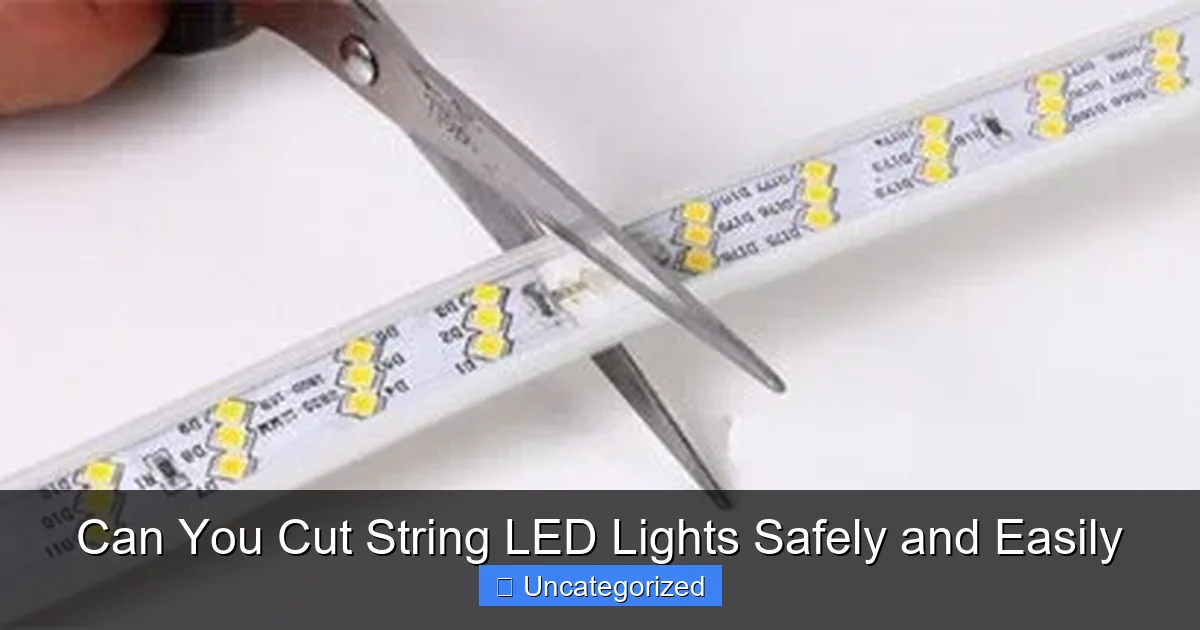
Yes, you can cut string LED lights safely—but only if they’re specifically labeled as “cuttable” and you follow the manufacturer’s guidelines. Look for designated cut points, usually marked by a scissor icon or line, to avoid damaging the circuit or creating a fire hazard. Never cut non-cuttable LED strings, as this can ruin the entire strand and pose safety risks.
Key Takeaways
- Check manufacturer guidelines: Always verify if your LED lights are designed to be cut safely.
- Use sharp tools: Cut cleanly with precision scissors or wire cutters to avoid damage.
- Measure twice, cut once: Mark the cut point clearly to prevent mistakes and wasted segments.
- Seal ends properly: Use waterproof tape or caps if cutting outdoor-rated LED strings.
- Test after cutting: Ensure functionality before final installation to confirm a successful cut.
📑 Table of Contents
- Can You Cut String LED Lights Safely and Easily?
- Understanding How LED String Lights Work
- When Can You Cut String LED Lights? Key Safety Guidelines
- Step-by-Step Guide: How to Cut String LED Lights
- Creative Uses for Cut String LED Lights
- Data Table: Cuttable vs. Non-Cuttable LED String Lights
- Conclusion: Cutting LED Strings Safely and Smartly
Can You Cut String LED Lights Safely and Easily?
String LED lights have become a staple in modern home decor, event planning, and festive celebrations. Their flexibility, energy efficiency, and vibrant illumination make them ideal for wrapping around trees, framing windows, outlining ceilings, or creating ambient mood lighting. However, one common question that arises among DIY enthusiasts and homeowners alike is: Can you cut string LED lights? The answer isn’t always straightforward, and the consequences of cutting the wrong type can range from a dimmer glow to a completely non-functional strand. This guide dives deep into the mechanics of LED string lights, the safety considerations, and the step-by-step process for cutting them—when it’s safe to do so.
Whether you’re trimming a 100-foot strand to fit a 30-foot patio or customizing a lighting display for a wedding backdrop, understanding the when, why, and how of cutting LED string lights is essential. With the right tools, knowledge, and precautions, you can achieve a perfectly tailored lighting setup without compromising safety or longevity. From identifying cuttable vs. non-cuttable strands to exploring creative applications, this comprehensive guide will equip you with everything you need to know to modify your LED string lights confidently and effectively.
Understanding How LED String Lights Work
Basic Components of LED String Lights
Before attempting to cut any string LED lights, it’s crucial to understand their internal structure. Most LED string lights consist of several key components:
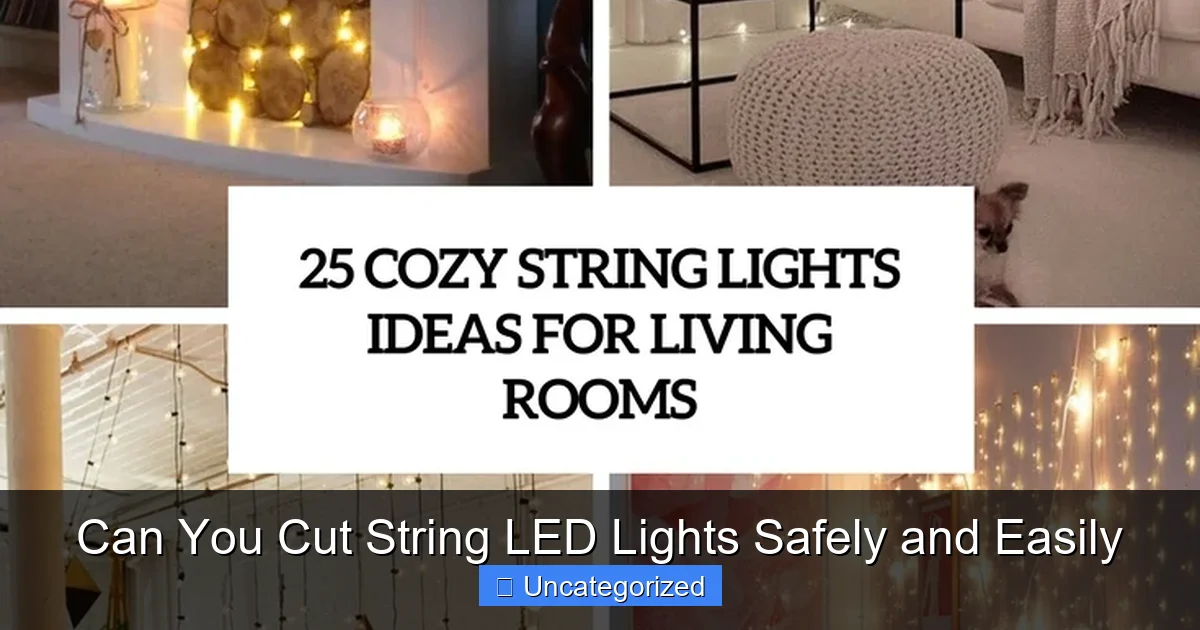
Visual guide about can you cut string led lights
Image source: digsdigs.com
- LED bulbs: Light-emitting diodes that produce light when an electric current passes through them. They are energy-efficient and long-lasting.
- Wiring: Copper or tinned copper wires that carry the electrical current. These are often insulated with PVC or silicone for safety and durability.
- Resistors: Small components that regulate the current to prevent LEDs from overheating or burning out.
- Connectors: Ends of the strand that may include male/female plugs, battery terminals, or USB connectors.
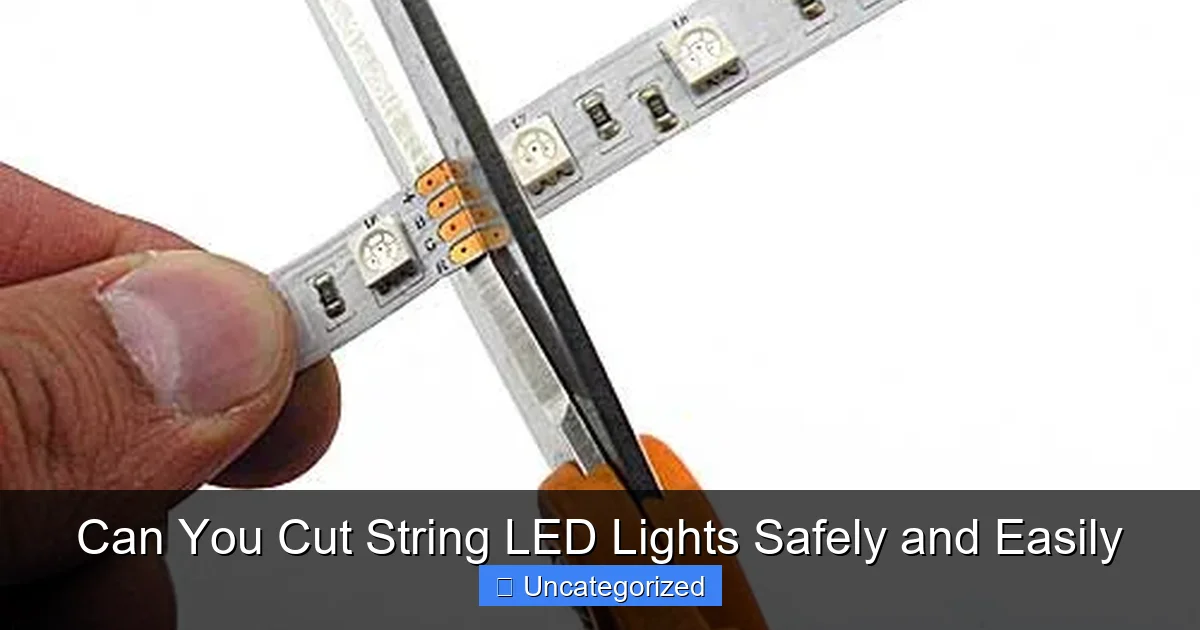
- Cut marks or solder points: Indicated by small scissor icons, dots, or lines on the wire where safe cutting is permitted.
These components are arranged in either a series or parallel circuit, which determines whether cutting the strand will affect the entire light set or just a section.
Series vs. Parallel Circuits: The Critical Difference
The circuit design is the most important factor in determining whether you can cut your LED string lights.
- Series circuit: In this configuration, all LEDs are connected in a single path. If one bulb or section is cut, the entire circuit breaks, and the remaining lights will not work. Most standard non-cuttable LED strings use series circuits.
- Parallel circuit: Each LED or group of LEDs has its own independent path. Cutting one section does not affect the others. Cuttable LED strings are designed with parallel circuits, often with resistors for each segment.
For example, a 50-foot LED string with 200 bulbs in series will go dark if you cut any part of the wire. In contrast, a parallel-configured string may have 10 segments of 20 LEDs each, allowing you to cut off unused segments without disrupting the rest.
Why Some LED Strings Are Labeled “Cuttable”
Manufacturers produce “cuttable” or “cut-to-size” LED string lights specifically for customization. These are engineered with:
- Clearly marked cutting points (usually every 6–12 inches or between segments).
- Internal parallel wiring with individual resistors per section.
- Reinforced solder joints at cut points to maintain conductivity after trimming.
- Waterproof or weather-resistant coatings (common in outdoor models).
These features ensure that cutting at designated points preserves the integrity of the remaining lights. Always check the packaging or product description for terms like “cuttable,” “modular,” “segmented,” or “customizable” before purchasing if you plan to trim them.
When Can You Cut String LED Lights? Key Safety Guidelines
Identifying Cuttable vs. Non-Cuttable LED Strings
Not all LED string lights are designed to be cut. Cutting the wrong type can lead to electrical hazards, fire risks, or permanent damage. Here’s how to tell the difference:
Visual guide about can you cut string led lights
Image source: chiuer.com
- Look for cut marks: Safe cutting points are usually indicated by:
- Scissor icons printed on the wire
- Small dots or lines between LEDs
- Notches or thinner wire sections
- Check the packaging or manual: Reputable brands will explicitly state if the lights are cuttable. Look for phrases like:
- “Cut to size at marked intervals”
- “Modular design for custom lengths”
- “Do not cut between segments”
- Test with a multimeter (advanced): If unsure, use a multimeter to check continuity. A drop in resistance or broken circuit after a cut indicates a series design—do not cut.
Example: The Philips Hue Lightstrip and GE Cuttable LED String Lights both feature visible cut marks and parallel circuits, making them safe to trim. In contrast, standard Christmas light strands from big-box stores are typically non-cuttable series circuits.
Electrical Safety Precautions
Even when cutting cuttable LED strings, follow these safety rules:
- Unplug the lights: Always disconnect from the power source before cutting. This prevents electric shock and short circuits.
- Use insulated tools: Choose wire cutters or scissors with insulated handles, especially for outdoor or wet-rated lights.
- Work on a dry surface: Avoid cutting near water or on wet surfaces to reduce shock risk.
- Inspect after cutting: Ensure no bare wires are exposed. Cover cut ends with electrical tape or silicone caps to prevent moisture ingress.
Never attempt to cut LED strings that are:
- Plugged into power
- Wet or damaged
- Without clear cut marks
- Labeled “non-cuttable” or “do not cut”
Common Mistakes to Avoid
Many DIYers make these errors when cutting LED strings:
- Cutting between marked points: Even on cuttable lights, cutting outside designated zones can sever critical wires or resistors.
- Using dull scissors: This can crush or fray wires, leading to poor connections. Always use sharp wire cutters.
- Ignoring polarity: Some cuttable lights have directional circuits (e.g., RGB color-changing strips). Cutting the wrong end may disable color control.
- Overloading the circuit: Removing too many segments can increase current to remaining LEDs, risking burnout. Follow manufacturer guidelines on maximum segment removal.
For instance, a 50-foot cuttable string may allow removal of up to 10 feet, but cutting 20 feet could strain the power supply. Always consult the manual for limits.
Step-by-Step Guide: How to Cut String LED Lights
Tools You’ll Need
Gather these tools before starting:
- Sharp wire cutters or precision scissors
- Electrical tape or silicone end caps (for sealing)
- Multimeter (optional, for testing)
- Measuring tape
- Marker or pen
- Safety gloves (recommended)
Pro tip: Use flush-cut wire cutters for clean, burr-free cuts that won’t damage insulation.
Measuring and Marking the Cut Point
- Unroll the entire strand and lay it flat on a clean, dry surface.
- Measure the desired length using a tape measure. Add 6–12 inches to account for connectors or mounting hardware.
- Locate the nearest cut mark beyond your measurement. For example, if you need 28 feet and the next cut mark is at 30 feet, cut there.
- Mark the wire with a pen or tape if the cut mark isn’t clearly visible.
Example: For a 20-foot patio, a 25-foot cuttable string with marks every 5 feet can be trimmed at the 25-foot mark, leaving 5 feet of excess to discard.
Making the Cut and Sealing the Ends
- Unplug the lights and double-check that no power is connected.
- Align the wire cutters with the cut mark. Position them perpendicular to the wire.
- Cut firmly and cleanly in one motion. Avoid sawing back and forth.
- Inspect the cut end: Look for exposed copper wires. If present, cover them immediately.
- Seal the end: Wrap electrical tape tightly around the cut point, or slide on a silicone end cap (included with some brands).
Sealing tips:
- For outdoor use, use heat-shrink tubing for a waterproof seal.
- For RGB color strips, ensure the data wire (if present) is also insulated.
- Label the cut end with “Do Not Connect” to avoid future mistakes.
Testing the Lights
After cutting:
- Plug in the remaining strand and check that all LEDs light up.
- Verify brightness and color: Ensure no sections are dim or flickering.
- Test the cut end: If using a multimeter, confirm no voltage leaks from the sealed end.
If lights don’t work, the cut may have damaged internal wiring. Try recutting 1–2 inches further along the strand.
Creative Uses for Cut String LED Lights
Custom Lighting for Home Decor
Cutting LED strings unlocks endless design possibilities:
- Window frames: Trim a strand to fit exactly around a window, creating a glowing border. Use adhesive clips to secure.
- Staircase lighting: Cut and install under steps for safety and ambiance. Choose IP65-rated outdoor strips for durability.
- Headboard accent: Create a geometric pattern behind a bed using multiple cut segments. Connect with extension cords.
- Mirror outlines: Frame a bathroom mirror with a cut-to-size strand for Hollywood-style lighting.
Pro tip: Use LED channels (aluminum tracks with diffuser covers) to hide wires and create a professional finish.
Event and Party Lighting
Custom-cut LED strings are perfect for events:
- Wedding arches: Cut strands to match the arch’s curves. Attach with floral wire or zip ties.
- Table centerpieces: Wrap cut strands around glass vases or bottles for a floating light effect.
- Photo backdrops: Create a starry sky effect by cutting and spacing lights evenly on fabric or mesh.
- Dance floor outlines: Mark dance areas with cut LED strips embedded in clear tape.
For battery-operated strings, cutting allows you to place lights in areas without outlets—ideal for outdoor events.
Outdoor and Garden Applications
Weather-resistant cuttable LEDs enhance outdoor spaces:
- Fence lighting: Cut strands to fit between fence posts. Use waterproof connectors.
- Tree trunks: Wrap cut segments around tree bases (avoid cutting into bark).
- Patio umbrellas: Attach cut strands to umbrella ribs for ambient lighting.
- Garden paths: Embed cut strips in concrete or gravel for safe nighttime walking.
Always use IP67-rated (waterproof) strings outdoors and seal all cut ends with silicone.
Data Table: Cuttable vs. Non-Cuttable LED String Lights
| Feature | Cuttable LED Strings | Non-Cuttable LED Strings |
|---|---|---|
| Circuit Type | Parallel (independent segments) | Series (single circuit) |
| Cut Marks | Visible scissor icons, dots, or notches | No visible cut points |
| Resistors | Per segment or group | One per entire strand |
| Cutting Impact | Only affects removed segment | Entire strand stops working |
| Sealing Required | Yes (tape, caps, or heat shrink) | Not applicable |
| Typical Use Cases | Custom decor, events, outdoor | Pre-sized installations, Christmas trees |
| Example Brands | Philips Hue, GE, LIFX, Sylvania | Standard holiday lights, IKEA LED strings |
| Price Range (per 16 ft) | $15–$40 | $5–$15 |
Conclusion: Cutting LED Strings Safely and Smartly
Cutting string LED lights is not only possible but a powerful way to personalize your lighting design—if you choose the right product and follow safety protocols. By understanding the difference between series and parallel circuits, identifying cuttable models, and using proper tools, you can trim LED strings to fit any space without sacrificing safety or performance. Whether you’re enhancing your living room, lighting a wedding venue, or illuminating a garden path, the ability to cut and customize opens up a world of creative possibilities.
Remember: Always prioritize safety. Unplug before cutting, seal exposed ends, and test the remaining lights. Avoid cutting non-cuttable strands, even if they seem convenient—the risk of fire or electrical damage is never worth the shortcut. With cuttable LED strings, the power to design your perfect lighting setup is literally in your hands. Measure carefully, cut precisely, and enjoy the glow of a job well done. From cozy indoor accents to dazzling outdoor displays, your customized LED lights will shine brighter and last longer when installed with care and knowledge.
Frequently Asked Questions
Can you cut string LED lights without damaging them?
Yes, you can cut string LED lights safely if they’re designed for it. Look for “cuttable” or “cut-to-size” labels on the packaging, and always cut at the marked points to avoid damaging the circuit.
Where should you cut string LED lights?
Most cuttable string LED lights have marked cutting points, usually near solder pads or connectors. Use sharp scissors or wire cutters at these spots to maintain functionality and ensure a clean connection.
Can you cut string LED lights and still use the remaining portion?
Absolutely! As long as you cut at the designated marks and properly insulate the cut end, the remaining portion will continue to work. Some users even reconnect segments using soldering or connectors.
Do all string LED lights support cutting?
No, not all string LED lights are designed to be cut. Always check the product specifications for “cuttable” features. Non-cuttable lights may short-circuit or fail if tampered with.
What tools do you need to cut string LED lights?
You’ll need sharp scissors, wire cutters, or a craft knife to cleanly cut the wires at marked points. For reconnecting segments, soldering tools or waterproof connectors may also be necessary.
Can you cut string LED lights to fit a specific space?
Yes, that’s one of the key benefits of cuttable string LED lights. Customize the length to fit shelves, frames, or decor, ensuring a seamless look for your lighting project.