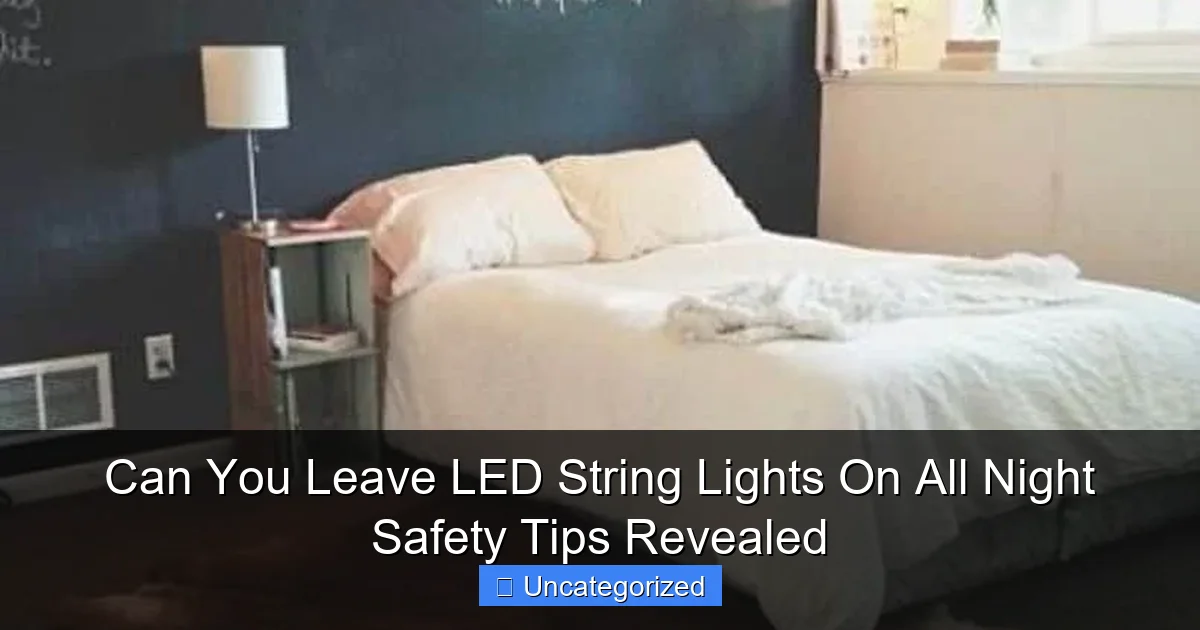
Featured image for can you leave led string lights on all night safety
Image source: cdn.diys.com
Yes, you can leave LED string lights on all night—they generate minimal heat and consume low energy, making them far safer than traditional incandescent lights. Always ensure they’re certified, in good condition, and used as directed to eliminate fire risks and maximize safety during extended use.
Key Takeaways
- LEDs stay cool: Safer for all-night use than incandescent bulbs.
- Check certifications: Use only UL or ETL-listed string lights.
- Inspect regularly: Replace frayed wires or damaged sockets immediately.
- Use timers: Automate shut-off to reduce fire risk and save energy.
- Avoid overloading circuits: Limit total wattage to prevent overheating.
- Keep away from flammables: Maintain safe distance from fabrics or paper.
📑 Table of Contents
- Can You Leave LED String Lights On All Night Safety Tips Revealed
- Understanding LED Technology and Why It’s Safer for Overnight Use
- Potential Risks of Leaving LED String Lights On All Night
- Best Practices for Safe Overnight LED String Light Use
- Indoor vs. Outdoor Use: Key Differences and Safety Considerations
- Data and Statistics: What the Numbers Say About LED Light Safety
- Conclusion: Enjoy Your LED Lights Safely, All Night Long
Can You Leave LED String Lights On All Night Safety Tips Revealed
LED string lights have become a staple in modern home decor, offering a warm, inviting ambiance for both indoor and outdoor spaces. From twinkling fairy lights adorning bedroom headboards to elegant strands wrapped around backyard pergolas, these versatile lighting solutions are beloved for their energy efficiency, longevity, and aesthetic appeal. Yet, as their popularity grows, so do questions about their safety—particularly regarding leaving them on overnight. Whether you’re using them for a cozy bedroom glow, holiday decorations, or ambient patio lighting, understanding the risks and best practices is essential.
Many homeowners wonder, “Can you leave LED string lights on all night safely?” The short answer is: yes, in most cases, but with important caveats. Unlike traditional incandescent lights, LEDs generate far less heat, consume less electricity, and are generally more durable. However, safety isn’t just about the technology—it’s also about installation, usage habits, and environmental factors. This comprehensive guide dives into the science, risks, and practical safety tips to help you enjoy your LED string lights with peace of mind, even during the longest nights.
Understanding LED Technology and Why It’s Safer for Overnight Use
To fully appreciate why LED string lights are often considered safe for extended use, it’s crucial to understand how they work and how they differ from older lighting technologies.
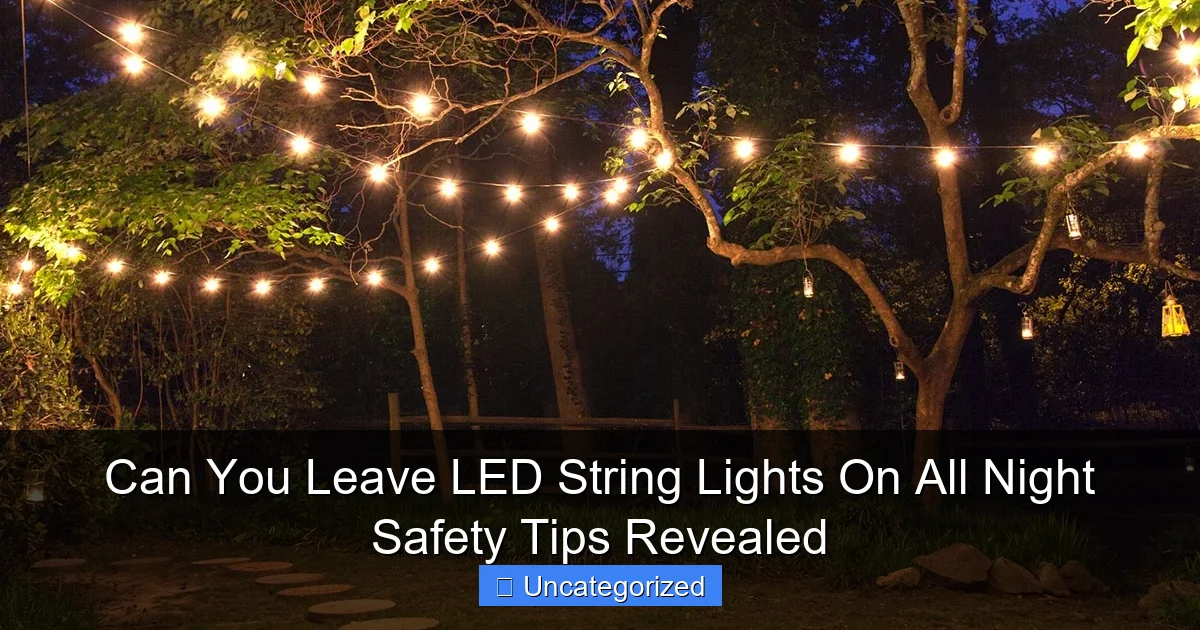
Visual guide about can you leave led string lights on all night safety
Image source: christmaslightsetc.com
How LEDs Differ from Incandescent and CFL Lights
LEDs, or light-emitting diodes, produce light through electroluminescence—a process where electrons recombine with electron holes within a semiconductor, releasing energy in the form of photons (light). This method is vastly more efficient than the heat-based lighting used in incandescent bulbs. For example:
- Heat Output: Incandescent bulbs can reach temperatures of 200–300°F (93–149°C), posing a fire risk if near flammable materials. In contrast, LEDs typically operate between 85–105°F (30–40°C), even after hours of use.
- Energy Consumption: A standard 60-watt incandescent bulb can be replaced by a 6–8 watt LED, reducing energy use by up to 90%. This lower wattage means less strain on circuits and lower heat generation.
- Lifespan: LEDs last 25,000 to 50,000 hours—up to 50 times longer than incandescent bulbs. This durability reduces the need for frequent replacements and minimizes wear-related risks.
Because of these characteristics, LEDs are inherently safer for long-term use. However, it’s important to note that not all LEDs are created equal. The safety of leaving them on all night depends on quality, design, and usage context.
Thermal Management in LED String Lights
Even though LEDs run cool, they still generate some heat—especially when densely packed. Reputable manufacturers include thermal management features such as:
- Aluminum heat sinks in bulb sockets
- Ventilated wire coatings
- Smart drivers that regulate current and prevent overheating
For example, a high-quality outdoor LED string light from brands like Philips Hue or GE uses a silicone-sealed bulb design and a temperature-regulating power supply. These features ensure that even if the lights are left on for 12+ hours, the temperature remains within safe limits. Cheaper, off-brand lights may lack these safeguards, increasing the risk of overheating or short circuits.
Potential Risks of Leaving LED String Lights On All Night
While LED string lights are safer than traditional options, they are not risk-free. Leaving them on all night can introduce several hazards if proper precautions aren’t followed.
Visual guide about can you leave led string lights on all night safety
Image source: img.einnews.com
Overheating and Fire Hazards
Although LEDs run cool, overheating can still occur under certain conditions. Risk factors include:
- Damaged or frayed wires: Exposed copper can cause short circuits, leading to sparks or localized overheating.
- Overloaded circuits: Connecting too many string lights (e.g., 50+ feet) to a single outlet can exceed the circuit’s capacity, especially if other appliances are running.
- Poor ventilation: Wrapping lights tightly around plastic, fabric, or foam can trap heat and cause materials to degrade or ignite over time.
For instance, a 2021 Consumer Product Safety Commission (CPSC) report noted that 12% of holiday lighting incidents involved overheating, with half linked to improper installation or damaged cords. While rare, these cases underscore the need for vigilance.
Electrical Malfunctions and Short Circuits
LED string lights are powered by low-voltage transformers (often 12V or 24V), which reduce the risk of electric shock. However, water damage, poor insulation, or manufacturing defects can still lead to:
- Short circuits in the wiring
- Transformer overheating
- Ground faults (especially in outdoor settings)
<
An example: A user in Florida left outdoor LED lights on during a thunderstorm. Rainwater seeped into the plug connection, causing a short that tripped the breaker. While the breaker prevented a fire, the incident highlights the importance of weatherproofing.
UV and Blue Light Exposure (Lesser-Known Risk)
Some LED lights emit higher levels of blue light, which can disrupt melatonin production and affect sleep quality. While this isn’t a fire risk, it’s a health consideration for those using LED lights in bedrooms. Studies suggest that exposure to blue light before bedtime can delay sleep onset by up to 30 minutes.
Tip: Use warm-white LEDs (2700K–3000K color temperature) in sleeping areas and avoid cool-white or daylight (5000K+) bulbs for overnight use.
Best Practices for Safe Overnight LED String Light Use
With the right approach, you can safely enjoy LED string lights all night long. Follow these evidence-based best practices to minimize risks and maximize enjoyment.
Choose High-Quality, Certified LED Lights
Always opt for LED string lights that meet safety standards. Look for certifications such as:
- UL (Underwriters Laboratories) – Ensures compliance with North American safety codes
- ETL (Intertek) – Similar to UL, with rigorous testing
- CE (Conformité Européenne) – For European markets
- RoHS (Restriction of Hazardous Substances) – Ensures no lead, mercury, or other toxins
Example: The Twinkle Star 66-Foot LED String Lights are UL-listed, use 12V low-voltage transformers, and feature waterproof connectors—ideal for outdoor use.
Use Timers and Smart Plugs
Instead of leaving lights on all night, use a timer or smart plug to automate shutdown. This reduces energy use, extends bulb life, and minimizes risk.
- Mechanical timers: Affordable and easy to use. Set for 4–8 hours (e.g., 8 PM to 2 AM).
- Smart plugs (e.g., TP-Link Kasa, Wemo): Allow remote control via smartphone. Schedule lights to turn off at bedtime or sunrise.
Pro Tip: Pair smart plugs with motion sensors to turn lights off automatically when no one is in the room.
Inspect and Maintain Regularly
Perform monthly checks to ensure your lights are in good condition:
- Unplug and examine cords for fraying, cracks, or kinks.
- Check bulbs for dark spots or flickering (signs of failing LEDs).
- Test the transformer for unusual warmth or buzzing sounds.
- Clean dust and debris from sockets and wires.
A user in Colorado discovered a frayed wire during a routine inspection. Replacing the strand prevented a potential short circuit during a winter storm.
Install with Safety in Mind
Proper installation is key to preventing hazards:
- Use clips or hooks instead of nails or staples to avoid damaging wires.
- Keep lights at least 12 inches from flammable materials (curtains, bedding, dry leaves).
- For outdoor use, ensure all connections are in waterproof enclosures (e.g., outdoor-rated junction boxes).
- Never daisy-chain more than the manufacturer’s recommended number of strands (usually 2–5).
Example: A 25-foot indoor LED strand from Luminoodle specifies a maximum of 3 strands connected end-to-end. Exceeding this can overload the first transformer.
Indoor vs. Outdoor Use: Key Differences and Safety Considerations
The safety rules for LED string lights vary significantly between indoor and outdoor environments. Understanding these differences is crucial for safe overnight use.
Indoor LED String Lights: Cozy but Cautious
Indoor use is generally safer due to stable temperatures and protection from the elements. However, unique risks exist:
- Fire risk near fabrics: Draping lights over a bed canopy or curtains can be dangerous if the fabric is synthetic (e.g., polyester), which melts at lower temperatures.
- Pet and child safety: Chewing or pulling on cords can damage insulation or cause shocks.
- Humidity: Bathrooms and kitchens may require moisture-resistant lights (look for IP44 rating).
Best Practice: Use battery-powered LED lights in bedrooms for maximum safety. Brands like Brightown offer rechargeable, remote-controlled options.
Outdoor LED String Lights: Weatherproofing is Essential
Outdoor lights face harsher conditions, requiring extra precautions:
- Waterproofing: Use lights with an IP65 or higher rating (dust-tight and protected against water jets).
- Temperature fluctuations: Extreme cold can make wires brittle; heat can degrade plastic coatings. Choose lights rated for -20°F to 140°F.
- UV resistance: Sunlight can fade plastic and weaken wires. Look for UV-stabilized materials.
- Ground fault protection: Always use a GFCI (Ground Fault Circuit Interrupter) outlet or adapter to prevent shocks.
Example: A homeowner in Minnesota left outdoor LED lights on during a blizzard. The lights were IP67-rated and connected to a GFCI outlet—no issues occurred despite sub-zero temperatures.
Special Considerations for Holiday Decorations
During holidays, people often use more lights for longer periods. Follow these tips:
- Use LED net lights or icicle lights with built-in timers.
- Limit outdoor displays to 6–8 hours per night.
- Turn off lights during storms or high winds.
- Store lights properly in a cool, dry place when not in use.
Data and Statistics: What the Numbers Say About LED Light Safety
Let’s look at the data to put LED string light risks into perspective.
| Factor | LED String Lights | Incandescent String Lights |
|---|---|---|
| Average Surface Temperature (after 12 hours) | 95°F (35°C) | 212°F (100°C) |
| Energy Consumption (per 50 ft strand) | 10–20 watts | 100–200 watts |
| Fire Incidents (annual, U.S.) | Approx. 150 | Approx. 1,200 |
| Average Lifespan | 25,000–50,000 hours | 1,000–2,000 hours |
| Cost per 1,000 Hours (electricity) | $0.12–$0.24 | $1.20–$2.40 |
| Waterproof Ratings (IP) | IP65 to IP68 (common) | IP44 (rarely higher) |
Source: U.S. Consumer Product Safety Commission (CPSC), Energy Star, and National Fire Protection Association (NFPA) reports (2020–2023).
As the table shows, LED string lights are 8 times less likely to cause fires than incandescent equivalents. Their lower heat output and energy use make them a safer choice for extended use. However, the 150 annual incidents still highlight the need for responsible usage.
Conclusion: Enjoy Your LED Lights Safely, All Night Long
So, can you leave LED string lights on all night? The answer is a resounding yes—but only if you follow safety best practices. Thanks to their low heat output, energy efficiency, and long lifespan, LED string lights are among the safest decorative lighting options available. However, no technology is 100% risk-free. Damaged cords, overloaded circuits, poor installation, and environmental factors can still pose hazards.
To enjoy your lights safely overnight:
- Choose high-quality, certified LED products
- Use timers or smart plugs to automate shutdown
- Inspect and maintain lights regularly
- Install with safety in mind—especially regarding distance from flammable materials
- For outdoor use, prioritize waterproofing and GFCI protection
By combining modern LED technology with smart habits, you can create a magical, cozy, or festive atmosphere without compromising safety. Whether it’s a string of fairy lights over your bed, a glowing patio canopy, or holiday decorations twinkling in the yard, you can rest easy knowing your lights are both beautiful and safe.
Remember: Safety isn’t just about the lights—it’s about how you use them. With the tips revealed in this guide, your LED string lights can illuminate your nights for years to come, one safe, sparkling moment at a time.
Frequently Asked Questions
Can you leave LED string lights on all night without risking a fire hazard?
Yes, LED string lights are generally safe to leave on all night because they emit very little heat compared to incandescent bulbs. However, always ensure they’re certified by safety organizations like UL or ETL to minimize risks.
Are LED string lights safer than traditional lights for overnight use?
Absolutely. LED string lights consume less energy, generate minimal heat, and are less likely to overheat, making them a safer choice for leaving on all night than incandescent or halogen alternatives.
What safety features should I look for in LED string lights for continuous use?
Look for features like low-voltage operation, built-in timers, and certifications (e.g., UL, CE). These ensure the lights meet safety standards and reduce risks when left on all night.
Can leaving LED string lights on all night damage the bulbs or wiring?
High-quality LED lights are designed for long-term use and won’t degrade quickly. However, cheap or damaged wiring can pose risks, so inspect lights regularly and replace frayed cords immediately.
Do LED string lights overheat if left on for 8+ hours?
LEDs rarely overheat due to their energy efficiency and low heat output. Still, avoid covering them with flammable materials or running them in enclosed spaces to maintain safety.
Is it safe to leave outdoor LED string lights on all night?
Yes, if they’re rated for outdoor use (IP65 or higher). These are weather-resistant and safe for overnight lighting, but always plug them into a GFCI outlet for added protection.