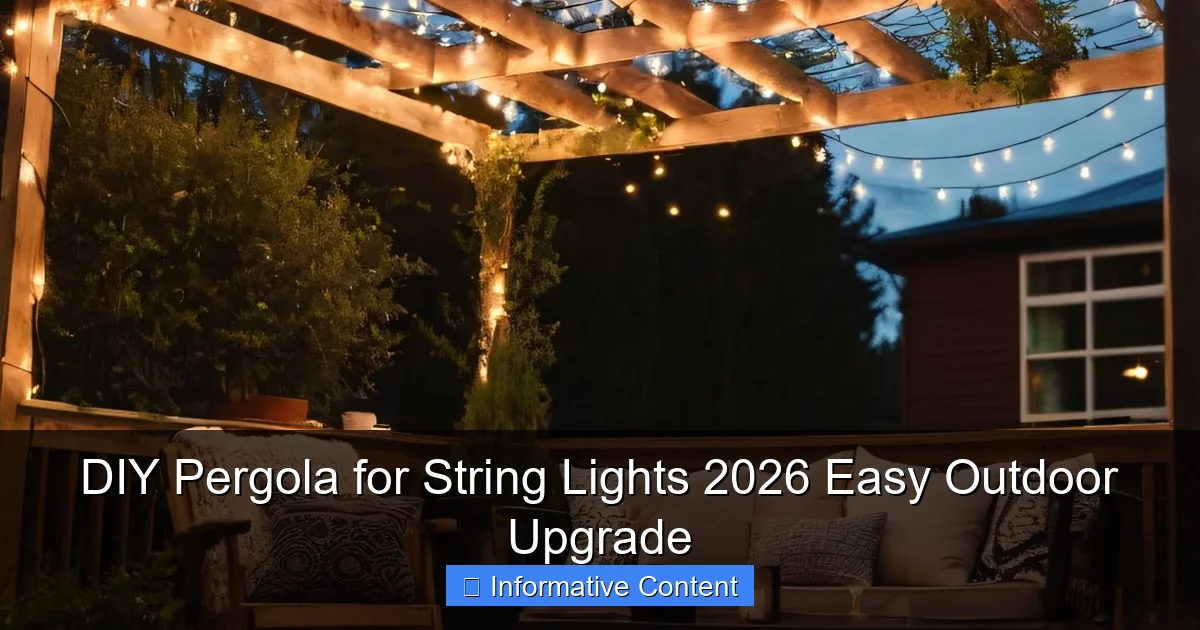
Featured image for diy pergola for string lights
Image source: publicdomainpictures.net
Transform your backyard into a magical evening retreat with a DIY pergola for string lights—simple, stylish, and surprisingly affordable. This easy 2026 outdoor upgrade requires basic tools and materials, yet delivers high-impact ambiance perfect for entertaining or relaxing under the stars. With step-by-step guidance and customizable designs, you can build a sturdy, weather-resistant pergola that elevates your space and showcases your lighting in just one weekend.
Key Takeaways
- Plan carefully: Measure your space and sketch a design before buying materials.
- Choose weather-resistant wood: Use cedar or pressure-treated lumber for durability.
- Install secure footings: Anchor posts with concrete to withstand wind and weight.
- Space beams evenly: Maintain 12–16 inch gaps for optimal string light support.
- Use outdoor-rated lights: Ensure lights are UL-listed for wet locations.
- Add a roof lattice: Cross beams provide extra hanging points for lights.
📑 Table of Contents
- Why a DIY Pergola for String Lights Is the Perfect Outdoor Upgrade
- Why Build a DIY Pergola for String Lights?
- Planning Your DIY Pergola: Size, Style, and Placement
- Materials and Tools You’ll Need (With Budget Tips)
- Step-by-Step Build Guide (Weekend-Friendly)
- Finishing Touches and Maintenance Tips
- Final Thoughts: Your 2026 Outdoor Oasis Awaits
Why a DIY Pergola for String Lights Is the Perfect Outdoor Upgrade
Remember that summer night when you sat outside, wrapped in a blanket, watching the stars while soft light from string lights flickered above? There’s something magical about that moment—the gentle hum of crickets, the warmth of the evening air, and the cozy glow turning your backyard into a personal retreat. If you’ve ever wanted to recreate that feeling, a DIY pergola for string lights might be the answer you’ve been looking for.
This simple outdoor project doesn’t just add beauty—it transforms your space into a functional, inviting area for relaxation, entertaining, or even working from home. Whether you’re sipping coffee at sunrise or hosting a backyard movie night, the right pergola with string lights creates ambiance and comfort. And the best part? You don’t need to be a master carpenter to build one. With a few materials, some weekend time, and a little creativity, you can craft a custom pergola that fits your style and budget. In this guide, I’ll walk you through everything you need to know—from planning and design to installation and finishing touches—so you can enjoy your dream outdoor space by 2026.
Why Build a DIY Pergola for String Lights?
Let’s be honest: outdoor living is having a moment. More people are investing in their backyards than ever before. According to a 2023 National Association of Home Builders report, outdoor living features are now among the top 10 most desirable home upgrades. And a DIY pergola for string lights checks all the boxes—it’s affordable, customizable, and instantly upgrades your outdoor experience.
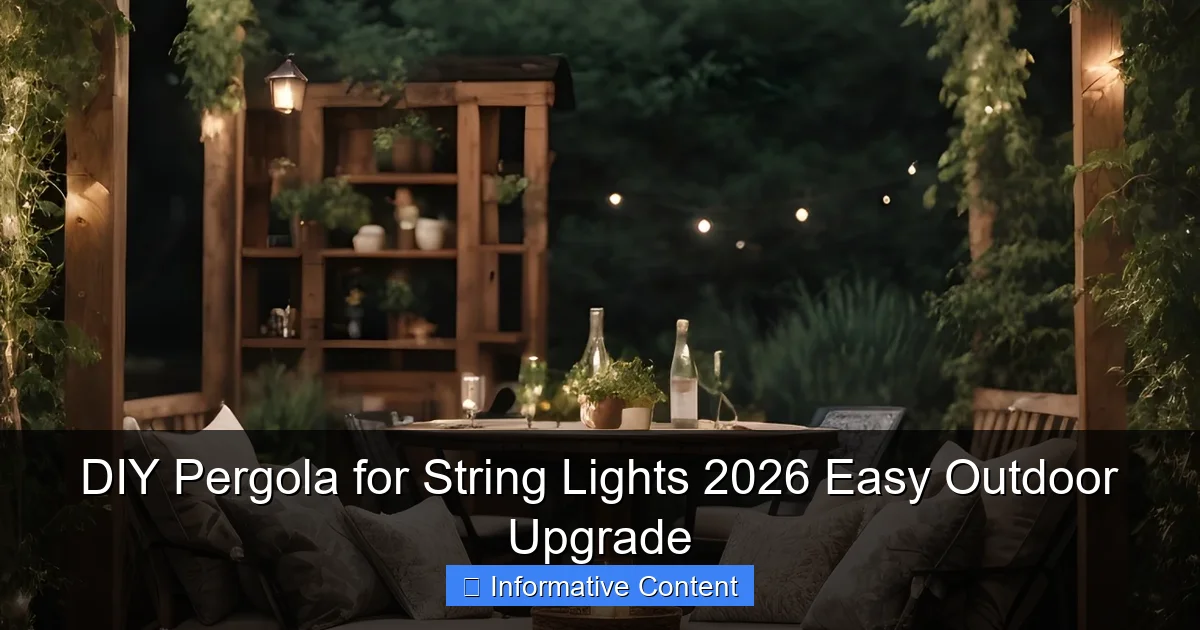
Visual guide about diy pergola for string lights
Image source: publicdomainpictures.net
Benefits That Go Beyond Aesthetics
Sure, a pergola looks great, but its real value lies in how it improves your lifestyle. Here’s why so many homeowners are choosing this upgrade:
- Creates a defined space: A pergola acts like an outdoor room, giving structure to your patio or lawn. It’s perfect for placing a dining table, lounge chairs, or even a hot tub.
- Supports string lights beautifully: Unlike trees or fences, pergolas offer a stable, level surface for hanging lights without sagging or uneven spacing.
- Adds shade and shelter: While it doesn’t fully block rain, a pergola with optional shade cloth or retractable canopy can reduce direct sunlight and keep your space usable longer.
- Increases home value: A well-built pergola can boost your home’s curb appeal and resale value—especially if it’s integrated with lighting and greenery.
- Encourages outdoor time: When your backyard feels like an extension of your home, you’re more likely to use it. And let’s face it—time outside is good for the soul.
One friend of mine, Sarah, built a simple pergola over her patio in just two weekends. “I used to only use my backyard in summer,” she told me. “Now, with the string lights and a small heater, I’m out there year-round. It’s my happy place.”
Why DIY Makes Sense
You could hire a contractor, sure. But building your own pergola gives you full control—over cost, design, materials, and timeline. A pre-fab kit might run $800–$1,500, but a custom DIY version can cost as little as $200–$400, depending on size and materials.
Plus, there’s a real sense of pride in creating something with your own hands. I remember the first time I drove the final screw into my pergola beam. I stood back, looked at it, and thought, “I did that.” It felt like more than just a structure—it was a milestone.
And let’s not forget: a DIY pergola for string lights is a project you can tackle in stages. No need to rush. Start with the frame, then add lights, then maybe a shade cover. It’s flexible, forgiving, and fun.
Planning Your DIY Pergola: Size, Style, and Placement
Before you grab a saw or hammer, take a breath. Planning is where most DIY projects either succeed or stall. A little time upfront saves headaches later—especially when it comes to lighting, stability, and how you’ll use the space.
Choose the Right Location
Start by asking: *Where do I want to spend time outdoors?* Common spots include:
- Over a patio or deck
- Beside a pool or hot tub
- Near the back door for easy access
- In a garden nook for a secluded vibe
Make sure the area has:
- Good drainage (no puddles after rain)
- Level ground or a surface you can level
- Access to an outdoor power outlet (for string lights or outlets)
Pro tip: Use painter’s tape to mark the perimeter on the ground. Stand inside it. Walk around. Imagine placing furniture. Does it feel too small? Too big? Adjust before cutting a single board.
Pick a Size That Fits
Most residential pergolas are between 8×8 feet and 12×16 feet. Here’s a quick guide:
- 8×8 ft: Ideal for a bistro table or small seating area. Great for tight spaces.
- 10×10 ft: Fits a 4–6 person dining set. A popular middle ground.
- 12×12 ft or larger: Room for a full outdoor living area—sofa, coffee table, maybe even a fire pit.
Remember: The size affects how many lights you’ll need and how much material you’ll use. A larger pergola means more support beams and possibly concrete footings (more on that later).
Select a Style That Matches Your Home
Your pergola should feel like it belongs. Consider these styles:
- Modern: Clean lines, square beams, black or gray stain. Pairs well with sleek furniture and minimalist decor.
- Rustic: Rough-sawn wood, natural finish, exposed joinery. Feels cozy and organic.
- Farmhouse: White or light-colored wood, simple design, often with a gable roof or crossbeams.
- Industrial: Steel or aluminum frame with wood slats. Great for urban backyards.
For string lights, I recommend a design with a solid top beam (or rafters) that run across the width. This gives you a consistent surface to attach lights—no gaps or awkward angles.
Check Local Rules and Permits
This one’s easy to skip, but don’t. Some cities or HOAs require permits for structures over 120 sq. ft. or within a certain distance from property lines. Call your local building department—they’re usually happy to help. A quick call now avoids fines or having to dismantle your pergola later.
Materials and Tools You’ll Need (With Budget Tips)
One of the best things about a DIY pergola for string lights is that you can build it with basic materials and tools. No need for expensive equipment or rare lumber. Here’s what you’ll need—and how to keep costs low.
Core Materials
- Posts: 4×4 pressure-treated wood (for ground contact) or cedar (for rot resistance and beauty). Use 8-ft lengths for standard 7-ft height.
- Beams and Rafters: 2×6 or 2×8 boards. Pressure-treated or cedar. Rafters run across the top to support lights.
- Crossbeams (optional): 2x4s or 1x4s to add texture and extra light-hanging points.
- Concrete: For footings if setting posts in ground. Use quick-setting bags or mix your own.
- Fasteners: Galvanized or stainless steel screws, post anchors, and joist hangers. Avoid nails—they can loosen over time.
- String lights: Choose outdoor-rated, LED, and with a warm white glow (2700K–3000K). I like globe lights or Edison-style bulbs for a classic look.
Essential Tools
- Circular saw or miter saw
- Drill/driver with wood bits
- Level (4-ft is ideal)
- Tape measure
- Post hole digger (or power auger)
- Shovel
- Safety gear (gloves, goggles, ear protection)
Budget-Friendly Tips
You don’t have to spend a fortune. Here’s how to save:
- Buy lumber in bulk: Home improvement stores often offer discounts for larger purchases. Split the cost with a neighbor or friend.
- Use pressure-treated wood: It’s cheaper than cedar and lasts 15–20 years with proper care.
- Skip the kit: Pre-made pergola kits are convenient but overpriced. Build your own frame for 40–60% less.
- Buy lights on sale: Wait for end-of-summer clearance or check Amazon during Black Friday. I got my string lights for 50% off in September.
- Rent tools: Need a post hole digger or miter saw? Rent for a day instead of buying.
My first pergola cost about $320 in materials. I used pressure-treated wood, borrowed a saw, and bought lights during a holiday sale. It’s still standing strong after 3 years—and I saved over $1,000 compared to a kit.
Material Comparison Table
| Material | Cost (per 8-ft board) | Lifespan | Best For | Light Hanging Suitability |
|---|---|---|---|---|
| Pressure-Treated Pine | $12–$18 | 15–20 years | Ground-contact posts, beams | Excellent (strong, flat surface) |
| Cedar | $25–$35 | 20–25 years | Visible beams, decorative rafters | Excellent (natural beauty, easy to drill) |
| Composite (e.g., Trex) | $40–$60 | 25+ years | Low-maintenance projects | Good (but may require special fasteners) |
| Steel/Aluminum Frame | $100–$200 (kit) | 20–30 years | Modern, sleek designs | Good (use clips or adhesive hooks) |
For a DIY pergola for string lights, I recommend starting with pressure-treated pine for the structure and adding cedar rafters if you want a nicer look. It’s the best balance of cost and quality.
Step-by-Step Build Guide (Weekend-Friendly)
Ready to build? This guide breaks the process into simple, manageable steps. I’ll assume a 10×10 ft pergola with four posts, two beams, and six rafters. Adjust as needed for your size.
Step 1: Mark and Dig Post Holes
- Use stakes and string to mark the four corners. Measure diagonals—they should be equal (to ensure it’s square).
- Dig holes 24–30 inches deep (below frost line if you’re in a cold climate). Make them 8–10 inches wide.
- Add 2–3 inches of gravel to the bottom for drainage.
Tip: Use a laser level or string line to keep posts aligned.
Step 2: Set the Posts
- Place a 4×4 post in each hole.
- Use a level to ensure it’s plumb (perfectly vertical). Brace with temporary 2x4s.
- Pour concrete into the hole. Let it cure for 24–48 hours.
Alternative: Use metal post anchors if you’re attaching to a deck or concrete patio.
Step 3: Install the Beams
- Cut two 2×8 beams to span between posts (e.g., 10 ft).
- Use joist hangers or ledger boards to attach beams to the posts. Secure with 3.5-inch screws.
- Double-check level and alignment.
Step 4: Add Rafters
- Cut 2×6 rafters to the width (e.g., 10 ft).
- Space them 16–24 inches apart across the beams.
- Secure with joist hangers or direct screwing.
For extra light-hanging points, add 1×4 crossbeams every 2–3 feet across the rafters.
Step 5: Sand and Stain (Optional)
- Sand any rough edges.
- Apply outdoor wood sealant or stain. I use a semi-transparent cedar tone—it protects the wood and looks great.
- Let dry for 24 hours.
Step 6: Hang the String Lights
- Use outdoor-rated hooks, eye screws, or zip ties to attach lights to rafters.
- Start at the power source and work outward. Use clips or adhesive mounts to keep lights straight.
- For a draped look, hang lights in a zigzag or crisscross pattern between rafters.
- Plug into a GFCI-protected outlet. Consider a timer or smart plug for automatic on/off.
Pro tip: Test lights before fully securing them. Nothing’s worse than finding a dead strand after you’ve nailed them in place.
Finishing Touches and Maintenance Tips
You’ve built it. The lights are glowing. Now, let’s make it last—and look even better.
Add Shade and Privacy
- Shade sail: A triangular or rectangular sail blocks 70–90% of UV rays. Easy to install with grommets.
- Retractable canopy: Motorized or manual—great for variable weather.
- Vines and plants: Train climbing plants like wisteria, jasmine, or grapevines over the rafters. Adds greenery and softness.
- Curtains: Hang outdoor fabric curtains on the sides for privacy and wind protection.
I added a shade sail last year. It cut the heat by at least 10 degrees and made the space usable even at noon.
Lighting Ideas Beyond String Lights
- Path lights: Line the walkway to the pergola.
- Fairy lights in mason jars: Hang from rafters for a whimsical touch.
- LED strip lights: Attach under beams for ambient uplighting.
- Solar lanterns: Place on tables or hang from crossbeams.
Mix and match—just avoid overdoing it. You want cozy, not carnival.
Maintenance to Keep It Looking Great
- Inspect annually: Check for loose screws, cracked wood, or rust on fasteners.
- Clean every 6 months: Use a mild soap and water to remove dirt, pollen, or bird droppings.
- Re-stain every 2–3 years: Especially if you used cedar or pine.
- Trim vines regularly: Prevents them from weighing down rafters.
- Store lights in winter (if needed): Some LED lights last longer if brought indoors.
One friend ignored her pergola for two years. By year three, the wood was warped and the lights were tangled. A few hours of care could have saved it. Don’t let that be you.
Final Thoughts: Your 2026 Outdoor Oasis Awaits
Building a DIY pergola for string lights isn’t just about adding a structure to your backyard—it’s about creating a space where memories are made. It’s where you’ll share meals with friends, read books on summer nights, and watch the stars with your kids. It’s where the ordinary becomes magical, one glowing light at a time.
You don’t need perfection. You don’t need expensive tools or years of experience. You just need a weekend, some basic materials, and the courage to start. Every cut, every screw, every string of lights is a step toward a backyard you love.
As you stand under your finished pergola, lights twinkling above, I hope you feel the same pride I did—the quiet joy of building something that brings beauty, comfort, and connection to your life. And when guests say, “This is amazing—did you hire someone?” you can smile and say, “Nope. I built it myself.”
So grab your tape measure, pick a sunny weekend, and get started. Your 2026 outdoor upgrade is closer than you think. The lights are waiting.
Frequently Asked Questions
How do I build a DIY pergola for string lights without professional help?
You can build a simple DIY pergola for string lights using basic tools, pressure-treated wood or metal posts, and pre-made brackets. Follow a step-by-step plan to ensure proper spacing and secure mounting for the lights.
What materials are best for a DIY pergola for string lights?
Pressure-treated lumber, cedar, or powder-coated metal are ideal for durability and weather resistance. Use galvanized or stainless steel hardware to prevent rust when installing string lights.
Can I install string lights on an existing pergola?
Yes, you can easily add string lights to an existing pergola using hooks, zip ties, or wire rope. Ensure the structure can support the weight and that lights are spaced evenly for a balanced look.
How do I ensure my DIY pergola is safe for outdoor string lights?
Use weatherproof, outdoor-rated string lights and secure all electrical connections with waterproof covers. Ground the pergola structure if using metal posts to prevent electrical hazards.
What’s the ideal spacing for posts in a DIY pergola for string lights?
Space posts 6–8 feet apart for optimal support and even light distribution. Adjust based on your pergola size and the weight of the lights you plan to hang.
Are solar-powered string lights a good fit for a DIY pergola?
Solar-powered string lights are energy-efficient and easy to install on a DIY pergola since they don’t require outlets. Just ensure the solar panel gets direct sunlight during the day.