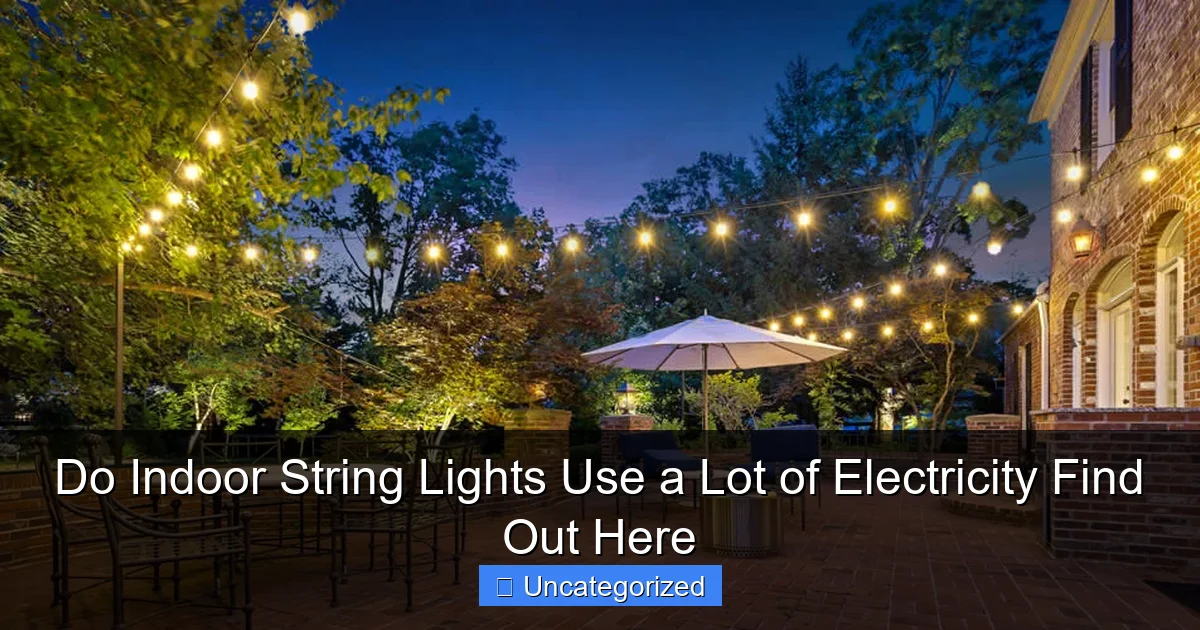
Featured image for do indoor string lights use a lot of electricity
Image source: outdoorlights.com
Indoor string lights are surprisingly energy-efficient, especially when using modern LED bulbs, which consume up to 80% less electricity than traditional incandescent options. Running a typical 20-foot LED string uses less than 10 watts per hour, making them a cost-effective way to add ambiance without spiking your energy bill.
Key Takeaways
- LED string lights use up to 80% less energy than incandescent ones.
- Check wattage ratings to estimate electricity use and costs accurately.
- Use timers or smart plugs to limit runtime and reduce consumption.
- Low-voltage options are safer and more energy-efficient for indoor use.
- Unplug when unused to avoid phantom energy drain from transformers.
- Opt for solar-powered models if near natural light for zero grid use.
📑 Table of Contents
- Do Indoor String Lights Use a Lot of Electricity? Find Out Here
- How Electricity Consumption Works for Indoor String Lights
- Comparing Bulb Types: LED vs. Incandescent vs. Other Options
- Real-World Examples: Energy Use in Everyday Scenarios
- Tips to Maximize Energy Efficiency and Minimize Costs
- Data Table: Electricity Consumption of Common Indoor String Lights
- Conclusion: Enjoy Beautiful Lighting Without Breaking the Bank
Do Indoor String Lights Use a Lot of Electricity? Find Out Here
Indoor string lights have become a staple in modern home decor, transforming ordinary spaces into cozy, magical environments. Whether draped across a mantel, wrapped around a headboard, or hung in a reading nook, these twinkling strands add ambiance, warmth, and personality to any room. From holiday celebrations to year-round mood lighting, string lights are beloved for their versatility and charm. But with rising energy costs and growing concerns about environmental sustainability, many homeowners are asking: do indoor string lights use a lot of electricity?
The short answer? It depends. While the image of a room glowing with fairy lights might suggest high energy consumption, the reality is far more nuanced. The electricity usage of indoor string lights hinges on several key factors: the type of bulb, the length of the strand, how often they’re used, and even the power source. For example, a 10-foot strand of LED string lights left on for a few hours a night will consume significantly less energy than an older, incandescent strand used for extended periods. In this comprehensive guide, we’ll dive deep into the world of indoor string lights, unpacking their energy efficiency, comparing different bulb types, and offering practical tips to help you enjoy beautiful lighting without inflating your electricity bill. Whether you’re a minimalist decorator or a maximalist enthusiast, understanding the energy footprint of your string lights empowers smarter, more sustainable choices.
How Electricity Consumption Works for Indoor String Lights
Understanding Watts, Volts, and Kilowatt-Hours
To determine whether your indoor string lights are energy hogs or eco-friendly decor, it’s essential to understand the basic units of electricity measurement. Watts (W) measure the rate at which electrical power is consumed. The higher the wattage, the more electricity a device uses. Volts (V) refer to the electrical potential or pressure, while amperes (A) measure current. For most household lighting, including string lights, you’ll see ratings in watts—this is the number you need to pay attention to when calculating energy use.
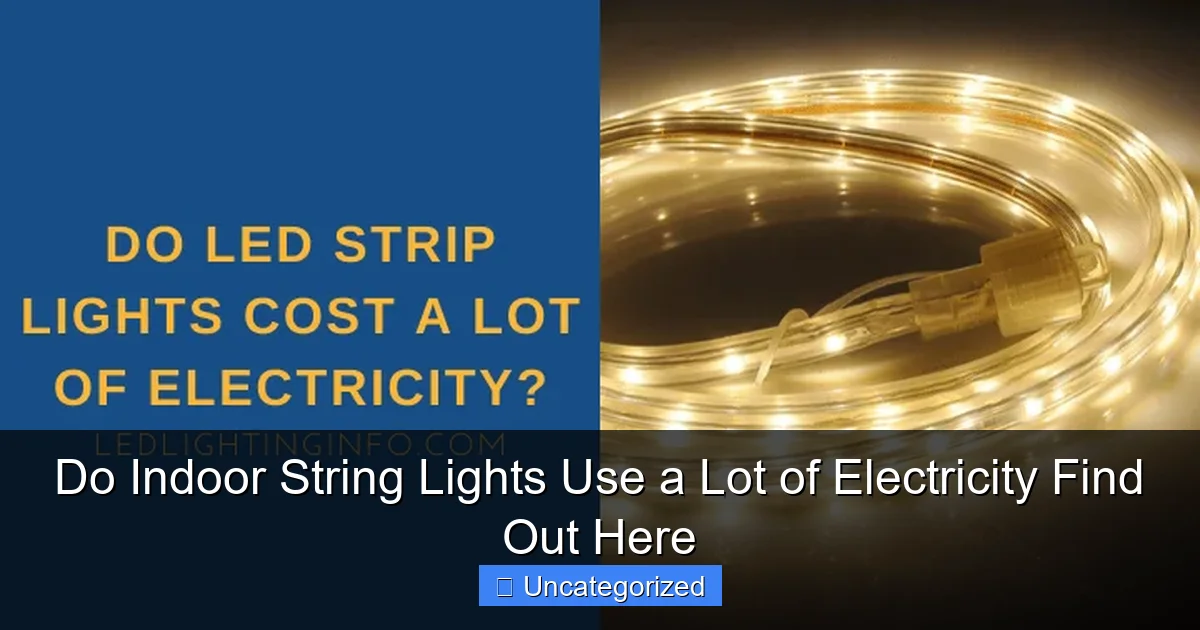
Visual guide about do indoor string lights use a lot of electricity
Image source: ledlightinginfo.com
Electricity consumption over time is measured in kilowatt-hours (kWh), which is what your utility company uses to bill you. One kilowatt-hour equals 1,000 watts used for one hour. For example, a 10-watt string light used for 100 hours consumes 1 kWh (10 W × 100 h ÷ 1,000 = 1 kWh). Knowing this, you can calculate how much each strand contributes to your monthly energy usage.
Calculating the Cost of Running String Lights
Let’s say you have a 20-foot LED string light rated at 5 watts, and you use it for 4 hours per night, 30 days a month. The monthly consumption would be: 5 W × 4 h × 30 days = 600 watt-hours = 0.6 kWh. At the average U.S. electricity rate of $0.13 per kWh, that’s just $0.078 per month—less than a dime. Even if you run multiple strands, the cost remains minimal with efficient bulbs. In contrast, a 50-watt incandescent strand used the same amount would cost $0.78 per month—ten times more. This stark difference highlights why bulb type is the most critical factor in energy consumption.
To calculate your own costs, use this formula: (Total wattage × hours used per day × days per month) ÷ 1,000 = kWh per month. Multiply that by your local electricity rate to get the dollar cost. Many online energy calculators can simplify this process, but understanding the math helps you make informed decisions.
Factors That Influence Electricity Use
Beyond wattage, other factors affect how much electricity your indoor string lights consume:
- Length of the strand: Longer strands have more bulbs, increasing total wattage. A 50-foot strand uses more power than a 10-foot one, even with the same bulb type.
- Number of bulbs: Denser bulb spacing (e.g., 100 LEDs per strand) draws more power than sparse arrangements.
- Usage duration: Leaving lights on overnight or 24/7 significantly increases consumption. Timers and smart controls can mitigate this.
- Power source: Battery-operated lights don’t add to your electricity bill, but frequent battery replacement has environmental and cost implications.
- Voltage: Most indoor string lights are low-voltage (e.g., 24V or 36V), which are safer and often more efficient than line-voltage (120V) models.
By optimizing these factors, you can enjoy beautiful lighting with minimal energy impact.
Comparing Bulb Types: LED vs. Incandescent vs. Other Options
LED String Lights: The Energy-Efficient Champion
LED (Light Emitting Diode) string lights are the gold standard for energy efficiency. Modern LEDs use up to 80–90% less electricity than traditional incandescent bulbs while producing the same brightness. For example, a 1-watt LED can emit the same lumens as a 6–10 watt incandescent bulb. LEDs also generate less heat, reducing fire risk and making them safer for indoor use.
LEDs have a long lifespan—typically 25,000 to 50,000 hours—meaning a strand could last 5–10 years with nightly use. This durability reduces replacement frequency and electronic waste. Additionally, many LED string lights are dimmable, color-tunable, and compatible with smart home systems (e.g., Alexa, Google Home), offering both energy savings and customization.
Real-world example: A popular 30-foot LED fairy light strand with 100 bulbs uses only 4–5 watts total. Run for 5 hours nightly, it costs less than $0.10 per month. Even a large, decorative LED chandelier-style string light (e.g., 50 watts) would cost under $1 monthly with moderate use.
Incandescent String Lights: The Energy Guzzler
Traditional incandescent string lights are less common today but still found in vintage or specialty decor. These bulbs work by heating a filament until it glows, a process that wastes about 90% of energy as heat. A typical incandescent strand uses 20–50 watts per 10 feet, making it far less efficient than LEDs.
For instance, a 10-foot incandescent strand with 50 bulbs might use 30 watts. Run for 4 hours nightly, it consumes 3.6 kWh monthly—costing $0.47 at $0.13/kWh. Over a year, that’s $5.64 for a single strand. Multiply this by multiple strands, and costs add up quickly. Incandescents also burn out faster (typically 1,000–2,000 hours) and generate heat, making them less safe for prolonged indoor use.
While incandescents offer a warm, nostalgic glow, their high energy use and shorter lifespan make them impractical for regular, energy-conscious decor.
Other Bulb Types: CFL, Halogen, and Smart Options
Though rare in string lights, CFL (Compact Fluorescent) and halogen bulbs are worth noting. CFLs use about 70% less energy than incandescents but contain mercury, making disposal hazardous. They’re also slow to reach full brightness and less suitable for decorative lighting. Halogen bulbs, a subtype of incandescent, are slightly more efficient (10–20% less energy) but still heat-intensive and short-lived.
For advanced users, smart LED string lights offer programmable schedules, motion sensors, and remote control. These features optimize energy use by turning lights off automatically when not needed. Some models even adjust brightness based on ambient light, further reducing consumption. While the upfront cost is higher, smart lights pay for themselves over time through energy savings and convenience.
Pro tip: Look for ENERGY STAR®-certified string lights, which meet strict efficiency guidelines. These products are tested for performance, durability, and energy use, ensuring you get a reliable, eco-friendly product.
Real-World Examples: Energy Use in Everyday Scenarios
Scenario 1: Cozy Bedroom Ambiance
Setup: 15-foot LED string light (50 bulbs, 3 watts total) draped over a headboard, used 4 hours nightly.
- Monthly consumption: 3 W × 4 h × 30 = 0.36 kWh
- Monthly cost: $0.047 (at $0.13/kWh)
- Yearly cost: $0.56
This setup provides soft, romantic lighting for less than a dollar per year. Adding a timer to turn the lights off automatically after 4 hours prevents accidental overnight use.
Scenario 2: Holiday Decorating (Year-Round Use)
Setup: 100 feet of LED string lights (500 bulbs, 20 watts total) on a mantel, bookshelf, and around a mirror, used 5 hours nightly, 365 days/year.
- Yearly consumption: 20 W × 5 h × 365 = 36.5 kWh
- Yearly cost: $4.75 (at $0.13/kWh)
Even with extensive, year-round use, the cost remains under $5 annually. In contrast, the same setup with incandescent lights (100 watts) would cost $23.75 yearly—five times more.
Scenario 3: Party Lighting (Occasional Use)
Setup: 200 feet of LED string lights (1,000 bulbs, 50 watts total) used for 8 hours at a birthday party, 4 times a year.
- Total yearly consumption: 50 W × 8 h × 4 = 16 kWh
- Yearly cost: $2.08
This occasional use is extremely energy-efficient. For frequent entertainers, investing in a rechargeable battery pack (e.g., solar-powered) can eliminate electricity use entirely during events.
Scenario 4: Smart Home Integration
Setup: 30-foot smart LED string light (100 bulbs, 6 watts) connected to a smart plug with motion sensor. Lights activate only when someone enters the room, averaging 2 hours nightly.
- Monthly consumption: 6 W × 2 h × 30 = 0.36 kWh
- Monthly cost: $0.047
The smart system reduces usage by 50% compared to manual control, saving energy and extending bulb life. Over 5 years, this saves $2.82 per strand.
Tips to Maximize Energy Efficiency and Minimize Costs
Choose the Right Bulb Type
Always opt for LED string lights over incandescent or CFL. Look for products labeled “low wattage” (e.g., 3–10 watts for 30-foot strands) and high lumens per watt (efficiency rating). ENERGY STAR® certification is a reliable indicator of quality.
Use Timers and Smart Controls
Timers are a simple, affordable way to automate lighting. Plug-in timers cost $5–$15 and let you set lights to turn off after a few hours. For greater control, use smart plugs (e.g., TP-Link Kasa, Amazon Smart Plug) to schedule lighting via smartphone or voice command. Motion sensors ensure lights activate only when needed.
Example: A $20 smart plug can save $5–$10 yearly in electricity costs by eliminating accidental overnight use.
Optimize Placement and Usage
- Use reflective surfaces: Hang lights near mirrors or light-colored walls to amplify brightness, allowing you to use fewer strands.
- Layer lighting: Combine string lights with other low-wattage sources (e.g., candles, salt lamps) to reduce dependency on one light type.
- Limit duration: Set a rule to turn off lights by 11 PM or use a “sleep mode” dimmer.
Consider Battery or Solar-Powered Options
For temporary or portable lighting, battery-operated LED string lights are ideal. They eliminate electricity use but require regular battery changes. Rechargeable batteries (e.g., NiMH) reduce waste and long-term costs. Solar-powered string lights (with indoor solar panels) charge during the day and light up at night, offering zero-energy operation.
Tip: Use solar lights in sunlit rooms (e.g., near a south-facing window) for reliable performance.
Maintain and Upgrade Your Lights
Clean bulbs regularly to prevent dust buildup, which can dim light output and force you to use more strands. Replace damaged or dim bulbs promptly to maintain efficiency. Upgrade older incandescent strands to LED—many retailers offer trade-in programs.
Data Table: Electricity Consumption of Common Indoor String Lights
| String Light Type | Length (feet) | Bulb Count | Wattage (Total) | Monthly Use (hours) | Monthly kWh | Monthly Cost ($0.13/kWh) | Yearly Cost |
|---|---|---|---|---|---|---|---|
| LED Fairy Lights | 15 | 50 | 3 W | 120 | 0.36 | $0.047 | $0.56 |
| LED Icicle Lights | 30 | 100 | 6 W | 150 | 0.9 | $0.117 | $1.40 |
| Incandescent Mini Lights | 10 | 50 | 30 W | 120 | 3.6 | $0.468 | $5.62 |
| Smart LED String Lights | 20 | 75 | 5 W | 60 (automated) | 0.3 | $0.039 | $0.47 |
| Large LED Chandelier Lights | 50 | 200 | 15 W | 180 | 2.7 | $0.351 | $4.21 |
This table compares real-world energy use across common string light types. As shown, LEDs consistently outperform incandescents, with yearly costs often under $5. Smart controls further reduce consumption by limiting usage duration.
Conclusion: Enjoy Beautiful Lighting Without Breaking the Bank
So, do indoor string lights use a lot of electricity? The answer is a resounding no—if you choose wisely. Modern LED string lights are incredibly energy-efficient, costing mere pennies per month to operate, even with frequent use. By contrast, older incandescent strands can drain your wallet, especially when used extensively. The key lies in selecting the right bulb type, optimizing usage patterns, and leveraging smart technology to automate and control your lighting.
Whether you’re creating a serene bedroom retreat, hosting a festive gathering, or adding year-round charm to your living room, indoor string lights can enhance your space without a significant energy footprint. Use timers, dimmers, and motion sensors to minimize waste, and consider solar or battery-powered options for temporary setups. With these strategies, you can enjoy the magic of twinkling lights guilt-free, knowing you’re conserving energy and saving money.
Remember, small changes add up. Replacing one incandescent strand with an LED model saves enough energy over five years to power a smartphone for over 10,000 charges. So, light up your life—responsibly, beautifully, and sustainably. The glow is worth it, and the planet (and your wallet) will thank you.
Frequently Asked Questions
Do indoor string lights use a lot of electricity?
No, indoor string lights typically consume very little electricity, especially LED versions. On average, a 20-foot LED string uses only 10-20 watts—about the same as a single incandescent bulb.
How much electricity do indoor string lights use compared to other lights?
Indoor string lights use significantly less electricity than traditional incandescent or halogen bulbs. LED string lights can save up to 80% more energy while providing the same brightness.
Are LED indoor string lights more energy-efficient?
Yes, LED indoor string lights are far more energy-efficient than older bulb types. They use up to 90% less energy and last up to 25 times longer, reducing both electricity use and replacement costs.
Can leaving indoor string lights on all night increase my electric bill?
While leaving indoor string lights on all night uses some electricity, the cost is minimal with LEDs. For example, running a 10-watt LED string for 12 hours costs less than $0.15 per night.
Do indoor string lights use a lot of electricity if I use them daily?
Even with daily use, indoor string lights consume very little electricity if they’re LED-based. Running them for 5 hours a day would cost only $1–$2 per year, depending on your electricity rate.
What factors affect how much electricity indoor string lights use?
The type of bulb (LED vs. incandescent), length of the strand, and usage duration impact electricity consumption. LED lights and shorter strands use the least amount of energy over time.