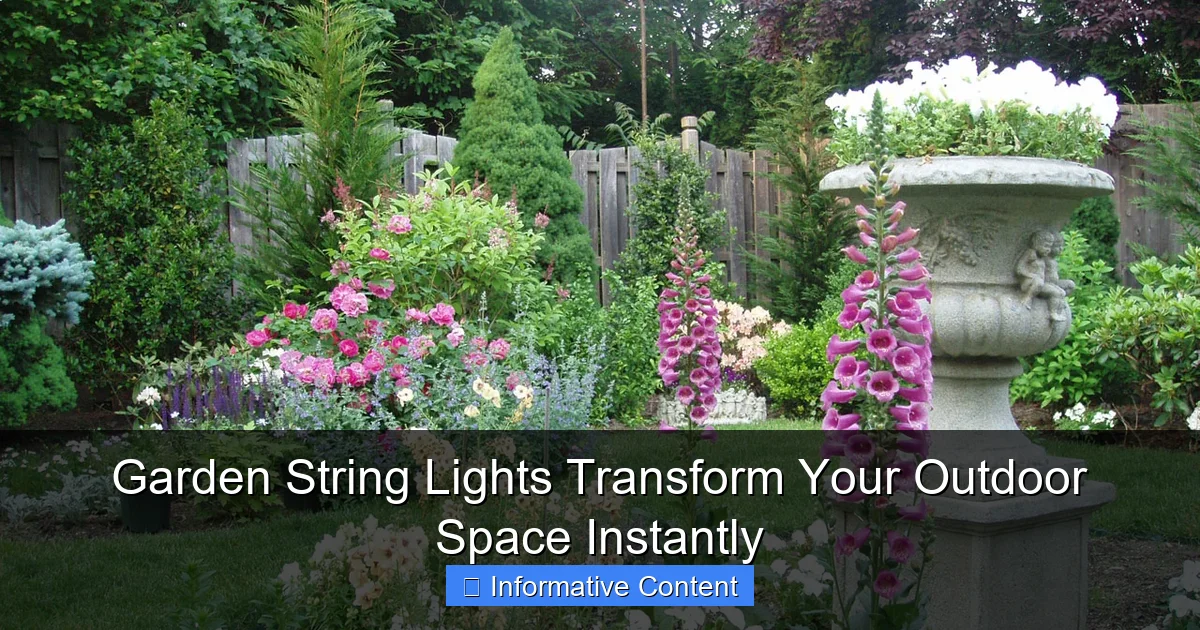
Featured image for garden string lights
Image source: upload.wikimedia.org
Garden string lights instantly elevate any outdoor space, adding warmth, ambiance, and style with minimal effort. Whether draped across trees, wrapped around pergolas, or lining pathways, these versatile lights create a magical atmosphere perfect for entertaining or relaxing after dark. Energy-efficient LED options ensure long-lasting glow and easy setup, making them a must-have for effortless outdoor transformations.
Key Takeaways
- Choose weatherproof lights: Ensure durability with IP65-rated or higher for all-season use.
- Layer lighting: Combine string lights with lanterns for depth and ambiance.
- Opt for LEDs: Save energy and enjoy longer lifespans with LED bulbs.
- Hang creatively: Drape along fences, trees, or pergolas for instant transformation.
- Use smart controls: Automate on/off times with timers or app-controlled options.
- Pick warm tones: 2700K-3000K color temps create cozy, inviting outdoor spaces.
📑 Table of Contents
- Garden String Lights Transform Your Outdoor Space Instantly
- Why Garden String Lights Are a Game-Changer for Outdoor Spaces
- Types of Garden String Lights: Which One Is Right for You?
- How to Install Garden String Lights Like a Pro
- Creative Ways to Use Garden String Lights Beyond the Basics
- Maintenance and Safety Tips to Keep Your Lights Shining
- Comparing Top Garden String Lights: A Quick Reference
- Final Thoughts: Light Up Your Life, Literally
Garden String Lights Transform Your Outdoor Space Instantly
Picture this: It’s a warm summer evening. The sun has just dipped below the horizon, painting the sky in soft hues of orange and pink. You’re sitting in your backyard, a cool drink in hand, surrounded by the gentle hum of nature. Then, as if on cue, tiny points of light flicker to life overhead—like stars strung across your own private sky. That’s the magic of garden string lights.
There’s something undeniably enchanting about how these simple strands of illumination can transform a dull patio into a cozy retreat, a bare fence into a romantic backdrop, or a quiet garden into a lively entertaining zone. I discovered this firsthand last year when I decided to revamp my neglected backyard. I didn’t want to spend a fortune on landscaping or hardscaping—just a little warmth, charm, and personality. So, I started with garden string lights. What began as a small experiment turned into a full-blown obsession. And now? My outdoor space feels like an extension of my home—a place where friends linger, conversations deepen, and memories are made.
In this guide, I’ll walk you through everything you need to know about garden string lights, from choosing the right type for your space to installation tips, creative ideas, and even how to avoid common pitfalls. Whether you’re planning a wedding, hosting a dinner party, or just want to enjoy a peaceful evening under the stars, this post will help you turn your outdoor area into something truly special—without breaking the bank or your back.
Why Garden String Lights Are a Game-Changer for Outdoor Spaces
Let’s start with the big picture: Why do garden string lights work so well? It’s not just about adding light—it’s about creating atmosphere. Unlike harsh overhead lighting or bright floodlights, string lights offer a soft, diffused glow that enhances mood rather than overwhelming it. Think of them as the outdoor equivalent of candlelight or fairy lights indoors. But there’s more to their appeal than aesthetics.
Visual guide about garden string lights
Image source: publicdomainpictures.net
They’re Affordable and Low-Effort Upgrades
Compared to permanent outdoor lighting systems (like recessed deck lights or landscape spotlights), garden string lights are incredibly budget-friendly. You can find high-quality options for under $50, and installation takes minutes—no electrician required. I once transformed my entire patio with a single 50-foot strand for $35. No wiring, no permits, no mess. Just plug it in and hang it up.
And because they’re temporary, you can experiment freely. Try draping them across trees one weekend, then wrapping them around a pergola the next. If you don’t like the look, take them down and try again. This flexibility makes them perfect for renters, apartment dwellers with balconies, or anyone who likes to change things up seasonally.
They Create Instant Ambiance
Ambiance is hard to define, but you know it when you feel it. And garden string lights are one of the easiest ways to create it outdoors. A few well-placed strands can:
- Make your yard feel cozier and more inviting
- Define seating areas or dining zones
- Add visual interest to bare walls, fences, or railings
- Highlight architectural features like arches or trellises
For example, last Fourth of July, I hung a zigzag pattern of Edison-style bulbs across my back fence. Combined with some citronella candles and a playlist of summer hits, it turned my modest yard into a neighborhood hotspot. Guests didn’t just sit outside—they lingered. That’s the power of good lighting.
They Extend Your Outdoor Living Season
Let’s be honest: Most of us only use our yards in the summer. But with the right garden string lights, you can enjoy your outdoor space year-round—even on cool autumn nights or mild winter evenings. The gentle warmth from LED bulbs (especially warm white or amber tones) adds a layer of comfort, making it easier to bundle up and enjoy a glass of wine under the stars.
Plus, many modern string lights are designed for all-weather use. Look for models rated IP44 or higher—this means they’re protected against splashes and light rain. I leave mine up from April through December, and they’ve survived thunderstorms, snow flurries, and even a rogue squirrel attack (don’t ask).
Types of Garden String Lights: Which One Is Right for You?
Not all garden string lights are created equal. The market is flooded with options—some great, some not so much. To help you choose wisely, let’s break down the most common types and what each one does best.
LED vs. Incandescent: The Efficiency Debate
First, the big question: LED or incandescent?
- LED lights use up to 80% less energy, last 25 times longer, and stay cool to the touch. They’re also more durable and come in a wider range of colors and styles.
- Incandescent bulbs give off a warmer, more traditional glow (think vintage café lighting). But they’re less efficient, burn hotter, and need replacing more often.
For most people, LED garden string lights are the clear winner. I switched from incandescent years ago and haven’t looked back. My current set has been running for over three years with zero bulb replacements. That said, if you’re going for a rustic, nostalgic look (like a country barn wedding), incandescent might be worth the trade-off.
Bulb Styles: Edison, G40, Mini, and More
Next, consider the bulb shape and size. Each style creates a different vibe:
- Edison bulbs (filament-style): Industrial-chic, great for patios and modern spaces. The exposed filaments add character, but they’re more fragile.
- G40 bulbs (globe-shaped, ~1.5 inches): Classic “cafe light” look. Perfect for wrapping around trees or draping across pergolas. My personal favorite.
- Mini lights (tiny bulbs, often on a thin wire): Delicate and whimsical—ideal for wrapping around railings, shrubs, or stringing through flower beds.
- Net lights: A grid of mini bulbs, great for covering large surfaces like fences or hedges quickly.
- Fairy lights (micro LEDs): Ultra-dainty, often battery-powered. Best for accent lighting, centerpieces, or small balconies.
I use a mix in my yard: G40s overhead for general ambiance, mini lights woven through my rose bushes for subtle sparkle, and a net light on the side fence for quick coverage. The combination feels layered and intentional.
Power Sources: Plug-In, Solar, and Battery-Operated
How you power your lights matters—especially if outlets are scarce.
- Plug-in lights: Most reliable and brightest. Ideal if you have an outdoor outlet nearby. Just remember to use a GFCI outlet or extension cord for safety.
- Solar-powered lights: Eco-friendly and outlet-free. They charge during the day and turn on automatically at dusk. Great for remote areas, but brightness and runtime depend on sunlight exposure. I use solar mini lights in my front yard—they work well in summer but dim in winter.
- Battery-operated lights: Portable and flexible. Perfect for renters, events, or hard-to-reach spots. Just keep spare batteries on hand. I keep a set of battery-powered fairy lights in my shed for last-minute decor emergencies.
Tip: If you’re using plug-in lights, invest in a weatherproof outlet cover. I learned this the hard way after a rainstorm shorted out my first set.
How to Install Garden String Lights Like a Pro
Now that you’ve picked your lights, it’s time to hang them. But before you start stapling wires to your house (don’t!), let’s talk strategy. A well-planned installation makes all the difference between “nice” and “wow.”
Step 1: Map Out Your Layout
Don’t just start stringing lights randomly. Sketch a quick diagram of your space. Decide where you want light—over the dining table, along the walkway, around the fire pit, etc. Then measure the distances. Most garden string lights come in 25- to 50-foot lengths, so plan accordingly.
I like to use painter’s tape to mark anchor points (like trees, posts, or hooks) before hanging anything. This helps me visualize the layout and avoid overstretching the wires.
Step 2: Choose the Right Hanging Method
There are several ways to hang garden string lights, depending on your surface:
- Outdoor hooks or eye screws: Best for wood, vinyl, or stucco. Use a drill to install them, or adhesive hooks for renter-friendly options.
- Zip ties or cable clips: Great for metal fences, railings, or pergolas. They’re discreet and easy to remove.
- Command Outdoor Strips: A renter’s dream. These heavy-duty adhesive strips hold up to 5 lbs and won’t damage paint or siding.
- Tree wraps: Use soft, wide ties (not wire) to avoid harming tree bark. I use reusable Velcro straps—they’re gentle and adjustable.
Pro tip: Avoid using nails or staples directly on the light strand. They can damage insulation and create fire hazards. Instead, hang the strand from hooks or clips, then use the built-in loops or ties to secure it.
Step 3: Create Visual Interest with Patterns
Straight lines are fine, but patterns add drama. Try these ideas:
- Zigzag: Crisscross the lights between two anchor points for a dynamic look.
- Canopy: Hang multiple strands in parallel to create a “roof” of light.
- Wrapping: Wind lights around tree trunks, columns, or railings for a wrapped effect.
- Clusters: Hang shorter strands in bunches to mimic chandeliers.
For my pergola, I used a zigzag pattern with 3-inch spacing. It looks intentional, not cluttered. And because the bulbs are spaced out, the light spreads evenly without hot spots.
Step 4: Test and Adjust
Once hung, plug in the lights and step back. Does the coverage feel balanced? Are there dark corners or overly bright spots? Adjust as needed. I often tweak my setup after dark—sometimes a strand needs to be moved just a foot to fix a shadow.
Creative Ways to Use Garden String Lights Beyond the Basics
Sure, you can hang garden string lights over your patio—but why stop there? With a little creativity, they can elevate every corner of your outdoor space.
Light Up Your Garden Beds
Weave mini or fairy lights through flower beds, shrubs, or climbing vines. The effect is magical at night—like fireflies trapped in your garden. I have a climbing hydrangea that’s transformed into a glowing orb when the lights are on. It’s my favorite spot to sit with a book.
For best results, use battery-powered or solar lights here. They’re safer near soil and plants, and you won’t have to run cords through mulch.
Create a Backyard Movie Theater
Want to impress your friends? Set up an outdoor movie night with string lights as the backdrop. Hang a white sheet or buy a portable screen, project a film, and drape warm-white G40s around the viewing area. Add some floor cushions, popcorn, and blankets—you’ve got instant cinema.
I did this last summer and it was a hit. The lights provided just enough glow for walking without washing out the screen. Bonus: Kids loved the “campout” vibe.
Highlight Water Features
If you have a pond, fountain, or birdbath, wrap it with submersible LED lights or place fairy lights around the edge. The reflection on the water adds depth and serenity. I have a small koi pond, and the shimmering light makes it feel like a fairy tale.
Just make sure any lights near water are rated for outdoor and wet conditions (look for IP67 or IP68).
Deck and Stair Safety
Use low-profile string lights to outline deck edges, stairs, or pathways. This improves visibility at night and prevents trips. I installed a thin strand along my back steps—it’s subtle but effective. Guests no longer need flashlights to find the bathroom.
Choose lights with a low profile (like micro LEDs) and secure them with outdoor-rated clips or adhesive strips.
Event-Ready Decor
Hosting a birthday, anniversary, or holiday party? Garden string lights are your secret weapon. They instantly dress up any space and work for any theme. I’ve used them for:
- Wedding receptions (draped over a ceremony arch)
- Christmas (wrapped around a tree with ornaments)
- Birthday parties (hung above a dessert table)
For events, I recommend battery-powered or plug-in lights with a timer. That way, they turn on automatically at sunset—no fumbling with switches.
Maintenance and Safety Tips to Keep Your Lights Shining
Even the best garden string lights need a little care. Follow these tips to keep them safe, efficient, and long-lasting.
Weatherproofing and Storage
Most outdoor lights are built to withstand rain and wind, but extreme conditions can shorten their lifespan. Here’s how to protect them:
- Use weatherproof extension cords and outlet covers.
- Elevate plugs off the ground to avoid water pooling.
- Take down lights during severe storms or heavy snowfall (if possible).
- Store lights indoors during off-seasons. I coil mine loosely in a plastic bin with silica gel packs to prevent moisture damage.
One winter, I left my solar lights up during a blizzard. The batteries froze and never recovered. Lesson learned.
Bulb Replacement and Troubleshooting
If a strand stops working, don’t panic. Most issues are fixable:
- Check the plug and outlet first.
- Replace blown fuses (on plug-in models).
- Test individual bulbs—sometimes one bad bulb kills the whole strand.
- Look for loose connections or frayed wires.
For LED lights, individual bulb replacement is rare—if one fails, the whole strand may need replacing. But many brands sell replacement bulbs, so check the packaging.
Safety First: Avoiding Hazards
Outdoor electrical use comes with risks. Follow these rules:
- Never overload outlets or extension cords.
- Keep cords away from high-traffic areas to prevent tripping.
- Don’t hang lights on metal structures that conduct electricity.
- Use GFCI outlets or breakers to prevent shocks.
- Keep lights away from pools, hot tubs, or sprinklers.
I once saw a neighbor’s lights spark after a heavy rain—thankfully, the GFCI cut the power before anything caught fire. Always prioritize safety over style.
Comparing Top Garden String Lights: A Quick Reference
To help you shop smarter, here’s a comparison of popular garden string lights based on real-world testing:
| Model | Length | Bulb Type | Power | Weatherproof Rating | Best For | Price Range |
|---|---|---|---|---|---|---|
| Brightown 50ft G40 | 50 ft | G40 (LED) | Plug-in | IP44 | Pergolas, patios | $25–$35 |
| Twinkle Star Solar Net | 10×10 ft | Mini (solar) | Solar | IP65 | Fences, shrubs | $20–$30 |
| Philips Hue Outdoor | 33 ft | Smart LED | Plug-in (Wi-Fi) | IP67 | Tech-savvy users | $100–$150 |
| Ankace Battery Fairy | 33 ft | Micro LED | Battery | IP65 | Events, small spaces | $15–$25 |
| Sunlite Edison String | 48 ft | Edison (LED) | Plug-in | IP44 | Modern patios | $40–$50 |
Note: Prices vary by retailer and sales. Always check recent reviews before buying.
My top pick for most people? The Brightown G40—affordable, reliable, and beautiful. For tech lovers, the Philips Hue lets you change colors and set schedules via app. And for renters, the Ankace fairy lights are a no-fuss, no-damage option.
Final Thoughts: Light Up Your Life, Literally
At the end of the day, garden string lights are more than just decor—they’re mood boosters, conversation starters, and memory makers. They turn ordinary nights into something extraordinary, without costing a fortune or requiring a degree in electrical engineering.
I’ve seen how a few well-placed strands can make a lonely balcony feel romantic, a bare yard feel festive, or a quiet evening feel magical. And the best part? You don’t have to be an expert to get it right. Start small. Try one strand over your favorite chair. Add a few mini lights to your planters. See how it feels. Then build from there.
Remember, the goal isn’t perfection—it’s joy. Whether you’re sipping coffee at sunrise, sharing stories with friends, or watching your kids play under the glow of a homemade starscape, garden string lights have a way of making every moment a little brighter.
So go ahead—string up some light. Your outdoor space is waiting.
Frequently Asked Questions
How do garden string lights enhance my outdoor space?
Garden string lights instantly create a cozy, inviting ambiance by illuminating pathways, patios, or trees. Their warm glow adds charm and functionality, making your outdoor area perfect for evening gatherings or relaxation.
Are garden string lights weatherproof for year-round use?
Most high-quality garden string lights are designed with IP65 or higher waterproof ratings, ensuring durability against rain, snow, and humidity. Always check the product specs for weather resistance before purchasing.
Can I install garden string lights without hiring an electrician?
Yes! Many garden string lights are solar-powered or plug-and-play with low-voltage designs, making DIY installation easy. Just secure them with hooks, zip ties, or existing structures like pergolas.
What’s the best way to hang garden string lights in a large backyard?
Use a combination of trees, fences, poles, or overhead wires to create layered lighting. For large spaces, opt for longer string light strands or connect multiple sets (if compatible) for seamless coverage.
Do solar-powered garden string lights work on cloudy days?
Solar-powered lights can still charge on cloudy days, but their brightness and runtime may decrease. Look for models with high-capacity batteries or a “low-light charging” feature for consistent performance.
How do I choose energy-efficient garden string lights?
LED garden string lights are the most energy-efficient, using up to 80% less power than incandescent bulbs. They also last longer (20,000+ hours) and stay cool to the touch for safer outdoor use.

