Featured image for hang string lights on pergola
Image source: us-aluminum.com
Transform your pergola into a stunning nighttime oasis by securely hanging string lights with simple, durable hardware like eye hooks and zip ties—ensuring a safe, weather-resistant setup. Follow our 2026 step-by-step guide for a hassle-free installation that delivers professional results and elevates your outdoor ambiance in minutes.
Key Takeaways
- Plan spacing first: Measure and mark light placement for even, balanced illumination.
- Use outdoor-rated lights: Ensure weatherproof and durable for year-round pergola use.
- Secure with clips/hooks: Attach lights to beams with UV-resistant hardware for safety.
- Hide cords neatly: Tuck wires along beams or use cable management for a clean look.
- Test before finalizing: Check connections and brightness early to avoid rework.
- Layer lighting: Combine string lights with task or accent lights for ambiance.
📑 Table of Contents
- Why Hanging String Lights on Your Pergola is a Game-Changer
- Choosing the Right String Lights for Your Pergola
- Planning Your Layout: Design Tips for a Flawless Look
- Tools and Materials You’ll Need (And Where to Get Them)
- Step-by-Step Installation Guide (With Pro Tips)
- Maintaining and Upgrading Your Pergola Lights
- Final Thoughts: Your Pergola, Your Paradise
Why Hanging String Lights on Your Pergola is a Game-Changer
There’s something magical about stepping into your backyard at night and being greeted by a warm, glowing canopy of string lights. Whether you’re hosting a summer barbecue, enjoying a quiet evening with a book, or celebrating a special occasion, hanging string lights on a pergola instantly transforms the space into an inviting retreat. I remember the first time I did this—my family gathered under the soft, twinkling glow, and my kids called it their “fairy fort.” That’s the kind of memory you create with just a few well-placed lights.
But let’s be honest: hanging string lights on a pergola can feel intimidating. You might worry about sagging wires, uneven spacing, or worse—lights falling after a windy night. The good news? With the right tools, a little planning, and a few insider tips, you can achieve a stunning, professional-looking setup in just a few hours. This guide walks you through everything you need to know in 2026, from choosing the right lights to securing them safely and beautifully. Whether your pergola is made of wood, metal, or composite, we’ve got you covered.
Choosing the Right String Lights for Your Pergola
Not all string lights are created equal. Picking the right ones sets the tone for your entire project—both in terms of aesthetics and durability. Let’s break down what to look for.
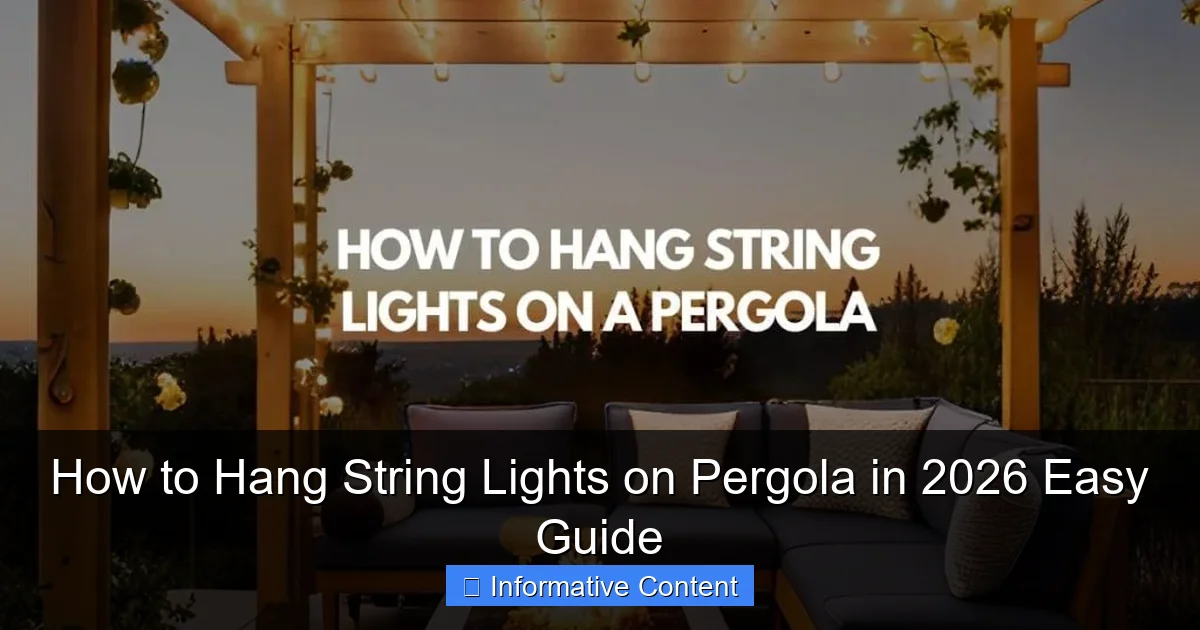
Visual guide about hang string lights on pergola
Image source: images.farmfoodfamily.com
Types of String Lights: LED vs. Incandescent
LED string lights are the clear winner in 2026. They’re energy-efficient, last up to 25,000 hours (that’s over 10 years with 6 hours of use per night!), and stay cool to the touch. Plus, many come with smart features like app control, dimming, and color-changing options. I recently upgraded to smart LED fairy lights that sync with my music—perfect for outdoor parties.
On the other hand, incandescent lights give off a warmer, nostalgic glow but burn out faster, use more electricity, and get hot. They’re great for short-term events, but not ideal for permanent pergola installations.
Bulb Style: Globe, Edison, Fairy, or Candle?
- Globe lights: Classic, round bulbs that cast a soft, diffused glow. Great for a cozy, modern look.
- Edison bulbs: Vintage-style with visible filaments. Perfect for rustic or industrial pergolas. They’re heavier, so make sure your pergola can support them.
- Fairy lights (micro LEDs): Tiny, delicate lights on thin wire. Ideal for a whimsical, starry-night effect. Use these for wrapping beams or creating delicate drapes.
- Candle-style bulbs: Mimic flickering flames. Add romance to dinner settings or date nights.
Pro tip: Mix and match! I used globe lights along the perimeter and fairy lights draped from beam to beam for a layered effect.
Weather Resistance and Power Source
Since your pergola is outdoors, look for lights rated IP44 or higher. This means they’re protected against splashing water and dust. For permanent setups, consider solar-powered lights or ones that connect to an outdoor-rated extension cord. Solar is great for off-grid areas, but in 2026, many solar models have improved battery life and brightness. If you’re using plug-in lights, always use a ground fault circuit interrupter (GFCI) outlet to prevent electrical hazards.
Planning Your Layout: Design Tips for a Flawless Look
Before you start hammering or tying anything, take a step back and plan. A well-thought-out layout prevents sagging, uneven spacing, and last-minute regrets.
Measure Your Pergola Accurately
Grab a measuring tape and note the following:
- Length and width of each side
- Height from ground to beams
- Distance between beams (if applicable)
- Total perimeter (for outlining the edges)
For example, my 10’ x 12’ wooden pergola has four beams running lengthwise and two crossbeams. I measured each beam’s length and the gaps between them to calculate how many strings I’d need.
Decide on a Hanging Pattern
Here are five popular layouts, with real-life examples:
- Perimeter outline: Hang lights along all four sides. Simple and effective. I used this for a clean, modern look.
- X-pattern across beams: Run strings diagonally from one corner to another, creating an “X” on each side. Adds drama and spreads light evenly.
- Grid pattern: String lights horizontally and vertically, like a checkerboard. Best for large pergolas with multiple beams. I did this on a friend’s 15’ x 20’ space—it felt like dining under the stars.
- Draped or curtain style: Let strings hang loosely in swags between beams. Creates a romantic, boho vibe. Use clips to control the sag.
- Wrapping beams: Wrap fairy lights around individual beams. Great for highlighting architectural details.
Tip: Sketch your plan on paper or use a free app like Canva. Visualizing helps avoid “I wish I had…” moments later.
Calculate How Many Strings You Need
Most string lights are 24–50 feet long. Divide your total perimeter or beam length by the string length to get the number needed. Add 10–20% extra for draping or overlaps. For my 44-foot perimeter, I used three 25-foot globe light strings with slight overlaps at corners.
Tools and Materials You’ll Need (And Where to Get Them)
Having the right gear saves time, frustration, and potential damage to your pergola. Here’s your shopping list.
Essential Tools and Hardware
- Measuring tape – For precise spacing.
- Pencil or chalk – Mark anchor points.
- Drill with drill bits – For wood or metal pergolas (use metal bits for steel).
- Screws, anchors, or hooks – Choose based on pergola material (see table below).
- Zip ties (outdoor-rated, UV-resistant) – For quick, temporary fixes.
- Clips or hooks – Use cup hooks for permanent setups or adhesive clips for no-damage hanging.
- Extension ladder – Safety first! Use a stable ladder with a helper nearby.
- Outdoor-rated extension cords and timers – Set lights to turn on at dusk automatically.
Material-Specific Hardware Guide
| Pergola Material | Recommended Hardware | Installation Tip |
|---|---|---|
| Wood | Cup hooks, eye screws, or outdoor zip ties | Pre-drill holes to prevent splitting. Use stainless steel to resist rust. |
| Metal (steel/aluminum) | Magnetic hooks, cable ties, or rivet nuts | Use rubber-coated magnetic hooks to avoid scratching paint. |
| Composite/Vinyl | Adhesive hooks, zip ties, or no-damage clips | Avoid drilling—use strong outdoor-rated adhesive (e.g., 3M VHB tape). |
| Concrete posts | Concrete anchors or expansion bolts | Use a hammer drill and masonry bit for clean holes. |
Where to Buy (and What to Avoid)
Stick to reputable brands like Philips Hue Outdoor, Brightech, or String Lights Co. Avoid cheap Amazon knockoffs—many lack weatherproofing or burn out in months. I once bought $15 lights that failed after one rainstorm. Lesson learned.
Step-by-Step Installation Guide (With Pro Tips)
Now the fun part—hanging the lights! Follow these steps for a secure, beautiful result.
Step 1: Install Anchor Points
Start by installing hooks, screws, or clips at your marked points. For wood pergolas, pre-drill holes and screw in cup hooks every 2–3 feet along the beams. For metal, use magnetic hooks spaced 18–24 inches apart. Pro tip: Use a level to ensure hooks are aligned—no one likes crooked lights!
Step 2: Test the Lights First
Plug in your string lights before hanging. Check for dead bulbs, frayed wires, or dim sections. Replace any faulty strings. I once hung 10 strings before realizing one was broken—don’t make my mistake.
Step 3: Hang the Lights
- For perimeter or grid patterns: Start at one corner. Hook one end, then stretch the string to the next anchor. Don’t pull too tight—allow a slight sag (1–2 inches) to prevent stress on the wires.
- For draped styles: Use zip ties or clips to create soft swags. Vary the sag height for a natural look.
- For X-patterns: Anchor one end, run diagonally to the opposite corner, then cross over to the next beam. Secure with clips every 2 feet.
Tip: Use a helper to hold the lights while you secure them. It’s much easier than balancing on a ladder.
Step 4: Manage Power Cords
Hide cords with cable clips, conduit, or by running them along beams. Use outdoor-rated extension cords and plug into a GFCI outlet. For a clean look, I routed my cords behind a planter box and used black zip ties to blend them in.
Step 5: Add Finishing Touches
- Use light clips to keep strings taut between hooks.
- Install a timer so lights turn on at sunset automatically.
- For smart lights, download the app and set scenes (e.g., “Dinner Mode” or “Party Mode”).
Pro tip: If lights sag over time, add extra clips or use a tension wire system (see next section).
Maintaining and Upgrading Your Pergola Lights
Good news: once installed, string lights are low-maintenance. But a little care keeps them shining for years.
Seasonal Maintenance Checklist
- Spring: Inspect for damage after winter. Replace broken bulbs or frayed cords.
- Summer: Wipe dust off bulbs with a dry cloth. Check for loose hooks.
- Fall: Trim overgrown vines or branches that could snag lights.
- Winter: In harsh climates, remove lights or cover with a pergola roof to extend lifespan.
Solving Common Problems
- Sagging lights: Add more clips or install a tension wire (thin steel cable) along the beam. Attach lights to the wire with S-hooks.
- Uneven glow: Replace dim bulbs. For LED strips, ensure the power supply is adequate.
- Wind damage: Use heavier-duty clips and avoid over-draping. Secure loose ends.
- Power issues: Use a surge protector and check GFCI outlets regularly.
2026 Upgrades: Smart and Sustainable
Technology makes lighting easier than ever:
- Smart controls: Use voice commands (Alexa, Google Home) or an app to adjust brightness, color, or schedules.
- Solar + battery combo: New hybrid models charge by day and last all night, even in cloudy weather.
- Motion sensors: Lights turn on when you enter the pergola—great for safety and energy savings.
I upgraded to solar-powered smart lights last year. Now my pergola lights up automatically at dusk, changes color for holidays, and even syncs with my outdoor speakers. It’s like living in a sci-fi movie!
Final Thoughts: Your Pergola, Your Paradise
Hanging string lights on your pergola isn’t just about adding light—it’s about creating a mood, a memory, a place where life happens. Whether you go minimalist with a single strand or go all-out with a glowing grid, the effort pays off every single evening. I’ve seen families gather under pergola lights for game nights, couples share quiet moments, and kids point at the “stars” above. That’s the magic.
Remember: start simple. A perimeter outline or draped style is easy and effective. Use the right tools, plan your layout, and don’t rush the installation. And if you make a mistake? No big deal. Lights are forgiving—just adjust and try again. By 2026, with smart tech and durable materials, there’s no reason your pergola can’t be the most enchanting spot in your home.
So grab your tools, invite a friend, and start hanging. The night sky is waiting—and so is your fairy fort.
Frequently Asked Questions
How do you hang string lights on a pergola without drilling holes?
Use adhesive hooks, zip ties, or tension rods to secure the lights without damaging the pergola. This method works best for lightweight LED string lights and temporary setups.
What’s the best way to hang string lights on a pergola for a permanent look?
For a polished, long-term installation, use screw-in cup hooks or stainless steel cables along the pergola beams. Ensure the lights are spaced evenly for a professional finish.
Can you hang string lights on a pergola with a retractable canopy?
Yes, attach lights directly to the pergola’s frame or use removable clips on the canopy tracks. Avoid obstructing the canopy’s movement for seamless operation.
How many string lights do I need for my pergola?
Measure the perimeter of your pergola and add 10–20% extra for swag or zigzag patterns. For example, a 20-foot perimeter may require 22–24 feet of lights.
How do you hang string lights on a pergola with uneven beams?
Use flexible mounting options like zip ties, twist ties, or adjustable clips to accommodate irregular spacing. LED lights with bendable wires work best for uneven surfaces.
Are solar-powered string lights safe for pergola use?
Yes, solar-powered lights are safe and energy-efficient for pergolas. Ensure the solar panel receives direct sunlight and is mounted securely for consistent charging.