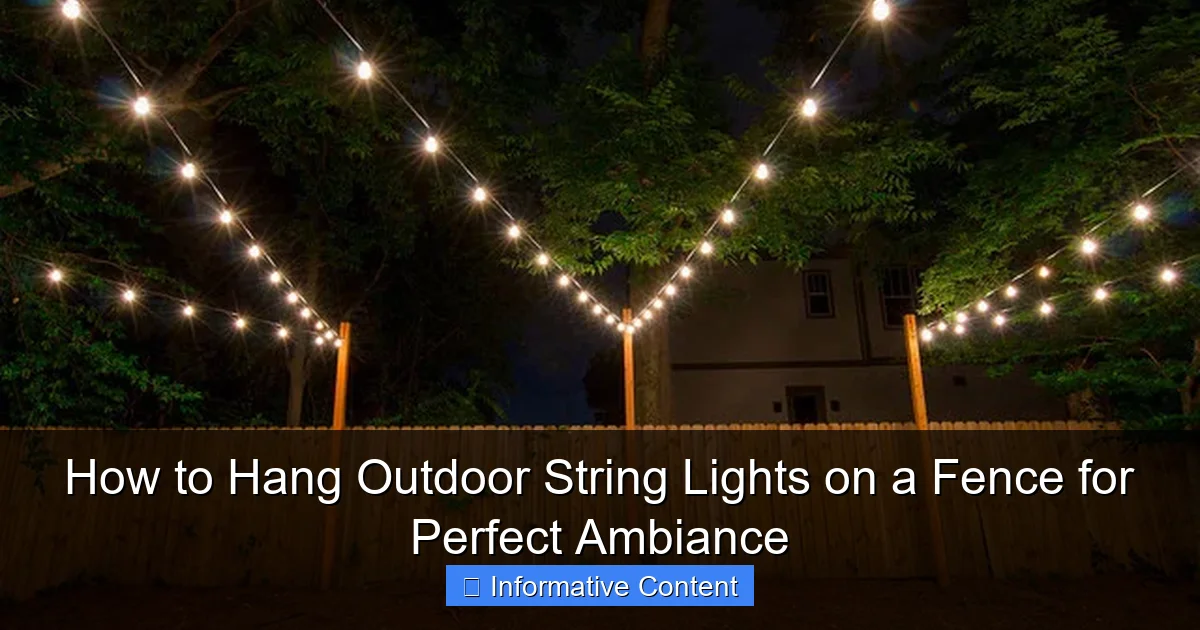
Featured image for hanging outdoor string lights on a fence
Image source: st.hzcdn.com
Transform your backyard into a cozy, inviting retreat by securely hanging outdoor string lights on a fence using durable hooks or zip ties spaced every 12–18 inches. Choose weather-resistant lights and maintain a safe distance from power sources to ensure both brilliance and safety for year-round ambiance.
Key Takeaways
- Plan spacing first: Measure and mark light positions for even, balanced coverage.
- Use sturdy hardware: Install hooks or clips rated for outdoor use to prevent sagging.
- Check power access: Ensure outlets are nearby or use solar-powered lights for flexibility.
- Secure connections tightly: Anchor lights at start and end points to maintain tension.
- Protect wiring: Use weatherproof covers or conduit to extend lifespan and safety.
- Test before finalizing: Check brightness and stability after installation for optimal ambiance.
📑 Table of Contents
- Why Hanging Outdoor String Lights on a Fence Transforms Your Space
- Choosing the Right String Lights for Your Fence
- Preparing Your Fence and Planning the Layout
- Step-by-Step Guide to Hanging the Lights
- Creative Ideas for Stunning Ambiance
- Maintenance and Safety Tips
- Data Table: Popular Outdoor String Light Options
- Final Thoughts: Your Fence, Your Glow
Why Hanging Outdoor String Lights on a Fence Transforms Your Space
Imagine this: it’s a warm summer evening, and you’re sitting in your backyard with a glass of iced tea. The sun has just dipped below the horizon, and suddenly, your fence comes to life with a warm, golden glow. That’s the magic of outdoor string lights on a fence. They’re not just decorative—they’re transformative. Whether you’re hosting a barbecue, enjoying a quiet night with a book, or just want to feel like your outdoor space has a little extra soul, these lights can set the mood in seconds.
But here’s the thing: hanging outdoor string lights on a fence isn’t as simple as just tossing them up and hoping they stick. Done wrong, they can look messy, sag too much, or even damage your fence. Done right? You’ve got a cozy, Instagram-worthy ambiance that makes your backyard feel like a retreat. I’ve been there—tangled in lights, frustrated with clips that won’t stay, and wondering if I should just give up. But after years of trial, error, and a few late-night “light emergencies,” I’ve learned a thing or two. And today, I’m sharing everything you need to know to get it right the first time.
Choosing the Right String Lights for Your Fence
Not all string lights are created equal. Before you start hanging, you need to pick the right type for your fence, your space, and your vibe. Here’s how to make the right choice without getting overwhelmed.
Visual guide about hanging outdoor string lights on a fence
Image source: menterarchitects.com
Types of Outdoor String Lights
There are a few main types of outdoor string lights, and each has its own strengths and quirks:
- LED string lights: These are the most popular for a reason. They’re energy-efficient, last longer than traditional bulbs, and come in a variety of colors and brightness levels. Plus, many have warm white tones that mimic the cozy glow of incandescent bulbs. If you want something low-maintenance and long-lasting, LED is the way to go.
- Incandescent string lights: These give off a classic, soft glow that some people prefer for a vintage or romantic feel. But they use more energy, get hotter, and don’t last as long. If you’re using them occasionally, they’re fine—but for year-round use, they’re not ideal.
- Edison-style bulbs: These have that trendy, exposed-filament look. They’re great for a rustic or boho vibe, but they’re often more expensive and not always weatherproof. Make sure they’re rated for outdoor use if you’re going this route.
- Smart string lights: Want to change colors with your voice or schedule them to turn on at sunset? Smart lights (like Philips Hue or LIFX) are awesome for tech lovers. But they’re pricier, and you’ll need a hub or app to control them.
Pro tip: Always check the packaging for an IP rating (like IP44 or IP65). This tells you how well the lights resist dust and water. For outdoor use, aim for at least IP44—higher is better for rainy climates.
Length, Spacing, and Brightness
Here’s where most people go wrong: buying lights that are too short or too dim. Measure your fence before shopping. If your fence is 20 feet long, don’t buy a 20-foot strand—you’ll need extra length for spacing, loops, or connecting multiple strands.
- Spacing between bulbs: Most outdoor lights have bulbs spaced 6–12 inches apart. Tighter spacing (6 inches) creates a dense, glowing effect—great for ambiance. Wider spacing (12 inches) gives a more subtle, starry look. Choose based on your preference.
- Brightness (lumens): For ambient lighting, 100–200 lumens per bulb is plenty. If you want to light up a large area or use them for dining, go for 300+ lumens. But remember: too much brightness can feel harsh. Warm white (2700K–3000K) is usually cozier than cool white (4000K+).
- Plug vs. solar: Plug-in lights are brighter and more reliable. Solar lights are eco-friendly and easy to install (no outlets needed), but they may dim on cloudy days. If your fence is far from an outlet, consider solar—or a long extension cord with a weatherproof cover.
Real example: I once bought solar lights for my back fence. They looked great on sunny days—but after three cloudy weeks, they barely lit up the path. Now, I use a 50-foot weatherproof extension cord and plug-in LEDs. Problem solved.
Preparing Your Fence and Planning the Layout
Before you start hammering or drilling, take a few minutes to plan. A little prep now saves a lot of hassle later.
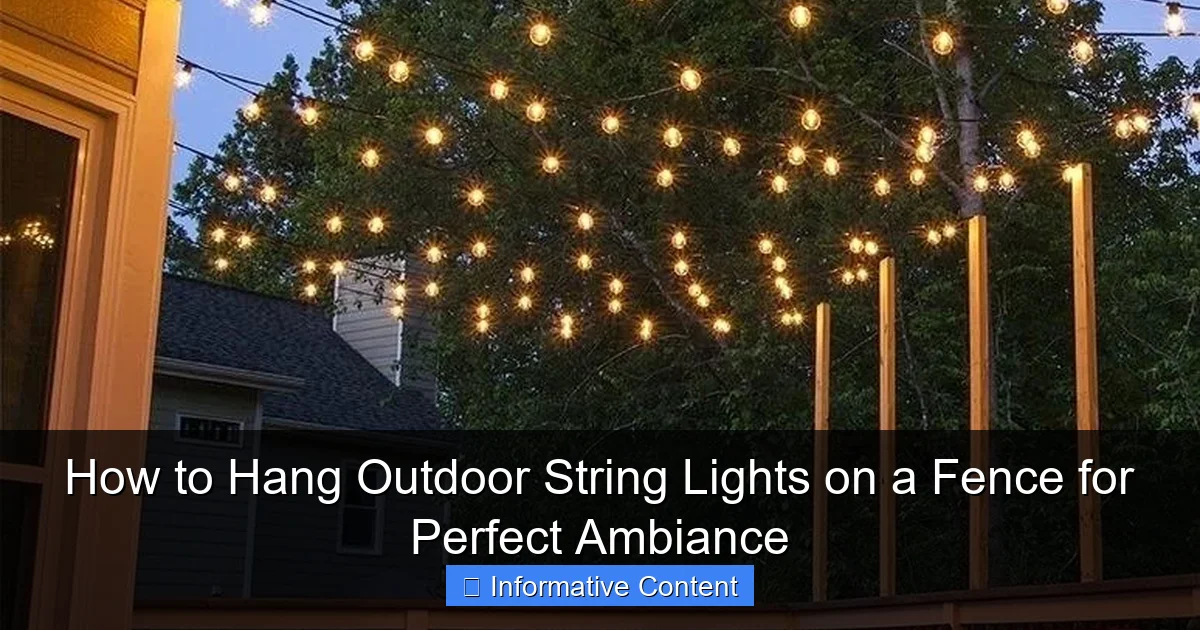
Visual guide about hanging outdoor string lights on a fence
Image source: menterarchitects.com
Inspect and Clean Your Fence
Your fence is the foundation of your lighting setup. Make sure it’s ready:
- Check for damage: Look for loose boards, rotting wood, or rusted metal. Fix any issues first. You don’t want your lights pulling down a weak section.
- Clean the surface: Dirt, pollen, and cobwebs can make clips or adhesive hooks slip. Use a mild soap and water solution to wipe down the fence. Let it dry completely before installing.
- Protect the wood (if needed): If you’re drilling into a wooden fence, consider using a sealant or rubber washer to prevent water damage. For metal fences, check for sharp edges that could cut the light cords.
Tip: If your fence is old or fragile, avoid heavy-duty hooks or nails. Use lightweight adhesive hooks or zip ties instead.
Sketch Your Layout
Grab a piece of paper or use a free design app (like SketchUp Free or Canva). Sketch your fence and plan where you want the lights:
- Straight line: Simple and classic. Hang lights in a straight line along the top of the fence. Good for a clean, minimalist look.
- Wave or zigzag: Create movement by looping the lights in gentle waves. This adds depth and makes the space feel larger.
- Grid pattern: Run lights horizontally and vertically to create a “cocoon” effect. Great for small patios or cozy corners.
- Highlight features: Use lights to draw attention to garden beds, a bench, or a water feature. For example, run a strand along the top of the fence and loop it down to frame a planter.
Pro tip: Use painter’s tape to mark where you’ll install hooks or clips. This lets you “test” the layout before committing.
Calculate Power Needs
If you’re using plug-in lights, don’t overload your circuit. Most outdoor outlets can handle about 1,800 watts (check your breaker panel). LED lights use around 1–10 watts per strand, so you can usually connect 3–5 strands. But if you’re using incandescent lights (which use 50+ watts per strand), you may need fewer.
- Use a timer or smart plug: This saves energy and lets you set the lights to turn on at dusk. I use a simple mechanical timer—it’s cheap and reliable.
- Extension cord safety: If you need an extension cord, choose one rated for outdoor use (look for “SJTW” on the label). Keep it off the ground to avoid tripping or water damage.
Step-by-Step Guide to Hanging the Lights
Now for the fun part: actually hanging the lights! Here’s how to do it neatly and securely.
Choose Your Hanging Method
The method depends on your fence type and how permanent you want the setup to be:
- Adhesive hooks or clips: Best for wooden fences or renters. Use heavy-duty outdoor-rated hooks (like Command Outdoor Hooks). They hold up to 3–5 pounds and won’t damage the wood. Just press them on and wait 24 hours before hanging lights.
- Screw-in hooks or eyelets: More secure for permanent setups. Use stainless steel or coated hooks to prevent rust. Pre-drill small holes in wooden fences to avoid splitting.
- Zip ties: Quick and cheap. Use UV-resistant ties (like these from CableOrganizer) and attach them to fence pickets or mesh. Trim the ends for a clean look.
- Fence clips or light hangers: These are designed specifically for string lights. They slide over fence pickets and grip the cord. I love the LightKeeper Pro clips—they’re sturdy and don’t slip.
Warning: Avoid staples or nails—they can cut the cords and create fire hazards.
Install the Hardware
Follow your layout plan and install the hooks, clips, or ties:
- Spacing: For straight lines, place hooks every 2–3 feet. For waves or zigzags, space them closer (every 1–1.5 feet) to hold the shape.
- Height: Hang lights 6–8 inches below the top of the fence to protect them from rain and debris. If your fence has a cap, you can hang them right under it.
- Corners: At corners, use a hook or clip to redirect the lights. Don’t bend the cord sharply—it can damage the wiring.
Real example: On my cedar fence, I used screw-in hooks every 2.5 feet. I pre-drilled the holes and used rubber washers to prevent water from seeping into the wood. After three years, the fence still looks great.
Hang the Lights
Now for the main event:
- Start at the power source: Begin near the outlet or timer. This reduces slack and makes it easier to connect multiple strands.
- Loop, don’t stretch: Don’t pull the lights tight. Leave a little slack (about 1–2 inches) between each hook. This prevents sagging and makes adjustments easier.
- Connect strands safely: If you’re using multiple strands, plug them together before hanging. Use outdoor-rated connectors and cover them with electrical tape or a silicone sleeve to keep water out.
- Secure the end: Tie the last bulb to a hook or use a zip tie to keep it from dangling.
Pro tip: If the lights sag too much, add extra hooks in the middle. Or try a “catenary” design—hang a thin steel wire between hooks and attach the lights to it. This gives a taut, professional look.
Creative Ideas for Stunning Ambiance
Once you’ve mastered the basics, it’s time to get creative. Here are some ideas to take your fence lighting to the next level.
Layer Your Lighting
Don’t rely on just one strand. Combine different types of lights for depth:
- Top layer: Hang a main strand along the fence for ambient light.
- Middle layer: Add a second strand lower down (or loop it around planters) for a “glow from below” effect.
- Bottom layer: Use ground-level lights or solar path lights to guide the eye.
Example: At a friend’s garden party, they hung warm white lights along the fence, added blue fairy lights in the flower beds, and used lanterns on the ground. The result? A magical, multi-dimensional glow.
Play with Shapes and Patterns
Use the lights to create shapes or highlight architectural features:
- Heart or star: For a special occasion, use wire frames to shape the lights into a heart, star, or your initials.
- “Floating” effect: Hang lights at different heights (like a zigzag or wave) to create a 3D look.
- Frame a view: If you have a nice view (like a garden or cityscape), use lights to “frame” it like a picture.
Use Color and Motion
Color-changing or twinkling lights can add drama:
- Color themes: Use blue for a cool, relaxing vibe or warm white for a cozy feel. For holidays, switch to red/green or orange/purple.
- Twinkling or chasing modes: These create a dynamic effect. Use them sparingly—too much motion can be distracting.
Maintenance and Safety Tips
Good lighting is a long-term investment. Keep yours safe and looking great.
Regular Checks
Inspect your setup every few months:
- Check for damage: Look for frayed cords, loose bulbs, or rusted hooks. Replace damaged parts immediately.
- Clean the bulbs: Wipe them with a damp cloth to remove dust and pollen. This keeps them bright.
- Tighten loose hardware: Over time, hooks and clips can shift. Re-secure them as needed.
Safety First
Never compromise on safety:
- Use GFCI outlets: These cut power if they detect a ground fault. Essential for outdoor use.
- Don’t overload circuits: Follow the manufacturer’s guidelines for how many strands you can connect.
- Unplug during storms: Lightning can damage lights and outlets. If a storm is coming, turn them off.
Winter Care
If you live in a cold climate:
- Remove lights if possible: Store them indoors to prevent ice damage.
- Or use all-weather lights: Some LEDs are rated for -20°F. Just make sure they’re designed for snow and ice.
Data Table: Popular Outdoor String Light Options
| Brand & Model | Bulb Type | Length | IP Rating | Special Features | Best For |
|---|---|---|---|---|---|
| Brightech Ambience Pro | LED (warm white) | 48 ft | IP65 | Weatherproof, connectable, dimmable | Year-round use, large spaces |
| Twinkle Star 2-Pack | LED (multi-color) | 20 ft each | IP44 | Remote control, 8 modes | Parties, holidays |
| Edison LED by Govee | LED (Edison-style) | 33 ft | IP65 | Smart app, voice control | Tech lovers, modern decor |
| Solar String Lights (Aityvert) | LED (warm white) | 33 ft | IP65 | Solar-powered, auto on/off | Eco-friendly, no outlet needed |
Final Thoughts: Your Fence, Your Glow
Hanging outdoor string lights on a fence is one of those small projects that makes a huge difference. It’s not just about the light—it’s about creating a space where you want to be. Whether you’re going for cozy, romantic, festive, or just “I want to show this off to my friends,” the right lights can make your backyard feel like an extension of your home.
Remember: start with the right lights, plan your layout, and take your time installing them. Don’t rush it. And don’t be afraid to experiment. I’ve changed my lighting setup three times in five years—and each time, it’s felt like a fresh start.
So go ahead: grab your lights, sketch a plan, and turn that fence into a glowing masterpiece. The ambiance you create might just be the best part of your day. And when you’re sitting outside with that glass of iced tea, watching the lights dance in the breeze? You’ll know it was worth every minute.
Frequently Asked Questions
How do I hang outdoor string lights on a fence without damaging it?
Use removable hooks, adhesive clips, or zip ties to secure the lights without drilling or nailing. These methods are gentle on the fence while providing a sturdy hold for your outdoor string lights.
What’s the best spacing for hanging string lights on a fence?
For even coverage, space hooks or clips 12–18 inches apart along the fence. This prevents sagging and ensures the lights create a balanced, ambient glow.
Can I leave outdoor string lights on my fence year-round?
Only if the lights are rated for year-round outdoor use and weatherproof. Check the product specifications and consider removing them during harsh winter conditions to prolong their lifespan.
How do I power outdoor string lights on a fence without an outlet nearby?
Use solar-powered outdoor string lights or a weatherproof extension cord routed safely from the nearest outlet. For longer distances, consider a low-voltage transformer system.
Are there special clips for hanging string lights on a chain-link fence?
Yes, use S-hooks or chain-link-specific clips designed to grip the fence’s diamond pattern securely. These allow easy installation and removal without tools.
How do I keep string lights from sagging between fence posts?
Install tension wire or fishing line behind the lights and anchor it to the fence posts. This creates a taut base to hang the lights on, preventing drooping over time.