Featured image for hardwired patio string lights
Image source: i.pinimg.com
Hardwired patio string lights deliver permanent, professional-grade illumination that transforms your outdoor space into a year-round retreat. Unlike plug-in alternatives, they offer seamless integration with your home’s electrical system, eliminating cords and enabling customizable, weather-resistant lighting perfect for entertaining or relaxing under the stars.
Key Takeaways
- Hardwired lights offer permanent, weatherproof outdoor illumination with no cords or battery replacements needed.
- Choose dimmable LEDs for customizable ambiance and significant energy savings over time.
- Professional installation ensures safety and code compliance for hardwired electrical connections.
- Opt for shatterproof bulbs and UV-resistant wiring to withstand harsh weather conditions.
- Integrate with smart home systems for automated scheduling and voice-controlled convenience.
- Select commercial-grade strands for durability in high-traffic entertaining areas.
📑 Table of Contents
- Why Hardwired Patio String Lights Are a Game-Changer
- What Are Hardwired Patio String Lights? (And How Do They Work?)
- Benefits of Choosing Hardwired Over Temporary Lighting
- Installation Guide: DIY vs. Hiring a Pro
- Top Features to Look for in Hardwired Patio String Lights
- Real-World Examples and Inspiration
- Final Thoughts: Is It Worth the Investment?
Why Hardwired Patio String Lights Are a Game-Changer
Picture this: It’s a warm summer evening. You’re sitting on your patio with a glass of wine, the sun has dipped below the horizon, and a gentle breeze carries the scent of blooming jasmine. But something’s missing. The space feels a little too dark, a little too quiet. That’s when you notice the soft, warm glow of hardwired patio string lights strung across your pergola—transforming your backyard from ordinary to magical in seconds.
Unlike temporary plug-in lights, hardwired patio string lights are permanently installed, offering a clean, professional look that blends seamlessly into your outdoor space. No more tripping over extension cords, no more unplugging during storms, and no more fiddling with timers every evening. They’re the kind of upgrade that feels like a luxury but pays off in convenience, safety, and long-term enjoyment. Whether you’re hosting a dinner party, enjoying a quiet night with a book, or just want to make your backyard feel like an extension of your home, these lights are a smart, lasting investment.
What Are Hardwired Patio String Lights? (And How Do They Work?)
Defining the Basics
Hardwired patio string lights are outdoor lighting fixtures that are directly connected to your home’s electrical system—just like your kitchen lights or bathroom vanity. Instead of plugging into an outlet, they’re wired through your home’s junction box, often via a dedicated circuit, and controlled by a switch or smart home system. This permanent installation eliminates the need for extension cords, timers, or power strips.
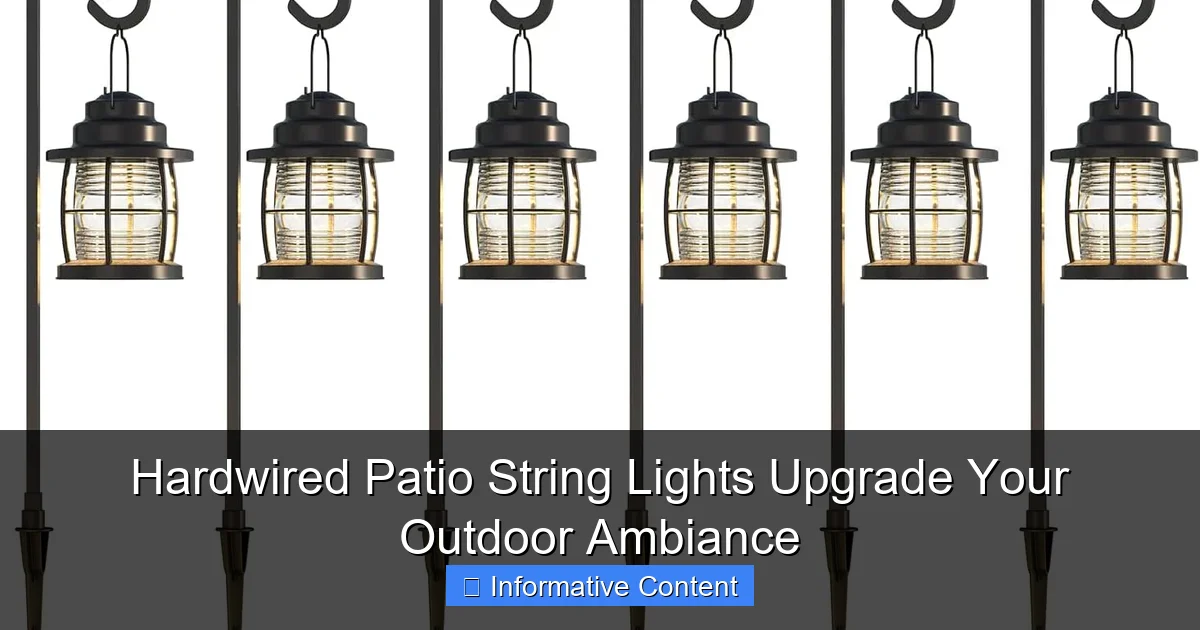
Visual guide about hardwired patio string lights
Image source: m.media-amazon.com
Think of them like recessed ceiling lights, but for your outdoor living area. They’re typically installed along eaves, pergolas, fences, or even tree branches, creating a canopy of light that enhances both ambiance and functionality. The “hardwired” part simply means they’re permanently connected to your electrical supply, not portable.
How They Differ from Plug-In or Solar Lights
Let’s compare the three main types of outdoor string lights:
- Plug-in string lights: Easy to install, but limited by outlet location and vulnerable to weather. You’ll need outdoor-rated extension cords and GFCI protection, which can look messy.
- Solar-powered lights: Eco-friendly and easy to install, but inconsistent brightness and performance in cloudy weather. They also require daily sun exposure to charge fully.
- Hardwired patio string lights: Reliable, always-on (when you want them), weatherproof, and professionally integrated. They require a bit more effort to install, but the payoff is a clean, permanent setup that works year-round.
For example, my neighbor installed solar lights last year. By October, half the bulbs were dim or dead. When I switched to hardwired lights last spring, I noticed a huge difference—consistent brightness, no charging worries, and the ability to leave them on for hours without draining a battery.
Key Components of a Hardwired System
A typical hardwired setup includes:
- Weatherproof light strands: Designed for outdoor use with UV-resistant, shatterproof bulbs and sealed sockets.
- Low-voltage transformer (if applicable): Some systems use 12V or 24V for safety and efficiency, especially in larger installations.
- Junction box and conduit: Protects wiring from moisture and physical damage. Must be installed by a licensed electrician for code compliance.
- Switch or smart controller: Allows you to turn lights on/off, dim, or schedule them via wall switch, remote, or app.
One thing I learned the hard way: not all “outdoor-rated” lights are truly weatherproof. I bought a cheap set from an online marketplace and within six months, the sockets corroded. Now I only buy lights with an IP65 or higher rating—meaning they’re dust-tight and protected against water jets.
Benefits of Choosing Hardwired Over Temporary Lighting
1. Clean, Professional Aesthetic
Let’s face it: extension cords and power strips are eyesores. They clutter your patio, create trip hazards, and make your space feel temporary. Hardwired patio string lights, on the other hand, look like they belong. With wires hidden in soffits, conduit, or under eaves, the result is a sleek, intentional design that elevates your entire outdoor area.
I once hosted a dinner party with plug-in lights strung across the yard. A guest tripped over a cord, spilled her drink, and we spent half the night untangling wires. After switching to hardwired lights, my patio feels like a resort—no cords, no clutter, just beautiful light.
2. Unmatched Reliability and Performance
Hardwired lights don’t depend on batteries or solar panels. They’re powered directly from your home’s electrical system, so you’ll never have dim bulbs or sudden outages. This is especially important for year-round use. In winter, solar lights barely work; plug-in lights can overheat or short out in snow. Hardwired systems, when properly installed, are built to handle all seasons.
For instance, during a recent winter storm, my neighbor’s solar lights went out after two days of overcast skies. Mine stayed on all night, providing both ambiance and safety on icy pathways. The peace of mind alone is worth the investment.
3. Enhanced Safety and Code Compliance
Outdoor electrical work must meet local building codes—especially when it comes to moisture protection and grounding. Hardwired installations are done by licensed electricians who ensure everything is up to code, reducing fire and shock risks. Plus, GFCI (ground fault circuit interrupter) protection is often built into the circuit, automatically shutting off power if there’s a short.
I’ve seen too many DIY plug-in setups with cords running through wet grass or buried under mulch—both huge hazards. A hardwired system eliminates those risks entirely.
4. Smart Integration and Control Options
Modern hardwired patio string lights can connect to smart home systems like Alexa, Google Home, or Apple HomeKit. Imagine dimming the lights from your phone, setting a “movie night” scene with 30% brightness, or scheduling them to turn on at sunset every day. Some even sync with music or change colors for holidays.
I use a Lutron Caséta switch to control my lights. I can dim them for a romantic dinner, brighten them for game night, or turn them off remotely if I forget. It’s simple, reliable, and feels like living in the future.
5. Long-Term Cost Savings
Yes, hardwired lights have a higher upfront cost—typically $300–$800 for materials and labor. But over time, they save money. You won’t need to replace batteries, buy new solar lights every few years, or replace damaged extension cords. Plus, energy-efficient LED bulbs use up to 80% less power than incandescent, so your electric bill won’t skyrocket.
One study by the U.S. Department of Energy found that LED string lights use only 10 watts per 100 bulbs—less than a standard lightbulb. Over five years, that adds up to significant savings.
Installation Guide: DIY vs. Hiring a Pro
When to DIY (And When Not To)
Some aspects of hardwired patio string lights can be DIY-friendly—like mounting the strands or running decorative wire covers. But the electrical work should always be handled by a licensed electrician. Running wiring through walls, connecting to your breaker panel, and ensuring code compliance are not tasks for beginners.
That said, you can handle the planning and setup. For example:
- Measure your space and sketch a layout.
- Choose the right type of lights (LED, warm white, Edison bulbs, etc.).
- Install mounting hooks or cable clips along the desired path.
- Run low-voltage cable (if using a transformer) from the transformer to the first light.
I did the prep work myself—measuring, buying materials, and installing the hooks. My electrician handled the wiring, transformer installation, and final connections. It saved me about $200 and gave me confidence that the system was safe.
Step-by-Step Overview (With Professional Help)
Here’s how a typical installation goes:
- Plan your layout: Decide where lights will go (e.g., along a pergola, around a deck, over a dining area). Use painter’s tape to test placement.
- Choose the system: Decide between line-voltage (120V) or low-voltage (12V/24V). Low-voltage is safer and more energy-efficient but requires a transformer.
- Hire an electrician: Get a quote and schedule the work. They’ll run conduit, install a junction box, and connect to your panel.
- Mount the lights: After wiring is complete, attach the strands using weatherproof clips or hooks. Avoid staples—they can damage insulation.
- Test and adjust: Turn on the lights, check for dim spots, and adjust spacing if needed.
- Add smart controls (optional): Install a smart switch or hub for remote access.
Pro tip: Install a dedicated outdoor circuit for your lights. This prevents tripping your breaker when you run other appliances like a grill or sound system.
Common Installation Mistakes to Avoid
- Using indoor-rated lights: Outdoor lights must be rated for wet or damp locations (look for “wet location” on the label).
- Overloading circuits: Don’t connect too many lights to one circuit. A good rule: no more than 80% of the circuit’s capacity.
- Improper grounding: All outdoor electrical work must be properly grounded. Your electrician will handle this.
- Ignoring local codes: Some areas require permits for outdoor wiring. Check with your city before starting.
I once saw a friend try to install lights himself. He used indoor extension cords, ran them through a window, and didn’t use a GFCI outlet. Not only was it unsafe, but his home insurance would have voided a claim if there was a fire. Don’t take shortcuts with electricity.
Top Features to Look for in Hardwired Patio String Lights
Weather Resistance (IP Rating)
Look for lights with an IP65 or higher rating. IP stands for Ingress Protection. The first digit (6) means dust-tight; the second (5) means protected against low-pressure water jets. For areas with heavy rain or snow, IP67 (immersion up to 1 meter) is even better.
For example, Brightown Outdoor String Lights have an IP65 rating and are made with rubberized sockets to prevent moisture buildup. I’ve had mine for three years with zero bulb failures.
Bulb Type and Color Temperature
LED bulbs are a must—they last 25,000+ hours, use less energy, and stay cool. For color temperature, 2700K–3000K (warm white) creates a cozy, inviting glow. Avoid cool white (4000K+) for patios—it feels more like an office than a lounge.
Some lights offer RGB (color-changing) options. I love these for holidays—red and green for Christmas, blue for Fourth of July—but I keep them on warm white most of the year.
Strand Length and Spacing
Measure your space carefully. Standard strands are 24, 48, or 96 feet long. Bulbs are usually spaced 12–18 inches apart. Closer spacing (12 inches) gives a denser, more luxurious look; wider spacing (18 inches) is better for large areas.
I have a 20-foot pergola and used two 24-foot strands with 12-inch spacing. It’s bright enough to read by, but not overwhelming.
Dimming and Smart Features
Not all hardwired lights are dimmable. Check the packaging or manufacturer’s website. For smart control, look for compatibility with Lutron, Philips Hue, or other hubs. Some systems even offer motion sensors or voice control.
My lights are dimmable and connect to my Alexa. I can say, “Alexa, set patio lights to 50%,” and she does it instantly. It’s small, but it makes the experience feel luxurious.
Warranty and Customer Support
Reputable brands offer 2–5 year warranties on both the lights and electrical components. Avoid no-name brands—if a bulb fails or the transformer dies, you’ll want support.
I had a transformer fail after 18 months. The company sent a replacement free of charge. That kind of service is worth paying a little more upfront.
Real-World Examples and Inspiration
Case Study: The Cozy Pergola
Sarah and Mark in Portland installed hardwired Edison-style lights along their cedar pergola. They chose 2700K warm white LEDs with 12-inch spacing. The electrician ran conduit under the deck and connected to a dedicated 15-amp circuit. They added a Lutron smart switch and now control the lights with voice commands.
- Cost: $650 (materials and labor)
- Energy use: ~15 watts per hour
- Result: A romantic, resort-like feel that’s used 4–5 nights a week.
Case Study: The Large Backyard Oasis
James in Austin wanted to light up his entire backyard—a 30×40 ft space with a fire pit, dining area, and lounge. He installed three separate zones: one over the dining table, one around the fire pit, and one along the fence line. Each zone has its own switch and dimmer.
- System: Low-voltage (24V) with a central transformer in the garage.
- Bulbs: Shatterproof, warm white LEDs.
- Result: Flexible lighting for any occasion—bright for parties, dim for quiet evenings.
Data Table: Comparing Top Hardwired Patio String Light Options
| Brand & Model | Voltage | Bulb Type | IP Rating | Length (ft) | Smart Features | Warranty | Price (approx.) |
|---|---|---|---|---|---|---|---|
| Brightown Outdoor LED | 120V | LED, warm white | IP65 | 24, 48, 96 | Dimming (requires compatible switch) | 3 years | $40–$120 |
| Philips Hue Outdoor | 120V | RGB + white | IP65 | 33, 66 | App, voice, scheduling | 2 years | $100–$200 |
| Westinghouse Low-Voltage | 24V | LED, Edison | IP67 | 50 | Transformer with timer | 5 years | $80 (lights) + $150 (transformer) |
| Feit Electric Smart | 120V | LED, warm white | IP65 | 48 | Wi-Fi, Alexa/Google | 3 years | $90 |
Note: Prices are for the light strands only. Installation and transformers are additional.
Final Thoughts: Is It Worth the Investment?
After living with hardwired patio string lights for over two years, I can say without hesitation: they’re one of the best upgrades I’ve made to my home. The initial cost and effort are real, but the payoff is immediate and lasting. I use my patio more, I entertain more, and I feel more connected to my outdoor space.
They’re not just about light—they’re about experience. The way the glow softens edges, the way shadows dance on the walls, the way a simple switch can transform a space from ordinary to extraordinary. It’s the little things that make a house a home, and for me, these lights are one of them.
If you’re on the fence, ask yourself: How much do you use your patio? Do you want a permanent, professional look? Are you tired of dealing with cords and batteries? If the answer is yes, then hardwired patio string lights are a smart, safe, and stylish choice.
Just remember: hire a licensed electrician, choose high-quality, weatherproof lights, and plan your layout carefully. With the right setup, you’ll have a beautifully lit outdoor oasis for years to come—no extension cords, no solar charging, no hassle. Just light, ambiance, and the perfect place to unwind.
Frequently Asked Questions
What are the benefits of hardwired patio string lights compared to plug-in versions?
Hardwired patio string lights offer a permanent, weather-resistant solution with no visible cords or plugs, creating a cleaner look. They’re ideal for long-term outdoor use and often integrate seamlessly with smart home systems for automated lighting control.
Can I install hardwired string lights on my own, or do I need an electrician?
While DIY installation is possible, hiring a licensed electrician is recommended for hardwired setups to ensure safety and compliance with local electrical codes. This is especially important when connecting to your home’s main power supply or adding a transformer.
Are hardwired patio string lights weatherproof for year-round use?
Yes, most hardwired patio string lights are designed with weatherproof materials like rubberized sockets and UV-resistant wiring. Always check the IP rating (e.g., IP65) to confirm they can withstand rain, snow, and extreme temperatures.
Do hardwired outdoor string lights require a transformer?
Many hardwired patio string lights use low-voltage systems (12V or 24V) and require a transformer to step down the power. Some LED models may work directly with line voltage, so always verify the product specifications before installation.
How do I choose the right brightness and color temperature for my space?
For a cozy ambiance, opt for warm white (2700K–3000K) LEDs with dimmable functionality. Measure your patio area to determine the required lumens—10–20 lumens per square foot is ideal for ambient lighting.
Can I connect hardwired patio string lights to a smart home system?
Yes, many hardwired string lights are compatible with smart switches, timers, or voice-controlled hubs like Alexa or Google Home. Look for models with Wi-Fi or Zigbee integration for easy automation and scheduling.