Featured image for how close should led lights be together on string lights
Image source: grayhousestudio.com
LED string lights should be spaced 2–4 inches apart for a balanced, radiant glow without harsh hotspots. Closer spacing (under 2″) creates intense brightness, ideal for focal points, while wider gaps (over 4″) offer a softer, starry effect—perfect for ambient lighting. Match spacing to your space and purpose for the perfect ambiance.
Key Takeaways
- Space LEDs 2-4 inches apart for balanced brightness and coverage.
- Closer spacing enhances glow in dimly lit or outdoor areas.
- Wider gaps reduce energy use and prevent overheating risks.
- Match spacing to bulb size—smaller LEDs need tighter placement.
- Test layouts before final install to perfect light distribution.
- Use diffusers or covers to soften harsh LED hotspots.
📑 Table of Contents
- The Magic of LED String Lights: Setting the Perfect Mood
- Understanding LED Light Spacing: The Basics
- Factors That Influence Ideal LED Spacing
- Optimal Spacing by Application: Practical Examples
- How to Calculate the Right Number of Bulbs and Spacing
- Common Mistakes and How to Avoid Them
- Conclusion: Finding Your Perfect Glow
The Magic of LED String Lights: Setting the Perfect Mood
There’s something undeniably enchanting about LED string lights. Whether they’re draped across a patio, wrapped around a tree, or twinkling above a dining table, they have the power to transform any space into a cozy, inviting haven. Their soft glow adds warmth to a room, creates a festive atmosphere during holidays, and even enhances the ambiance of a romantic dinner. But have you ever wondered what makes certain string lights look so much better than others? One critical factor often overlooked is how close the LED lights should be together.
Too far apart, and the lights lose their magical continuity, creating awkward gaps that disrupt the visual flow. Too close, and the brightness can become overwhelming, causing glare or uneven illumination. Achieving the perfect balance between spacing and glow is both an art and a science. In this guide, we’ll explore the optimal spacing for LED lights on string lights, helping you create a luminous display that’s just right for your space, occasion, and aesthetic goals. From understanding light density to choosing the right bulb type, we’ll cover everything you need to know for a flawlessly glowing setup.
Understanding LED Light Spacing: The Basics
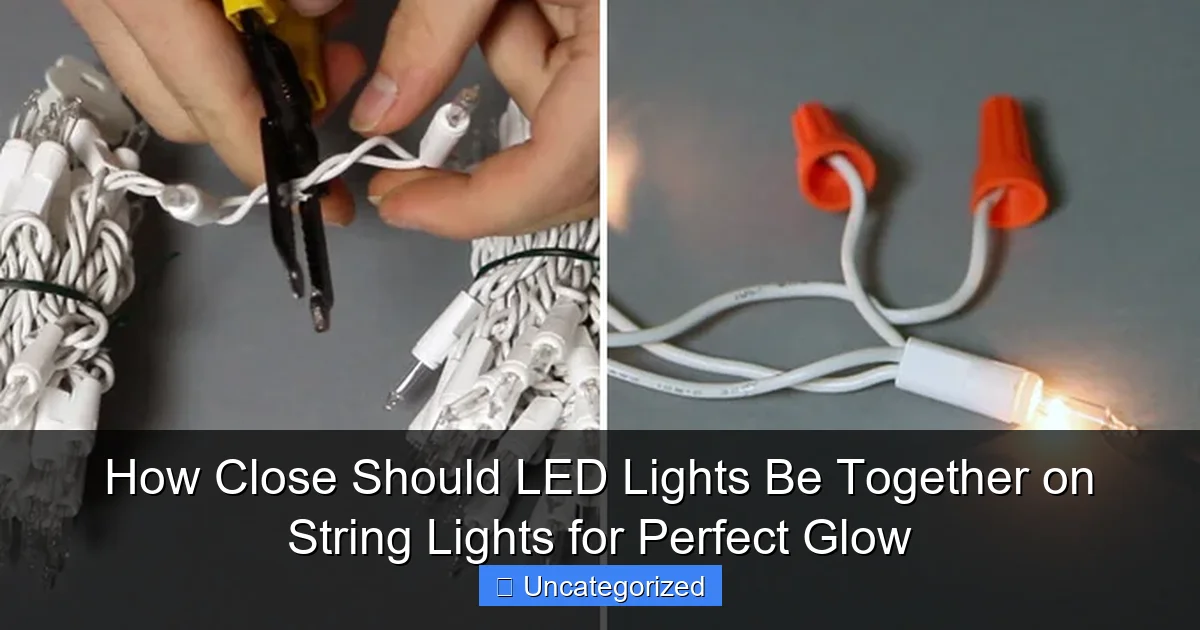
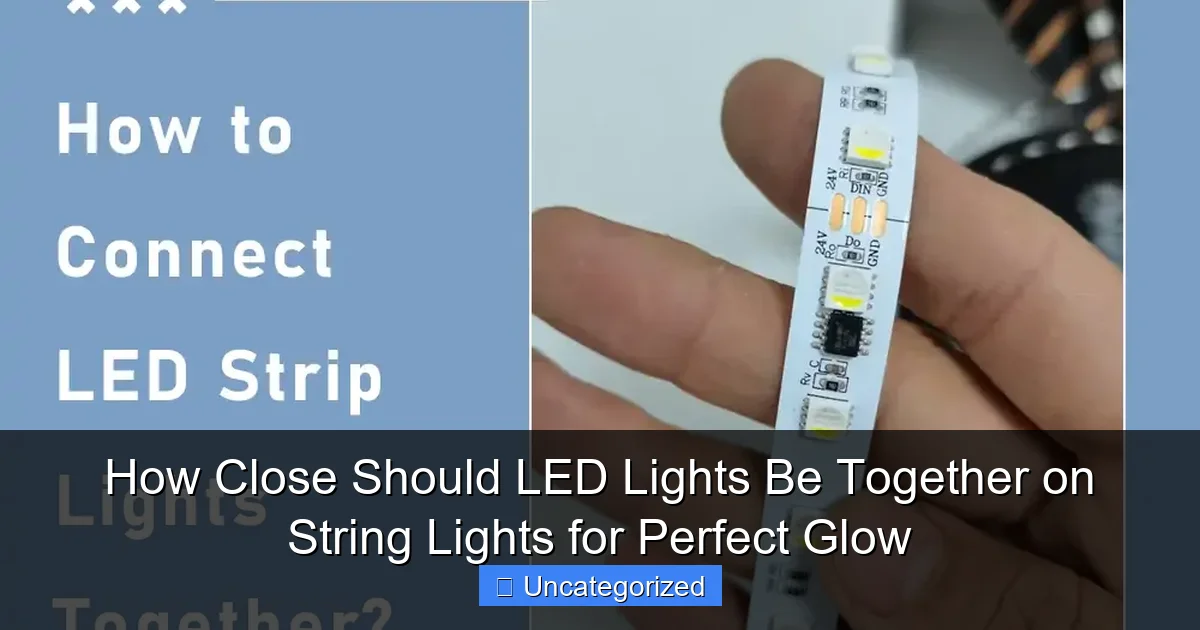
LED string lights are available in a wide variety of configurations, but one of the most important specifications to consider is bulb spacing—the distance between each LED bulb along the wire. This spacing directly impacts the visual effect, energy efficiency, and overall ambiance of your lighting design. Getting it right means the difference between a professional-looking installation and a lackluster one.
Visual guide about how close should led lights be together on string lights
Image source: se.lighting
What Is Bulb Spacing?
Bulb spacing refers to the center-to-center distance between adjacent LED bulbs on a string. It’s usually measured in inches or centimeters and is a standard specification provided by manufacturers. For example, a string light labeled “12-inch spacing” means each LED is 12 inches apart from the next. Common spacing options include 4″, 6″, 12″, 18″, and 24″—each offering a distinct visual effect.
- 4-inch spacing: Ideal for close, continuous illumination—great for wrapping around columns or outlining small areas.
- 6-inch spacing: A balanced choice for most indoor and outdoor uses, offering a soft, even glow without excessive brightness.
- 12-inch spacing: Perfect for outlining large areas like pergolas or eaves, where a subtle twinkle is desired.
- 18-24 inch spacing: Best for decorative accents, such as hanging from trees or outlining architectural features.
Why Spacing Matters
Spacing affects more than just aesthetics. It influences:
- Light distribution: Closer spacing creates a continuous band of light, while wider spacing produces a dotted or twinkling effect.
- Energy efficiency: Fewer bulbs mean less power consumption, but may require more strings to cover the same area.
- Installation flexibility: Closer-spaced lights are easier to wrap around small objects (like railings), while wider-spaced strings are better for long, straight runs.
- Visual comfort: Overly bright or tightly packed LEDs can cause glare, especially in low-light environments.
For example, if you’re decorating a 10-foot balcony railing, using 6-inch spaced LEDs will require approximately 20 bulbs (10 feet = 120 inches ÷ 6 inches = 20 bulbs), creating a warm, continuous glow. In contrast, 12-inch spacing would only use 10 bulbs, resulting in a more spaced-out, starry effect.
Factors That Influence Ideal LED Spacing
There’s no one-size-fits-all answer to how close LED lights should be. The ideal spacing depends on several interrelated factors, including the environment, purpose, bulb type, and personal preference. Let’s break down the key considerations.
Visual guide about how close should led lights be together on string lights
Image source: i.ytimg.com
1. Intended Use and Ambiance
The purpose of your lighting setup plays a major role in determining spacing. Are you aiming for a romantic glow, a festive display, or a functional lighting solution?
- Romantic or cozy ambiance (indoor): Opt for 4″ to 6″ spacing. The close bulbs create a soft, warm, and continuous glow—ideal for bedrooms, dining areas, or living rooms.
- Holiday or party lighting: 6″ to 12″ spacing works well. You want enough bulbs to feel festive without overwhelming the space. For Christmas trees, 6″ spacing on mini lights gives a classic, twinkling effect.
- Outdoor architectural lighting: 12″ to 18″ spacing is often preferred. This allows you to outline structures (e.g., pergolas, fences, eaves) with a subtle, elegant glow.
- Task lighting (e.g., under-cabinet): 4″ to 6″ spacing ensures even illumination without dark spots.
2. Bulb Type and Brightness
Not all LEDs are created equal. The brightness (measured in lumens), bulb shape, and lens design affect how spacing should be approached.
- Mini LED bulbs (standard string lights): Typically 0.5 to 1.5 lumens per bulb. These are best used with 6″ to 12″ spacing to avoid excessive brightness or gaps.
- Large LED bulbs (globe, Edison-style): Often 5 to 20 lumens per bulb. These are brighter and more visible, so 12″ to 18″ spacing is usually sufficient to prevent glare.
- Diffused vs. clear lenses: Diffused lenses scatter light more evenly, allowing for slightly wider spacing (e.g., 12″ instead of 6″) while maintaining a smooth glow.
3. Viewing Distance and Height
The distance from which you’ll view the lights also matters. Lights placed high on a wall or in a tree will appear more spaced out than those at eye level.
- Eye-level installations (e.g., around a mirror, headboard): Use 4″ to 6″ spacing to maintain a continuous glow.
- High installations (e.g., ceiling, eaves, tall trees): 12″ to 18″ spacing is often ideal, as the lights appear closer together from below.
4. Surface and Shape of the Area
The geometry of the space you’re lighting affects spacing. Curved or irregular surfaces require more bulbs to maintain even coverage.
- Straight lines (e.g., along a fence): Wider spacing (12″-18″) works well.
- Curved or intricate shapes (e.g., around a tree, spiral staircase): Closer spacing (4″-6″) ensures the lights follow the contour without gaps.
Pro Tip: For wrapping around a tree trunk or column, use a spacing calculator: divide the circumference (in inches) by your desired spacing to determine how many bulbs you’ll need per loop.
Optimal Spacing by Application: Practical Examples
Now that we understand the factors, let’s dive into real-world applications. Here are detailed examples of how spacing should be adjusted based on common lighting scenarios.
1. Indoor Decor: Bedroom, Living Room, or Dining Area
For a cozy, intimate feel, aim for a soft, continuous glow. This is where 4″ to 6″ spacing shines.
- Bedroom headboard: Wrap string lights around the frame or drape them behind a sheer curtain. Use 6″ spacing with warm white LEDs (2700K-3000K) for a relaxing ambiance.
- Dining table: Hang lights overhead in a zigzag or crisscross pattern. 6″ spacing ensures even coverage without blinding guests.
- Living room mantel or bookshelf: Use 4″ spacing for a “wall of light” effect. Pair with dimmable LEDs for adjustable brightness.
Example: A 60-inch-long bookshelf with 4″ spacing requires 15 bulbs (60 ÷ 4 = 15), creating a dense, glowing outline.
2. Outdoor Patio or Pergola
Outdoor spaces often benefit from a balance between visibility and elegance. 6″ to 12″ spacing is ideal.
- Hanging overhead: Use 12″ spacing with large Edison-style bulbs. The gaps add visual interest while still providing ambient light.
- Wrapping columns: Use 6″ spacing with mini LEDs to ensure full coverage around curved surfaces.
- Along railings: 6″ spacing creates a continuous band of light, perfect for evening gatherings.
Example: A 20-foot pergola with 12″ spacing needs about 20 bulbs (240 inches ÷ 12 = 20). Add a second parallel string for a fuller look.
3. Holiday Decor: Christmas Trees and Windows
Holiday lighting is all about sparkle and festivity. 6″ spacing is the gold standard for Christmas trees.
- Tree lighting: Use 6″ spacing mini LEDs. Wrap vertically (from top to bottom) for even coverage. For a 7.5-foot tree, you’ll need about 200-250 bulbs (depending on fullness).
- Window frames: 6″ to 12″ spacing works well. Closer spacing creates a solid glow; wider spacing gives a “twinkle” effect.
- Rooflines and eaves: 12″ to 18″ spacing with large bulbs (e.g., C9s) for visibility from a distance.
4. Event Lighting: Weddings, Parties, and Backdrops
Events require lighting that’s both functional and decorative. 4″ to 8″ spacing offers versatility.
- Backdrop lighting: Use 4″ spacing with warm white or colored LEDs. The dense bulbs create a seamless background.
- Dance floor perimeter: 6″ spacing with RGB LEDs allows for color-changing effects without dark spots.
- Ceiling draping: 8″ spacing with fairy lights gives a “starry night” effect.
Pro Tip: For weddings, consider using cluster lights (groups of 3-5 bulbs close together with wider spacing between clusters) for a dynamic, twinkling look.
How to Calculate the Right Number of Bulbs and Spacing
Now that you know the ideal spacing ranges, let’s make it practical. Here’s a step-by-step guide to calculating the perfect setup for your space.
Step 1: Measure the Area
Use a tape measure to determine the total length of the area you want to light. For example:
- Balcony railing: 10 feet (120 inches)
- Pergola beam: 15 feet (180 inches)
- Christmas tree (vertical wrap): 7.5 feet (90 inches)
Step 2: Choose Your Desired Spacing
Refer to the earlier guidelines based on use case. For a pergola, you might choose 12″ spacing. For a bedroom, 6″ spacing.
Step 3: Calculate the Number of Bulbs
Use this formula:
Number of bulbs = Total length (in inches) ÷ Spacing (in inches)
Example: 180-inch pergola with 12″ spacing = 180 ÷ 12 = 15 bulbs
Step 4: Adjust for Overlap or Multiple Rows
If you want a fuller look, add a second or third row with staggered spacing. For example:
- Row 1: 12″ spacing (15 bulbs)
- Row 2: 12″ spacing, starting 6″ from Row 1 (creates a zigzag effect)
Step 5: Consider Bulb Density and Power
Check the manufacturer’s specs for:
- Total lumens: Higher lumens = brighter output. For ambient lighting, aim for 200-500 lumens per 10 feet.
- Power draw: Ensure your power source (battery, plug, transformer) can handle the total wattage.
- Max connected strings: Most LED strings allow 20-50 connected together. Don’t exceed the limit.
Spacing Calculator Table
| Area Length (inches) | Spacing (inches) | Number of Bulbs Needed | Recommended Use |
|---|---|---|---|
| 60 | 4 | 15 | Bookshelf, headboard |
| 120 | 6 | 20 | Balcony, railing |
| 180 | 12 | 15 | Pergola, eaves |
| 90 | 6 | 15 | Christmas tree (7.5 ft) |
| 240 | 8 | 30 | Event backdrop |
Common Mistakes and How to Avoid Them
Even with the best intentions, mistakes happen. Here are the most common errors in LED string light spacing—and how to fix them.
1. Choosing the Wrong Spacing for the Space
Problem: Using 12″ spacing on a small bookshelf results in only 5-6 bulbs, making the lights look sparse.
Solution: Match spacing to the scale. For small areas, go with 4″ to 6″ spacing. For large areas, 12″ to 18″ is fine.
2. Ignoring Bulb Brightness
Problem: Using high-lumen bulbs (e.g., 20 lumens) with 4″ spacing creates glare.
Solution: Pair bright bulbs with wider spacing (12″+) or use diffused lenses. For soft light, choose lower-lumen bulbs (1-2 lumens) with closer spacing.
3. Poor Placement on Curved Surfaces
Problem: Lights appear uneven when wrapped around a tree—some areas are too bright, others too dark.
Solution: Use 6″ spacing and wrap vertically (not horizontally) for even coverage. Add extra bulbs in dense foliage areas.
4. Overloading the Power Source
Problem: Connecting too many strings causes flickering or burnout.
Solution: Check the manufacturer’s max connection limit (usually 20-50 strings). Use a timer or dimmer to reduce load.
5. Forgetting the Viewing Angle
Problem: Lights on a high ceiling look sparse when viewed from below.
Solution: Use wider spacing (12″-18″) for high installations. The lights will appear closer together from a distance.
6. Neglecting Dimming and Color Options
Problem: Lights are too bright or the wrong color for the mood.
Solution: Choose dimmable, color-tunable LEDs. Warm white (2700K-3000K) is best for cozy spaces; cool white (4000K-5000K) for task lighting.
Final Tip: Always test a section of lights before full installation. Adjust spacing and brightness to suit the environment.
Conclusion: Finding Your Perfect Glow
How close should LED lights be together on string lights? The answer lies in a thoughtful balance of purpose, environment, bulb type, and spacing. Whether you’re creating a romantic bedroom nook, a festive holiday display, or an elegant outdoor lounge, the right spacing transforms your lights from simple decor to a work of art.
Remember, there’s no universal “perfect” spacing—but there is a perfect spacing for your space. Use the guidelines and calculations in this guide to tailor your setup. Start with 6″ spacing as a safe middle ground, then adjust based on brightness, distance, and shape. Don’t be afraid to mix and match—layering different spacings can create depth and visual interest.
Ultimately, the goal is to create a glow that feels just right: not too bright, not too dim; not too sparse, not too crowded. With the right approach, your LED string lights won’t just illuminate a space—they’ll elevate it. So go ahead, experiment, measure, and light up your world with confidence. The perfect glow is closer than you think.
Frequently Asked Questions
How close should LED lights be together on string lights for optimal brightness?
The ideal spacing for LED lights on string lights is typically 2–4 inches apart for a balanced glow. Closer spacing (1–2 inches) creates a denser, brighter effect, while wider spacing (4+ inches) offers a more subtle, twinkling look.
What’s the best LED light spacing for outdoor string lights?
For outdoor use, aim for 3–4 inches between LEDs to maintain visibility without overwhelming the space. This spacing works well for patios, gardens, or pergolas, blending ambient lighting with energy efficiency.
Can LED string lights be too close together?
Yes, placing LED lights too close (under 1 inch) can create harsh hotspots or uneven brightness. It may also reduce airflow, increasing heat buildup and shortening the lifespan of the LEDs.
How does spacing affect the ambiance of LED string lights?
Closer spacing (2–3 inches) delivers a cozy, continuous glow ideal for intimate settings, while wider spacing (4+ inches) creates a starry, relaxed vibe. Adjust spacing based on your desired mood and setting.
Are there guidelines for spacing LED string lights in commercial spaces?
For commercial spaces like cafés or event venues, 3–4 inches between LEDs ensures even illumination without glare. This spacing also meets safety standards while enhancing the atmosphere.
How do I calculate the right spacing for my LED string lights?
Measure the area you want to light, then divide the total length by your desired spacing (e.g., 3 inches). For example, a 10-foot (120-inch) space with 3-inch spacing needs around 40 LEDs for even coverage.