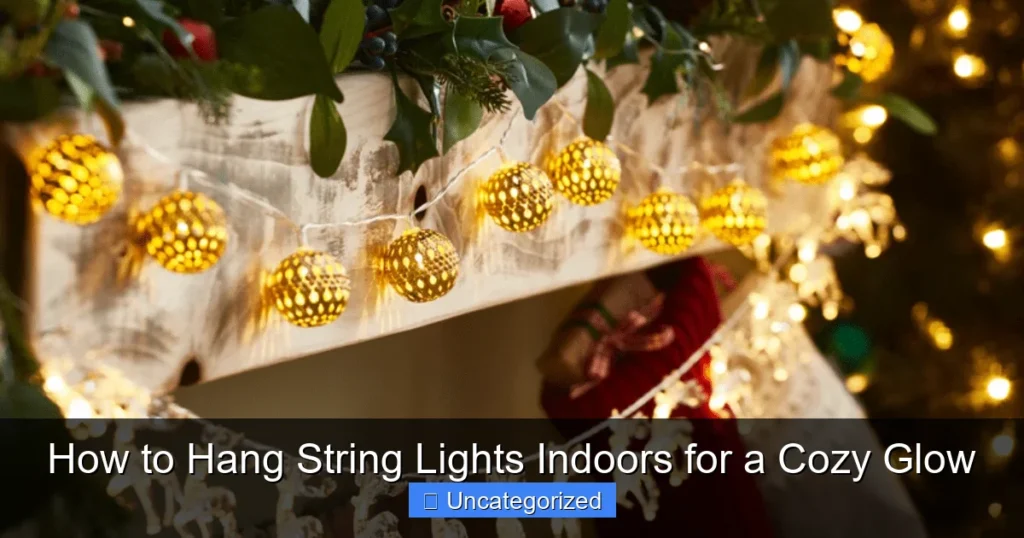
Featured image for how do led christmas light strings work
LED Christmas light strings work by using energy-efficient light-emitting diodes that convert electricity directly into light, offering brighter illumination with far less power than traditional incandescent bulbs. Connected in series or parallel circuits with built-in resistors and controllers, these lights maintain consistent voltage and enable dynamic effects like twinkling or color shifts—making them safer, longer-lasting, and more versatile for holiday displays.
Key Takeaways
- LEDs use semiconductors to emit light efficiently with minimal heat.
- Lower energy consumption makes LED strings cheaper to run than incandescent.
- Longer lifespan of 25,000+ hours reduces replacement frequency.
- Parallel wiring ensures one failed bulb won’t darken the whole string.
- Color options are limitless thanks to RGB and phosphor-coated LEDs.
- Smart controls enable app-based brightness, timing, and color changes.
- Always check IP ratings for safe indoor/outdoor use and durability.
📑 Table of Contents
How Do LED Christmas Light Strings Work: A Complete Guide
The soft glow of Christmas lights twinkling across homes and trees is one of the most iconic symbols of the holiday season. While traditional incandescent bulbs once dominated the market, LED Christmas light strings have rapidly become the standard for festive illumination. These energy-efficient, long-lasting, and vibrant lights are now found in homes, shopping centers, and public displays worldwide. But how exactly do these tiny, brilliant lights work? What makes them so much more efficient and durable than their older counterparts?
Understanding the inner workings of LED Christmas light strings not only satisfies curiosity but also helps consumers make informed decisions when choosing lights for their holiday decor. From the science behind the light-emitting diodes to the wiring configurations and control mechanisms, this guide dives deep into every aspect of how LED Christmas lights function. Whether you’re a DIY decorator, an electronics enthusiast, or simply someone who wants to keep their lights glowing for years to come, this comprehensive breakdown will illuminate the mysteries behind your favorite seasonal decorations.
The Science Behind LED Technology
What Is an LED?
LED stands for Light Emitting Diode, a semiconductor device that emits light when an electric current passes through it. Unlike incandescent bulbs, which produce light by heating a filament, LEDs generate light through a process called electroluminescence. When electrons recombine with electron holes within the semiconductor material, they release energy in the form of photons—light particles. This process is far more efficient because it converts most of the electrical energy directly into light, with minimal heat loss.
For example, a typical incandescent bulb converts only about 10% of its energy into light, with the remaining 90% lost as heat. In contrast, LEDs can convert up to 80-90% of the energy into light, making them significantly more energy-efficient. This efficiency is one of the primary reasons LED Christmas lights consume up to 80% less electricity than traditional bulbs, leading to lower energy bills and reduced environmental impact.
Semiconductor Materials and Color Production
The color of an LED is determined by the type of semiconductor materials used in its construction. Different semiconductor compounds emit photons at specific wavelengths, which correspond to different colors of visible light. For instance:
- Gallium arsenide (GaAs) produces infrared light (not visible).
- Gallium phosphide (GaP) emits red and green light.
- Gallium nitride (GaN) is used to create blue and white LEDs.
- Indium gallium nitride (InGaN) enables a broad spectrum of colors, including white and even ultraviolet.
White LEDs, which are common in Christmas light strings, are typically created in one of two ways:
- Phosphor Conversion: A blue LED is coated with a yellow phosphor layer. When the blue light excites the phosphor, it emits yellow light, which combines with the remaining blue to produce white light.
- RGB Mixing: Red, green, and blue LEDs are placed closely together, and their combined light appears white to the human eye. This method allows for color-changing capabilities.
Modern LED Christmas lights often use phosphor-converted white LEDs for a consistent, warm glow. However, RGB-based strings are popular for animated and color-changing effects, as they can be programmed to cycle through a spectrum of hues.
Energy Efficiency and Longevity
One of the standout advantages of LED Christmas lights is their longevity. While traditional incandescent bulbs last about 1,000 to 2,000 hours, LEDs can operate for up to 50,000 to 100,000 hours—equivalent to 5 to 10 years of continuous use. This extended lifespan is due to several factors:
- No filament to burn out.
- Lower operating temperatures reduce thermal stress.
- Solid-state construction makes them more resistant to vibration and physical shock.
Additionally, LEDs are highly energy-efficient. A standard string of 100 LED mini lights uses only about 4 to 6 watts of power, compared to 40 watts for an equivalent incandescent string. This efficiency not only reduces electricity consumption but also allows for longer strings to be connected end-to-end without overloading household circuits. For example, you can often connect up to 20 or more LED strings in series, whereas incandescent lights may only allow 3 to 5 strings before tripping a breaker.
Wiring and Circuit Design in LED Light Strings
Series vs. Parallel Circuits
The way LED Christmas lights are wired determines how they function when one bulb goes out. Most LED strings use a combination of series and parallel circuits to balance reliability, brightness, and energy use.
In a series circuit, LEDs are connected end-to-end, so the same current flows through each diode. If one LED fails, the entire circuit is broken, and all lights go out—this was a common frustration with older incandescent strings. However, modern LED lights use a shunt resistor or zener diode in parallel with each LED. When an LED fails (usually by going open-circuit), the shunt activates, allowing current to bypass the dead LED and keep the rest of the string lit. This is why today’s LED strings often stay on even if one bulb burns out.
In contrast, a parallel circuit connects each LED directly across the power supply. This means each LED has its own independent path for current. If one fails, the others continue to function. However, parallel wiring requires more complex circuitry and can lead to inconsistent brightness if LEDs are not perfectly matched. For this reason, most commercial LED Christmas lights use a hybrid design: groups of LEDs are wired in series (e.g., 20 LEDs), and these groups are connected in parallel. This allows for longer strings while maintaining reliability.
Voltage Regulation and Drivers
LEDs are current-driven devices, meaning they require a consistent current to operate safely and maintain brightness. Too much current can overheat and destroy an LED, while too little results in dim or flickering light. To regulate current, LED strings use current-limiting resistors in series with each LED or group of LEDs.
For example, a typical 120V AC-powered LED string may include a small bridge rectifier to convert household AC (alternating current) to DC (direct current), followed by a current-limiting resistor. Some advanced strings use integrated driver circuits that provide constant current, improving efficiency and extending LED life.
Low-voltage LED strings (e.g., 12V or 24V) are often used for outdoor displays or battery-powered applications. These require a step-down transformer or power adapter to convert 120V AC to the lower DC voltage. Low-voltage systems are safer, especially in wet conditions, and allow for longer strings without voltage drop issues.
Voltage Drop and String Length
One challenge with long LED strings is voltage drop—the reduction in voltage as it travels along the wire. As more LEDs are added in series, the total voltage requirement increases. If the voltage at the end of the string is too low, the last LEDs may appear dimmer or flicker.
To combat this, manufacturers use thicker gauge wires and limit the number of LEDs per series group. For instance, a 100-LED string might be divided into five groups of 20 LEDs each, connected in parallel. This ensures each group receives adequate voltage. Additionally, some strings include voltage boosters or repeaters at intervals to maintain consistent brightness across long runs.
Types of LED Christmas Light Strings
Mini LED Lights
Mini LED lights are the most common type of Christmas light, featuring small, bullet-shaped bulbs spaced closely together (typically 4 to 6 inches apart). These are ideal for wrapping trees, outlining roofs, or decorating indoor garlands. Mini LEDs are available in a wide range of colors, including warm white, cool white, red, green, blue, and multicolor.
Most mini LED strings use 20 to 100 LEDs and operate on 120V AC. They are often rated for indoor/outdoor use and feature weather-resistant construction. A practical tip: when choosing mini lights, look for UL-listed products to ensure safety and quality.
Net and Curtain Lights
Net lights consist of a mesh of LEDs arranged in a grid, making them perfect for covering large areas like bushes, hedges, or walls. They come in standard sizes (e.g., 4×6 ft) and eliminate the need for individual wrapping. Net lights are usually powered by a single plug and use parallel wiring so that if one LED fails, the rest remain lit.
Curtain lights (also called icicle lights) feature vertical strands of LEDs hanging from a horizontal wire, mimicking the look of falling snow or icicles. These are ideal for eaves, patios, or windows. Curtain lights often include multiple strands of varying lengths (e.g., 12″, 18″, 24″) to create a cascading effect.
Color-Changing and Smart LED Lights
Modern LED strings go beyond static colors. Color-changing LEDs use RGB (red, green, blue) diodes that can be mixed to produce over 16 million hues. These lights are controlled by a built-in microchip or remote, allowing users to cycle through colors, fade, twinkle, or strobe.
Smart LED lights take this a step further by connecting to Wi-Fi or Bluetooth. With a smartphone app (e.g., Philips Hue, Twinkly, or GE Reveal), users can:
- Change colors and patterns remotely.
- Schedule on/off times.
- Sync lights to music or movies.
- Create custom animations (e.g., twinkling snowflakes).
For example, the Twinkly Smart String Lights use addressable LEDs, where each bulb can be controlled individually, enabling intricate pixel-like animations. These are ideal for tech-savvy decorators who want dynamic, programmable displays.
Fairy and Micro LED Lights
Fairy lights feature ultra-small LEDs (often 2-3mm in size) mounted on thin, flexible wires. They are commonly used for indoor decor, such as wrapping around vases, mirrors, or bed frames. Fairy lights are usually battery-powered or USB-powered, making them portable and safe for children’s rooms.
Micro LEDs are even smaller and are often used in delicate crafts or for outlining intricate shapes. They are available in both steady-on and twinkling modes and are perfect for creating a “starry night” effect.
Power Sources and Safety Considerations
AC vs. DC Power
Most LED Christmas lights plug into standard 120V AC household outlets. However, they convert this to low-voltage DC internally using a rectifier circuit. This conversion is crucial because LEDs only operate on DC. Some outdoor or specialty lights use 12V or 24V DC, requiring an external power adapter. DC-powered lights are safer for wet environments and can be powered by batteries or solar panels.
Battery-powered LED strings are ideal for areas without outlets, such as centerpieces, wreaths, or outdoor trees. They typically use AA or AAA batteries and last 20 to 50 hours, depending on battery quality and LED count. Tip: Use rechargeable batteries to save money and reduce waste.
Weather Resistance and Outdoor Use
Outdoor LED strings must be rated for IP44 or higher (Ingress Protection). This means they are protected against splashing water and solid objects larger than 1mm. Look for labels like “weatherproof” or “outdoor use” when purchasing lights for exterior decoration.
For extreme weather (e.g., snow, ice, or high humidity), consider commercial-grade LED lights, which use thicker insulation, corrosion-resistant sockets, and UV-resistant plastic. Avoid leaving strings plugged in during heavy rain or storms to prevent electrical hazards.
Electrical Safety Tips
To ensure safe operation, follow these best practices:
- Inspect lights before use: Check for frayed wires, cracked sockets, or loose bulbs.
- Don’t overload outlets: Use a power strip with surge protection.
- Unplug when not in use: Especially overnight or during storms.
- Use timers: Automate on/off cycles to reduce fire risk and save energy.
- Avoid extension cords unless necessary: Use heavy-duty, outdoor-rated cords if needed.
Remember: LED lights generate less heat than incandescent bulbs, reducing fire risk. However, damaged cords or faulty wiring can still pose dangers.
Maintenance, Troubleshooting, and Lifespan
Cleaning and Storage
Proper storage extends the life of LED Christmas lights. After the holidays:
- Turn off and unplug lights.
- Remove bulbs from trees or structures carefully to avoid bending sockets.
- Wrap strings around a cardboard rectangle or use a light reel to prevent tangling.
- Store in a dry, temperature-controlled area (e.g., a closet or attic).
Clean bulbs with a dry cloth or compressed air. Avoid water or cleaning solutions, as moisture can damage internal electronics.
Common Problems and Fixes
Even the best LED strings can develop issues. Here are common problems and solutions:
| Problem | Possible Cause | Solution |
|---|---|---|
| Entire string is off | Blown fuse, loose plug, or dead power adapter | Check plug connection, replace fuse (if accessible), test with another outlet |
| Part of string is off | Dead LED, loose bulb, or broken wire | Test bulbs with a LED tester, tighten loose bulbs, inspect for wire damage |
| Flickering or dim lights | Voltage drop, loose connection, or failing driver | Reduce string length, check connections, replace driver if needed |
| Color-changing lights stuck | Faulty remote, dead battery, or microchip error | Replace remote batteries, reset lights (unplug for 30 seconds), contact manufacturer |
When to Replace LED Strings
Despite their long lifespan, LED strings eventually wear out. Signs it’s time to replace them include:
- Multiple bulbs failing within a short period.
- Frequent flickering or color inconsistency.
- Visible damage to wires or sockets.
- Outdated technology (e.g., non-smart strings when you want app control).
Tip: Keep receipts and warranty information. Many manufacturers offer 2-5 year warranties on LED lights.
Understanding how LED Christmas light strings work empowers you to choose the best lights for your needs, troubleshoot issues, and maximize their lifespan. From the semiconductor science that produces brilliant light to the clever wiring that keeps strings lit even when one bulb fails, every component plays a vital role. Whether you prefer classic mini lights, dazzling color-changing displays, or smart programmable strings, LEDs offer unmatched efficiency, safety, and versatility.
As technology continues to evolve, we can expect even more innovative features—like solar-powered smart lights, voice control, and augmented reality integration. But at their core, LED Christmas lights remain a marvel of engineering, transforming simple electrical currents into the warm, joyful glow that defines the holiday spirit. So this year, as you string up your lights, take a moment to appreciate the science and craftsmanship behind each twinkling diode. After all, the magic of the season isn’t just in the lights—it’s in how they work.
Frequently Asked Questions
How do LED Christmas light strings work compared to traditional incandescent lights?
LED Christmas light strings use light-emitting diodes (LEDs) that convert electricity directly into light, making them more energy-efficient and cooler to the touch than incandescent bulbs. Unlike traditional lights that rely on a filament, LEDs have no fragile components, resulting in longer lifespans and reduced energy consumption.
Can LED Christmas light strings be connected end-to-end safely?
Yes, most LED Christmas light strings are designed with built-in connectors to safely link multiple strands end-to-end. However, always check the manufacturer’s guidelines to avoid overloading circuits, as exceeding the recommended number of connected strings can pose a fire hazard.
Why do LED Christmas light strings stay lit even if one bulb goes out?
LED lights are typically wired in parallel circuits, so if one LED fails, the others remain unaffected. This contrasts with older incandescent strings, where a single broken bulb could disrupt the entire circuit due to series wiring.
How do color-changing LED Christmas light strings work?
Color-changing LED Christmas light strings use RGB (red, green, blue) LEDs and a controller to mix these colors digitally, creating a wide spectrum of hues. The controller adjusts the intensity of each LED to produce effects like fading, flashing, or static colors.
Are LED Christmas light strings waterproof for outdoor use?
Many LED Christmas light strings are rated for outdoor use with waterproof or weather-resistant coatings on the bulbs and wiring. However, always confirm the product’s IP rating and avoid submerging the string in water unless explicitly stated.
What causes LED Christmas light strings to flicker or malfunction?
Flickering in LED Christmas light strings can result from loose connections, incompatible dimmer switches, or voltage fluctuations. Ensure all plugs are secure and use LED-compatible dimmers if needed to resolve these issues.