Featured image for how many lumens in 15count led string lights
Image source: cdn.gardeningleave.org
Most 15-count LED string lights produce between 50 to 100 lumens total, offering soft, decorative illumination rather than bright task lighting. Individual LEDs typically emit 3–7 lumens, making them ideal for ambiance in bedrooms, patios, or holiday displays. Always check product specs, as lumen output varies by bulb size, design, and brand efficiency.
Key Takeaways
- Lumens vary by model: Check manufacturer specs for exact lumen output per bulb.
- Total lumens = per bulb × 15: Multiply single bulb lumens by 15 for total brightness.
- Warm vs. cool light: Choose 2700K–3000K for cozy, 4000K+ for vibrant illumination.
- LED efficiency matters: Lower wattage with higher lumens saves energy without sacrificing brightness.
- Spacing affects perceived brightness: Closer bulbs (6–8″) enhance overall glow and uniformity.
📑 Table of Contents
- Understanding Lumens in LED String Lights: What You Need to Know
- What Are Lumens and Why Do They Matter in LED String Lights?
- Typical Lumen Outputs for 15-Count LED String Lights
- Factors That Influence Lumen Output in 15-Count LED Strings
- How to Measure and Compare Lumen Output Accurately
- Choosing the Right 15-Count LED String for Your Needs
- Data Table: Lumen Output Comparison of 15-Count LED String Lights
- Final Thoughts: Finding the Perfect Balance of Light and Style
Understanding Lumens in LED String Lights: What You Need to Know
When shopping for LED string lights, one of the most common questions is, how many lumens are in 15-count LED string lights? Lumens are the key measurement of brightness in lighting, and understanding them is essential for choosing the right lights for your space. Whether you’re decorating for the holidays, creating a cozy ambiance in your living room, or illuminating your outdoor patio, knowing the lumen output of your string lights can make a significant difference in both appearance and functionality.
Unlike older incandescent bulbs that were measured in watts (a measure of energy consumption), modern LED lights are evaluated by their lumen output—the actual amount of visible light they emit. A 15-count LED string light typically contains 15 individual LEDs spaced evenly along a wire or string. But the total lumens depend on several factors, including LED quality, color temperature, wattage, and whether the lights are designed for ambient glow or functional illumination. In this guide, we’ll explore how lumens work in these popular lighting solutions, what to expect from a standard 15-bulb string, and how to choose the right brightness for your specific needs.
What Are Lumens and Why Do They Matter in LED String Lights?
Defining Lumens vs. Watts
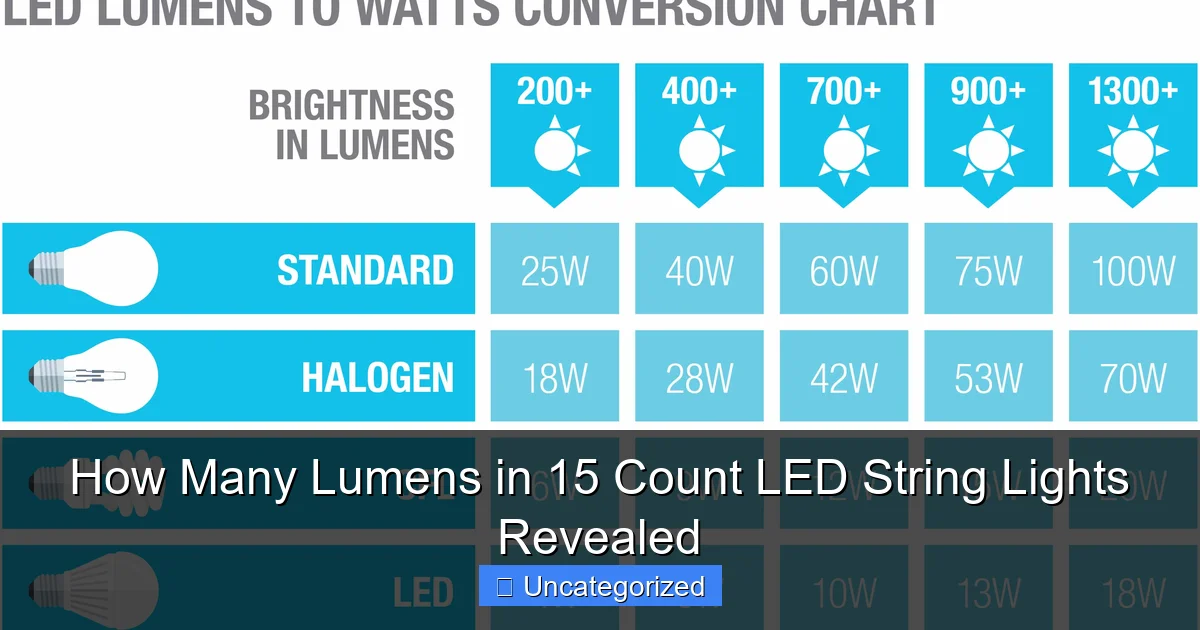
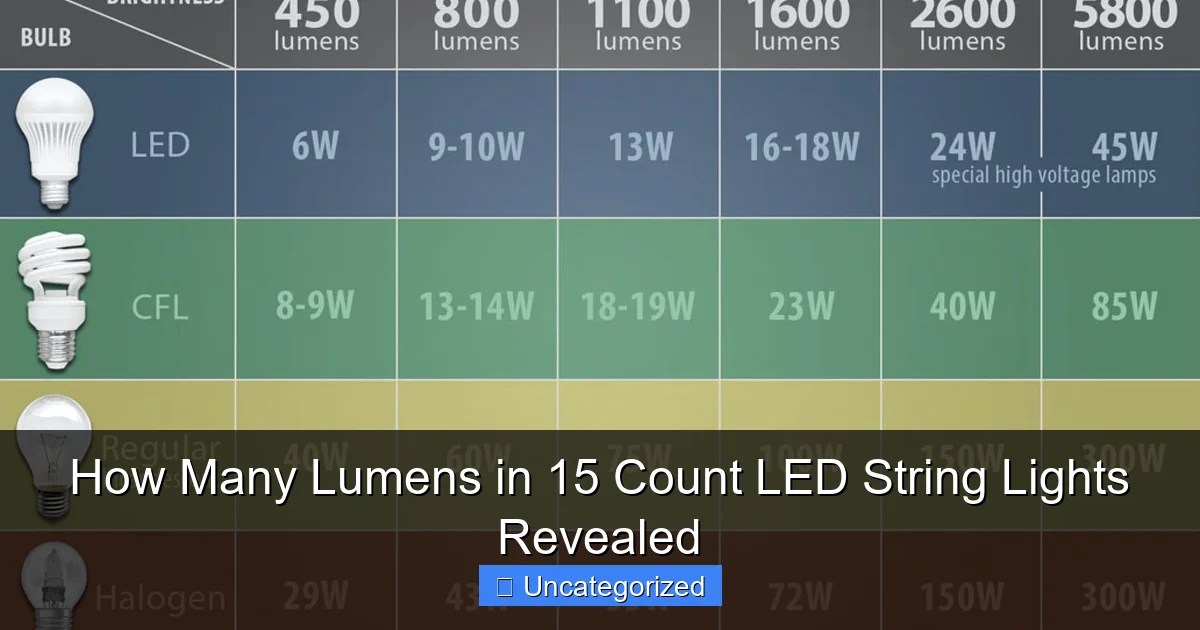
To understand how many lumens in 15-count LED string lights, it’s crucial to distinguish between lumens and watts. In the past, consumers judged light brightness by wattage—higher wattage meant brighter light. However, with the advent of energy-efficient LEDs, this metric has become outdated. Lumens measure the total amount of visible light emitted by a source, regardless of how much electricity it uses. For example, a 5-watt LED can produce the same brightness as a 40-watt incandescent bulb but uses only a fraction of the energy.
Visual guide about how many lumens in 15count led string lights
Image source: contentgrid.homedepot-static.com
For LED string lights, manufacturers often list both wattage and lumens. A typical 15-count LED string might consume between 0.5 to 2 watts total, but the total lumen output can range from 50 to 300 lumens depending on the model. This means you’re getting efficient, bright light without high energy costs. When comparing products, always check the lumens per bulb and total lumens per string to ensure you’re getting the brightness level you need.
How Lumens Affect Ambiance and Functionality
The lumen output of your 15-count LED string lights directly impacts the mood and usability of a space. For instance:
- 50–100 lumens total: Ideal for soft, decorative lighting—think fairy lights on a bookshelf, around a headboard, or in a mason jar centerpiece. These create a warm, cozy glow without overpowering the room.
- 100–200 lumens total: Suitable for accent lighting—wrapped around a tree, outlining a window, or lining a walkway. These provide noticeable brightness while maintaining a festive or romantic feel.
- 200+ lumens total: Better for functional or task lighting, such as illuminating a workspace, kitchen island, or outdoor dining area. These strings are often used in commercial settings or for year-round outdoor use.
For example, a 15-count warm white string with 150 total lumens (10 lumens per LED) is perfect for wrapping around a Christmas tree or creating a twinkling canopy in a bedroom. On the other hand, a cool white or daylight string with 250 lumens (over 16 lumens per bulb) might be better for a modern patio setup or a craft room where visibility matters.
Typical Lumen Outputs for 15-Count LED String Lights
Average Lumens Per LED Bulb
The lumen output per individual LED in a 15-count string can vary widely based on design and purpose. Most standard decorative LED bulbs produce between 5 to 15 lumens each. Here’s a breakdown of common configurations:
Visual guide about how many lumens in 15count led string lights
Image source: images.adsttc.com
- Miniature fairy lights (5–8 lumens per bulb): Often used for delicate indoor decor. These are common in battery-operated strings and are ideal for wrapping around picture frames, mirrors, or floral arrangements.
- Standard decorative LEDs (10–12 lumens per bulb): Found in most plug-in holiday or patio lights. These provide a balanced brightness for trees, railings, and outdoor structures.
- High-output LEDs (15–20+ lumens per bulb): Used in commercial-grade or outdoor-rated strings. These are brighter and more durable, often with weatherproof coatings and thicker wires.
For a 15-count string, multiplying the average lumens per bulb by 15 gives you the total output. For example:
- 10 lumens × 15 bulbs = 150 total lumens (typical for mid-range holiday lights)
- 12 lumens × 15 bulbs = 180 total lumens (common in premium indoor/outdoor strings)
- 16 lumens × 15 bulbs = 240 total lumens (ideal for bright outdoor or commercial use)
Color Temperature and Its Impact on Perceived Brightness
While lumens measure actual light output, the color temperature (measured in Kelvin) affects how bright the light appears to the human eye. LED string lights come in several color temperatures:
- Warm White (2700K–3000K): Appears softer and more golden. A 150-lumen warm white string may look less intense than a 150-lumen cool white, but it creates a cozy, inviting atmosphere—perfect for bedrooms, dining rooms, or holiday decor.
- Cool White (4000K–4500K): Appears brighter and more clinical. These are often used in kitchens, garages, or workspaces where visibility is key.
- Daylight (5000K–6500K): Mimics natural sunlight. These are the brightest in perception and are great for outdoor areas needing functional lighting.
For instance, a 15-count warm white string with 160 lumens may appear softer than a 15-count daylight string with 140 lumens, even though the latter technically emits less light. This is due to the eye’s sensitivity to cooler tones. Always consider both lumens and color temperature when choosing your lights.
Factors That Influence Lumen Output in 15-Count LED Strings
LED Quality and Chip Technology
Not all LEDs are created equal. The quality of the LED chip (the tiny semiconductor that emits light) plays a huge role in lumen output, energy efficiency, and longevity. High-quality LEDs use advanced phosphor coatings and efficient chip designs to maximize brightness while minimizing heat and power draw.
Brands like Philips, GE, and Cree often use superior LED technology, resulting in higher lumens per watt. For example, a premium 15-count string might use SMD (Surface-Mounted Device) LEDs, which are smaller, brighter, and more efficient than traditional through-hole LEDs. These can achieve 15–20 lumens per bulb while using less than 0.1 watts each.
In contrast, budget or generic brands may use lower-grade chips, resulting in dimmer bulbs (5–8 lumens each) that burn out faster. When comparing products, look for:
- Brand reputation and customer reviews
- LED chip type (SMD, COB, etc.)
- Energy Star or UL certification
- Lifespan (typically 25,000–50,000 hours for quality LEDs)
Power Source and Voltage
The power source of your 15-count LED string also affects brightness. Most strings are either:
- Plug-in (AC-powered): These often have higher voltage (120V in the US) and can support brighter LEDs. They’re ideal for permanent installations like outdoor eaves or indoor wall lighting.
- Battery-operated (DC-powered): Limited by battery life and voltage (usually 3V–6V). These tend to have lower lumen outputs (often 5–8 lumens per bulb) to conserve battery. However, advancements in LED efficiency mean some battery strings now reach 10–12 lumens per bulb.
For example, a 15-count plug-in warm white string might deliver 180 lumens (12 per bulb), while a similar battery-operated version might only reach 90 lumens (6 per bulb) due to power constraints. If brightness is a priority, plug-in models are generally the better choice.
Lens and Housing Design
The lens or housing around each LED also influences perceived brightness. Some strings use clear lenses that maximize light output, while others use frosted or colored lenses that diffuse light, creating a softer glow but reducing overall lumens.
For instance:
- Clear bulbs: Direct, bright light—ideal for outlining shapes or creating sparkle effects. A 15-count clear warm white string might reach 200 lumens total.
- Frosted or matte bulbs: Softer, more even light—great for ambient lighting. These may reduce total lumens by 10–20% but create a more pleasing, glare-free ambiance.
- Colored bulbs (red, blue, green): Colored LEDs often have lower lumen outputs than white ones due to the way pigments filter light. A red 15-count string might only emit 80–100 lumens, even if the LEDs are high-quality.
When choosing, consider the trade-off between brightness and aesthetic. A frosted white string might be perfect for a bedroom, while clear bulbs are better for a holiday display.
How to Measure and Compare Lumen Output Accurately
Reading Product Labels and Specifications
When shopping for 15-count LED string lights, always check the product specifications. Reputable brands will list:
- Total lumens per string
- Lumens per bulb
- Color temperature (in Kelvin)
- Wattage and voltage
- LED type and spacing
For example, a product listing might say: “15-count warm white LED string, 180 total lumens, 12 lumens per bulb, 2700K, 1.2 watts, 6-inch spacing, plug-in.” This tells you everything you need to know about brightness and efficiency.
If lumens aren’t listed, look for clues like “equivalent to 40-watt incandescent” or “high brightness.” You can also check customer reviews for phrases like “very bright,” “soft glow,” or “not as bright as expected” to gauge real-world performance.
Using a Light Meter or Smartphone App
For the most accurate lumen measurement, use a light meter (lux meter) or a smartphone app designed for measuring light intensity (e.g., Light Meter for iOS or Lux Light Meter for Android). While these measure lux (lumens per square meter), you can estimate total lumens by:
- Measuring lux at a fixed distance (e.g., 1 meter) from the string
- Using the formula: Lumens = Lux × (Distance in meters)² × 4π (for spherical light distribution)
For example, if your app reads 50 lux at 1 meter, the estimated total lumens would be: 50 × (1)² × 12.57 ≈ 628 lumens. However, since LED strings emit light directionally, this is an approximation. For a 15-count string, you’d expect much lower readings (e.g., 20–40 lux at 1 meter for a 150-lumen string).
This method is useful for comparing different strings side by side or verifying manufacturer claims.
Choosing the Right 15-Count LED String for Your Needs
Indoor vs. Outdoor Use
Your intended use dramatically affects the ideal lumen output. For indoor decorative lighting, aim for 100–200 total lumens. This range provides enough brightness to be visible without creating glare or harsh shadows. Examples include:
- Bedroom canopy: 150 lumens (10 per bulb), warm white, frosted bulbs
- Living room accent: 180 lumens (12 per bulb), cool white, clear bulbs
- Holiday tree: 150–200 lumens (10–13 per bulb), warm white, clear or twinkling
For outdoor or functional lighting, choose strings with 200+ lumens. These are better for:
- Illuminating a patio or deck
- Lining a driveway or walkway
- Lighting a gazebo or pergola
Outdoor strings should also be weather-resistant (IP65 or higher) and use UV-stable materials to prevent yellowing.
Special Features: Twinkle, Color-Changing, and Smart Controls
Modern 15-count LED strings often come with extra features that affect brightness:
- Twinkle or flashing modes: These may reduce average lumens since bulbs cycle on and off. However, they add dynamic visual interest—great for parties or holiday displays.
- Color-changing (RGB): RGB strings use red, green, and blue LEDs to create colors. When all three are on, they produce white light, but colored modes often have lower lumens (e.g., red mode might only use 30% of total brightness).
- Smart controls (Wi-Fi, app, voice): These allow you to adjust brightness, color, and timing. Many smart strings let you dim the lights, effectively changing the lumen output from 20% to 100%. This is ideal for creating different moods with one string.
For example, a 15-count smart RGB string with 240 total lumens (16 per bulb) can be dimmed to 120 lumens for a soft glow or set to red at 80 lumens for a dramatic effect. Always check if the lumen rating is for full brightness or includes dimming ranges.
Data Table: Lumen Output Comparison of 15-Count LED String Lights
| Product Type | Bulb Type | Color Temp (K) | Lumens per Bulb | Total Lumens | Wattage | Ideal Use |
|---|---|---|---|---|---|---|
| Mini Fairy Lights (Battery) | SMD LED | 2700K (Warm White) | 6 | 90 | 0.8W | Indoor decor, crafts |
| Standard Holiday String (Plug-in) | Through-hole LED | 3000K (Warm White) | 10 | 150 | 1.0W | Christmas tree, mantel |
| Premium Patio Lights (Plug-in) | SMD LED | 4000K (Cool White) | 12 | 180 | 1.2W | Outdoor dining, gazebo |
| High-Brightness Outdoor (Plug-in) | SMD LED | 5000K (Daylight) | 16 | 240 | 1.8W | Walkways, security lighting |
| Smart RGB String (Wi-Fi) | RGB SMD | 2700K–6500K (Adjustable) | 16 (white mode) | 240 (full brightness) | 2.0W | Parties, smart homes |
| Colored Decorative (Plug-in) | Red LED | N/A | 5 | 75 | 0.9W | Valentine’s, themed decor |
Final Thoughts: Finding the Perfect Balance of Light and Style
So, how many lumens are in 15-count LED string lights? As we’ve seen, the answer isn’t one-size-fits-all. Most 15-count strings range from 90 to 240 total lumens, depending on LED quality, color, design, and intended use. A good rule of thumb is:
- 90–150 lumens: Soft, decorative lighting for indoor ambiance
- 150–200 lumens: Balanced brightness for accent or holiday lighting
- 200+ lumens: Functional or outdoor illumination
When choosing your string lights, consider not just the numbers but the mood you want to create. A warm, dim string with 120 lumens might be perfect for a romantic dinner, while a bright 240-lumen daylight string is ideal for a workshop. Don’t forget to check for energy efficiency, durability, and smart features that enhance usability.
Ultimately, the best 15-count LED string is one that matches your space, purpose, and personal style. With this guide, you’re now equipped to make an informed decision—whether you’re lighting up a holiday tree, transforming your patio, or adding sparkle to your bedroom. Remember: lumens measure brightness, but ambiance is an art. Choose wisely, and let your space shine.
Frequently Asked Questions
How many lumens do 15-count LED string lights typically produce?
Most 15-count LED string lights produce between 50 to 150 lumens total, depending on bulb brightness (2–10 lumens per LED). Warmer color temperatures (2700K–3000K) often appear slightly dimmer than cool white (5000K–6500K) options.
What factors affect the lumen output of 15-count LED string lights?
Lumen output depends on LED quality, wattage (usually 1–5W total), and bulb design (frosted vs. clear lenses). Brighter LEDs and higher wattage per bulb will increase overall lumens for your 15-count LED string lights.
Are 15-count LED string lights bright enough for outdoor use?
Yes, if the total lumens exceed 100 (e.g., 7+ lumens per LED), they’re suitable for patios or pathways. For ambient lighting or holiday decor, even 50 lumens can create a cozy glow.
How do I calculate lumens per LED in a 15-count string light?
Divide the total lumens by 15 (e.g., 120 total lumens = 8 lumens per LED). Check the product specs—many manufacturers list lumens per bulb for transparency.
Do warm white and cool white 15-count LED string lights differ in lumens?
Technically, no—lumens measure brightness, not color. However, human eyes perceive cool white as brighter, so identical lumen counts may feel more intense in 5000K+ lights.
Can I increase the brightness of my 15-count LED string lights?
Not directly, but you can layer multiple strands or add reflective surfaces (e.g., mirrors) to amplify perceived brightness. Opt for higher-lumen replacements if the lights are dimmable.