Featured image for how many watts do led christmas light strings use
Image source: christmas-light-source.com
LED Christmas light strings use just 1 to 5 watts per 100 lights, making them up to 80% more energy-efficient than traditional incandescent bulbs. This ultra-low wattage means you can safely string dozens of LED sets together without overloading circuits, saving both energy and money while keeping your holiday display bright and safe. Discover how modern LED efficiency transforms festive lighting with minimal power draw.
Key Takeaways
- LED strings use 1-5 watts: Far less than incandescent lights, saving energy.
- Check wattage labels: Always verify per-string usage before connecting multiple sets.
- Longer strings draw more: 100-LED sets may use 4-5 watts; plan circuits accordingly.
- Use timers wisely: Even low-watt LEDs benefit from scheduled on/off times.
- Mix types carefully: Total wattage must stay under circuit limits (usually 15-20A).
- Outdoor LEDs vary: Weatherproof models may use slightly more power—factor this in.
📑 Table of Contents
- The Magic Behind the Glow: Understanding LED Christmas Light Wattage
- How LED Christmas Lights Work and Why Wattage Matters
- How Many Watts Do LED Christmas Light Strings Use? A Detailed Breakdown
- Comparing LED to Incandescent Christmas Lights: A Wattage Showdown
- Calculating Total Energy Use and Avoiding Circuit Overloads
- Choosing the Right LED Christmas Lights: A Buyer’s Guide
- Conclusion: Shine Bright, Spend Less, and Stay Safe
The Magic Behind the Glow: Understanding LED Christmas Light Wattage
As the holiday season approaches, homes across the world begin to sparkle with the warm, festive glow of Christmas lights. Among the most popular choices today are LED Christmas light strings, celebrated not only for their vibrant colors and durability but also for their energy efficiency. But how much electricity do these twinkling marvels actually consume? The answer lies in their wattage—a critical factor for both your electricity bill and your holiday cheer. Whether you’re decorating a modest tree or transforming your entire home into a winter wonderland, understanding the wattage of LED Christmas lights empowers you to make smart, sustainable, and budget-friendly decisions.
Unlike traditional incandescent holiday lights, which guzzle electricity and generate heat, LED (Light Emitting Diode) lights are engineered for efficiency. They use semiconductor technology to convert electricity into light with minimal energy loss. This means you can string together dozens of feet of lights without fear of tripping a circuit or racking up a sky-high utility bill. But just how many watts do LED Christmas light strings use? The answer isn’t one-size-fits-all—it depends on bulb count, color, size, and even whether the lights are steady or blinking. In this comprehensive guide, we’ll dive deep into the science, practical applications, and real-world data behind LED Christmas light wattage, helping you illuminate your holidays with confidence and clarity.
How LED Christmas Lights Work and Why Wattage Matters
The Science Behind LED Efficiency
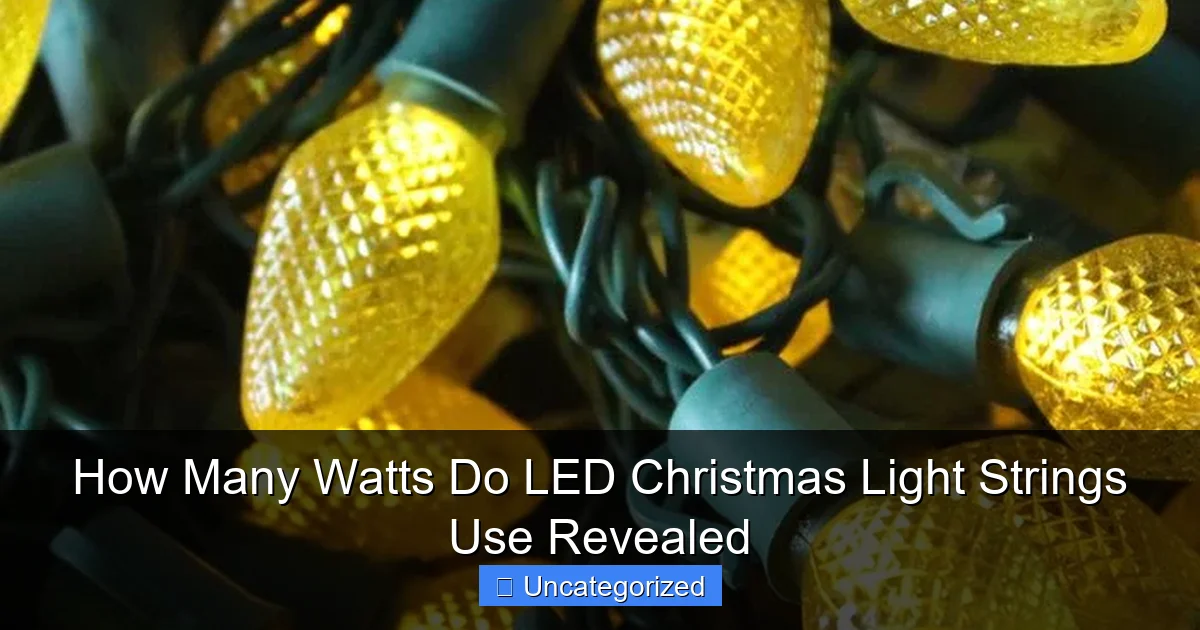
At the heart of every LED Christmas light is a tiny semiconductor diode that emits light when an electric current passes through it. Unlike incandescent bulbs, which rely on heating a filament until it glows (a process that wastes up to 90% of energy as heat), LEDs produce light through electroluminescence—a far more efficient process. This fundamental difference is why LED Christmas light strings use significantly fewer watts than their older counterparts. For example, a single 5mm LED bulb may consume just 0.06 to 0.1 watts, compared to 0.5 watts for a traditional mini incandescent bulb.
Visual guide about how many watts do led christmas light strings use
Image source: cdn.shopify.com
LEDs also have a longer lifespan—typically 25,000 to 50,000 hours—meaning they can last for decades of holiday use. Their low heat output reduces fire risks, and their compact size allows for more bulbs per string. But while LEDs are inherently efficient, their actual wattage still varies based on design, brightness, and features. Understanding these variables is key to calculating your total energy consumption and avoiding circuit overloads.
Why Wattage Is Crucial for Holiday Decorating
Wattage isn’t just about electricity usage—it affects safety, cost, and performance. Most household circuits in North America are rated for 15 or 20 amps, which translates to a maximum of 1,800 to 2,400 watts (at 120 volts). Exceeding this limit can trip breakers or, in worst cases, cause electrical fires. By knowing the wattage of your LED Christmas light strings, you can safely chain multiple sets together and avoid overloading your outlets.
Additionally, lower wattage means lower energy bills. If you run 100 watts of lights for 6 hours a night over 30 days, you’ll consume 18 kWh (100 watts × 6 hours × 30 days ÷ 1,000). At an average electricity rate of $0.13 per kWh, that’s just $2.34. In contrast, the same setup with incandescent lights could cost over $10. The savings add up—especially if you decorate extensively or use lights year-round for ambiance.
Practical Tip: Use a Kill-A-Watt Meter
To get the most accurate wattage reading, consider using a Kill-A-Watt meter or similar energy monitoring device. Plug your light string into the meter, then connect it to the outlet. The device will display real-time wattage, voltage, and even estimated monthly costs. This is especially useful for older or mixed-bulb strings where manufacturer data may be incomplete.
How Many Watts Do LED Christmas Light Strings Use? A Detailed Breakdown
Wattage by Bulb Count and Size
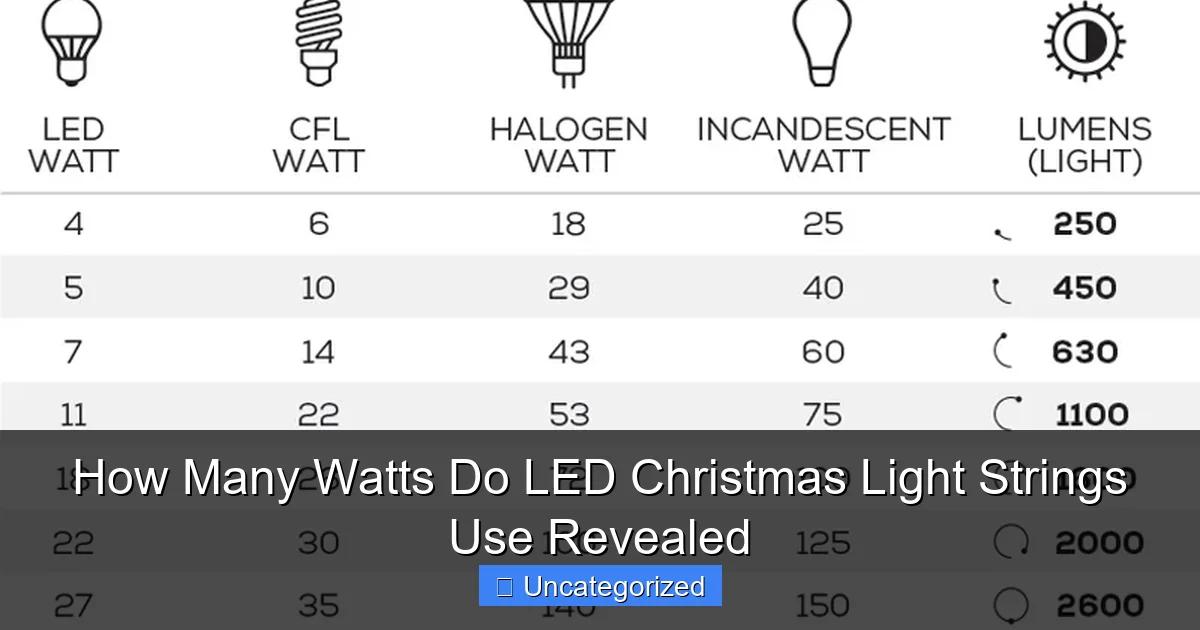
The number one factor affecting LED Christmas light wattage is the bulb count. More bulbs mean more diodes drawing power—but thanks to LED efficiency, the increase is minimal. Here’s a general guide based on common string types:
Visual guide about how many watts do led christmas light strings use
Image source: bulbbasics.com
- 50-count mini LED string (5mm bulbs): 3–6 watts
- 100-count mini LED string (5mm bulbs): 6–12 watts
- 150-count mini LED string (5mm bulbs): 9–18 watts
- 25-count C6 LED string (larger cone-shaped bulbs): 4–8 watts
- 50-count C6 LED string: 8–16 watts
- 25-count C9 LED string (large bulbs, often used outdoors): 10–15 watts
- 50-count C9 LED string: 20–30 watts
For example, a popular 100-count warm white mini LED string from a major brand uses just 7.2 watts—less than a single 60-watt incandescent bulb. This means you could run 250 such strings simultaneously on a 15-amp circuit (1,800 watts ÷ 7.2 watts = 250), though safety guidelines recommend staying well below the maximum.
Wattage by Color and Brightness
Color can subtly affect wattage due to differences in semiconductor materials. Blue and white LEDs typically require slightly more voltage (and thus more power) than red, green, or yellow. However, the difference is usually negligible—less than 10% in most cases. For instance, a 100-count blue LED string might use 7.8 watts, while the same string in red uses 7.2 watts.
Brightness, measured in lumens, also plays a role. Higher-lumen LEDs may draw slightly more current to achieve greater intensity. Some premium “ultra-bright” LED strings can use up to 20% more power than standard ones, but they’re still far more efficient than incandescents. Always check the product’s lumens-to-watts ratio (lumens per watt) to compare efficiency across brands.
Steady vs. Blinking and Animated Patterns
Do blinking lights use more or less power? Surprisingly, blinking LED Christmas light strings often use the same or slightly less wattage than steady lights. When the lights blink, they’re off half the time, so total energy consumption decreases. For example, a 10-watt steady string might drop to 8–9 watts in blinking mode.
However, animated patterns (e.g., chasing, twinkling, or color-changing) can increase wattage slightly due to the need for additional circuitry and microcontrollers. These effects may add 1–3 watts to the total draw. If energy savings are your priority, opt for steady lights or simple on/off blinking modes.
Indoor vs. Outdoor LED Strings
Outdoor LED strings are often designed for higher durability and weather resistance, which can slightly increase wattage. For example, a 100-count indoor mini LED string might use 7 watts, while a comparable outdoor-rated string could use 8–9 watts due to thicker insulation and moisture-resistant components. Always check the packaging for “indoor/outdoor” ratings and wattage specifications.
Comparing LED to Incandescent Christmas Lights: A Wattage Showdown
The Energy Gap: LED vs. Incandescent
The difference in wattage between LED and incandescent Christmas lights is staggering. On average, LED lights use 80–90% less energy than incandescent equivalents. Here’s a side-by-side comparison of common string types:
| String Type | LED Wattage | Incandescent Wattage | Energy Savings |
|---|---|---|---|
| 100-count mini (5mm) | 6–12 watts | 40–50 watts | 70–85% |
| 50-count C6 | 8–16 watts | 40–50 watts | 60–80% |
| 25-count C9 | 10–15 watts | 120–150 watts | 88–92% |
| 100-count large globe | 15–20 watts | 200–250 watts | 90–92% |
For example, a 50-count C9 incandescent string (common for rooflines and trees) uses 125 watts, while an LED equivalent uses just 12 watts. Over a 30-day holiday season with 6 hours of use per night, the incandescent version would consume 22.5 kWh ($2.93 at $0.13/kWh), while the LED version uses only 2.16 kWh ($0.28)—a savings of over $2.65 per string.
Cost Comparison: Upfront vs. Long-Term
LED strings typically cost more upfront—$15–$30 for a 100-count string vs. $5–$10 for incandescent. However, their energy efficiency and longevity make them far cheaper over time. A typical LED string lasts 25,000 hours, meaning you could use it for 25 holiday seasons (assuming 100 hours per year). In contrast, incandescent strings last 1,000–2,000 hours—requiring replacement every 1–2 years.
Factoring in energy costs, a single LED string could save you $50–$100 in electricity and replacement costs over its lifetime. For large installations (e.g., 20+ strings), the savings can exceed $1,000.
Safety and Heat Output
Incandescent lights get hot—sometimes hot enough to melt plastic or ignite dry materials. This makes them risky for trees, garlands, or near flammable décor. LEDs, by contrast, remain cool to the touch. Their low heat output also means they’re safer for pets and children and reduce the risk of electrical fires. If you’ve ever had to unplug a tangled incandescent string to avoid overheating, LED lights are a game-changer.
Calculating Total Energy Use and Avoiding Circuit Overloads
How to Calculate Total Wattage for Your Setup
To avoid tripping breakers, calculate the total wattage of all devices on a single circuit. Here’s how:
- Add up the wattage of all LED Christmas light strings you plan to use.
- Include other holiday devices (e.g., inflatables, light projectors, timers) in the total.
- Divide the total by 1,800 (for a 15-amp circuit) or 2,400 (for a 20-amp circuit).
- If the result is greater than 1.0, you’re at risk of overloading the circuit.
Example: You have:
- Five 100-count mini LED strings (7.2 watts each) = 36 watts
- Two 50-count C9 LED strings (25 watts each) = 50 watts
- One LED light projector (30 watts) = 30 watts
- Total: 116 watts
116 watts ÷ 1,800 = 0.064 (6.4% of circuit capacity). Safe!
But if you add 10 more mini strings (36 watts) and a 100-watt inflatable, the total jumps to 252 watts (14% of capacity). Still safe, but leave room for other devices.
Using Timers and Smart Plugs
Even with low-wattage LEDs, it’s wise to use timers or smart plugs to control when your lights turn on/off. This prevents accidental overnight use and further reduces energy consumption. A simple mechanical timer costs $5–$10 and can save 15–20% in energy by ensuring lights aren’t left on 24/7.
Smart plugs (e.g., TP-Link Kasa, Wemo) let you schedule lights via an app and monitor energy usage. Some models even provide real-time wattage data, helping you fine-tune your setup.
Chain Limits and Manufacturer Guidelines
Most LED strings specify how many can be safely chained together. This limit is based on wattage and circuit design. For example:
- A 100-count mini LED string may allow chaining up to 25 sets.
- A 50-count C9 LED string may allow only 3–4 sets.
Never exceed the manufacturer’s chain limit. If in doubt, use a power strip with a built-in circuit breaker to distribute the load.
Choosing the Right LED Christmas Lights: A Buyer’s Guide
Key Features to Consider
When shopping for LED Christmas light strings, look for these features to optimize wattage and performance:
- Energy Star Certification: Ensures high efficiency and low wattage.
- UL or ETL Listing: Indicates safety compliance.
- IP Rating (for outdoor lights): IP44 or higher means weather-resistant.
- Replaceable Bulbs: Allows for easy repairs and reduces waste.
- Low Voltage Options: Some sets use 24V or 12V transformers, further reducing energy use.
Top Brands and Wattage Efficiency
Not all LED lights are created equal. Here are three top brands known for energy efficiency:
- GE Reveal: 100-count mini strings use 6.5 watts; Energy Star certified.
- Twinkly: Smart RGB LEDs (100-count) use 10 watts; app-controlled patterns.
- Holiday Time (Walmart): 150-count warm white uses 9 watts; budget-friendly.
For maximum efficiency, choose warm white or pure white LEDs. They typically have the best lumens-per-watt ratio (80–100 lm/W) compared to colored LEDs (50–70 lm/W).
DIY Tips: Mixing and Matching Strings
If you’re combining different types of LED strings (e.g., mini, C6, and rope lights), calculate the total wattage before connecting them. Use a power strip with individual switches to control zones independently. For large installations, consider hiring an electrician to install dedicated holiday circuits.
Conclusion: Shine Bright, Spend Less, and Stay Safe
So, how many watts do LED Christmas light strings use? The answer is clear: far fewer than you might expect. With typical wattages ranging from 3 to 30 watts per string, LEDs offer dazzling brightness at a fraction of the energy cost of incandescent lights. Whether you’re decking the halls with 50-count mini lights or lining your roof with C9 bulbs, understanding wattage empowers you to decorate boldly—without breaking the bank or the circuit.
By choosing energy-efficient LEDs, calculating total power needs, and using smart timers, you can create a magical holiday display that’s as sustainable as it is stunning. Remember, every watt saved is a step toward lower bills, reduced environmental impact, and safer, cooler-running lights. This season, let your home shine—not just with light, but with smart, informed choices that keep the spirit of the holidays glowing all year long.
As you string up your lights, take a moment to appreciate the tiny semiconductors behind the sparkle. They’re not just lighting your home—they’re lighting the future of festive, efficient, and joyful holiday decorating. Happy holidays, and may your watts be ever in your favor!
Frequently Asked Questions
How many watts do LED Christmas light strings typically use?
Most LED Christmas light strings use between 2 to 10 watts per 100 lights, depending on bulb brightness and spacing. This is up to 80% less energy than traditional incandescent lights.
Are LED Christmas lights more energy-efficient than incandescent?
Yes, LED Christmas light strings use significantly fewer watts—often 10x less—than incandescent equivalents. For example, a 50-light incandescent set may use 20 watts, while LEDs use only 2-4 watts.
Can I connect multiple LED light strings without overloading a circuit?
Generally, yes. Since LED Christmas light strings use so few watts, you can safely connect 10-20+ strings on a standard 15-amp circuit. Always check the manufacturer’s maximum connection limit on the packaging.
How do I calculate the wattage of my LED Christmas lights?
Check the product label or packaging for the listed wattage. If unavailable, multiply the amps (A) by volts (V) using a multimeter (e.g., 0.1A × 120V = 12 watts for the entire string).
Do longer LED light strings use more watts?
Yes, but not linearly. A 200-light LED string may use 4-6 watts, while a 100-light uses 2-3 watts. The wattage increases with length, but LED Christmas light strings remain highly efficient regardless.
How many watts do battery-powered LED Christmas lights use?
Battery-powered LED light strings typically use 0.5 to 3 watts, depending on battery voltage (AA/AAA) and bulb count. Their low wattage makes them ideal for temporary or portable displays.