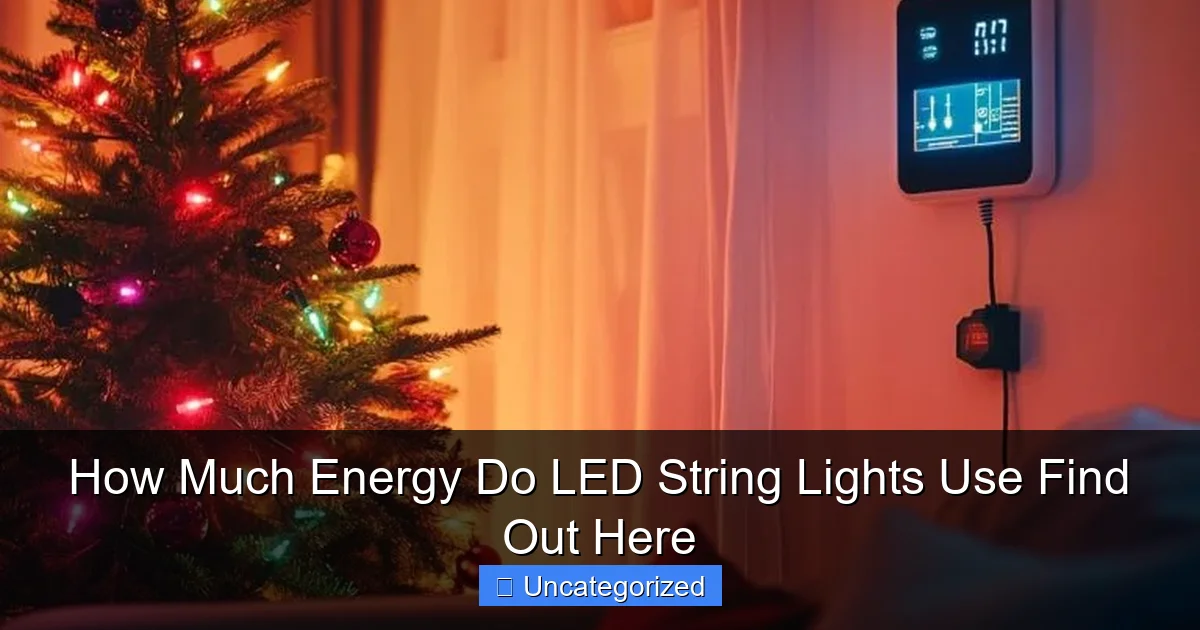
Featured image for how much energy do led string lights use
Image source: consumerenergycenter.org
LED string lights use up to 80% less energy than traditional incandescent bulbs, making them a highly efficient and cost-effective lighting choice. On average, a standard LED string light set consumes only 5–15 watts per 100 bulbs, offering bright, long-lasting illumination with minimal impact on your energy bill.
Key Takeaways
- LEDs use 80-90% less energy than incandescent bulbs for the same brightness.
- Check wattage ratings to compare energy use across different LED string lights.
- Longer strands consume more power—calculate total wattage by length for accuracy.
- Use timers or smart plugs to reduce runtime and cut energy waste effortlessly.
- Look for ENERGY STAR certification to ensure maximum efficiency and quality standards.
- Solar-powered options exist for completely off-grid, zero-electricity outdoor lighting.
📑 Table of Contents
- How Much Energy Do LED String Lights Use Find Out Here
- Understanding LED Technology and Energy Efficiency
- Calculating Energy Consumption of LED String Lights
- Factors That Influence LED String Light Energy Use
- Cost Comparison: LED vs. Incandescent and Other Lighting Types
- Tips to Maximize Energy Savings with LED String Lights
- Conclusion
How Much Energy Do LED String Lights Use Find Out Here
When the holidays roll around, or you’re planning a cozy evening on your patio, few things set the mood quite like LED string lights. Twinkling across trees, wrapped around railings, or strung above a dining table, these versatile decorations bring warmth and charm to any space. But as energy costs rise and sustainability becomes a top priority for homeowners, many are asking a critical question: How much energy do LED string lights use?
It’s a smart inquiry—especially when you consider that string lights can be left on for hours, sometimes even overnight. While traditional incandescent string lights were notorious for their high energy consumption and short lifespans, LED (Light Emitting Diode) technology has revolutionized the lighting industry. Today’s LED string lights are not only brighter and more durable but also significantly more energy-efficient. This blog post dives deep into the world of LED string lights, exploring how much power they consume, what factors influence their energy use, and how you can maximize savings while still enjoying that magical glow. Whether you’re decking the halls for the holidays, illuminating your garden for a summer party, or adding ambiance to your bedroom, understanding energy consumption will help you make smarter, more sustainable lighting choices.
Understanding LED Technology and Energy Efficiency
How LEDs Work Compared to Incandescent Bulbs
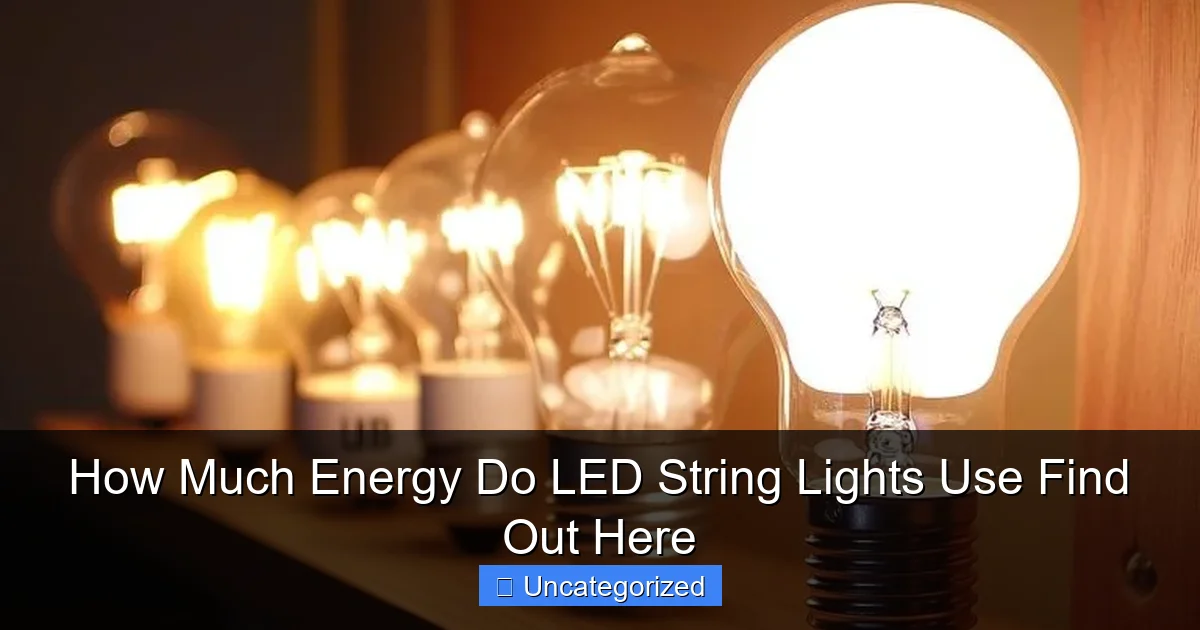
To truly grasp how much energy LED string lights use, it helps to understand the science behind LEDs. Unlike traditional incandescent bulbs, which generate light by heating a filament until it glows (a process that wastes up to 90% of energy as heat), LEDs produce light through electroluminescence in a semiconductor material. This means they convert a much higher percentage of electrical energy directly into visible light, resulting in far less wasted energy.
Visual guide about how much energy do led string lights use
Image source: consumerenergycenter.org
For example, a typical 60-watt incandescent bulb might produce about 800 lumens of brightness. An equivalent LED bulb, on the other hand, can produce the same 800 lumens using only 8 to 10 watts. That’s a massive reduction in energy use—up to 85% less electricity for the same light output. This efficiency is even more pronounced in string lights, where dozens (or even hundreds) of bulbs are used in a single strand.
Why LEDs Are the Energy-Efficient Choice
LEDs offer several advantages that contribute to their low energy consumption:
- Low wattage per bulb: Most LED string lights use bulbs rated between 0.06 and 0.5 watts each, compared to 0.5 to 1 watt per bulb in older incandescent strings.
- Long lifespan: LEDs can last 25,000 to 50,000 hours—far longer than incandescent bulbs, which typically last 1,000 to 2,000 hours. This reduces the need for replacements and associated energy used in manufacturing.
- Directional light output: LEDs emit light in a specific direction, reducing the need for reflectors or diffusers that can waste energy.
- Minimal heat production: Since LEDs don’t rely on heat to produce light, less energy is lost as thermal radiation.
Because of these characteristics, LED string lights are not just more efficient—they’re also safer and cooler to the touch, making them ideal for indoor and outdoor use, especially around children and pets.
Real-World Example: Energy Use Comparison
Let’s compare two 25-foot string lights with 100 bulbs each:
- Incandescent string light: 100 bulbs × 1 watt = 100 watts total
- LED string light: 100 bulbs × 0.06 watts = 6 watts total
That’s a 94% reduction in energy use. Over a 30-day holiday season, running the lights for 6 hours per night:
- Incandescent: 100 watts × 6 hours × 30 days = 18,000 watt-hours (18 kWh)
- LED: 6 watts × 6 hours × 30 days = 1,080 watt-hours (1.08 kWh)
At an average electricity rate of $0.13 per kWh, the incandescent lights would cost $2.34, while the LED version costs just $0.14. That’s a savings of over $2 per strand—multiply that by multiple strands, and the cost difference becomes significant.
Calculating Energy Consumption of LED String Lights
Key Metrics: Watts, Volts, and Amps
To determine how much energy your LED string lights use, you need to understand three core electrical terms:
Visual guide about how much energy do led string lights use
Image source: consumerenergycenter.org
- Watts (W): A measure of power consumption. This tells you how much electricity the lights draw.
- Volts (V): The electrical potential or “push” behind the current. Most household string lights operate at 120V in the U.S. or 230V in Europe.
- Amps (A): The rate of electrical flow. You can calculate amps using the formula: Amps = Watts ÷ Volts.
For example, if your LED string lights consume 8 watts and operate at 120 volts, the current draw is 8 ÷ 120 = 0.067 amps. This low current draw is another reason LEDs are energy-efficient—they place minimal strain on your electrical system.
How to Calculate Energy Use (kWh)
Energy consumption is measured in kilowatt-hours (kWh), which is what your utility bill uses. To calculate kWh:
kWh = (Watts × Hours Used) ÷ 1,000
Let’s say you have a 10-watt LED string light and use it for 5 hours per day:
- (10 watts × 5 hours) ÷ 1,000 = 0.05 kWh per day
- Over 30 days: 0.05 × 30 = 1.5 kWh per month
Multiply by your electricity rate (e.g., $0.13/kWh) to find the cost: 1.5 × 0.13 = $0.195 per month—less than 20 cents!
Practical Tips for Measuring and Monitoring
If you’re unsure of your string lights’ wattage, here are some ways to find out:
- Check the packaging or product manual: Most manufacturers list the total wattage clearly.
- Use a plug-in energy monitor: Devices like the Kill A Watt or TP-Link Kasa Smart Plug can measure real-time energy use. Simply plug your lights into the monitor, and it will display watts, amps, volts, and kWh.
- Look for ENERGY STAR certification: ENERGY STAR-rated LED lights meet strict efficiency guidelines and often include energy use data on the label.
Pro tip: If you’re using multiple strands, connect them in series (end-to-end) rather than using multiple power outlets. This reduces the number of power supplies and minimizes energy loss through adapters.
Factors That Influence LED String Light Energy Use
Number of Bulbs and Strand Length
The most obvious factor affecting energy use is the number of bulbs on the string. A 10-foot strand with 20 bulbs will use far less energy than a 50-foot strand with 200 bulbs. However, LED efficiency means even long strands consume minimal power.
For example:
- 20-bulb strand (0.06W per bulb) = 1.2 watts total
- 200-bulb strand (0.06W per bulb) = 12 watts total
Even the 200-bulb strand uses less energy than a single 60-watt incandescent bulb. When choosing string lights, consider your space and lighting needs—more bulbs aren’t always better. Sometimes, fewer, strategically placed lights create a more elegant ambiance.
Brightness (Lumens) and Color Temperature
LEDs come in various brightness levels (measured in lumens) and color temperatures (measured in Kelvin). Brighter lights (higher lumens) or those with a higher color temperature (e.g., cool white at 5000K) may consume slightly more power than dimmer or warmer lights (e.g., warm white at 2700K), but the difference is usually minimal.
For instance:
- Warm white LED (2700K, 80 lumens) = 0.06 watts
- Cool white LED (5000K, 100 lumens) = 0.07 watts
That’s just a 16% increase in energy use for a noticeable jump in brightness. If you’re aiming for energy savings, opt for warm white LEDs—they’re often more efficient and create a cozier atmosphere.
Usage Patterns: Timers, Dimmers, and Smart Controls
How and when you use your LED string lights has a big impact on energy consumption. Here are some smart strategies:
- Use timers: Program your lights to turn on at dusk and off at midnight or bedtime. A simple mechanical timer costs under $10 and can reduce usage by 30–50%.
- Install dimmers: Some LED strings are compatible with dimmer switches or remote controls. Lowering brightness by 50% can reduce energy use by nearly half.
- Smart plugs and apps: Connect your lights to a smart plug (e.g., Kasa, Wemo) and control them via smartphone or voice assistant. Set schedules, monitor usage, and even turn them off remotely if you forget.
Bonus: Smart systems can track your energy usage over time, helping you optimize lighting schedules for maximum savings.
Outdoor vs. Indoor Use
Outdoor LED string lights are often brighter and more durable, but they may use slightly more power due to weatherproofing and higher lumen output. However, the difference is usually negligible. The real energy impact comes from how long they’re used. Outdoor lights, especially during holidays, are often left on longer, so timers are essential.
Indoor lights, on the other hand, are typically used for shorter durations (e.g., during dinner or reading), so their overall energy footprint is even smaller.
Cost Comparison: LED vs. Incandescent and Other Lighting Types
Energy Cost Breakdown by Bulb Type
To highlight the energy savings of LED string lights, let’s compare three common types over a 30-day holiday season (6 hours per night, 100 bulbs, $0.13/kWh):
| Light Type | Watts per Bulb | Total Watts (100 bulbs) | Energy Use (kWh) | Cost (30 days) | Lifespan (hours) |
|---|---|---|---|---|---|
| Incandescent | 1.0 W | 100 W | 18.0 kWh | $2.34 | 1,000 |
| Halogen | 0.8 W | 80 W | 14.4 kWh | $1.87 | 2,000 |
| LED | 0.06 W | 6 W | 1.08 kWh | $0.14 | 25,000+ |
As the table shows, LED string lights use less than 6% of the energy of incandescent lights and cost just 6% of the operating expense. Over a 10-year period, the savings add up dramatically.
Long-Term Savings and Return on Investment
While LED string lights have a higher upfront cost ($15–$50 per strand vs. $5–$20 for incandescent), the long-term savings are substantial. Consider this:
- Incandescent: $10 per strand, lasts 1 holiday season, costs $2.34 in electricity.
- LED: $30 per strand, lasts 10+ years, costs $0.14 per season in electricity.
Over 10 years:
- Incandescent: 10 strands × $10 = $100 + (10 × $2.34) = $23.40 in electricity = $123.40 total
- LED: 1 strand × $30 = $30 + (10 × $0.14) = $1.40 in electricity = $31.40 total
That’s a savings of $92—and you only need to buy the lights once. Plus, fewer replacements mean less waste and a lower environmental impact.
Environmental Impact and Carbon Footprint
Energy efficiency isn’t just about saving money—it’s about reducing your carbon footprint. The U.S. Environmental Protection Agency (EPA) estimates that replacing just one incandescent bulb with an LED can save about 450 pounds of CO₂ over the bulb’s lifetime. For string lights, the impact is even greater.
Using the earlier example, switching from incandescent to LED for 10 years saves 169.2 kWh (18 kWh – 1.08 kWh) × 10 = 169.2 kWh. At an average emissions rate of 0.92 pounds of CO₂ per kWh (U.S. grid average), that’s 156 pounds of CO₂ saved per strand.
Tips to Maximize Energy Savings with LED String Lights
Choose the Right Brightness and Color
As mentioned earlier, warmer LEDs (2700K–3000K) are often more efficient and create a more inviting glow. Avoid “daylight” (5000K+) LEDs unless you need high visibility for outdoor tasks. Also, consider micro-LEDs—tiny bulbs that use as little as 0.02 watts each. They’re perfect for delicate decor and use up to 70% less energy than standard LEDs.
Use Timers and Motion Sensors
Instead of leaving lights on all night, use:
- Photocell timers: Automatically turn on at dusk and off at dawn.
- Programmable timers: Set specific on/off times (e.g., 6 PM to 10 PM).
- Motion sensors (for outdoor use): Lights turn on only when someone is nearby.
These tools can reduce energy use by 40–70% without sacrificing ambiance.
Connect Multiple Strands Efficiently
Most LED string lights can be connected end-to-end. Check the manufacturer’s guidelines—many allow up to 25 strands on a single outlet. This reduces the number of power supplies and prevents energy loss through multiple adapters. Use UL-listed extension cords for safety, especially outdoors.
Maintain and Store Properly
Proper care extends the life of your LED lights, reducing the need for replacements and saving energy in the long run:
- Store lights in a cool, dry place.
- Use reels or bags to prevent tangling and damage.
- Replace damaged bulbs promptly—a single dead bulb can reduce the efficiency of the entire strand.
Upgrade to Smart LED Systems
Smart LED string lights (e.g., Philips Hue, LIFX) offer advanced features like:
- Remote control via smartphone
- Scheduling and automation
- Color-changing and scene modes
- Energy usage tracking
While more expensive, they provide the ultimate control over energy use and ambiance.
Conclusion
So, how much energy do LED string lights use? The answer is: very little—especially when compared to older lighting technologies. With wattages often under 10 watts for 100-bulb strands, LEDs consume up to 90% less energy than incandescent lights while lasting 10 to 25 times longer. This translates to significant cost savings, reduced environmental impact, and greater convenience for homeowners.
By understanding the factors that influence energy use—such as bulb count, brightness, usage patterns, and smart controls—you can make informed decisions that maximize efficiency without sacrificing style. Whether you’re decorating for the holidays, enhancing your outdoor space, or creating a cozy bedroom nook, LED string lights offer a sustainable, affordable, and beautiful lighting solution.
Remember: every watt saved is a step toward a greener, more energy-conscious lifestyle. So go ahead—string up those lights with confidence, knowing that your twinkling display is as kind to your wallet as it is to the planet. With LED technology, the future of lighting is bright, efficient, and dazzling.
Frequently Asked Questions
How much energy do LED string lights use compared to incandescent lights?
LED string lights consume up to 80-90% less energy than traditional incandescent string lights. For example, a 20-foot LED strand may use only 5-10 watts, while an incandescent equivalent could draw 40-60 watts.
What factors affect the energy use of LED string lights?
The energy consumption of LED string lights depends on bulb count, brightness (lumens), and usage duration. Longer strands or lights with higher lumens will use slightly more power, but still far less than older technologies.
How much energy do LED string lights use per hour?
Most standard LED string lights use 0.5-1 watt per hour, depending on the bulb density and settings. For example, a 50-bulb set might use 25-50 watts total over 10 hours of operation.
Do LED string lights raise my electricity bill significantly?
No, LED string lights have minimal impact on your electricity bill due to their ultra-low wattage. Running a 10-watt strand for 5 hours daily would cost less than $0.50 per month in most regions.
Are solar-powered LED string lights energy-efficient?
Yes, solar-powered LED string lights are highly energy-efficient since they draw no power from your home grid. They store sunlight energy in batteries, making them ideal for outdoor decor with zero added energy use.
Can I leave LED string lights on overnight without wasting energy?
Absolutely! LED string lights are designed for long-term use and waste very little energy as heat. Even leaving them on for 8-12 hours nightly consumes only a fraction of what traditional lights would use.