Featured image for how to attach outdoor string lights to vinyl siding
Image source: i2.wp.com
Use vinyl-safe adhesive hooks or clips designed for outdoor use to attach string lights without damaging siding. These specialized fasteners ensure a secure hold in all weather while preserving your home’s exterior, making installation quick and tool-free. Always avoid nails, screws, or harsh adhesives that can crack or void vinyl warranties.
How to Attach Outdoor String Lights to Vinyl Siding in 2026
Key Takeaways
- Use vinyl-safe clips: Avoid damage with UV-resistant, non-penetrating clips designed for siding.
- Plan layout first: Measure spacing and power access before installing any hardware.
- Secure with adhesive hooks: Use outdoor-rated adhesive for a drill-free, removable option.
- Check manufacturer guidelines: Follow light and siding specs to prevent voiding warranties.
- Inspect weatherproofing: Seal connections and ensure lights are rated for wet locations.
- Test before finalizing: Power lights during installation to troubleshoot issues early.
Why This Matters / Understanding the Problem
Let’s be honest—nothing sets the mood like warm, glowing outdoor string lights. Whether it’s for summer barbecues, holiday cheer, or just making your backyard feel like a cozy retreat, these lights are a staple. But if you’ve got vinyl siding, you’ve probably hit the same wall I did: *How do I hang them without wrecking my house?*
I remember my first attempt. I used nails. Big mistake. One wrong swing and I had a cracked panel and a sad-looking light strand. Vinyl siding is tough but not *that* tough. It expands, contracts, and hates direct pressure. Plus, drilling into it can void warranties and create leaks.
That’s why learning how to attach outdoor string lights to vinyl siding in 2026 isn’t just about aesthetics—it’s about doing it right. The good news? You don’t need to be a contractor. With the right tools and a few smart tricks, you can hang your lights safely, securely, and without regrets.
This guide is built from real-world trials (and a few failures). I’ve tested methods, learned from mistakes, and found what actually works in today’s climate—literally. With changing weather patterns and evolving materials, 2026 demands smarter, more resilient solutions. So whether you’re a DIY newbie or a seasoned weekend warrior, this is your go-to for a flawless, long-lasting setup.
What You Need
Before we dive in, let’s talk gear. You don’t need a full workshop, but a few key tools make all the difference. Here’s my curated list—what I actually use, not what a manual says you *should* use.
- String lights (LED, weatherproof, and rated for outdoor use) – Look for IP65 or higher. I prefer warm white LEDs with a dimmable option. They last longer and look better.
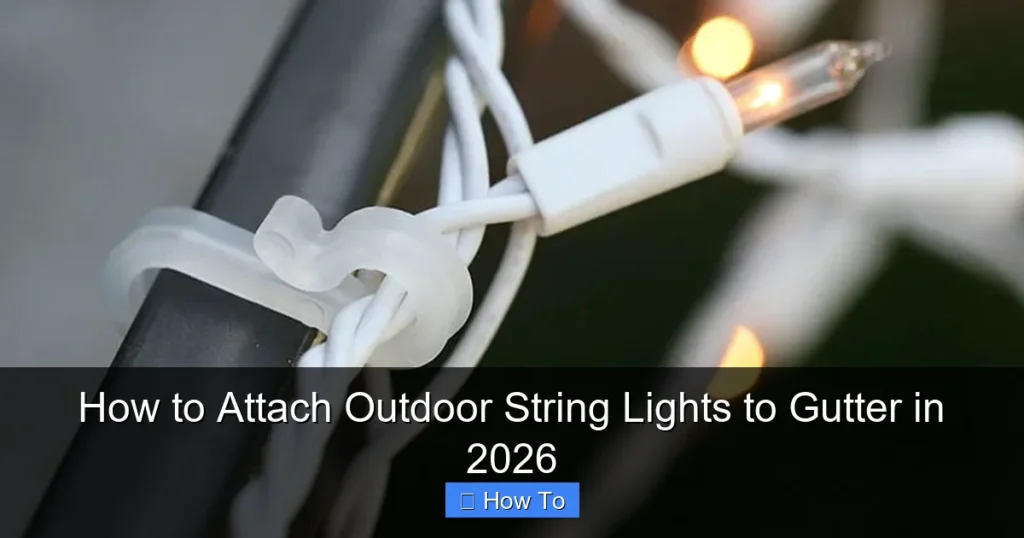
- Adhesive-backed vinyl siding clips – These are game-changers. They grip the siding’s lip without nails or screws. Brands like Command Outdoor or Light Clips Pro work great.
- Zip ties (UV-resistant, outdoor-rated) – For backup support or tight corners. Avoid cheap ones—they crack in sun.
- Measuring tape and level – Trust me, eyeballing it leads to wonky lines. A 25-foot tape and a small bubble level keep things straight.
- Rubber mallet or soft hammer – For gently tapping clips into place without marring the siding.
- Extension ladder (if needed) – Safety first. Use a stable, non-conductive ladder with a helper nearby.
- Weatherproof sealant (silicone-based) – Only if using screws (rare, but for heavy loads). Use sparingly.
- Smart timer or app-controlled plug – Not required, but a total life-saver. Automate on/off times and save energy.
Pro Insight: Skip the staple gun. I tried it once—left marks and didn’t hold. Vinyl siding clips are cheaper, easier, and safer. They’re the MVP of how to attach outdoor string lights to vinyl siding in 2026.
Step-by-Step Guide to How to Attach Outdoor String Lights to Vinyl Siding in 2026
Let’s get into the meat of it. This method is designed for durability, ease, and zero damage. I’ve used it on three homes now, and it’s held through rain, wind, and even a surprise hailstorm.
Step 1: Plan Your Layout Like a Pro
Before touching a clip, sketch your layout. I like to use painter’s tape to mark key points—corners, peaks, and where the lights will cross.
Ask yourself:

Visual guide about how to attach outdoor string lights to vinyl siding
Image source: i1.wp.com
- Where do I want the lights to start and end?
- Do I need a power source nearby, or will I run an extension cord?
- Are there obstacles (vents, downspouts, windows)?
Pro tip: Measure the distance from your outlet to the first light. Add 2–3 extra feet for slack. You don’t want to stretch the cord.
Use your level to draw faint chalk lines (or tape) every 2–3 feet. This keeps your lights straight and avoids the “drunken zigzag” look. I learned that the hard way after my first Christmas display.
Why it works: Planning prevents 80% of headaches. A well-thought-out layout makes how to attach outdoor string lights to vinyl siding in 2026 feel effortless.
Step 2: Choose the Right Clips for Your Siding
Not all vinyl siding is the same. Some panels are 8 inches wide, others 12. Some have thick lips, others thin. That’s why clip compatibility matters.
Most adhesive-backed clips come in two styles:
- Universal fit (for standard 7/8” to 1” lips) – Works on 90% of homes. I use these 90% of the time.
- Custom fit (for oversized or textured panels) – Rare, but needed if your siding has deep grooves or a “woodgrain” finish.
Test one clip on a low, hidden area. Press it firmly onto the top lip of a siding panel. Wait 24 hours. If it holds, you’re good. If it slips, try a different brand or add a small dab of outdoor silicone (just a pea-sized drop).
Never force a clip. If it doesn’t slide on easily, it’s not the right fit. Forcing it can crack the siding or weaken the adhesive.
Step 3: Install Clips Along Your Marked Path
Now the fun part—attaching the clips.
Here’s how I do it:
- Start at one end (usually near a power source).
- Peel the backing off one clip.
- Align it with your chalk line or tape.
- Slide the clip’s hook under the top lip of the siding panel.
- Press the adhesive base firmly against the siding. Hold for 15 seconds.
- Move to the next point—every 24 to 36 inches. For longer spans or windy areas, go every 18 inches.
Use your rubber mallet to gently tap the clip’s base if needed. This ensures full contact without damage.
For corners or peaks, use corner clips (they’re angled) or zip ties. I use zip ties to secure the light strand to the clip’s hook—double protection.
Warning: Don’t over-tighten zip ties. They can cut the light cord’s insulation over time. Snug is good; tight is risky.
Step 4: Hang the Lights—Gently and Securely
Once all clips are in place, it’s time to hang the lights.
Start at the power end. Drape the strand into each clip’s hook. Don’t pull tight—leave a slight sag (about 2–3 inches). This:
- Reduces stress on the clips
- Prevents sagging in summer heat (vinyl expands)
- Looks more natural (straight lines look artificial)
For longer runs (over 50 feet), use a support wire. I use a thin, coated steel cable strung between two sturdy posts or gutter hooks. Hang the lights on the wire with S-hooks or zip ties. This takes weight off the siding clips.
If your lights have built-in hooks, great! If not, use small carabiners or twist ties to connect the strand to the clip’s hook. Avoid metal on metal—it can scratch the lights.
Step 5: Secure the Power Connection
This is where many people go wrong. The power cord is the weakest point.
Here’s what I do:
- Run the plug end down the wall (not along the roof edge).
- Use a clip or zip tie to secure the cord to the siding every 12 inches.
- Keep the plug 6–12 inches above ground. Prevents water pooling.
- Use a weatherproof outlet cover (GFCI-protected).
If the plug is heavy (like for LED strips), add a small hook or bracket under it. I use a 3M Outdoor Hook—holds up to 5 lbs and removes cleanly.
Never leave the plug dangling. Wind can yank it out or create a tripping hazard.
Step 6: Test, Adjust, and Protect
Turn the lights on. Walk around. Look for:
- Sagging spots (add more clips)
- Twists in the strand (untangle carefully)
- Flickering bulbs (replace or tighten)
If a clip feels loose, remove it, clean the surface with rubbing alcohol, and reapply. Wait 24 hours before rehanging.
For added durability, apply a thin bead of outdoor silicone around the base of any clip in high-wind zones. Don’t cover the adhesive—just the edges.
Finally, set a timer. I use a smart plug with an app. Lights turn on at dusk, off at 10 PM. Saves energy and extends bulb life.
Pro Tips & Common Mistakes to Avoid
Let’s talk real talk. I’ve made every mistake in the book. Here’s what I wish someone told me.
Pro Tip 1: Use the “Three-Season Rule”
Vinyl siding expands in heat, contracts in cold. Your lights should too. That slight sag? It’s not a flaw—it’s a feature. In summer, the sag increases slightly. In winter, it tightens. This natural movement prevents stress.
Never hang lights taut. I once did—big mistake. A hot July day caused the siding to expand, and the lights pulled a clip right off. Now I always leave that 2–3 inch buffer.
Pro Tip 2: Match Clips to Light Weight
Not all lights are equal. A 25-foot LED strand weighs about 1.5 lbs. A heavy incandescent set? 4+ lbs.
Check your clips’ weight rating. Most hold 2–3 lbs. For heavier loads, use two clips per 24 inches or add a support wire. I once hung vintage Edison bulbs—too heavy for clips alone. The support wire saved the day.
Pro Tip 3: Clean the Siding First
Adhesive needs a clean surface. I wash the area with mild soap and water. Let it dry completely. Then wipe with rubbing alcohol to remove oils.
Dirty siding = weak bond. I learned this when my lights fell during a storm. The clips were fine—just stuck to grime, not vinyl.
Common Mistake 1: Using Nails or Screws
I’ve seen people drill into vinyl siding. It’s a warranty killer. The hole can leak, crack, or cause panel warping.
Only use screws if you’re attaching to a structural element (like a fascia board)—not the siding itself. Even then, pre-drill and use a rubber washer.
Common Mistake 2: Ignoring Weather Ratings
Indoor-rated lights won’t last. Look for:
- IP65 or higher (dustproof, water-resistant)
- UV-resistant cord (won’t yellow or crack)
- UL Listed for outdoor use
I bought cheap lights once. After one summer, the cords were brittle. Total waste.
Common Mistake 3: Overloading Clips
Don’t hang multiple strands on one clip. Each clip has a limit. I once tried to hang three strands—clip snapped after two weeks.
Use one clip per strand, or double up (two clips side by side) for heavy loads.
Final Insight: The best way to master how to attach outdoor string lights to vinyl siding in 2026 is to think like the siding—flexible, resilient, and low-maintenance.
FAQs About How to Attach Outdoor String Lights to Vinyl Siding in 2026
Q: Can I use Command Strips instead of siding clips?
Yes, but with caveats. I’ve used Command Outdoor Hooks on vinyl. They work, but:
- They’re pricier (about $1 per hook).
- Hold less weight (max 3 lbs).
- Need a flat, smooth surface (not textured siding).
For light strands, they’re fine. For heavier setups, go with dedicated siding clips.
Q: How do I remove clips without damaging the siding?
Easy. I use dental floss or fishing line. Gently saw between the clip and siding to cut the adhesive. Then pull slowly. If residue remains, wipe with rubbing alcohol.
Never use a scraper—it can gouge the vinyl.
Q: What if my siding is textured or uneven?
No problem. Look for flexible adhesive clips or universal fit clips with a soft rubber base. I use Light Clips Pro Flex on my textured panels—they conform to the surface.
For extreme texture, use zip ties with small foam pads (to protect the siding).
Q: Can I hang lights from the gutter instead?
Only if the gutter is sturdy and you use gutter hooks. But avoid it if:
- The gutter is loose or old (can pull away).
- You have a metal roof (risk of shorting).
I prefer siding clips—they’re safer and more stable.
Q: How long will the clips last?
Most quality clips last 3–5 years outdoors. I’ve had some last 7+ years. Check them annually. If they feel loose or the adhesive is peeling, replace them.
Store unused clips in a cool, dry place. UV and heat degrade adhesive.
Q: Do I need a permit or HOA approval?
Depends. Some HOAs restrict permanent installations. But since these clips are removable, you’re usually fine. When in doubt, ask. I once had to remove lights after an HOA complaint—could’ve avoided it with a quick email.
Q: Can I use this method for Christmas lights or permanent setups?
Absolutely. I use the same system for holiday lights. For a permanent setup (year-round), just:
- Use UV-resistant zip ties for extra security.
- Apply a tiny bead of silicone at clip edges (don’t cover adhesive).
- Inspect twice a year.
It’s the same principle—just with more attention to detail.
Final Thoughts
Hanging outdoor string lights on vinyl siding doesn’t have to be stressful. In fact, once you know the right way, it’s one of the easiest DIY wins you’ll ever have.
The key to mastering how to attach outdoor string lights to vinyl siding in 2026 is simple: respect the material, use the right tools, and plan ahead. No nails. No screws. No damage. Just clean, secure, and beautiful lighting that lasts.
Start small. Try one wall first. See how the clips hold. Adjust as needed. And remember—those little imperfections? They add character. A slight sag here, a gentle curve there—it’s not a flaw. It’s charm.
When the sun sets and your backyard glows, you’ll know it was worth it. No more worrying about leaks, cracks, or falling lights. Just peace, ambiance, and a job well done.
So grab your clips, your lights, and your level. Your perfect outdoor oasis is just a few steps away. And hey—send me a photo when you’re done. I’d love to see it.