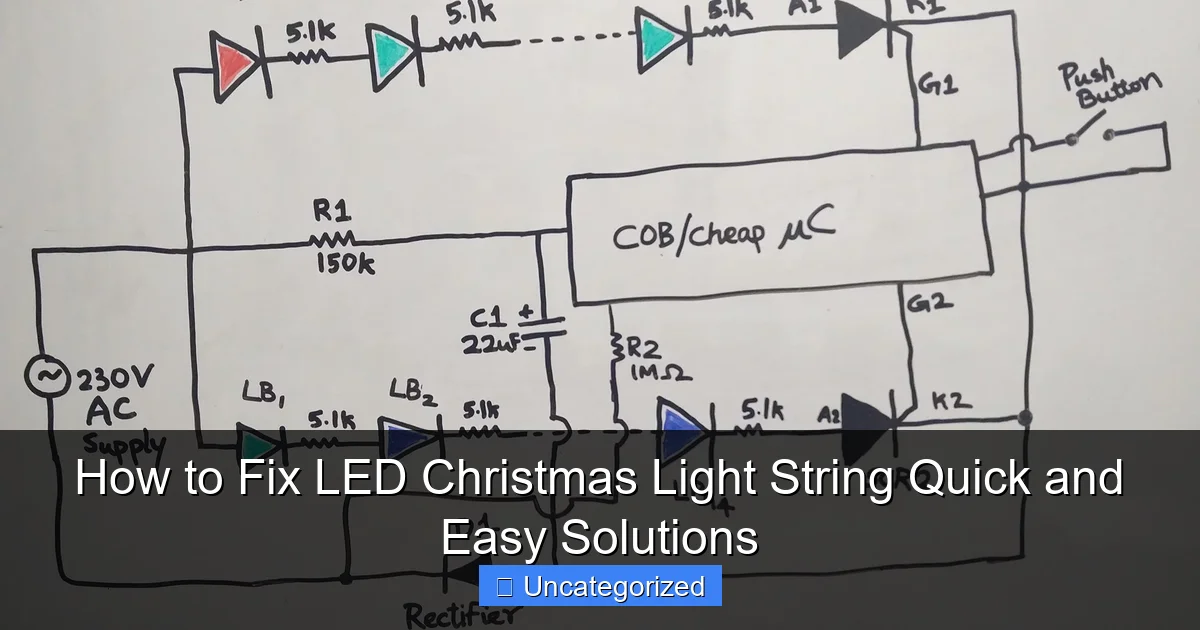
Featured image for how to fix led christmas light string
Image source: i0.wp.com
Most LED Christmas light string issues stem from a single burnt-out bulb or loose connection—so always start by inspecting and reseating bulbs. A simple fix using a voltage tester and replacement bulbs can restore your lights in minutes, saving you time and money. Avoid tangled messes and frustrating outages with these quick, DIY solutions.
How to Fix LED Christmas Light String Quick and Easy Solutions
Key Takeaways
- Check the fuse first: Replace blown fuses in the plug for instant fixes.
- Test bulbs individually: Use a multimeter to identify and swap faulty LEDs.
- Inspect for loose connections: Tighten or reseat bulbs not making proper contact.
- Use a light tester: Quickly pinpoint dead sections without manual checks.
- Replace damaged wires: Cut and reconnect frayed or broken wiring safely.
- Store properly post-season: Prevent future issues with tangle-free, dry storage.
Why This Matters / Understanding the Problem
Every year, millions of people hang LED Christmas lights to brighten their homes, trees, and rooftops. But nothing kills the holiday spirit faster than a string of lights that won’t turn on. You plug them in, flip the switch, and… darkness.
Unlike old incandescent bulbs, LED Christmas lights are more energy-efficient and last longer—but they’re not foolproof. A single faulty bulb, loose connection, or damaged wire can shut down the entire string. That’s why knowing how to fix LED Christmas light string quick and easy solutions is a must for every holiday decorator.
Whether you’re dealing with flickering, half-lit strands, or total blackouts, this guide walks you through simple, effective fixes. No electrician needed. Just patience, a few tools, and a little know-how. And the best part? Most problems can be fixed in under 30 minutes.
LED lights are delicate but repairable. The key is to identify the root cause—whether it’s a bad bulb, a loose wire, or a power issue—and tackle it step by step. By the end of this guide, you’ll not only save money but also avoid the hassle of buying new lights every season.
Let’s dive into the most common LED light problems and how to solve them—fast.
What You Need
Before you start, gather these tools and materials. Having them ready will make the process smoother and safer.
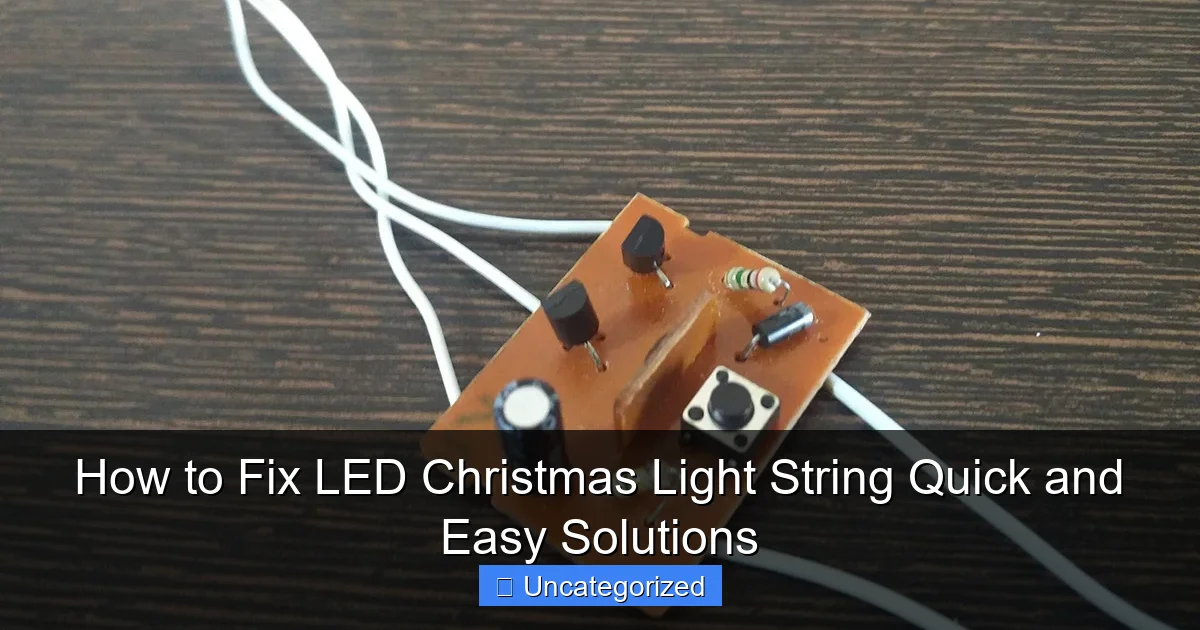
Visual guide about how to fix led christmas light string
Image source: i0.wp.com
- Replacement LED bulbs (match your light string’s color, voltage, and base type)
- Mini screwdriver set (for opening bulb sockets)
- Needle-nose pliers (to grip small parts)
- Multimeter or voltage tester (optional but helpful)
- Electrical tape (for sealing connections)
- Wire cutters/strippers (for repairing frayed wires)
- Heat shrink tubing (for permanent wire repairs)
- Flashlight or headlamp (to see in dark spaces)
- Work gloves (to protect your hands)
- Small container (to hold tiny screws and parts)
You don’t need all these tools for every fix. For example, if you’re just replacing a bulb, you only need a screwdriver and spare bulbs. But if the wire is damaged, wire cutters and electrical tape are essential.
Pro tip: Keep a small repair kit with spare bulbs, tape, and pliers in your holiday storage box. That way, you’re ready next year when you need to apply how to fix LED Christmas light string quick and easy solutions again.
Step-by-Step Guide to How to Fix LED Christmas Light String Quick and Easy Solutions
Step 1: Unplug the Lights and Check the Power Source
Always start by unplugging the light string from the outlet. Safety first! Never work on live circuits.
Next, plug the string into a different outlet. Sometimes the issue isn’t the lights—it’s a tripped breaker, a faulty outlet, or a bad extension cord.
Try using a working lamp or phone charger in the same outlet to confirm power. If nothing else works, the outlet may be dead.
Tip: Use a plug-in circuit tester (available at hardware stores) to check if the outlet is wired correctly. A red light means there’s an issue.
If the outlet works, move to the next step. But if the outlet is dead, reset your breaker or use a different power source.
Step 2: Inspect the Fuse (If Your String Has One)
Many LED Christmas light strings have a small fuse box near the plug. It’s usually a tiny plastic cap you can twist open.
Inside, you’ll find one or two 3-amp fuses. These protect the circuit from power surges. If one is blown, the whole string stays dark.
Remove the fuse and check if the metal wire inside is broken or blackened. You can also use a multimeter on continuity mode to test it.
Warning: Never replace a fuse with a higher-amp one (like 10A). It can overheat and start a fire. Always use the same rating.
Replace the bad fuse with a spare (usually included with the lights). Twist the cap back on and plug in the string. If it lights up, you’ve solved the problem!
No spare fuse? You can buy a pack of 3A fuses at any hardware store for under $5.
Step 3: Test the Plug and Wires for Damage
Look closely at the plug and the first few inches of wire. Signs of trouble include:
- Cracks in the plug casing
- Frayed or exposed wires
- Burn marks or melted plastic
- Loose connections
If the plug looks damaged, don’t use it. It’s a fire hazard. You can either replace the plug or cut it off and splice in a new one.
To test wires, gently wiggle the cord near the plug while the lights are plugged in. If the lights flicker or turn off, there’s a loose connection.
Pro tip: Use a non-contact voltage tester to check for live wires before touching anything. It beeps when near electricity.
For minor wire damage (like a small cut), wrap it tightly with electrical tape. For major damage (exposed copper, long cuts), cut out the bad section and splice the wires using wire nuts and heat shrink tubing.
This step is crucial when applying how to fix LED Christmas light string quick and easy solutions—a damaged wire can ruin your holiday display.
Step 4: Identify the Faulty Bulb or Socket
LED strings often use a “series” circuit, where all bulbs share the same path. One bad bulb can shut down the whole string.
Start by turning the lights on (plugged in) and walking down the strand. Look for:
- Bulbs that are dark while others glow
- Flickering bulbs
- Bulbs that feel loose in their socket
If you find a dark bulb, try wiggling it. Sometimes a loose bulb just needs to be reseated.
Still dark? Use the “bulb swap test”: Remove the suspected bad bulb and replace it with a known good one from the end of the string. If the section lights up, the original bulb was faulty.
Note: LED bulbs are polarity-sensitive. Make sure the positive and negative leads align with the socket. Look for the flat side on the bulb base—it must match the socket.
Don’t have spare bulbs? Try using a bulb tester (a small tool that checks LED function) or test the bulb with a multimeter.
Some LED strings have a “shunt” system. A shunt is a tiny wire inside the socket that bypasses a burned-out bulb. If the shunt fails, the whole section stays off. In that case, you’ll need to replace the socket or the entire section.
Step 5: Check for Loose or Corroded Connections
Over time, moisture and cold weather can cause corrosion on bulb bases and sockets. This creates poor conductivity.
Unplug the lights and remove a few bulbs. Look inside the sockets for:
- White or greenish powder (corrosion)
- Oxidized metal contacts
- Cracked or melted plastic
Clean corrosion with a cotton swab dipped in isopropyl alcohol. Gently scrub the contacts and let it dry.
For loose sockets, use needle-nose pliers to gently bend the metal contacts inward. This creates a tighter grip on the bulb base.
Warning: Don’t use water or household cleaners—they can leave residue and cause shorts.
After cleaning, reinsert the bulbs and test the string. If a socket is cracked or melted, replace it. You can buy individual sockets online or from hardware stores.
This step often resolves flickering issues and is a key part of how to fix LED Christmas light string quick and easy solutions.
Step 6: Test for Wire Breaks or Shorts
If the entire string is dark and the fuse is good, the problem might be a break in the wire.
Use a multimeter set to continuity mode (beep test). Unplug the lights and touch one probe to the metal contact in the plug (positive) and the other to the first bulb socket’s contact.
If there’s no beep, there’s a break in the wire. Move the second probe down the strand, testing each socket. When the meter beeps, you’ve found the break.
Tip: For long strings, test every 10–15 bulbs to speed up the process.
Once you find the break, cut out the damaged section. Strip the wire ends, twist them together, and secure with a wire nut. Cover with electrical tape or heat shrink tubing.
For a short (when wires touch), look for melted spots, exposed copper, or tangled wires. Separate the wires, insulate with tape, and test again.
This method saves you from replacing the whole string—just fix the bad section.
Step 7: Address Dim or Flickering Lights
Dim or flickering LEDs aren’t always broken. The cause could be:
- Overloaded circuit (too many lights on one outlet)
- Voltage drop (long extension cords or thin wires)
- Loose connections (see Step 5)
- Faulty dimmer switch (if using one)
Unplug all other devices on the same circuit. Plug the lights directly into a wall outlet—not a power strip.
If using an extension cord, make sure it’s rated for outdoor use and at least 16-gauge. Thin cords can’t handle the load.
For flickering, check each bulb and socket. A loose bulb can cause intermittent contact.
Pro tip: LED lights need a minimum voltage to glow. If the voltage drops too low (e.g., with long cords), they’ll dim or flicker. Use a voltage tester to check the plug—should read 120V (in the U.S.).
If the dimmer switch is the issue, bypass it or replace it with a standard switch. Most LED strings don’t work well with older dimmers.
Step 8: Reassemble and Test
After making repairs, reassemble the string:
- Reinsert all bulbs and tighten the plug fuse cap
- Secure any taped or spliced wires with zip ties
- Double-check that all connections are snug
Plug the string in and test it indoors first. If it works, hang it outside (if intended for outdoor use).
Let it run for 10–15 minutes to ensure it doesn’t overheat or flicker.
Final check: Look for hot spots, strange smells, or buzzing sounds. If you notice any, unplug immediately and recheck your work.
Once it passes the test, your lights are ready to shine!
Pro Tips & Common Mistakes to Avoid
Even with the right tools, small mistakes can ruin your repair. Here’s how to avoid them:
- Don’t mix LED and incandescent bulbs: They have different voltage requirements. Mixing them can damage the circuit.
- Avoid over-tightening bulbs: LED bases are fragile. Hand-tighten only. Use pliers only if absolutely necessary.
- Never use metal tools on live wires: Always unplug before testing or repairing. Electricity can jump even when “off.”
- Skip the tape on wet wires: Moisture under electrical tape causes corrosion. Dry the area first.
- Don’t ignore the manual: Some LED strings have special features (like shunts or smart controls). Check the manual for troubleshooting tips.
Pro tip: Label your light strings with the year and type. Store them in labeled bins. This makes next year’s setup (and repairs) much easier.
Another common mistake? Assuming the whole string is bad. Often, just one bulb or socket is the culprit. Take your time to test each component.
And remember: how to fix LED Christmas light string quick and easy solutions isn’t just about speed—it’s about doing it right the first time. A rushed repair can lead to bigger problems later.
Finally, don’t throw away broken bulbs. Many contain recyclable materials. Check with your local recycling center for disposal options.
FAQs About How to Fix LED Christmas Light String Quick and Easy Solutions
Can I use regular light bulbs to replace LED bulbs?
No. LED and incandescent bulbs have different electrical needs. Regular bulbs won’t work and could damage the string. Always use LED replacements that match the original voltage, color, and base type (e.g., E12, E17).
Why do only half the lights work?
This usually means a break in the wire or a failed shunt. The circuit is split into sections. If one section is dark, check for a loose bulb, broken wire, or corroded socket in that zone. Use the continuity test (Step 6) to pinpoint the issue.
Are LED Christmas lights repairable?
Yes! Unlike older lights, most LED strings can be fixed. The most common repairs are replacing bulbs, fixing fuses, and repairing wires. As long as the main circuit board isn’t damaged, you can usually save the string.
How do I know if the plug is bad?
Look for cracks, burn marks, or loose wires. Test the plug with a multimeter. If there’s no continuity between the prongs and the first wire, the plug is likely faulty. You can replace it with a new one from a hardware store.
Can I fix a cut wire without soldering?
Yes. Use wire nuts or crimp connectors to join the wires. Cover with electrical tape or heat shrink tubing. Soldering is more durable, but not required for temporary fixes. Just make sure the connection is tight and insulated.
Why do my LED lights flicker when it’s cold?
Cold temperatures can affect LED performance. But flickering is often due to loose bulbs, corroded sockets, or voltage drop. Try warming the string indoors first. If it works, the issue is environmental. Use outdoor-rated lights for cold climates.
Is it safe to repair lights with electrical tape?
Yes, but only for temporary fixes. Electrical tape insulates wires and prevents shorts. For long-term safety, use heat shrink tubing or replace the damaged section. Never leave exposed wires.
Final Thoughts
Holiday lights bring joy, but a broken string doesn’t have to mean the end of the fun. With the right tools and a little patience, you can master how to fix LED Christmas light string quick and easy solutions and keep your display glowing.
Remember: Start with the simplest fixes—check the outlet, fuse, and loose bulbs. Then work your way to wires and connections. Most problems are easy to solve if you take it step by step.
Keep a repair kit handy and store your lights properly. Label them, avoid tangles, and inspect them before hanging. A little maintenance goes a long way.
Next time your lights go dark, don’t toss them. Fix them. You’ll save money, reduce waste, and feel proud of your handiwork.
Now go hang those lights—and let the season shine!