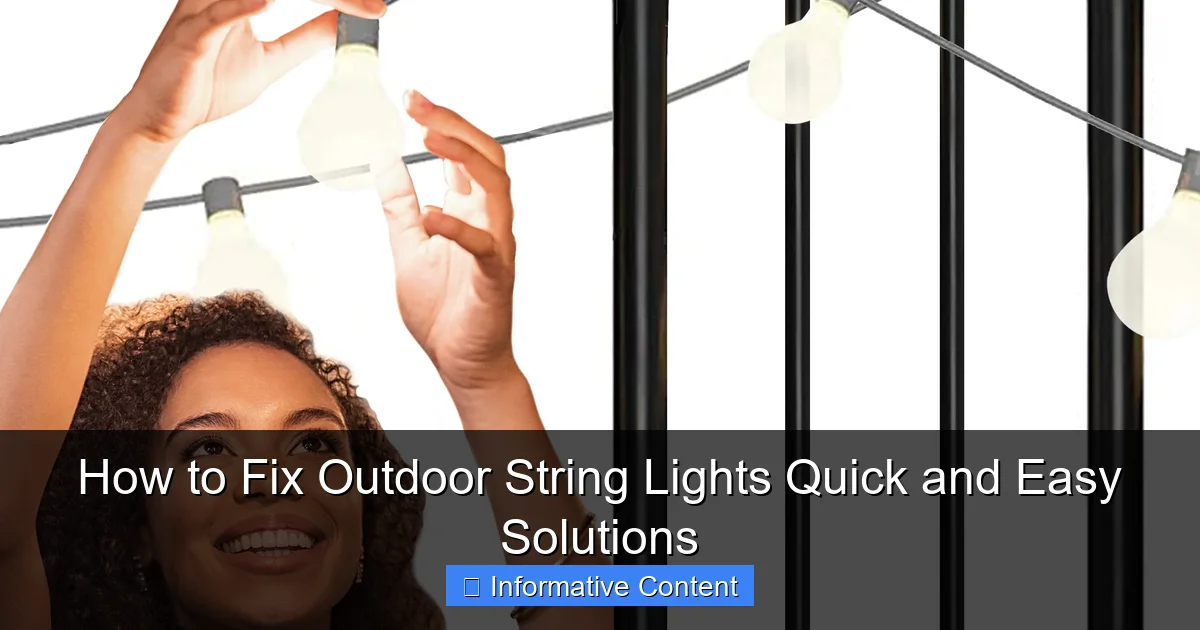
Featured image for how to fix outdoor string lights
Image source: m.media-amazon.com
Outdoor string lights not working? Start by checking the power source and replacing any blown fuses or faulty bulbs—most issues are resolved with this simple fix. For damaged cords or loose connections, use weatherproof electrical tape or a splice kit to restore function quickly and safely. Regular maintenance and proper storage extend lifespan, ensuring your lights shine bright all season long.
Key Takeaways
- Inspect bulbs first: Check for loose or burnt-out bulbs before troubleshooting further.
- Test the power source: Ensure outlets and extension cords are functioning properly.
- Secure connections: Tighten all plugs and sockets to prevent flickering or outages.
- Use outdoor-rated parts: Replace damaged cords or sockets with weatherproof components.
- Protect from weather: Install covers or seal connections to avoid moisture damage.
- Check for overloads: Avoid exceeding wattage limits to prevent circuit failures.
- Label circuits: Mark breakers to quickly locate and reset tripped switches.
📑 Table of Contents
- How to Fix Outdoor String Lights Quick and Easy Solutions
- 1. Start with the Basics: Simple Checks That Fix Most Issues
- 2. Diagnose and Fix Common Bulb-Related Problems
- 3. Tackle Wiring and Socket Issues
- 4. Prevent Moisture and Weather Damage
- 5. Know When to Replace vs. Repair
- 6. Quick Reference: Common Problems and Fixes
How to Fix Outdoor String Lights Quick and Easy Solutions
There’s nothing quite like the warm, inviting glow of outdoor string lights strung across a patio, wrapped around a tree, or draped along a pergola. They turn ordinary evenings into something magical—perfect for backyard barbecues, late-night chats, or just unwinding after a long day. But when those lights suddenly stop working, that magic can quickly fade. I’ve been there: one minute, my patio is a cozy oasis; the next, it’s pitch dark because a single bulb burned out or a plug came loose. It’s frustrating, but the good news is that most issues with outdoor string lights are surprisingly easy to fix—often without needing to call in an electrician or replace the entire set.
Whether your lights are flickering, partially lit, or completely dead, this guide will walk you through how to fix outdoor string lights with quick, practical solutions. From checking the basics to diagnosing tricky wiring problems, you’ll learn how to troubleshoot like a pro. And the best part? Most fixes take less than 30 minutes and require only basic tools you probably already own. So grab a flashlight, a ladder if needed, and let’s get those lights shining again. After all, your outdoor space deserves to sparkle.
1. Start with the Basics: Simple Checks That Fix Most Issues
Before you start digging into wiring or buying replacement bulbs, always begin with the simplest checks. You’d be surprised how often a loose plug or tripped breaker is the culprit. Think of it like checking if your phone is charged before assuming it’s broken. A little patience here can save you hours of unnecessary work.
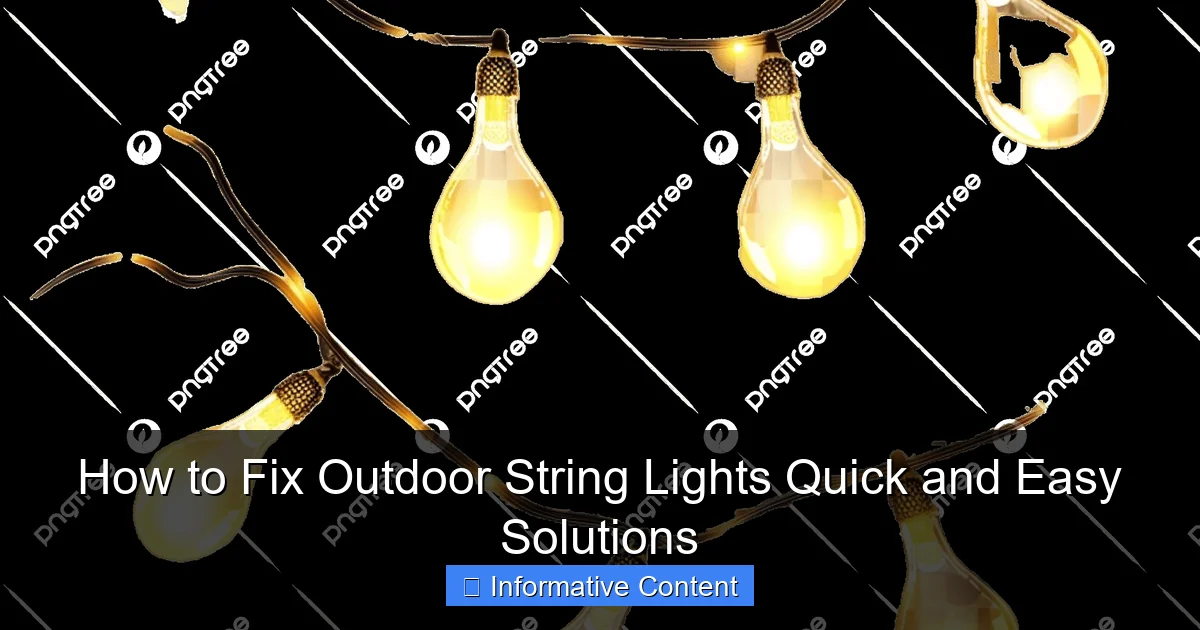
Visual guide about how to fix outdoor string lights
Image source: png.pngtree.com
Check the Power Source and Outlet
First things first: make sure the outlet is actually working. Plug in another device—like a phone charger or lamp—to confirm power is flowing. Sometimes, outdoor GFCI (Ground Fault Circuit Interrupter) outlets trip due to moisture or a power surge. Look for a small reset button on the outlet (usually red) and press it. If it clicks and stays in, great! That might have been the issue. If it trips again immediately, there could be a short circuit—more on that later.
Pro tip: I once spent 20 minutes troubleshooting my lights only to realize the outlet had tripped after a heavy rainstorm. A simple reset brought everything back to life. Always check this first!
Inspect the Plug and Cord
Next, examine the plug and the cord leading to your lights. Look for:
- Frayed or cracked insulation
- Kinks or cuts in the cord
- Corrosion or discoloration at the plug prongs
- Moisture inside the plug housing
If the cord is damaged, don’t risk using it. Even a small tear can be a fire hazard, especially outdoors. If the damage is near the plug, you can sometimes cut off the damaged section and reattach a new plug (more on that later). But if the damage is extensive, it’s safer to replace the entire string.
Also, make sure the plug is fully inserted into the outlet. Sometimes, outdoor plugs can wiggle loose, especially if the string is pulled or moved frequently.
Look for Loose Connections
If your lights are connected end-to-end (daisy-chained), check each connection point. Gently wiggle the connectors while the lights are on. If the lights flicker or go out, you’ve found a loose or corroded connection. Unplug the string, clean the connectors with a dry cloth, and re-secure them. For extra protection, use a bit of dielectric grease (available at hardware stores) to prevent moisture buildup.
Real-life example: Last summer, my lights kept cutting out every time the wind blew. Turns out, one of the connectors between two strings was loose. A quick tighten and a dab of grease solved the problem for the rest of the season.
2. Diagnose and Fix Common Bulb-Related Problems
Bulbs are the heart of your string lights—and they’re often the weakest link. A single bad bulb can sometimes take down an entire string, especially if it’s an older incandescent model. But even with modern LED strings, bulb issues are common. Let’s break down how to identify and fix them.
Identify a Burned-Out Bulb
Start by visually inspecting each bulb. Look for:
- Blackened or discolored glass
- A broken filament (in incandescent bulbs)
- Bulbs that appear dimmer than others
If you find one that looks suspect, turn off the power and carefully remove it. Most string light bulbs twist out like a regular lightbulb. If it’s an LED string, the bulbs might be smaller and more delicate—handle with care.
Once removed, test the bulb in another string or socket if you have one. If it still doesn’t light, it’s definitely dead. But here’s a key tip: don’t replace it yet. Sometimes, a bulb burns out and creates a short, which can damage the entire string. We’ll cover that next.
Use a Bulb Tester or Multimeter (Optional but Helpful)
If you’re dealing with a string that’s completely dead, a bulb tester (a small device that checks continuity) or a multimeter can help. These tools let you test each bulb without removing it. Simply touch the probes to the metal contacts inside the socket. A working bulb will show continuity (beep or resistance reading), while a dead one won’t.
I keep a basic multimeter in my toolbox. It cost me $15 at a hardware store and has saved me from buying dozens of replacement bulbs over the years. It’s especially useful for LED strings, where a single bad diode can kill the whole circuit.
Replace the Bulb Correctly
When replacing a bulb:
- Match the voltage and type (LED, incandescent, etc.)
- For LED strings, ensure the polarity is correct (some LEDs have + and – contacts)
- Don’t overtighten—finger-tight is enough
After replacing the bulb, turn the power back on. If the string lights up, you’re golden. But if it still doesn’t work, the problem might be deeper—like a faulty socket or internal wiring.
Watch Out for “Shunted” vs. “Non-Shunted” Sockets
This is a technical detail, but it matters. Some sockets are shunted, meaning they have a small metal bridge that allows current to bypass a burned-out bulb. Others are non-shunted, so a dead bulb breaks the circuit. If you replace a bulb and the string still doesn’t work, the socket might be damaged or non-functional. Try replacing the socket (available at hardware stores) or bypassing it temporarily with a jumper wire (advanced fix—only if you’re comfortable with basic wiring).
3. Tackle Wiring and Socket Issues
If bulbs and connections aren’t the problem, the issue might be inside the string itself. Wiring can break due to wear, weather, or accidental damage. Sockets can corrode or fail. These fixes are a bit more involved, but still doable with basic tools.
Inspect for Internal Wire Breaks
Over time, the thin wires inside the string can break, especially if the string is frequently moved or exposed to extreme temperatures. Look for:
- Kinks or bends in the cord
- Sections of the string that feel stiff or brittle
- Flickering when the cord is moved
To test, gently bend the cord along its length while the lights are on. If the lights flicker or go out in a certain spot, there’s likely a break. You can sometimes repair it with heat-shrink tubing and solder, but for outdoor use, it’s often safer to replace the entire string.
Fix a Corroded or Damaged Socket
Moisture is the enemy of outdoor lights. Sockets can corrode, especially near the contacts. Here’s how to clean or replace one:
- Unplug the string and let it dry completely.
- Use a cotton swab and rubbing alcohol to clean the socket contacts.
- For severe corrosion, use fine-grit sandpaper (600 grit or higher) to gently buff the metal.
- If the socket is cracked or broken, cut it out and splice in a new one (see below).
Tip: I keep a small container of dielectric grease on hand. A tiny dab on each socket contact after cleaning helps prevent future corrosion.
Splice in a New Socket (Intermediate Fix)
If a socket is beyond repair, you can replace it:
- Cut the cord on either side of the damaged socket, leaving a few inches of wire.
- Strip about 1/2 inch of insulation from each wire.
- Twist the wires from the string to the wires on the new socket (match colors: black to black, white to white).
- Solder the connections (use a soldering iron and rosin-core solder).
- Cover each joint with heat-shrink tubing or electrical tape.
- Secure the new socket in a weatherproof housing (available at hardware stores).
This fix requires basic soldering skills, but it can extend the life of your string by years. Just remember: never leave exposed wires outdoors—moisture will destroy them.
4. Prevent Moisture and Weather Damage
Outdoor string lights are built to withstand the elements, but they’re not indestructible. Moisture, UV exposure, and temperature swings can shorten their lifespan. The best way to fix outdoor string lights is to prevent problems before they start.
Seal Connections and Plugs
Every connection point is a potential entry for water. Use:
- Silicone sealant around plug housings and connectors
- Weatherproof extension cord covers for outdoor outlets
- Heat-shrink tubing over spliced wires
I once used a simple plastic bag taped over my outlet—it worked for a while, but eventually tore and let water in. Now I use a proper outdoor outlet cover. It’s worth the extra $10.
Choose the Right Installation Method
How you hang your lights matters. Avoid:
- Stapling or nailing the cord directly (it can damage insulation)
- Running the cord through wet grass or puddles
- Hanging it where it will be hit by sprinklers or rain runoff
Instead, use:
- Outdoor-rated hooks or clips (available at home improvement stores)
- Fishing line or wire to suspend the string between posts
- Zip ties on metal or plastic structures (avoid wood, as it expands/contracts)
My go-to: I use clear plastic hooks on my pergola. They’re barely visible and hold the string securely without damaging the cord.
Store Lights Properly Off-Season
If you live in a climate with harsh winters, take your lights down and store them indoors. Wrap them loosely around a piece of cardboard or a reel to prevent tangling. Keep them in a dry, temperature-controlled space (like a closet or basement). Never store them in a damp garage or shed—moisture will corrode the wires and sockets.
5. Know When to Replace vs. Repair
Not every problem is worth fixing. Sometimes, the cost of repairs (in time or materials) outweighs the value of the lights. Here’s how to decide.
Assess the Age and Condition
Consider:
- How old are the lights? (Most last 3–5 years outdoors)
- How many bulbs are already replaced?
- Is the cord frayed or brittle?
If the string is more than 5 years old and has multiple issues, replacement might be smarter. Modern LED strings are more energy-efficient, brighter, and often come with better weatherproofing.
Calculate the Cost
Compare:
- Cost of replacement bulbs, sockets, or tools
- Your time (are you spending hours on a $20 string?)
- Cost of a new string (many are under $30)
I once spent $18 on bulbs and sockets trying to fix a $25 string. In the end, I bought a new one for $22 and had it up in 10 minutes. Lesson learned.
Look for Upgrades
When replacing, consider:
- Smart LED strings with app control and dimming
- Weatherproof ratings (look for IP65 or higher)
- Longer warranties (some brands offer 2+ years)
My current string has a 3-year warranty and survived two thunderstorms and a hailstorm. It was worth the extra $10.
6. Quick Reference: Common Problems and Fixes
Here’s a handy table to help you diagnose and fix issues fast. Keep it bookmarked for the next time your lights go out.
| Problem | Likely Cause | Quick Fix |
|---|---|---|
| Entire string is dark | Tripped outlet, loose plug, or blown fuse | Reset outlet, check plug, inspect fuse in plug (if applicable) |
| Partial string is lit | Burned-out bulb or bad socket | Check each bulb, replace or clean sockets |
| Lights flicker when moved | Loose connection or broken wire | Inspect connectors, wiggle cord to find breaks |
| One bulb out, others work | Dead bulb or corroded socket | Replace bulb, clean socket with alcohol |
| String trips GFCI outlet | Moisture in plug or socket, short circuit | Unplug, dry thoroughly, check for damage |
| New bulb doesn’t work | Wrong bulb type, polarity issue (LEDs), or bad socket | Verify bulb specs, check socket continuity |
Remember, this table is a starting point. If a fix doesn’t work, don’t force it—safety first. And if you’re ever unsure, consult an electrician.
Fixing outdoor string lights isn’t just about restoring light—it’s about preserving the atmosphere they create. Whether you’re hosting a party or enjoying a quiet night under the stars, those little bulbs make a big difference. By following these steps, you can tackle most issues quickly and confidently. And with a little preventative care, your lights will keep shining for years to come.
So next time your string lights go dark, don’t panic. Grab your tools, check the basics, and work your way through the fixes. You’ve got this. And when those lights flicker back to life? That’s the moment you’ll appreciate the glow even more. After all, the best solutions are the ones that bring a little more light into your life—literally.
Frequently Asked Questions
How do I troubleshoot outdoor string lights that won’t turn on?
First, check the power source and ensure the outlet is working by testing another device. Inspect the fuse in the plug (if applicable) and replace it if blown—this is a common fix for outdoor string lights.
Why do only some bulbs work on my outdoor string lights?
This often indicates a loose bulb or a broken filament in one of the sockets. Gently wiggle each bulb to identify the faulty one, then replace it to restore full functionality.
Can I fix outdoor string lights with water damage?
If lights were exposed to heavy rain, unplug them immediately and let them dry completely before reuse. For persistent issues, seal connections with waterproof electrical tape to prevent future water damage.
How to fix outdoor string lights with a broken socket?
Cut out the damaged socket using wire strippers, splice the wires together with a waterproof connector, and insulate with heat-shrink tubing. Always disconnect power before attempting repairs.
What causes outdoor string lights to flicker intermittently?
Loose connections, corroded wires, or a failing transformer can cause flickering. Tighten all connections and clean corroded areas with electrical contact cleaner to resolve the issue.
How do I replace a damaged section of outdoor string lights?
Cut out the damaged portion, strip the wires, and connect a replacement strand using waterproof wire nuts or a soldered connection. Ensure the new section matches the voltage and wattage of the original.