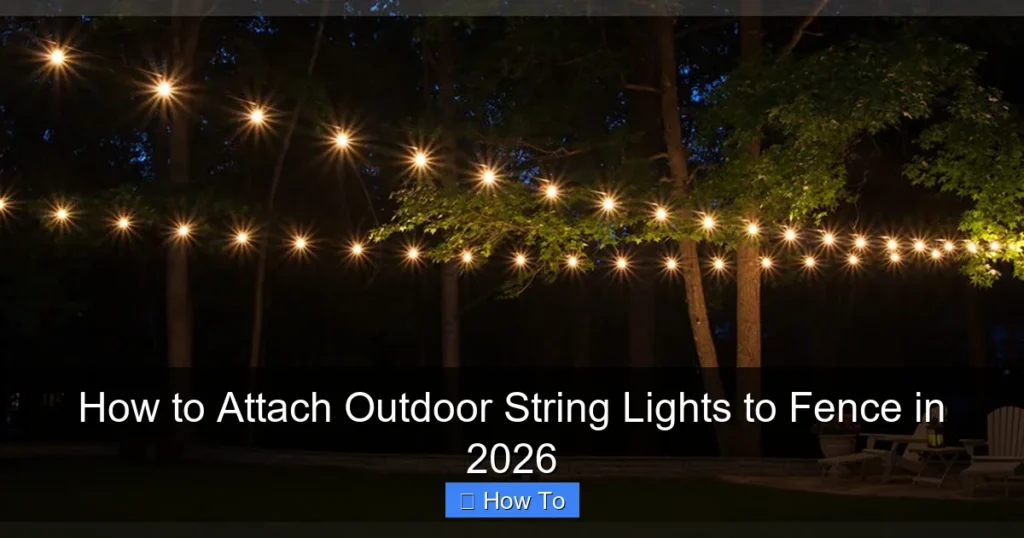
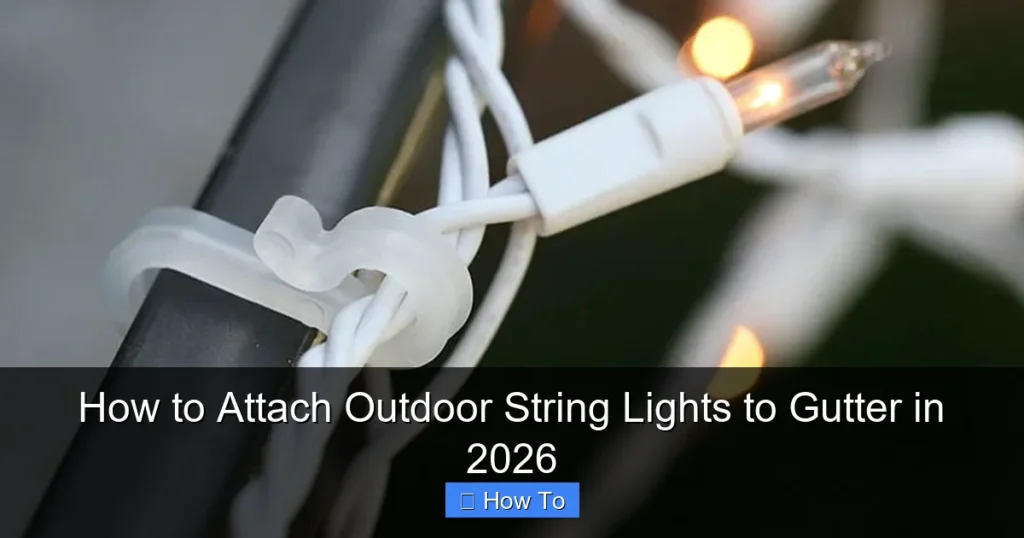
Featured image for how to hang solar string lights on fence
Image source: i.ytimg.com
Hang solar string lights on your fence in 2026 with ease using simple, secure mounting methods like zip ties, hooks, or adhesive clips—no wiring needed. Ensure the solar panel gets direct sunlight by positioning it at the fence’s highest point or on an extension arm. This quick, weather-resistant setup enhances ambiance while maximizing energy efficiency all season long.
How to Hang Solar String Lights on Fence in 2026 Easy Guide
Key Takeaways
- Plan placement first: Ensure fence receives direct sunlight for optimal solar charging.
- Use weatherproof clips: Secure lights with UV-resistant clips to prevent sagging or damage.
- Measure spacing accurately: Space lights evenly for balanced illumination and visual appeal.
- Test before finalizing: Check light function and solar panel angle before permanent installation.
- Maintain panel cleanliness: Wipe solar panels monthly to sustain charging efficiency.
- Choose durable lights: Opt for IP65+ rated lights to withstand outdoor elements long-term.
Why This Matters / Understanding the Problem
You’ve probably seen those dreamy backyard scenes on Instagram—twinkling solar string lights draped across a fence, casting a soft golden glow over a cozy patio. It looks magical, right? But when you try to recreate it, things go sideways. The lights sag, they fall off, or worse—they don’t charge because they’re shaded all day.
I learned this the hard way. Last summer, I bought a beautiful set of solar-powered string lights, excited to transform my backyard fence into a nighttime oasis. I slapped them up with random clips, ignored the sun’s path, and ended up with dim, flickering lights after three days. Total bummer.
That’s when I realized: hanging solar string lights isn’t just about aesthetics. It’s about placement, stability, and sunlight. Done right, your lights will shine bright every night. Done wrong? You’re just wasting money and time.
This How to Hang Solar String Lights on Fence in 2026 Easy Guide walks you through every step—from choosing the right tools to avoiding rookie mistakes—so you get that Instagram-worthy glow, every single night.
Real Talk: Solar lights need direct sunlight to charge. If your fence is under a tree or shaded by a shed, you’ll need to get creative with placement or consider a hybrid system. Don’t skip this step—it’s the #1 reason solar lights fail.
What You Need
Before you start, gather your supplies. You don’t need a full toolkit—just a few basics. Here’s what I keep in my “solar lighting kit” for quick, reliable setups.

Visual guide about how to hang solar string lights on fence
Image source: englishstudypage.com
- Solar string lights (with integrated panel or remote panel)
- Outdoor-rated zip ties (UV-resistant, 8–12 inches)
- Fence clips or S-hooks (stainless steel or plastic, weatherproof)
- Measuring tape (to plan spacing)
- Scissors or wire cutters (for trimming zip ties)
- Drill with small drill bit (optional, for wooden fences)
- Silicone adhesive hooks (for vinyl or metal fences where drilling isn’t allowed)
- Level (if you want perfectly straight lines—optional but helpful)
- Sunlight map (use your phone or a sun-tracking app to find the sunniest spot)
Pro tip: Buy a set of lights with a remote solar panel. This lets you place the panel in full sun (like on a post or roof) while the lights hang on a shady fence. It’s a game-changer for tricky yards.
And if you’re using How to Hang Solar String Lights on Fence in 2026 Easy Guide as your go-to resource, you’ll want to invest in quality clips—they last longer and prevent sagging.
Step-by-Step Guide to How to Hang Solar String Lights on Fence in 2026 Easy Guide
Step 1: Choose the Right Solar Lights for Your Fence
Not all solar lights are created equal. Some have panels built into the light strand. Others have a separate solar panel on a long cord. For fences, separate panel models are best—they give you flexibility.
Ask yourself:
- Does your fence get 6+ hours of direct sunlight daily?
- Is the fence wooden, vinyl, or metal?
- Do you want a draped, zigzag, or straight-line look?
If your fence is shaded (like mine was), go for a model with a 6–10 ft cord between the panel and lights. That way, you can mount the panel on a sunny post, roof, or even a tree branch.
Also, check the battery capacity (measured in mAh). Lights with 800+ mAh batteries last longer into the night—especially after cloudy days.
My Pick: I use the “Brightech Ambience Pro” with a 10-ft cord. The panel lives on a south-facing post, and the lights drape beautifully along my cedar fence. After two years, they still shine 6+ hours nightly.
Step 2: Map the Sunlight (Seriously, Do This First)
This step is non-negotiable if you want your lights to work. Solar panels need direct, unobstructed sunlight to charge efficiently.
Spend a day tracking the sun’s path:
- At noon, check which side of your yard gets the most light.
- Use a free app like Sun Surveyor or Sun Seeker to map shadows.
- Mark the sunniest spot—even if it’s not on the fence itself.
For example: My fence runs east-west, so the south side gets full sun from 10 AM to 4 PM. That’s where I placed the solar panel. The north side (where the lights hang) is shaded—but the panel charges just fine.
Bonus: If you have a south-facing roof, gutter, or post, use it! A 6-ft extension cord lets you place the panel up high and out of shade.
This is the How to Hang Solar String Lights on Fence in 2026 Easy Guide secret: the lights can be anywhere, but the panel must be in the sun.
Step 3: Measure and Plan Your Layout
Grab your measuring tape and decide how you want the lights to look. There are three common styles:
- Straight lines: Lights run parallel to the top rail. Clean and modern.
- Draped (zigzag): Lights crisscross between fence posts. Romantic and cozy.
- Vertical drops: Lights hang down from the top rail. Great for privacy.
For straight lines:
- Measure the fence length.
- Divide by 12–18 inches (standard bulb spacing).
- Mark anchor points with tape or chalk.
For draped styles:
- Measure diagonally between posts (e.g., 4 ft apart, 3 ft down).
- Plan 3–5 anchor points per post.
- Use a level to keep lines even.
I prefer draped lights for a “fairy garden” vibe. But if you’re short on clips, straight lines use fewer anchors.
Pro Move: Lay the lights on the ground first. Test the layout with clips or tape. This saves you from climbing a ladder multiple times.
Step 4: Install the Solar Panel (The Smart Way)
Now, mount the solar panel in your sunniest spot. Here’s how I do it, based on fence type:
For wooden fences:
- Use stainless steel screws or a small L-bracket.
- Angle the panel toward the sun (south in the Northern Hemisphere).
- Use a 15–30 degree tilt for best year-round charging.
For vinyl or metal fences:
- Use heavy-duty outdoor adhesive hooks (like 3M Command Outdoor).
- Or, use a fence post clamp (no drilling needed).
For no-drill options:
- Attach the panel to a nearby tree with a zip tie.
- Or, place it on a freestanding solar stand.
Key: The panel should face south (in the U.S./Canada) or north (in Australia/Southern Hemisphere). Avoid east/west unless you only want 4–5 hours of charging.
And please—don’t hang the panel on the same shaded fence as the lights. I see this mistake all the time. It’s like putting your phone in a dark drawer to charge.
Step 5: Hang the Lights with the Right Hardware
This is where most people fail. They use flimsy hooks, duct tape, or nails that rust. Not cool.
Here’s the How to Hang Solar String Lights on Fence in 2026 Easy Guide method for each fence type:
Wooden fences:
- Drill a small pilot hole (1/8 inch) into the top rail or post.
- Insert a stainless steel screw hook or eye bolt.
- Loop the light strand around the hook. Use a zip tie to secure the cord.
Vinyl fences:
- Use outdoor adhesive clips (rated for 10+ lbs).
- Or, use zip ties through the fence’s top rail holes (if your fence has them).
- For no holes, use silicone hooks (like Command Outdoor Clear Hooks).
Metal fences:
- Use magnetic clips (if the metal is ferrous).
- Or, use zip ties around the top rail.
- Avoid glue—it fails in heat/cold.
For draped styles:
- Install 3–5 anchor points per post (top, middle, bottom).
- Run the lights diagonally between points.
- Use S-hooks to connect the strand—they’re easy to adjust.
Warning: Don’t stretch the lights too tight. Solar strands have delicate wires. A little slack prevents breaks in wind or cold.
Step 6: Test and Adjust for Perfect Lighting
Once everything’s up, test it at dusk:
- Turn the lights on (if manual).
- Check for dim bulbs—this means poor charging.
- Look for sagging or uneven lines.
If lights are dim:
- Reposition the solar panel to a sunnier spot.
- Clean the panel with a soft cloth (dust blocks sunlight).
- Wait 2–3 sunny days—batteries need time to charge fully.
If lights sag:
- Add more clips every 12–18 inches.
- Use zip ties to secure the cord to fence posts.
- For long runs, add a center support (like a small hook on a post).
I once had a 30-ft run that sagged in the middle. I added a clip at the 15-ft mark—problem solved.
Step 7: Maintain for Long-Term Shine
Solar lights last 2–5 years, but only if you care for them. Here’s my seasonal checklist:
Spring:
- Clean the solar panel with water and a soft brush.
- Trim overhanging branches (shade is the enemy).
- Check clips and replace any rusted or broken ones.
Summer:
- Wipe the panel weekly (dust and pollen block light).
- Ensure no vines or plants are shading the panel.
Fall:
- Remove leaves and debris from around the panel.
- Check battery life—if lights last less than 4 hours, the battery may be dying.
Winter:
- Bring lights indoors if you get heavy snow (snow covers the panel).
- Or, install the panel under a roof eave (still gets sun, stays dry).
And if your lights stop working in winter? It’s likely the battery. Most solar lights use NiMH batteries, which degrade over time. You can replace them (look for 1.2V, 600–800 mAh), but after 3 years, it’s often cheaper to upgrade to a new set.
Pro Tips & Common Mistakes to Avoid
Pro Tip #1: Use color temperature wisely. Warm white (2700K) feels cozy. Cool white (4000K) looks modern but can feel harsh. I mix both—warm for seating areas, cool for pathways.
Pro Tip #2: Buy lights with memory function. These remember the last setting (on/off, brightness). My old lights reset every night—super annoying.
Pro Tip #3: For vinyl fences, use UV-resistant zip ties. Regular ties turn brittle and break in 6 months. I learned this after my lights fell during a windstorm.
Common Mistake #1: Hanging the solar panel on the same fence as the lights. If the fence is shaded, the panel won’t charge. Always place the panel in full sun—even if it’s 10 ft away.
Common Mistake #2: Overloading the strand. Solar lights have a max wattage. Adding too many strands in series can dim or damage the system. Stick to 1–2 strands per panel unless the manual says otherwise.
Common Mistake #3: Ignoring the weather. If you live in a rainy or snowy area, choose lights with an IP65 rating (dustproof and waterproof). My first set was IP44—it survived rain but died after a snowstorm.
And one last thing: Don’t rush. I’ve seen people hang lights in 30 minutes and regret it. Take your time. A well-planned setup lasts years. A rushed one? It’s a temporary fix.
FAQs About How to Hang Solar String Lights on Fence in 2026 Easy Guide
Q: Can I hang solar string lights on a vinyl fence without drilling?
Absolutely! Use outdoor adhesive clips or zip ties through the top rail’s holes. I’ve used 3M Command Outdoor hooks on my vinyl fence for two years—no damage, no rust. Just make sure the surface is clean and dry before applying.
Q: What if my fence gets no sun at all?
Get a set with a remote solar panel and a long cord (6–10 ft). Mount the panel on a sunny post, roof, or even a tree. I did this for my north-facing fence—the panel lives on a south-facing post, and the lights shine just as bright.
Q: How far apart should I place the clips?
Every 12–18 inches for straight lines. For draped styles, 3–5 anchor points per post. The key is to prevent sagging. If the lights droop, add more clips. It’s better to have too many than too few.
Q: Can I connect multiple solar strands together?
Only if the manual says it’s safe. Most solar lights aren’t designed for daisy-chaining. If you need more light, use a second solar panel. I run two separate strands—one for the fence, one for a pergola—and it works perfectly.
Q: Why do my lights only work for 2–3 hours?
Two reasons: poor charging or old batteries. First, check the panel’s position. Is it shaded? Clean? Then, check the battery. If it’s been 2+ years, the battery may need replacing. Or, upgrade to a model with a higher mAh battery.
Q: Are solar string lights safe in winter?
Yes—but with caveats. If you get heavy snow, bring the lights indoors or cover the panel. Most solar lights work in cold weather (down to -4°F), but snow blocks sunlight. I leave mine up but remove them during blizzards.
Q: What’s the best time of year to install them?
Spring or early summer. You’ll have the most sunlight to test charging, and you can enjoy the lights all season. I install mine in May—by June, they’re fully charged and ready for summer nights.
Final Thoughts
Hanging solar string lights on a fence isn’t rocket science—but it does take thought. The How to Hang Solar String Lights on Fence in 2026 Easy Guide isn’t just about aesthetics. It’s about creating a space that feels warm, inviting, and alive after dark.
Remember:
- The solar panel is the heart of the system. Put it in the sun.
- Use the right hardware for your fence type. No shortcuts.
- Plan your layout on the ground first. Save time and hassle.
- Maintain the lights. A little care goes a long way.
I’ve used this method for three summers now. My lights still shine bright, the clips are secure, and my backyard feels like a retreat. You can do the same.
So grab your tools, map the sun, and start hanging. And when you see that first twinkle of light at dusk? You’ll know it was worth it.
Happy lighting! 🌙✨