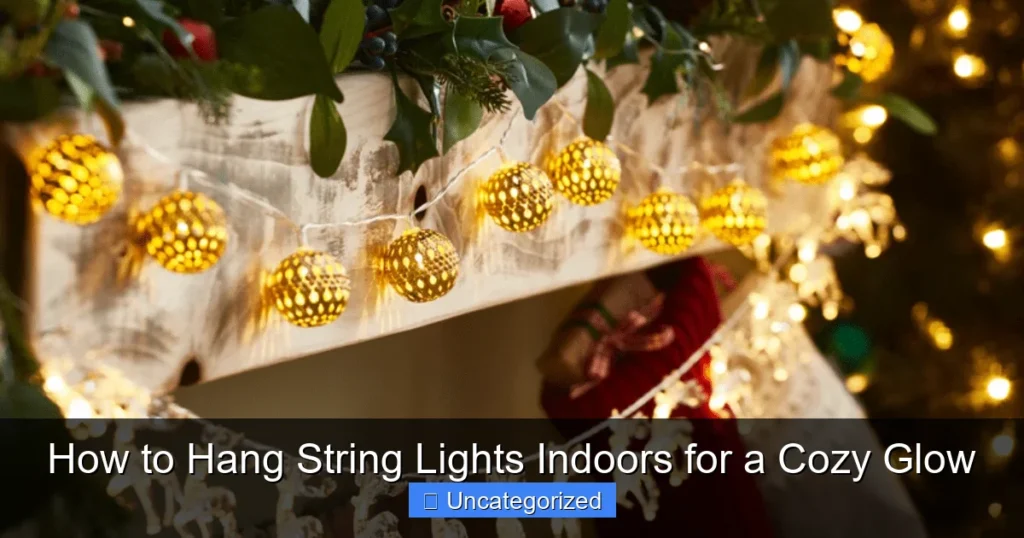
Featured image for how to hang string lights indoors on wall
Image source: digsdigs.com
Transform any room into a cozy retreat by hanging string lights on your wall with simple, damage-free methods like adhesive hooks, clips, or tension rods. Choose warm white or soft-toned LEDs and drape them in cascading waves, along a gallery wall, or around a mirror for maximum ambiance—no tools or nails required.
Key Takeaways
- Plan your layout: Sketch light placement to avoid uneven spacing or gaps.
- Use removable hooks: Protect walls with damage-free adhesive or tension-mounted options.
- Hide cords creatively: Conceal wires with molding, clips, or decorative channels.
- Secure lights tightly: Prevent sagging by anchoring every 12–18 inches.
- Layer with other lighting: Combine string lights with lamps for balanced ambiance.
- Test before installing: Ensure bulbs work and brightness suits the mood first.
📑 Table of Contents
- How to Hang String Lights Indoors on Wall for Cozy Vibes
- Choosing the Right String Lights for Your Space
- Preparing Your Wall: Safety and Surface Considerations
- Step-by-Step Installation Methods for Different Walls
- Creative Layout Ideas to Elevate Your Design
- Maintaining and Troubleshooting Your String Lights
- Conclusion
How to Hang String Lights Indoors on Wall for Cozy Vibes
Imagine walking into a room that instantly wraps you in warmth and comfort, where soft, twinkling lights dance across the walls, casting a gentle glow that transforms the atmosphere. String lights aren’t just for holidays or outdoor patios—they’re a year-round design tool that can elevate your indoor space with minimal effort. Whether you’re creating a cozy reading nook, a romantic bedroom retreat, or a vibrant accent wall in your living room, string lights offer a magical touch that’s both affordable and easy to install. The best part? You don’t need to be a DIY expert to achieve stunning results.
From enhancing your mood to adding visual interest to otherwise plain walls, indoor string lights are more than just decor—they’re a mood enhancer. According to a 2022 study by the American Society of Interior Designers, 78% of homeowners reported feeling more relaxed and at ease in rooms with ambient lighting like string lights. But how do you hang them properly without damaging your walls or creating a tangled mess? This guide walks you through every step, from choosing the right lights to installing them safely and stylishly. Whether you’re a renter, a homeowner, or a design enthusiast, you’ll learn how to hang string lights indoors on wall surfaces to create a space that feels both inviting and uniquely yours.
Choosing the Right String Lights for Your Space
Types of String Lights: LED vs. Incandescent vs. Fairy Lights
Before you start hanging, it’s crucial to select the right type of string lights for your indoor wall setup. Not all lights are created equal, and your choice will impact both aesthetics and functionality.

Visual guide about how to hang string lights indoors on wall
Image source: lifelovelarson.com
- LED String Lights: The most popular choice for indoor use, LED lights are energy-efficient, long-lasting (up to 25,000 hours), and emit minimal heat. They’re ideal for extended use and are available in warm white, cool white, multicolor, and color-changing options. For example, warm white LEDs create a soft, candle-like glow perfect for bedrooms or living rooms.
- Incandescent String Lights: These traditional bulbs offer a nostalgic, warm glow but consume more energy and generate heat. They’re best for short-term use (like holiday decor) due to their shorter lifespan and fire risk if left on for long periods.
- Fairy Lights (Micro LED): Delicate and often battery-powered, fairy lights are excellent for intricate designs, small spaces, or accent lighting. They come in copper wire, silver wire, or plastic-coated strands and are ideal for wrapping around shelves, picture frames, or creating a starry sky effect on walls.
Light Color and Brightness: Setting the Mood
The color temperature of your lights dramatically affects the ambiance. Warm white (2700K–3000K) mimics candlelight and is ideal for cozy, relaxing spaces. Cool white (4000K–5000K) feels more energetic and is better for workspaces or modern minimalist designs. For a playful or festive vibe, consider multicolor or color-changing RGB lights with remote controls.
Tip: Test a small section of lights in your room before committing to a full installation. Observe how the light interacts with your wall color, furniture, and existing decor. A dark wall may absorb light, requiring brighter or closer placement, while a light-colored wall can reflect and amplify the glow.
Length, Power Source, and Smart Features
Measure your wall space carefully. Most indoor string lights come in 10- to 50-foot lengths. For a 10-foot wall, a 20-foot strand allows for creative draping or zigzag patterns. Consider the power source:
- Plug-in lights: Best for permanent installations near outlets. Use extension cords or power strips if needed, but avoid overloading circuits.
- Battery-powered lights: Ideal for renters or temporary setups. Look for models with USB rechargeability (e.g., 5V USB fairy lights) to reduce battery waste.
- Smart lights: Wi-Fi or Bluetooth-enabled strands (e.g., Philips Hue, Govee) allow app control for color, brightness, and timers. Perfect for tech-savvy users who want customizable moods.
Preparing Your Wall: Safety and Surface Considerations
Assessing Wall Material and Condition
Your wall’s material determines the best hanging method. Common indoor surfaces include:
- Drywall (plasterboard): Most common in homes. Use lightweight anchors or adhesive hooks for heavier strands.
- Plaster walls: More brittle than drywall. Avoid nails or screws; opt for removable adhesive hooks or tension rods.
- Wood or paneling: Can support nails, screws, or picture hooks. Sand rough edges first to prevent wire damage.
- Tiles or glass (e.g., bathroom walls): Use silicone-based adhesive hooks or suction cups. Never use nails or screws.
Pro Tip: Press your hand against the wall. If it feels warm or has visible texture (e.g., popcorn ceilings), avoid adhesive methods that could peel paint or damage texture.
Tools and Materials Checklist
Gather these supplies before starting:
- String lights (measured to fit)
- Measuring tape
- Pencil (for marking)
- Level (for straight lines)
- Adhesive hooks (3M Command Strips, Gorilla Mounting Putty)
- Thumbtacks or push pins (for lightweight strands)
- Removable wall anchors (for drywall)
- Picture hooks or nails (for wood/paneling)
- Extension cord or power strip (if needed)
- Scissors or wire cutters (for trimming excess wire)
- Masking tape (to temporarily test placement)
Power and Outlet Planning
Plan your lighting layout around outlets to minimize cord clutter. For a 15-foot wall with a single outlet on one end:
- Start hanging lights 3–4 feet from the outlet to allow slack.
- Route cords along the wall’s baseboard or behind furniture to hide them.
- Use cord clips or zip ties to bundle excess wire and prevent tripping hazards.
Warning: Never daisy-chain more than three light strands unless the manufacturer specifies it’s safe. Overloading circuits can cause fires.
Step-by-Step Installation Methods for Different Walls
Method 1: Adhesive Hooks (Best for Renters & Drywall)
Adhesive hooks (e.g., 3M Command Strips) are ideal for temporary setups or delicate walls. Here’s how:
- Clean the wall: Wipe with rubbing alcohol to remove dust and grease.
- Mark hook placement: Use a pencil and level to draw a straight line. Space hooks every 12–18 inches for a draped effect or 6–8 inches for a straight line.
- Apply hooks: Press firmly for 30 seconds per hook. Wait 1 hour before hanging lights.
- Hang the lights: Loop the light strand’s cord over each hook. For a zigzag pattern, alternate hook heights (e.g., 8″ apart vertically).
Example: For a 10-foot wall, use 8 adhesive hooks spaced 15 inches apart. Hang lights in a gentle “S” curve between hooks for a relaxed, organic look.
Method 2: Push Pins or Thumbtacks (Lightweight Strands)
Perfect for fairy lights or thin copper-wire strands:
- Mark points with a pencil (every 6–10 inches).
- Insert pins at a 45-degree angle to grip the cord.
- Wrap the strand around each pin, leaving slight slack for a “floating” effect.
Tip: Use colored pins that match your wall to make them nearly invisible.
Method 3: Picture Hooks or Nails (Wood/Permanent Installations)
For heavy strands or long-term use:
- Drill pilot holes to prevent splitting (use a 1/16″ bit for drywall).
- Insert picture hooks or small nails.
- Loop the light cord over each hook, ensuring even tension.
Pro Tip: For a geometric pattern, use a grid layout (e.g., 12″ x 12″ squares) with hooks at each intersection.
Method 4: Tension Rods (No Damage, High Flexibility)
Ideal for wide spaces (e.g., behind a bed or sofa):
- Install a tension rod between two walls or furniture.
- Hang lights from the rod using S-hooks or clips.
Example: A 60″ tension rod with 20 fairy lights creates a “canopy” effect above a reading chair.
Creative Layout Ideas to Elevate Your Design
Classic Horizontal or Vertical Lines
Simple but effective. For a horizontal line, hang lights parallel to the ceiling or baseboard. For a vertical line, run lights from floor to ceiling (e.g., beside a bookshelf). Use a level to ensure straightness.
Geometric Patterns: Squares, Triangles, or Hexagons
Turn your wall into a work of art. To create a hexagon pattern:
- Measure and mark six points in a honeycomb layout.
- Connect points with adhesive hooks.
- Weave lights through each hook, leaving gaps for visual interest.
Data Table: Pattern Spacing Guide
| Pattern Type | Hook Spacing (Inches) | Recommended Light Type | Best For |
|---|---|---|---|
| Straight Line | 6–12 | LED or Incandescent | Minimalist spaces |
| Zigzag | 8–10 (vertical) | Fairy Lights | Bedrooms, nurseries |
| Grid | 12–18 (both directions) | LED | Living rooms, offices |
| Starburst | Radial (every 30°) | Micro LED | Accent walls |
Framed Art or Mirror Accent
Enhance existing decor by outlining a mirror, picture frame, or gallery wall. Use bendable fairy lights to trace the shape. Secure with adhesive putty or small clips.
Ceiling-to-Wall Transition
Create a “glowing cloud” effect by hanging lights diagonally from the ceiling to a corner. Use ceiling hooks or adhesive mounts. For a 10-foot ceiling, angle lights at 45 degrees.
Themed Designs: Seasonal or Personal Touches
Customize for holidays (e.g., heart shapes for Valentine’s Day) or personal milestones (e.g., spelling a name with letter-shaped lights). Use bendable wire strands to shape letters or symbols.
Maintaining and Troubleshooting Your String Lights
Cleaning and Storage Tips
To extend your lights’ lifespan:
- Wipe bulbs with a dry microfiber cloth monthly.
- Store in a cool, dry place. Wrap strands around a cardboard spool to prevent tangling.
- For battery-powered lights, remove batteries if unused for over 3 months.
Common Issues and Fixes
Even the best installations face challenges:
- Flickering lights: Check loose connections or replace dead bulbs. For LED strands, ensure all bulbs are properly seated.
- Adhesive hooks falling: Use hooks rated for the lights’ weight (e.g., 3M Command Strips hold up to 5 lbs). Reapply with fresh adhesive if needed.
- Cord clutter: Use cord covers or paint cords to match the wall. For a seamless look, run cords behind baseboards.
- Overheating: Never cover lights with fabric or insulation. Turn off when unattended for long periods.
Upgrading and Expanding
Want to add more lights or change the look? Try:
- Layering: Combine two strands (e.g., warm white + multicolor) for depth.
- Smart integration: Connect to Alexa or Google Home for voice control.
- Seasonal swaps: Use removable hooks to easily change light colors or patterns.
Pro Tip: Label your storage boxes by season or room (e.g., “Winter – Blue & White,” “Bedroom – Warm White”) to simplify future setups.
Conclusion
Hanging string lights indoors on your wall is more than a DIY project—it’s a way to transform your home into a sanctuary of warmth and creativity. With the right lights, tools, and techniques, you can achieve a professional-looking installation that’s safe, stylish, and uniquely yours. Whether you opt for a minimalist straight line, a playful zigzag, or an elaborate geometric pattern, the key lies in thoughtful planning and attention to detail. Remember: the goal isn’t perfection but personalization. Your lights should reflect your taste, elevate your space, and make you smile every time you flip the switch.
As you embark on this project, keep in mind that flexibility is your greatest asset. Experiment with layouts, test different placements, and don’t fear small mistakes—they often lead to unexpected design breakthroughs. From renters using adhesive hooks to homeowners with permanent installations, string lights offer endless possibilities for cozy vibes. So gather your supplies, play some soft music, and let the glow begin. Your dreamy, illuminated wall awaits—one twinkle at a time.
Frequently Asked Questions
How do I hang string lights indoors on a wall without damaging the paint?
Use damage-free solutions like removable adhesive hooks, washi tape, or tension rods. These options securely hold your string lights while keeping your walls intact and easy to remove later.
What are the best ways to hang string lights on a wall for a cozy atmosphere?
Create a warm, inviting look by draping lights in a zigzag pattern, framing a gallery wall, or outlining a headboard. Use adhesive clips or small nails for a secure hold that enhances the cozy vibes.
Can I hang string lights on a textured wall?
Yes! For textured walls, use sturdy adhesive hooks with a stronger hold or opt for removable putty. Ensure the hooks are rated for the weight of your lights to avoid slippage.
How do I hide the wires when hanging string lights indoors on a wall?
Conceal cords by running them behind shelves, furniture, or curtains, or use cord covers that match your wall color. For a seamless look, tuck wires into baseboards or moldings.
Do I need special tools to hang string lights on a wall?
Most methods require minimal tools—adhesive hooks, push pins, or removable clips work for lightweight lights. For heavier strings or permanent setups, a hammer and nails or a drill may be needed.
How do I hang string lights on a wall with no visible hooks?
Use transparent adhesive hooks, clear fishing line to tie lights around fixed points, or LED strips with built-in adhesive. These options keep the focus on the glow, not the hardware.